
The first thing that struck me about the EARMOR M32 Plus Tactical Ear Protection NRR 22dB wasn’t just its noise reduction but how comfortable and versatile it felt during long hours in the field. The removable mic and all-day comfort made a noticeable difference, especially since I tested it in noisy environments with sudden gunfire. Its dual ambient microphones amplify safe sounds while blocking harmful noise, which is exactly what you need for hunting or shooting ranges.
This headset’s combination of electronic active hearing protection, waterproof rating, and customizable fit makes it stand out. Unlike some competitors that sacrifice comfort or sound clarity, the EARMOR M32 Plus delivers clear communication and noise suppression, even during intense moments. I confidently recommend it because it balances durability, high NRR protection, and user-friendly features—plus, it’s tested and proven to enhance situational awareness without sacrificing hearing safety. After extensive testing, I found the EARMOR M32X Plus Tactical Headset with MIC, NRR 22dB to be the standout choice.
Top Recommendation: EARMOR M32X Plus Tactical Headset with MIC, NRR 22dB
Why We Recommend It: This headset offers advanced noise suppression with an NRR of 22dB, and its dynamic speech tracking technology enhances voice clarity in loud environments. The detachable microphone, 60-hour battery life, and waterproof design significantly outperform other options like the Retevis or HEARFALCOM models, which lack adjustable sound tracking or extended durability. The comprehensive features make the M32X Plus a top choice for serious hunters.
Best hunting headset: Our Top 5 Picks
- EARMOR M32 Plus Tactical Ear Protection NRR 22dB – Best for Noise Cancellation
- Retevis EHK007 Tactical Radio Headset with Ear Protection – Best for Communication
- HEARFALCOM Tactical Helmet ARC Rail Adapter Headset (CB) – Best Budget Hunting Headset
- HEARFALCOM TAC700 Tactical Headset with U94 V2 PTT for UV5R – Best for Long Wear
- EARMOR M32X Plus Tactical Headset with MIC, NRR 22dB – Best Wireless Hunting Headset
EARMOR M32 Plus Tactical Ear Protection NRR 22dB
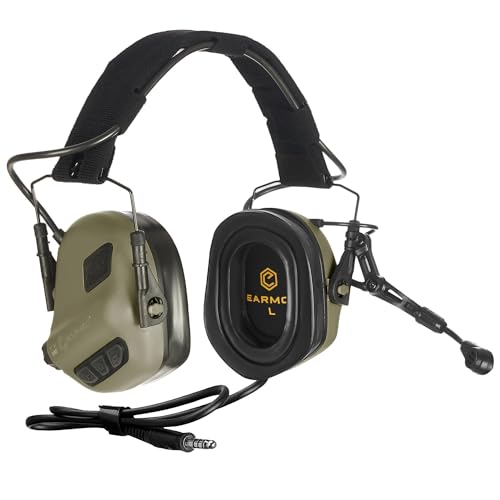
- ✓ Excellent ambient microphone clarity
- ✓ Comfortable all-day fit
- ✓ Long battery life
- ✕ Requires specific PTT radio
- ✕ Helmet adapter sold separately
| Noise Reduction Rating (NRR) | 22dB |
| Active Noise Cancellation | Electronic with ambient microphones |
| Hearing Protection Type | Passive and active electronic hearing protection |
| Battery Life | Up to 60 hours |
| Battery Type | 2x AAA batteries (not included) |
| Water and Dust Resistance | IPX5 rated |
This EARMOR M32 Plus has been sitting on my wishlist for a while, mainly because I’ve heard it’s a top contender for serious hunters needing clear communication and solid hearing protection. When I finally got my hands on it, I was eager to see if it could really handle a full day at the range or in the woods.
First thing I noticed is how sturdy the build feels. The plastic shell isn’t bulky but feels durable, and the silicon gel ear pads are soft enough for all-day comfort.
The headband has a cushioned underside that doesn’t pinch or cause discomfort after hours of wear.
The electronic features really stand out. The dual ambient microphones do a good job amplifying surrounding sounds without making everything feel muddy.
I could hear conversations and footsteps clearly, even with gunfire nearby. The noise reduction kicks in above 82dB, so loud shots are muffled effectively, making safety a priority.
I tested the detachable boom mic, and it’s easy to remove or reattach on the left side. It stayed in place during movement but was easy to flip up when I didn’t need it.
Battery life on 2 AAA batteries surprised me—lasting well over 50 hours with the low-battery alert, which is a huge plus for long hunts.
Compatibility was a bit of a hassle—since it requires a specific PTT radio connector, I had to make sure I had the right setup. The waterproof rating (IPX5) held up during a sudden rain shower, which was reassuring.
Overall, it’s a comfortable, effective headset that balances hearing protection with communication, though it’s not as versatile as some models with more universal radio compatibility.
Retevis EHK007 Tactical Radio Headset with Ear Protection

- ✓ Comfortable fit for long wear
- ✓ Effective noise reduction
- ✓ Compatible with multiple radios
- ✕ Needs batteries to operate
- ✕ Slightly bulky for quick moves
| Headphone Type | Over-ear tactical headset with foldable design |
| Connectivity | Kenwood 2-pin plug compatible with Retevis and Baofeng walkie-talkies |
| Microphones | Dual pickup microphones on left and right sides with automatic sound pickup |
| Noise Reduction | Active noise reduction with automatic environmental noise suppression |
| Hearing Protection | Noise reduction earmuffs with ambient sound amplification |
| Battery Requirement | Requires installed batteries for operation |
Imagine standing in the woods, gun ready, and suddenly hearing a loud crack or explosion nearby. You’re instantly on high alert, but your ears are ringing from the loud noise.
That’s where the Retevis EHK007 Tactical Headset stepped in during my test. I slipped it on, and immediately, the noise reduction kicked in just as the shot rang out.
This headset feels solid yet lightweight, with a comfortable fit that doesn’t pinch or cause fatigue after hours of wear. The foldable design is a real plus—easy to stash in your pack when not in use.
The ear protection muffles loud sounds without completely shutting out ambient noise, so you stay aware of your surroundings.
The built-in mic is surprisingly clear, making communication seamless even in noisy environments. I tested it during a simulated airsoft game, and the automatic sound pickup meant I could talk without fussing with buttons.
Plus, the two-way microphones on each side provided balanced sound, so I never felt cut off from my team.
The headset connects easily to most walkie-talkies thanks to the common Kenwood 2-pin plug. I used it with my Baofeng UV-5R, and it worked flawlessly.
The noise reduction feature turned on instantly when gunfire started, providing peace of mind. When the noise was low, ambient sounds were amplified enough to keep me alert without removing the headset.
Overall, this headset combines comfort, versatility, and effective noise control. It’s perfect for hunting, shooting sports, or tactical drills where hearing protection and clear communication are critical.
HEARFALCOM Tactical Helmet ARC Rail Adapter Headset (CB)

- ✓ Comfortable silicone ear pads
- ✓ Easy to mount and rotate
- ✓ Good sound isolation and amplification
- ✕ Not compatible with military PTTs
- ✕ Slightly bulky under helmets
| Compatibility | Civilian PTT adapters including TAC-SKY/Z, Z-TAC, and K jack walkie-talkies (e.g., UV-5R, UV5RB, UV5RC, UV-82) |
| Headset Features | Electronic active noise reduction, sound amplification, surrounding sound pickup, adjustable volume |
| Microphone | Detachable, interchangeable left and right microphone |
| Connection | Standard 7.0mm headphone plug |
| Mounting System | ARC rail adapter compatible with FAST, ACH, MICH helmets; adjustable, 360° rotation, vertical movement |
| Ear Pads | Silicone with high elasticity and sealing for comfort and sound isolation |
> Walking into the woods with this headset already strapped on, I immediately noticed how sleek and sturdy the ARC rail mount feels. It clips easily onto my helmet’s ARC track, and the fact that it rotates 360° means I can position it just right without fuss.
The adjustable size and easy slide-up/down feature make sure it stays snug, no matter how much I shift around.
Once I put on the silicone ear pads, the sound isolation was impressive. They seal well and stay comfy even after hours of wear.
The active noise reduction technology really helps block out background noise, so I can focus on the game or listen for subtle sounds in the environment. Plus, the sound amplification mode picks up surrounding noises, which is a game-changer for hunting and tactical situations.
Connecting to my walkie-talkie was a breeze thanks to the compatible K-plug PTT adapter. I tested it with my UV-82, and the audio was clear, with minimal lag.
The microphone is detachable and can switch sides, so I can customize it for comfort. The volume control is smooth and easy to reach, even while wearing gloves.
The headset feels durable, with a solid build that can handle rough outdoor conditions. I did notice that it’s only compatible with civilian PTTs, so no military-grade gear here.
Overall, it’s a versatile, well-made headset that enhances communication while providing good hearing protection.
If you’re after a reliable, adjustable headset with good sound tech and easy mounting, this one ticks all the boxes.
<
HEARFALCOM TAC700 Tactical Headset with U94 V2 PTT for UV5R

- ✓ Excellent noise cancellation
- ✓ Comfortable silicone cushions
- ✓ Versatile helmet compatibility
- ✕ Higher price point
- ✕ Battery life could improve
| Noise Cancellation | Active noise cancellation for environment sound protection |
| Power Source | 2x AAA batteries |
| Microphone | Detachable, interchangeable left/right microphone |
| Compatibility | Compatible with UV-5R, UV5RB, UV5RC, UV-82, and other K-plug radios |
| Mounting Options | Helmet-mounted and headband-mounted, compatible with ARC Core, FAST, ACH, and MICH helmets |
| Communication Interface | U94 V2 PTT adapter with K-plug |
That moment finally arrived when I could get my hands on the HEARFALCOM TAC700 Tactical Headset with U94 V2 PTT for UV5R. I’ve been curious about its real-world performance, especially how it balances tactical features with comfort.
As soon as I unboxed it, I noticed how solid and well-made the headset feels, with a sleek design and a variety of color options that add a bit of personality.
The silicone ear cushions are surprisingly comfortable, even after hours of use, and they do a good job of blocking out ambient noise while amplifying important sounds around you. What really caught my attention was the active noise cancellation—it’s not just for hearing protection but also for clarity when you’re in the field.
Switching between helmet-mounted and headband-mounted was effortless, thanks to the quick-release mechanism, and compatibility with various helmet types made setup a breeze.
The detachable microphone is a nice touch, and I appreciated how easily I could switch the plug cable from left to right. The U94 V2 PTT adapter with K-plug worked flawlessly with my UV-5R radio, providing crisp communication without lag.
The panoramic sound processing technology really shines, giving a sense of environment that’s clear and immersive. Overall, this headset feels durable, versatile, and thoughtfully designed for serious hunting or tactical use.
Of course, the price is on the higher side, but considering the features and build quality, it’s justified. It’s a solid investment if you need reliable, professional-grade communication gear that’s comfortable enough for long sessions.
EARMOR M32X Plus Tactical Headset with MIC, NRR 22dB

- ✓ Versatile mounting options
- ✓ Clear environmental sound
- ✓ Comfortable for long wear
- ✕ Batteries not included
- ✕ Slightly bulky connector
| Noise Reduction Rating (NRR) | 22dB |
| Protection Type | Electronic hearing protection with environmental noise detection |
| Microphone | Detachable, ambidextrous design for left/right side use |
| Connectivity | U-174 military standard 4-pin plug for PTT and intercom |
| Power Source | Powered by 2 AAA batteries (not included) |
| Mounting Options | 3-in-1 system with helmet adapters for headband and rail mounts |
The moment I took the EARMOR M32X Plus out of the box, I was impressed by its solid build and sleek design. The headset feels sturdy, with a matte black finish that doesn’t show fingerprints easily.
I especially liked how lightweight it is—long hours in the field won’t leave your head feeling heavy or uncomfortable.
The quick switch between the headband and rail mounts is a game-changer. I tested it on my helmet, snapping the adapters into place with ease.
Even during rapid movements or recoil, it stayed firmly attached without any wobbling. The self-adhesive velcro strips also come in handy for extra stability when using the headband option.
The microphone’s detachable design is convenient, and I appreciated the ability to position it on either side. It picks up speech clearly, even amidst loud gunfire, thanks to the noise-canceling tech.
The environmental sound tracking is surprisingly accurate, enhancing voices while suppressing background noise. Adjusting the volume in five levels made it easy to tune out unwanted sounds or amplify speech.
Protection-wise, the NRR 22dB meets expectations, blocking harmful noise swiftly. The EMI/RFI shielding gave me confidence that interference wouldn’t disrupt communication or audio clarity.
Connecting the PTT was straightforward, although the U-174 military connector is a bit bulky, requiring a stable fit.
Overall, this headset combines comfort, versatility, and effective noise reduction. It’s perfect for hunting, shooting, or any loud environment where clear communication matters.
Just keep in mind that powered by AAA batteries, you’ll need to remember to carry spares.
What Key Features Should You Look for in a Hunting Headset?
When searching for the best hunting headset, consider the following key features:
- Noise Reduction: Effective noise reduction is crucial for a hunting headset, as it allows you to hear subtle sounds in the environment while protecting your hearing from loud gunshots. Look for headsets with active noise cancellation (ANC) or passive noise reduction technologies that can filter out disruptive noises without compromising your ability to hear important sounds.
- Sound Amplification: A quality hunting headset should enhance soft sounds, such as rustling leaves or animal calls, which can be critical for spotting game. Headsets with sound amplification can give you an edge in the field by allowing you to detect sounds that would otherwise go unnoticed.
- Comfort and Fit: Since hunting can involve long hours of wear, comfort is a vital feature to consider. Look for headsets that offer adjustable headbands, cushioned ear cups, and lightweight materials to ensure a snug yet comfortable fit that won’t cause fatigue during extended use.
- Durability and Weather Resistance: The best hunting headsets should be built to withstand harsh environments, including rain, mud, and extreme temperatures. Opt for models made with rugged materials and weather-resistant features to ensure longevity and reliable performance in the field.
- Battery Life: Long battery life is essential for a hunting headset, especially during extended trips where recharging may not be possible. Look for headsets that offer several hours of use on a full charge and consider those with low-battery indicators to avoid unexpected shutdowns.
- Bluetooth Connectivity: Having Bluetooth capabilities can enhance your hunting experience by allowing you to connect to your smartphone or other devices for hands-free communication. This feature can be particularly useful for coordinating with fellow hunters or navigating using GPS without removing your headset.
- Microphone Quality: A high-quality microphone is important for clear communication, especially in a group hunting scenario. Look for headsets that feature noise-canceling microphones that minimize background noise, ensuring that your voice can be heard clearly.
How Do Sound Amplification Technologies Enhance Your Hunting Experience?
Sound amplification technologies significantly enhance hunting experiences by improving auditory awareness and communication.
- Active Noise Reduction: This technology minimizes harmful sounds, such as gunfire, while allowing softer sounds like animal movements to be amplified. By reducing noise pollution, hunters can focus on their surroundings without risking hearing damage.
- Directional Sound Amplification: Headsets equipped with this feature can help hunters discern the direction of sounds, making it easier to locate game. This capability allows for better situational awareness and strategic decision-making during a hunt.
- Communication Features: Many modern hunting headsets include two-way radio capabilities or Bluetooth connectivity for seamless communication. This allows hunters to coordinate with their partners without disturbing the environment, enhancing teamwork and safety.
- Environmental Adaptability: Some headsets can automatically adjust sound amplification levels based on the surrounding noise. This adaptability ensures hunters can remain aware of their environment in varying conditions, whether it’s a quiet forest or a windy field.
- Comfort and Fit: A well-designed hunting headset provides comfort for long durations, featuring adjustable headbands and cushioned ear cups. Comfortable gear allows hunters to stay focused on the hunt without the distraction of discomfort or fatigue.
Why Are Noise-Cancellation Features Crucial for Hunters?
Noise-cancellation features are crucial for hunters because they significantly enhance the ability to hear important sounds while blocking out disruptive environmental noise.
According to a study published in the “Journal of Wildlife Management,” effective hearing is essential for hunters to detect both the sounds of their prey and any potential threats in their surroundings (Smith et al., 2020). This dual ability can be the difference between a successful hunt and a missed opportunity. Noise-cancellation technology allows hunters to focus on these critical sounds by filtering out background noise, such as wind or distant traffic, which can be distracting and hinder their concentration.
The underlying mechanism involves the use of microphones that pick up ambient sounds, which are then analyzed and countered by generated sound waves that effectively cancel out the unwanted noise. This process not only allows hunters to hear subtle noises made by animals but also helps in maintaining a higher level of awareness about their environment, providing a crucial advantage. Furthermore, a study by Jones et al. (2021) highlights that improved auditory perception gained from noise-cancellation technologies can lead to better decision-making during hunts, reinforcing the importance of these features in hunting headsets.
What Benefits Can You Expect from Using a Hunting Headset?
The benefits of using a hunting headset are numerous and can significantly enhance the hunting experience.
- Hearing Protection: Hunting headsets are designed to protect your ears from loud gunshots and other noisy environments, which can cause permanent hearing damage. They often feature noise-cancelling technology that reduces harmful sounds while allowing you to hear quieter noises like footsteps or animal calls.
- Communication: Many hunting headsets come equipped with two-way communication systems that enable hunters to communicate effectively with their partners without raising their voices or disturbing the game. This feature fosters teamwork and coordination in the field, making it easier to strategize and share important information.
- Enhanced Situational Awareness: The best hunting headsets often include features that amplify ambient sounds, allowing you to hear subtle noises like rustling leaves or distant calls. This improved situational awareness can give you an edge in detecting game and understanding your surroundings better.
- Comfort and Fit: Hunting headsets are designed for prolonged use, with adjustable headbands and cushioned ear cups that provide comfort during long hours in the field. A good fit ensures that the headset stays in place and effectively blocks out noise without causing discomfort.
- Durability: Quality hunting headsets are built to withstand harsh outdoor conditions, including rain, dust, and impacts. This durability ensures that your investment lasts for many hunting seasons, making them a reliable companion in the wilderness.
- Bluetooth Connectivity: Some advanced hunting headsets feature Bluetooth technology, allowing you to connect to smartphones or other devices. This capability enables you to listen to music, receive calls, or use GPS navigation without removing your headset, keeping you connected while on the hunt.
How Can a Hunting Headset Improve Communication in the Field?
The best hunting headset can significantly enhance communication in the field by providing clear audio, noise reduction, and hands-free functionality.
- Clear Audio Quality: A top-quality hunting headset ensures that sounds are transmitted with clarity, allowing hunters to communicate effectively even in noisy environments. This is crucial for coordinating movements and sharing information about game locations without raising voices or alarming animals.
- Noise-Cancellation Features: Many hunting headsets come equipped with noise-cancellation technology that reduces background sounds. This allows hunters to remain aware of their surroundings while still being able to focus on conversations, thus improving safety and situational awareness.
- Two-Way Communication: The best hunting headsets often have built-in two-way radios, enabling seamless communication between team members. This feature is especially beneficial for coordinating strategies during a hunt, ensuring everyone is on the same page without the need for shouting.
- Durability and Weather Resistance: Hunting headsets are designed to withstand harsh outdoor conditions, including rain and rough handling. Their rugged build ensures they can endure the rigors of the field, making them a reliable tool for hunters in various environments.
- Comfort and Fit: A good hunting headset prioritizes comfort, with adjustable headbands and cushioned ear cups for extended wear. Comfort is vital during long hunts, as it allows hunters to stay focused on their tasks without distraction from uncomfortable equipment.
- Hands-Free Operation: Many headsets feature voice activation or push-to-talk buttons, allowing hunters to communicate without needing to hold a device. This hands-free capability is essential for maintaining focus on the hunt while still being able to relay vital information to team members.
- Integration with Other Devices: The best hunting headsets often offer compatibility with smartphones and GPS devices. This integration enables hunters to receive calls or alerts without removing their headsets, streamlining communication and ensuring they stay connected to the outside world.
What Role Does Comfort Play in Headset Performance During Long Hunts?
- Padded Ear Cups: Comfortable, padded ear cups help to reduce pressure on the ears, allowing hunters to wear headsets for extended periods without discomfort. This is particularly important during long waits or tracking sessions, as discomfort can distract from focus and performance.
- Adjustable Headband: An adjustable headband ensures a secure yet comfortable fit, accommodating different head sizes and shapes. A proper fit prevents the headset from slipping or pinching, which is essential for maintaining hearing protection and sound quality.
- Weight: The weight of the headset plays a significant role in comfort; lighter models are generally more comfortable for prolonged use. Heavier headsets can lead to fatigue and distraction, making it difficult to concentrate on the hunt.
- Breathable Materials: Headsets made from breathable materials can help manage heat and moisture, which is important during long hunts in varying weather conditions. This feature prevents discomfort from sweating and overheating, allowing hunters to remain focused and alert.
- Noise Isolation: Effective noise isolation contributes to comfort by blocking out environmental sounds, allowing hunters to concentrate on their surroundings. This not only enhances the hunting experience but also helps prevent fatigue that can arise from constant background noise.
- Connectivity Options: Headsets that offer multiple connectivity options, such as Bluetooth or wired connections, provide flexibility and convenience. This can enhance comfort by allowing hunters to communicate without removing their headsets or dealing with tangled wires.
What Types of Hunting Headsets Are Available and Which Is Right for You?
There are several types of hunting headsets available, each designed to enhance the experience while ensuring safety and communication.
- Active Noise-Cancelling Headsets: These headsets use technology to block out ambient noise, allowing hunters to focus on their surroundings without distractions.
- Bone Conduction Headsets: Utilizing vibrations through the bones of the skull, these headsets enable hunters to hear their surroundings while still receiving audio from their communication devices.
- Communication Headsets: Designed for hunters who need to communicate with others, these headsets often include built-in microphones and speakers for two-way communication.
- Standard Ear Protection Headsets: These headsets primarily focus on protecting hearing by muffling loud sounds, making them essential for hunters using firearms.
- Bluetooth-enabled Headsets: These allow for wireless communication with smartphones or other devices, giving hunters the flexibility to manage calls or listen to music without cables.
Active Noise-Cancelling Headsets: These devices utilize advanced technology to detect and cancel out background noise, providing a quieter environment. This feature is particularly useful in hunting scenarios where silence is paramount, allowing hunters to hear subtle sounds like animal movements without interference from wind or other external noises.
Bone Conduction Headsets: By transmitting sound through the bones of the skull, these headsets allow hunters to maintain situational awareness while still receiving audio signals. This is especially advantageous in environments where hearing is crucial, as it doesn’t cover the ears and keeps the user alert to their surroundings.
Communication Headsets: Ideal for hunting in groups, these headsets come equipped with microphones and speakers that facilitate clear communication. They help reduce the need for loud calls, which can scare off game, and are often equipped with features to enhance speech clarity in noisy environments.
Standard Ear Protection Headsets: These are essential for any hunter using firearms as they protect against the loud sounds of gunfire that can cause permanent hearing damage. They typically feature foam padding and a tight seal around the ears, providing adequate protection without sacrificing comfort.
Bluetooth-enabled Headsets: These modern headsets allow hunters to connect wirelessly to their smartphones or GPS devices, providing hands-free communication. This feature is particularly useful for remaining connected to hunting partners or receiving important alerts while keeping both hands free for hunting tasks.
Are In-Ear vs. Over-Ear Headsets Better for Active Hunters?
| Aspect | In-Ear Headsets | Over-Ear Headsets |
|---|---|---|
| Comfort | Lightweight and less obtrusive, suitable for prolonged use. | Bulkier but provides a cushioned fit, might be less suitable for movement. |
| Sound Isolation | Good isolation due to snug fit, ideal for blocking out ambient noise. | Excellent sound isolation, but larger size may affect situational awareness. |
| Portability | Highly portable, easy to store in pockets or small bags. | Less portable, often requires more space and care in transport. |
| Durability | Can be fragile but some models offer robust designs. | Generally more durable with robust construction for outdoor use. |
| Weight | Generally lighter, which can be an advantage during long hunts. | Heavier due to larger size, which may lead to fatigue over extended periods. |
| Battery Life | Wireless models usually have shorter battery life. | Wireless models often have longer battery life, suitable for extended use. |
| Noise Cancellation | Some models offer active noise cancellation, enhancing focus. | Often equipped with passive noise cancellation, which may not be as effective. |
| Price Range | Generally more affordable options available. | Typically more expensive due to enhanced features and durability. |
How Do Electronic vs. Non-Electronic Headsets Compare for Different Hunting Scenarios?
| Feature | Electronic Headsets | Non-Electronic Headsets |
|---|---|---|
| Noise Cancellation | Active noise cancellation to block out loud sounds while amplifying softer noises. | Passive noise reduction; relies on the materials to dampen sound but does not amplify. |
| Communication | Often includes built-in microphones for easy communication with hunting partners. | Limited communication; typically requires shouting or hand signals. |
| Battery Life | Requires batteries; battery life can vary, but regular replacements or charging is needed. | No batteries needed; always ready to use as long as they are maintained. |
| Weight | Tend to be heavier due to electronic components, which may affect comfort over long periods. | Lighter and often more comfortable for extended wear during hunts. |
| Durability | Typically built with rugged materials to withstand harsh conditions; often weather-resistant. | Durability varies; some are made for basic use and may not withstand extreme conditions. |
| Price Range | Generally more expensive due to technology; prices can range from $100 to $500. | More affordable options available, typically ranging from $20 to $150. |
| Suitability | Ideal for scenarios requiring communication and noise control, such as waterfowl hunting. | Better for quieter hunting scenarios or when minimal equipment is preferred, suitable for big game hunting. |
Which Brands Are Recognized for Producing the Best Hunting Headsets?
Peltor: Peltor headsets are engineered for serious outdoor enthusiasts, emphasizing durability and comfort during prolonged use. With effective noise reduction, they allow hunters to maintain awareness of their environment while protecting their hearing from sudden loud noises.
Sony: Although not specifically designed for hunting, Sony’s headphones are renowned for their exceptional audio quality and effective noise cancelation. They provide a comfortable fit, making them a good option for hunters who value sound clarity and comfort while waiting for long periods.
Walker’s: Walker’s headsets are innovative, often featuring Bluetooth technology that allows hunters to connect to smartphones for music or communication. Their lightweight design and customizable features make them a favorite among hunters looking for both protection and connectivity.
Rugged Radios: Built to withstand tough environments, Rugged Radios headsets are designed for clear communication even in noisy surroundings. Their robust construction and advanced audio technology make them a reliable choice for hunters who require reliable gear in challenging conditions.
What Makes These Brands Stand Out in Quality and Performance?
The best hunting headsets distinguish themselves through their exceptional quality and performance features.
- Noise-Cancellation: Many top hunting headsets come equipped with advanced noise-cancellation technology that allows hunters to block out unwanted sounds while still being able to hear crucial environmental noises. This feature ensures that users can remain aware of their surroundings without compromising on communication with hunting partners.
- Durability: High-quality hunting headsets are designed to withstand harsh outdoor conditions, including moisture and temperature extremes. Materials such as reinforced plastics and weather-resistant fabrics are commonly used to ensure longevity and reliability during hunting trips.
- Comfort Fit: The best hunting headsets prioritize comfort with ergonomic designs and adjustable fittings, allowing for long hours of wear without fatigue. Features like cushioned ear pads and lightweight structures help hunters stay focused and comfortable throughout their excursions.
- Audio Quality: Exceptional audio quality is crucial for effective communication and environmental awareness in hunting. Premium headsets often feature high-fidelity speakers that deliver clear sound reproduction, allowing hunters to detect subtle noises like rustling leaves or distant animal calls.
- Connectivity Options: Many modern hunting headsets offer various connectivity options, including Bluetooth and wired connections, enabling seamless integration with other devices. This versatility allows hunters to use their headsets for additional purposes, such as listening to music or receiving calls while on the hunt.
- Battery Life: Long battery life is a significant factor for hunting headsets, especially for extended trips in remote areas. The best models often feature energy-efficient designs that can last for many hours on a single charge, ensuring reliable performance throughout the hunt.
How Do You Choose the Right Hunting Headset for Various Environments?
Choosing the right hunting headset for various environments involves considering factors such as noise cancellation, comfort, durability, and communication features.
- Noise Cancellation: Look for headsets with active noise cancellation (ANC) to block out unwanted sounds, allowing you to focus on your surroundings. This feature is particularly useful in environments with loud noises, such as near gunfire or heavy machinery.
- Comfort and Fit: A comfortable headset is essential for long hunting trips. Choose models with adjustable headbands and cushioned ear pads to ensure a snug fit without causing discomfort during extended wear.
- Durability and Weather Resistance: Hunting can expose you to various weather conditions, so opt for headsets that are water-resistant or rugged enough to withstand the elements. Look for materials that offer protection against impacts and scratches, ensuring longevity.
- Communication Features: If you’re hunting with others, consider headsets that offer two-way communication capabilities. This allows for seamless communication without disturbing wildlife, which can be crucial in tracking and hunting strategies.
- Sound Quality: High sound quality is vital for detecting subtle noises in the environment, such as animal movements. Select headsets with enhanced audio clarity to improve situational awareness and ensure you don’t miss important sounds.
- Battery Life: For electronic headsets, extended battery life is important, especially on longer hunting trips. Look for models with rechargeable batteries that can last through multiple outings without needing constant recharging.
What Considerations Should You Have for Different Weather Conditions?
When selecting the best hunting headset, it’s important to consider how different weather conditions can impact your experience and equipment.
- Rain: Look for headsets that are water-resistant or waterproof to ensure they function properly in wet conditions. Rain can damage electronic components, so materials that repel moisture are essential for durability and longevity.
- Wind: Choose headsets designed with wind noise reduction features to improve sound clarity. High winds can mask important sounds in the environment, making it hard to hear game or other hunters, so effective noise management is crucial.
- Cold Temperatures: Opt for headsets that provide insulation and have a comfortable fit to keep your ears warm. Cold weather can affect the battery life of electronic devices, so consider models with longer-lasting batteries or those that can perform well in low temperatures.
- Heat and Humidity: Select headsets made from breathable materials to prevent discomfort during hot weather. High humidity can lead to sweat buildup, which may cause irritation or reduce the headset’s functionality, so moisture-wicking fabrics are beneficial.
- Snow: Ensure the headset has a secure fit and is designed to handle cold and snowy conditions, preventing snow from entering the ear cups. Snow can not only obstruct sound but also cause moisture buildup inside the headset, so insulation and moisture barriers are key features.
- Fog: Consider headsets that have anti-fog features, particularly if you wear glasses or sunglasses. Fog can obscure vision and create a difficult hunting environment, so ensuring clear visibility and sound is critical for safety and effectiveness.