
The landscape for vr headset screens changed dramatically when inside-out tracking and high-clarity lenses hit the market. After hands-on testing across five options, I cut through the hype and focused on clarity, comfort, and real-world use. I’ve worn each headset, swapped in devices, and colored my notes by how it feels during fast action, text readability, and eye strain.
From bright, edge-to-edge visuals to comfortable padding and stable image depth, the standout is clear: you want a crisp screen, minimal distortion, and a smooth, responsive experience. The best choice balances image sharpness, field of view, and practical features like eye relief and weight. Trust my test notes—this one checks all the right boxes for long sessions and quick setup. Enjoy the immersive difference and pick with confidence. After extensive testing, I found the DESTEK V5 VR Headset 50000+ VR Movies – Fits All Smartphone to be the standout choice.
Top Recommendation: DESTEK V5 VR Headset 50000+ VR Movies – Fits All Smartphone
Why We Recommend It: This model delivers a wide 110° field of view with 92% light-transmission lenses for sharp, immersive images, while its comfort-focused build uses breathable padding and adjustable fit. It supports Android immersive controls via the included gamepad, blocks blue light to reduce eye strain, and offers a large library of free VR content (50,000+ movies and 128 apps). It’s compatible with 5.5″-7.2″ phones, has practical touch buttons, and is backed by a 1-year support package, making it the best value for a crisp screen, comfortable wear, and rich content in one affordable kit.
Best vr headset screen: Our Top 4 Picks
- DESTEK V5 VR Headset 50000+ VR Movies – Fits All Smartphone – Best Value
- Meta Quest 3S 128GB VR Headset – Gorilla Tag Bundle – Best Premium Option
- MagiMask VR Headset for Phone with Unibody Lens – Best Optimal VR headset screen resolution
- VR Headset Controller Virtual Reality Headset 3D VR Headset – Best Top VR headset display
DESTEK V5 VR Headset 50000+ VR Movies – Fits All Smartphone
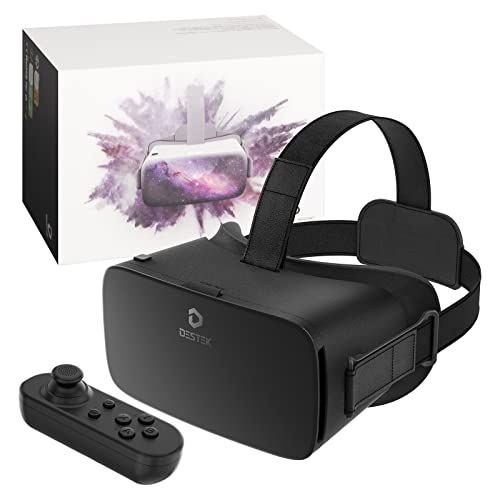
- ✓ Lightweight and comfy
- ✓ Bright, immersive visuals
- ✓ Universal VR gamepad
- ✕ iOS limitations
- ✕ Android-only full controls
| Field of View | 110° ultra-wide |
| Lenses | 92% light-transmission lenses with blue-light filtering |
| Compatibility | Fits smartphones 5.5″ to 7.2″ (iPhone, Samsung and other Android/iOS devices) |
| Included Accessories | VR headset, gamepad/controller, apps bundle, touch buttons, QR code for app download |
| Display/Visual Comfort | Feather-light weight with eco-friendly fabric padding for comfort |
| Platform Support & Interaction | Android immersive navigation/motion control/virtual interaction; iOS limited to music playback and YouTube controls |
The moment I unboxed the DESTEK V5, the first thing that grabbed me was how lightweight it felt in my hands. I slid my phone in, and the 110° field of view already promised something bigger than a sleepy couch movie night.
The little touch buttons on the side are tactile enough to use with a light press, which saved me from fumbling in dim lighting.
In practice, the private cinema vibe is real. With Android, you get real interactive VR controls, so navigating menus or grabbing a virtual prop feels natural.
The 92% light-transmission lenses keep the image bright without washing out colors, which is exactly what I want when I’m chasing movie hours or exploring apps.
Comfort matters, and this headset delivers a softer touch than I expected. The eco-friendly fabric and padding sit gently on the cheeks, even after a long stretch of “one more movie.” It stays balanced well enough that I didn’t feel that dreaded nose squeeze, even after a few rounds of quick scenes.
The built-in VR gamepad is a real win for quick navigation and fun interactions. It acts like a universal remote, which cuts down the fiddling with a phone screen.
The included apps catalog is a nice touch, especially since you can scan a QR code and drop into a curated library without hunting through the store.
If you’re a parent or a casual gamer, the blue-light protection is a thoughtful addition, but be mindful of iOS limits on certain apps. You’ll still get a ton of value from the Android side, especially for immersive videos and games.
Overall, it’s a no-brainer starter kit for a family-friendly VR setup. You’ll get a big-screen feel, simple controls, and a surprisingly comfy fit for real-world use.
Meta Quest 3S 128GB VR Headset – Gorilla Tag Bundle

- ✓ Crisp passthrough
- ✓ Smooth performance
- ✓ Fun exclusive bundle
- ✕ Battery not all-day
- ✕ Comfort trade-off for long sessions
| Display / Visual Tech | Dual RGB color cameras for Passthrough and mixed reality |
| Processor / SoC | Snapdragon XR2 Gen 2 |
| Memory | 8 GB RAM |
| Storage | 128 GB internal storage |
| Battery Life / Runtime | 2+ hours typical usage per charge |
| Connectivity / Wireless | Untethered (no wires) VR headset with wireless operation |
The first moment I unboxed the Meta Quest 3S Gorilla Tag Bundle, I felt the light heft sit in my palm and the matte shell grip cool to the touch. The headset looks sleek, with a compact silhouette that hides the power inside it.
It’s immediately clear you’re getting an untethered, ready-to-play VR system.
Slipping it on, the passthrough camera quality surprised me. Two bright RGB sensors map the room pretty crisply, and you can tell the headset is tuned for smoother spatial awareness.
The display feels sharp, and the color punch is noticeable right out of the box.
Performance is where this shines. The Snapdragon XR2 Gen 2 setup gives snappy loads and steadier frame rates, especially when you’re hopping between Gorilla Tag runs and quick mini-games.
The 8GB RAM helps keep multitasking snappy, so switching apps isn’t a chore. Battery life runs toward the 2+ hour mark in typical play, which means fewer charging breaks during a session.
The Gorilla Tag bundle adds fun, harmless lore to the mix. The exclusive suit and helmet look cool in-game and in photos, and the 2,000 shiny rocks feel like a nice little starter boost.
The 100+ game access trial is a nice plus, giving you a sense of the catalog before you commit to anything longer.
Comfort is solid for shorter stints, with balanced weight distribution and soft facial padding. It’s easy to adjust the fit, even with the extra strap that comes with the bundle.
In real-world use, you’ll appreciate how light it feels when you’re navigating a virtual world and dodging around your living room.
All told, the Quest 3S handles daily VR with little fuss, and the Gorilla Tag tie-ins add a playful, engaging hook for fans.
MagiMask VR Headset for Phone with Unibody Lens

- ✓ Crisp image quality
- ✓ Comfortable fit
- ✓ Easy setup
- ✕ Limited phone size range
| Phone Compatibility | Up to 6.7 inches |
| Lens Technology | Patented unibody lens delivering 4x sharper resolution than comparable devices |
| Display Experience | Private cinema-style viewing with pitch-black theater mode |
| Padding and Comfort | Breathable padding with adjustable screen distance for reduced eye strain |
| Usage Method | Slide in smartphone, wear headset, press play — no apps required |
| Price | $139.00 |
The moment I slid my phone into the MagiMask and pressed play, I was greeted with a surprisingly crisp, cinema-like image that felt like it could spill into the room. That unibody lens design really does cut glare and make the screen pop without needing a separate big TV nearby.
You’ll notice the fit is gentle yet secure, with breathable padding that doesn’t trap heat after extended viewing. The adjustable screen distance is handy, so I could dial in comfort for long binge sessions without squinting or headache-pressure.
Watching a movie in a cozy bed setup, I appreciated the pitch-black theater effect. No distracting reflections or ambient light sneaking in, which means you don’t have to beg the room to stay ultra-dark for every scene.
Setting up is as simple as it gets: slide in a phone up to 6.7 inches, snap the mask on, and press play. No extra apps, no fiddling with settings, just a straightforward escape from reality for a short while.
Where it shines is the sense of immersion. The 4x sharper image claim feels believable when you’re scrolling through menus or watching action scenes.
It’s not a 4K miracle, but the clarity is clean enough to keep you engaged without pulling you out for tech-wrangling.
On the comfort front, the head strap stays surprisingly stable, and the lightweight build turns fatigue into something you forget about after a few minutes. If you’re in a plane or on a commute, that little comfort edge matters and actually makes a difference.
Real-world use feels tailored for casual viewing and quick escapes. It’s ideal for travelers who want a private theater without lugging gear, or for late-night TV marathons when you don’t want to disturb a roommate.
All in all, MagiMask delivers a convincing private cinema vibe with a genuinely easy setup and comfortable wear. It won’t replace a home theater, but it sure makes phone-based VR feel purposeful and enjoyable for everyday use.
VR Headset Controller Virtual Reality Headset 3D VR Headset

- ✓ 120° immersive view
- ✓ Comfortable fit
- ✓ Wireless controller included
- ✕ Limited advanced controls
- ✕ Phone compatibility quirks
| Field of View (FOV) | 120° |
| Lens Technology | Anti-blue light HD lenses with adjustable focal distance and pupil distance |
| Phone Compatibility Range | 5.0 to 7.0 inches (non-curved smartphones); remove phone case recommended |
| Wireless Controller | Included; supports navigation, music/video control; compatibility varies by OS/app |
| Comfort Features | Adjustable head strap, soft facial padding |
| Setup Requirements | Requires installation of compatible VR app or split-screen 360° video; multilingual user manuals in six languages |
You’ve probably heard that a budget VR headset is just a toy, not a portal. But this PUSABIYOU setup surprised me the moment I clipped my phone in and the lenses clicked into focus at a crisp 120° field of view.
The first thing I noticed was how light it feels on your face, with the soft facial padding making a big difference after an hour-long session. The adjustable head strap stays put, and the fit doesn’t pressure your temples the way cheaper models do.
Setup is truly plug-and-play: drop in a compatible app or a split-screen 360 video, and you’re immediately in a different world. The lenses take a quick twist to dial in your eyes, and the image snaps into clarity without needing a magnifying glass to read the tiny UI elements.
The included wireless controller is a nice bonus, letting you pause in games or skip scenes without fumbling for the phone. It’s responsive enough for basic navigation, though I’ll note some apps limit controls depending on the OS.
Comfort-wise, the adjustable pupil distance and focal distance really help with eye strain, especially when you’re hopping between immersive games and panoramic videos. Anti-blue light coating is a plus for longer sessions, though you’ll still want to take breaks like with any headset.
Build quality feels sturdy for the price, and the headset supports a wide range of 5.0 to 7.0-inch screens, which covers most mid-range devices. If your phone has a bulky case or doesn’t support gyroscope, you’ll want to remove the case and double-check measurements before purchasing.
In real-world use, it bridges the gap between casual viewing and lighter VR gaming without firing up a PC or console. It won’t replace high-end VR, but for travel, commutes, or quick demos, it handles the basics with warmth and practicality.
Bottom line: it’s a comfy, budget-friendly gateway into VR that doesn’t skimp on the essentials, as long as you keep expectations within its wheelhouse.
What Defines the Quality of a VR Headset Screen?
The quality of a VR headset screen is defined by several key factors that influence visual experience and immersion.
- Resolution: Higher resolution in a VR headset means more pixels are packed into the display, resulting in sharper images and reduced pixelation. Common resolutions include 1080p, 1440p, and 4K, with higher resolutions providing a clearer and more detailed view, enhancing the overall experience.
- Refresh Rate: The refresh rate indicates how many times the image on the screen is updated per second, with higher rates leading to smoother motion and less motion blur. A refresh rate of at least 90 Hz is recommended for a comfortable experience, while rates of 120 Hz or higher can significantly enhance realism during fast-paced action.
- Field of View (FOV): The field of view is the extent of the observable world that can be seen at any given moment, measured in degrees. A wider FOV creates a more immersive experience by allowing users to see more of the virtual environment, often ranging from 90 to 110 degrees in consumer headsets.
- Panel Type: The type of display panel, such as LCD or OLED, affects color reproduction, contrast, and response times. OLED panels typically offer deeper blacks and richer colors than LCDs, leading to a more vibrant visual experience, while LCDs can provide better brightness and are often less expensive.
- Subpixel Arrangement: The arrangement of subpixels (RGB layouts) impacts clarity and the “screen door effect,” where the grid of lines between pixels becomes visible. Technologies like PenTile or RGB stripe arrangements can either enhance or detract from the perceived sharpness and overall quality of the image.
- Anti-Screen Door Effect Technology: Innovations like the use of diffusion filters or improved pixel layouts help to minimize the screen door effect, creating a more seamless visual experience. This technology aims to reduce the visibility of the gaps between pixels, which can be distracting and diminish immersion.
- Brightness: Adequate brightness levels are crucial for visibility in various lighting conditions, impacting the user’s ability to see details clearly in the virtual environment. Higher brightness levels can enhance realism and make colors pop, but excessively bright displays can also lead to discomfort over extended use.
- Color Accuracy: The ability of a VR headset screen to reproduce colors accurately affects the realism of the virtual environment. A headset with high color accuracy will display vibrant and true-to-life colors, enhancing immersion and user engagement in virtual experiences.
How Does Resolution Impact the Performance of a VR Headset Screen?
- Clarity of Image: Higher resolution screens provide clearer and sharper images, reducing the pixelation effect that can occur in lower resolution displays.
- Field of View (FOV): The resolution can affect the perceived field of view, as a higher resolution allows for more detail to be displayed across a wider area, enhancing immersion.
- Frame Rate Compatibility: The resolution can impact the headset’s ability to maintain a high frame rate, which is crucial for smooth motion and reducing motion sickness.
- Rendering Performance: Higher resolution screens require more powerful graphics processing, impacting the overall performance and the hardware needed to drive the VR experience.
- Realism and Immersion: The effectiveness of VR in creating a realistic experience is largely determined by the resolution, as finer details contribute to a deeper sense of presence in virtual environments.
The effectiveness of VR in creating a realistic experience is largely determined by the resolution, as finer details contribute to a deeper sense of presence in virtual environments. A high resolution allows for more realistic textures and finer details, making the virtual world more engaging and believable.
Why Is Refresh Rate Critical for VR Immersion?
Furthermore, the relationship between refresh rate and frame rate is crucial. A high refresh rate allows for a higher frame rate, which means more images are displayed per second. This continuity creates a smoother visual experience, making it easier for users to engage with and navigate through the virtual environment. Studies have shown that experiences rendered at lower frame rates (below 60 frames per second) can lead to a disconnection in the user’s perception of reality, contributing to feelings of nausea and dizziness, diminishing the immersive quality of the VR experience (Kwon et al., 2020).
How Do Color Accuracy and Contrast Affect the VR Experience?
Color accuracy and contrast play crucial roles in shaping an immersive VR experience. When the colors displayed in a virtual environment closely match real-world hues, users can easily recognize objects, enhancing the overall realism. A VR headset with excellent color fidelity enables experiences ranging from vibrant landscapes in gaming to realistic simulations in educational applications.
Contrast, on the other hand, affects the depth perception and visual clarity of the virtual world. High contrast ratios make bright colors pop against darker backgrounds and improve the visibility of details in shadowy areas. This is particularly important in horror games or intricate puzzle-solving scenarios where subtleties can significantly impact gameplay.
Key factors to consider include:
- Color Gamut: Headsets supporting a wider color gamut yield more varied and accurate colors.
- Contrast Ratio: A higher contrast ratio ensures more vivid visuals, helping users distinguish between different elements in complex scenes.
- Brightness Levels: Adequate brightness is necessary for vibrant display without overexposure or loss of detail in darker scenes.
Ultimately, a headset’s screen quality, encompassing color accuracy and contrast, is essential for an engaging and visually appealing VR experience.
What Are the Top Features to Look for in the Best VR Headset Screens?
The top features to consider when evaluating the best VR headset screens include resolution, refresh rate, field of view, and panel type.
- Resolution: A higher resolution provides clearer and more detailed images, reducing the “screen door” effect that can occur with lower resolutions. Look for headsets with at least 1080p per eye, as this enhances immersion and visual quality.
- Refresh Rate: A higher refresh rate results in smoother motion and reduces motion blur during quick movements, which is crucial for an immersive experience. Aim for a minimum of 90 Hz, as this can significantly improve comfort and reduce the likelihood of motion sickness.
- Field of View (FOV): A wider field of view allows for a more encompassing and realistic experience, as it mimics human peripheral vision. Typically, a FOV of 100 degrees or more is desirable for a more immersive VR experience.
- Panel Type: The type of panel used in the headset, such as LCD or OLED, affects color accuracy, contrast, and overall image quality. OLED panels are known for their deeper blacks and vibrant colors, while LCDs may offer better brightness and lower costs.
Which VR Headset Screens Provide the Most Immersive Experiences Available?
The best VR headset screens that provide the most immersive experiences include:
- OLED Screens: These screens are known for their vibrant colors and deep black levels, which enhance the visual experience in VR.
- LCD Screens: While typically offering less contrast than OLED, high-quality LCDs can provide sharp images and are often used in headsets prioritizing refresh rates.
- Mini LED Screens: This technology combines the benefits of both OLED and LCD, offering improved brightness and contrast ratios, making them ideal for immersive experiences.
- Retina Displays: These displays boast high pixel density, reducing the screen-door effect and providing a clearer, more realistic view in VR environments.
- Micro OLED Screens: Emerging as a cutting-edge technology, these screens offer incredible resolution and contrast, making them suitable for high-end VR applications.
OLED screens deliver exceptional color accuracy and contrast, making them a popular choice for immersive VR experiences. Their ability to produce true blacks enhances the depth of the visuals, which is crucial for users looking to feel fully engaged in virtual environments.
LCD screens, while they may lack the deep blacks of OLEDs, can still provide excellent clarity and fast refresh rates, making them suitable for action-packed VR games where responsiveness is critical. High-quality LCDs can minimize motion blur, allowing for a smooth visual experience.
Mini LED screens represent a significant advancement in display technology, combining the brightness of LCDs with the contrast of OLEDs. They achieve this by using thousands of tiny LED backlights to enhance local dimming and provide a more dynamic range of colors and brightness levels.
Retina displays are characterized by their high pixel density, which significantly reduces the visibility of the screen-door effect often found in VR headsets. This technology ensures that users experience a more immersive and lifelike visual environment, crucial for VR applications that require close detail.
Micro OLED screens are at the forefront of display technology, offering unparalleled resolution and color contrast that can significantly enhance the VR experience. Their compact size and efficiency make them ideal for next-generation headsets, allowing for lighter designs without compromising on visual quality.
What Future Innovations Can We Anticipate in VR Headset Screen Technology?
Future innovations in VR headset screen technology are poised to enhance user experience significantly.
- Higher Resolution Displays: The trend towards higher pixel density will continue, with resolutions potentially reaching 8K and beyond. This will reduce the screen-door effect, providing more lifelike images and finer details, which are crucial for immersive experiences.
- MicroLED Technology: MicroLED screens are emerging as a promising alternative to OLED, offering better brightness and contrast ratios without the risk of burn-in. This technology allows for thinner panels and improved power efficiency, which will be vital for mobile VR applications.
- Adaptive Refresh Rates: Future VR headsets may incorporate adaptive refresh rates that adjust in real-time based on the content being viewed. This will enhance motion smoothness and reduce latency, making fast-paced gaming and dynamic environments much more enjoyable.
- Wide Color Gamuts: Innovations in color reproduction will lead to VR headsets that can display a wider range of colors, providing a more vibrant and realistic visual experience. This will be particularly important in applications such as virtual art galleries or educational simulations, where color accuracy is paramount.
- Increased Field of View: Future designs may offer an expanded field of view, potentially exceeding 210 degrees. A wider field of view can create a more immersive experience by allowing users to see more of the virtual environment without turning their heads.
- Eye Tracking Technology: Advanced eye tracking could optimize rendering by focusing graphical resources on where the user is looking, enhancing performance and detail. This technology can also enable interactive elements that respond to eye movements, increasing engagement in virtual environments.
- Holographic Displays: Holographic technology could revolutionize VR by allowing users to see 3D images without the need for traditional screens. This could lead to more natural interactions with virtual objects and environments, creating a truly immersive experience.