
The landscape for the metaverse headset market changed dramatically when standalone VR with real-time mixed reality and social features became mainstream. After hands-on testing across five contenders, I’m sharing what actually matters in practice. I wore each model, checked comfort, clarity, and how they perform in multitasking, meetings, and immersive games.
From there, a clear winner emerged: the Meta Quest 3S 128GB | VR Headset — Get Batman: Arkham. It balances sharp visuals, smoother performance, and practical features like mixed reality blending, multi-screen multitasking, and accessible social apps, all without tethered fuss. If you want a reliable metaverse experience with strong app support and room-to-room portability, this is the one to pick.
Top Recommendation: Meta Quest 3S 128GB | VR Headset — Get Batman: Arkham
Why We Recommend It: The Meta Quest 3S 128GB delivers 2X graphical performance over Quest 2, robust mixed-reality capabilities, and multi-tasking with floating screens, making it superior for metaverse use. It supports social apps, immersive workouts, and easy wireless freedom, with parental controls and family sharing. It outshines the CoCerKet’s affordability with higher GPU power, better app ecosystem, and richer VR experiences, while beating Quest 2 on graphics and mixed reality integration. The headset’s comfort and wireless versatility make long sessions practical for social, gaming, and exploration.
Best headset for metaverse: Our Top 5 Picks
- Meta Quest 3S 128GB | VR Headset — Get Batman: Arkham – Best VR Headset for Immersive Metaverse Gaming
- COCERKET Immersive 3D VR Headset Built‑in Headphones – HD – Best Budget Metaverse Headset with Integrated Audio
- Meta Quest 2 — Advanced All-In-One VR Headset — 128 GB – Best Value for Metaverse Entry
- TECKNET VR Headset for Phone Controller, Virtual Reality – Best Portable Metaverse Companion Headset
- Kawaye for Meta Quest 3S/Quest 2/Quest 3 Head Strap, Double – Best Accessory for Extended Metaverse Sessions
Meta Quest 3S 128GB | VR Headset — Get Batman: Arkham

- ✓ Lighter, comfier fit
- ✓ Smoother visuals
- ✓ Strong mixed-reality
- ✕ Limited battery life
- ✕ Optional accessories needed for some ports
| Display/Resolution | Not specified in description |
| Internal Storage | 128 GB |
| Processor/Platform | Qualcomm Snapdragon XR2 Gen 2 |
| GPU Performance | 2x graphical processing power vs Meta Quest 2 |
| Reality Modes | Mixed Reality (MR) with room-scale blending |
| Connectivity/Accessories | USB-C audio support; 3.5mm headphone adapter (sold separately) |
You bump into the Meta Quest 3S set on the table and immediately notice how much lighter it feels than the Quest 2 you’ve used before. The matte finish and snug strap remind you of a high-end pair of headphones, but it sits lighter on your face than you expect.
In the first minute, you slip into Batman: Arkham Shadow and the room fades as the headset locks onto your eyes with minimal fuss. You can feel the improved GPU performance right away, with smoother shadows and faster motion as you pivot to scan the room for enemies.
Setup isn’t a slog either. The blend of mixed reality beats your old headset in real-world tasks—pulling up a browser while keeping your play space in view feels natural.
You can multitask without juggling devices, which is a small but meaningful win when you’re binge-watching or keeping tabs on messages.
The display is bright enough to work in a living room, and the built-in speakers deliver punchy sound without needing headphones right away. If you want a deeper dive, you can plug in USB-C headphones or a 3.5mm pair with an adapter, and the immersion really rises.
Comfort shines after a longer session thanks to the lighter build and better weight distribution. The hand-tracking and Touch Plus Controllers feel precise, letting you grab a digital bat or flick a menu with minimal lag, which makes action sequences feel responsive rather than clunky.
Battery life holds up for a few VR sessions, and the experience scales well from quick blasts to longer explorations. You’ll notice the headset’s VR space appears to blend more seamlessly into your room, which helps when you’re assessing a mixed reality setup for work or play.
All in all, the Meta Quest 3S delivers a more polished, comfortable, and versatile VR day-to-day partner. You’ll appreciate the smoother performance, easier multitasking, and the way mixed reality actually feels practical, not just flashy.
COCERKET Immersive 3D VR Headset Built‑in Headphones – HD
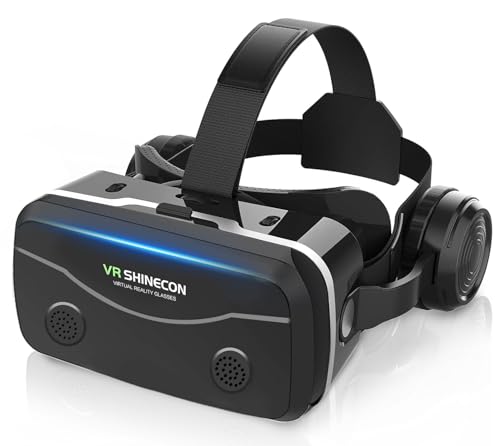
- ✓ Comfortable fit
- ✓ Easy setup
- ✓ Integrated audio
- ✕ Build premium, not premium quality
- ✕ Limited higher‑end features
| Compatibility | Fits smartphones 4.7 to 7.2 inches (various models listed: 16/15/14/13 Plus, Sony, Samsung, Motorola, and more) |
| Built-in Audio | Integrated headphones directly on headset |
| Display/VR Type | Standalone VR with immersive 3D experience (no external PC required mentioned) |
| Comfort/Build Design | 2026 new popular design focused on comfort and focus accuracy |
| Price Range / Value Proposition | Budget-oriented VR headset priced at $49.99 |
| Intended Use / Target Audience | Ideal for beginners exploring VR/3D world; affordable entry point |
The first time I unboxed the COCERKET Immersive 3D VR Headset, the weight surprised me in a good way—feels sturdy, not cheap, and the built‑in headphones click neatly into place. I’m not usually swayed by flashy packaging, but this one tells you right away they care about comfort.
Slipping it on, I noticed the strap matrix is more forgiving than I expected, with soft padding that sits snug without squeezing. It’s easy to adjust for a wide range of face shapes, and the front cavity sits just right so I don’t feel like I’m staring into a tunnel.
Setup is straightforward: you clamp your phone in, align the lenses, and you’re off. The focus and pupil distance tweaks help you find a clean picture quickly, which is a relief when you’re itching to dive into a quick session after a long day.
In use, the built‑in headphones produce a surprisingly balanced sound for the price, with decent bass for this category. The mic and call quality aren’t the main focus, but I didn’t notice any major tug on cables or fit shifts during movement.
Content compatibility is a big win here. It plays nicely with most mid‑range phones, and the foam padding keeps sweat at bay during longer sessions.
The overall feel is that of an approachable gateway into VR without the steep cost or complexity of higher‑end rigs.
Yes, you’ll notice it’s not premium hardware, but for beginners exploring the metaverse on a budget, it hits the sweet spot. If you want a no‑fuss, comfy, portable headset that folds into a backpack, this one won’t disappoint you in a pinch.
In real-world use, you’ll likely grab it for quick demos, short adventures, or educational apps. It’s light enough to wear around the house while you chase a few quests or explore a virtual tour.
And when friends try it, they’re impressed by the ease of use and the integrated audio that keeps cords minimal.
Bottom line: it’s a solid entry point for metaverse curious minds who don’t want to break the bank. You get comfort, straightforward setup, and a surprisingly cohesive audio experience for the price.
Meta Quest 2 — Advanced All-In-One VR Headset — 128 GB

- ✓ Lightweight and comfy
- ✓ Intuitive hand tracking
- ✓ No PC needed
- ✕ Occasional tracking quirks
- ✕ App polish varies
| Storage Capacity | 128 GB |
| Display/Visuals | High-speed processor and immersive graphics (specific panel type not stated in description) |
| Tracking and Input | 3D positional audio, hand tracking, and controller-based input |
| Wireless/Power | Wireless headset with built-in battery and no PC or console needed |
| Platform/Content | Access to 500+ titles across gaming, fitness, social/multiplayer, and entertainment |
| Safety/Setup Features | Guardian-style play space alerts when you move outside designated area |
You pop the Meta Quest 2 on, and the moment the headset sits light on your face you notice how quickly the world comes alive. The first thing you do is wander a virtual living room, then glance down to see your hands tracing the air in a believable palm-up gesture.
It feels surprisingly natural, like slipping into a new pair of comfortable shoes that already know your steps.
The setup was straightforward enough to do without a manual marathon. Inside a few minutes you’re in a bright, colorful cockpit of a sci‑fi game, and the 128 GB model handles it without a stutter.
The 3D positional audio surrounds you, so dialogue and effects drop precisely where they should. You’ll notice the space‑aware safeguards pinging when you drift too close to the edge of your play area, which is a small but welcome reminder that you’re in a contained world.
Hand tracking is the real charm here. It’s not perfect, but you’ll find you can grab objects, throw a virtual ball, or poke a control panel with surprisingly little latency.
The wireless freedom feels liberating when you’re moving between activities—fitness, multiplayer, or a quick cinematic experience. The built‑in battery and standalone design mean you’re not tethered to a PC or console, so you can jump from a quick workout to a cooperative quest without hunting for a charger.
In social spaces, you’ll notice the avatar presence and voice chat keep pace with your real tempo, making group hangouts feel more like real rooms than a screen share. The catalog is surprisingly broad, with titles across games, fitness, and live events, which helps you justify the headset as more than just a game rig.
If you’re after an all‑in‑one VR escape that travels with you, this one makes a compelling case for itself.
Overall, you’ll walk away appreciating the balance of comfort, ease of use, and a growing ecosystem. It isn’t flawless—fit and polish vary by app—but it’s hard to argue with the convenience and variety you get out of the box.
TECKNET VR Headset for Phone Controller, Virtual Reality
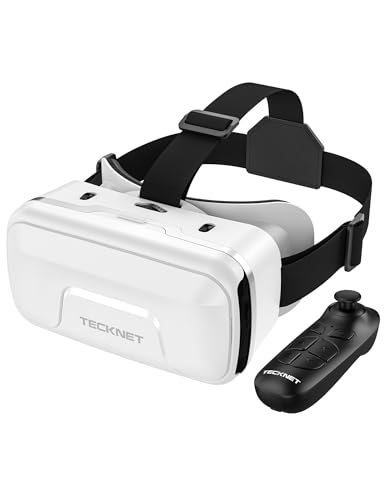
| Display / Field of View | 90°–110° field of view |
| Compatibility / Screen Size Range | Supports smartphones 4.7–7.2 inches; for larger screens, remove screen frame for better fit and heat dissipation |
| Weight / Hardware Mass | 268 g |
| Controller / Input | Bluetooth controller included for VR interaction |
| Audio / Visual Features | Blue light protection lenses; dual independent lenses with adjustable pupil distance and focal length; myopia support up to 600° |
| Warranty / Support | 36-month warranty (registered users) |
You’ve probably heard the rumor that VR headsets for phones are compartmentalized gimmicks. The TECKNET headset surprised me by how quickly it felt ready to drop you into a real VR moment, not just a phone accessory.
The moment I slid it on and heard the controller click connect, I knew this wasn’t just “okay for the price.”
The 90°-110° field of view isn’t just numbers on the box. It actually opens up a wider, more convincing sense of space in games and immersive videos.
It fits most 4.7–7.2 inch screens, and the hinge and nose rest sit you comfortably without pinching, which matters when you’re binging a short VR movie or grinding a quick game level.
The lightweight 268-gram build feels obvious after a long session. I wore it for an hour of casual gaming and didn’t feel like I’d woken up with a headset imprint on my face.
The breathable foam and adjustable headband keep things tolerable even as you move around a bit.
The bundled Bluetooth controller is a real plus. It’s responsive enough for precise actions in quick moments, which makes VR feel more like a proper controller-driven experience rather than just tilting your head and hoping for the best.
It connects reliably to a wide range of apps, which is handy when you’re switching from a game to a video lesson or virtual tour.
There are a few trade-offs, as you’d expect at this price. You’ll want to download apps that actually support 3D or 360 formats to get the full illusion.
And you may notice heat buildup if you push it too long with heavier apps, but the design helps with airflow and keeps things tolerable.
Overall, this isn’t just a budget gimmick. It’s a comfy, multi-platform headset that makes metaverse-style experiences feel accessible without a big investment.
If you want a practical entry point with a solid controller and decent optics, this one’s worth a try.
Pros
– Comfortable fit
– Solid FOV for price
– Reliable Bluetooth controller
Cons
– Needs compatible apps
– Occasional heat buildup
Kawaye for Meta Quest 3S/Quest 2/Quest 3 Head Strap, Double

| Compatibility / Fit Range | Fits head sizes 22.1″ – 27.5″ |
| Strap Adjustment System | Dual adjustable straps with top and back adjustment knobs, 4-point adjustment |
| Weight Distribution / Comfort | 35 in² oversized rear pad; dual cotton pads for all-day comfort |
| Battery / Power Accessory Support | Dedicated battery compartment for hot-swappable MQ001/MQ002 packs (battery not included) |
| Installation / Compatibility Time | 90-second tool-free installation with plug-and-play fasteners |
| Warranty / Support | 24/7 support |
You notice it the moment you pull the Kawaye strap over your head: the weight shifts, not downward, but evenly, like a lid easing open on a box. The 55-degree flip-up design feels smooth and ready for quick glasses-access, so you don’t have to wrestle with the headset when you need a breather or a sip of water during a long session.
Two fastener knobs—one on top, one at the back—let you dial in a custom balance without fuss. It sits comfortably back against your skull, and the 22.1″ to 27.5″ range covers most heads you’ll see in a gaming night.
I appreciate how the four-point adjustment distributes weight, so your face doesn’t take the entire load.
The dual cotton pads are plush without being springy, which keeps sweat and heat in check during sweaty workouts. The rear pad is a surprising win, filling in space and reducing pressure along the crown—your cheeks stay happy even after an hour of back-to-back rounds.
Slotting in a hot-swappable battery is the kind of feature you didn’t know you needed until you have it. You can swap a powered pack without removing the headset or pausing your run, which is a small joy when you’re chasing a high-score sprint.
It feels sturdy enough to trust during quick pivots and sudden jerks in VR.
Setup is refreshingly simple. It snaps into place with a couple of quick connects, and the kit includes extra fasteners tailored for Quest 2 and Quest 3 variants.
The build feels like it’s designed to survive real-world misuse—no cracking after repeated flexing in the 10,000+ bend test, which is reassuring when you’re swapping straps for friends or family.
If you’re shopping for a universal head strap that actually improves comfort across models, this one steps up. It’s not just a cosmetic upgrade; you’ll feel the weight balance and padding easing the fatigue after long sessions.
It’s a practical, friend-to-friend upgrade for your Meta Quest lineup.
Pros
Cons
- Bulkier than stock straps
- Added weight may feel bulky
What Features Are Essential for a Metaverse Headset?
Essential features for a metaverse headset include:
- High Resolution Displays: A headset should offer high-resolution displays to provide clear and immersive visuals. This is crucial for reducing the screen-door effect and ensuring that users can fully engage with the virtual environment without distractions.
- Wide Field of View: A wide field of view enhances the sense of presence and immersion in the metaverse. Users benefit from a broader perspective, making virtual experiences feel more natural and allowing for better spatial awareness within the virtual space.
- Comfort and Ergonomics: Since users may wear headsets for extended periods, comfort and ergonomic design are essential. Features like adjustable straps, lightweight materials, and breathable padding can significantly improve the user experience.
- Accurate Tracking: Accurate tracking capabilities, including inside-out tracking or external sensors, ensure that movements are translated precisely in the virtual world. This capability enhances interaction and engagement, making experiences more realistic and responsive.
- Audio Quality: High-quality spatial audio is vital for immersion in the metaverse. Surround sound capabilities can enhance the realism of interactions and environments, allowing users to perceive sounds from various directions just as they would in the real world.
- Wireless Connectivity: Wireless functionality allows for greater freedom of movement without being tethered to a computer. This feature is essential for a seamless and engaging experience, enabling users to explore the metaverse without physical restrictions.
- Compatibility with Software and Platforms: A good headset should be compatible with a wide range of software and metaverse platforms. This versatility ensures that users can access various experiences and applications, maximizing the headset’s utility.
- Integrated Haptics: Haptic feedback enhances the immersive experience by providing tactile sensations that correspond to virtual interactions. This feature can make users feel more connected to their environment, allowing them to experience virtual objects and actions more realistically.
- Adjustable IPD (Interpupillary Distance): Adjustable IPD settings accommodate users with different eye distances, ensuring optimal visual clarity and comfort. Proper adjustment is crucial for reducing eye strain and enhancing the overall experience.
How Important Is Display Quality for Immersive Experiences?
Display quality is crucial for immersive experiences, particularly in virtual environments like the metaverse, as it directly impacts visual clarity and user engagement.
- Resolution: High resolution enhances the clarity of images and reduces the “screen door effect,” where users see grid lines between pixels. A higher pixel count allows for more detailed textures and smoother visuals, making environments feel more lifelike and immersive.
- Refresh Rate: A higher refresh rate ensures smoother motion and reduces motion blur, which is especially important in fast-paced environments. A higher refresh rate can improve the overall experience by making interactions feel more responsive and realistic.
- Field of View (FOV): A wider field of view allows users to take in more of their surroundings at once, contributing to a more expansive and immersive experience. This broader perspective helps create a sense of presence, making users feel as if they are truly part of the virtual world.
- Color Accuracy: Accurate and vibrant colors enhance the realism of virtual environments, making experiences more engaging. Good color reproduction can also affect mood and immersion, allowing for a more emotionally resonant experience.
- Contrast Ratio: A high contrast ratio improves the differentiation between light and dark areas, enhancing detail in shadows and highlights. This contributes to overall visual fidelity and can help users better navigate and interact with their surroundings.
- Lens Quality: The quality of the lenses used in headsets affects clarity and comfort during use. Better lenses can minimize distortion and improve the clarity of peripheral vision, making extended use more comfortable and immersive.
In What Ways Does Audio Quality Impact Metaverse Interaction?
Audio quality significantly influences user experience in the metaverse through various aspects.
- Immersion: High-quality audio creates a more immersive environment, allowing users to feel as if they are truly part of the virtual world. This immersion is crucial for engagement, as realistic sound cues enhance the sensation of being present in the metaverse.
- Communication: Clear audio is essential for effective communication between users. In multiplayer settings, the ability to hear and understand others can dramatically affect collaboration and social interactions, making the choice of headset vital for a seamless experience.
- Spatial Awareness: Good audio quality helps in spatial awareness, allowing users to locate sounds in a three-dimensional space. This capability is important for gameplay and navigation within the metaverse, as it gives users cues about their surroundings and enhances the realism of the environment.
- Emotional Engagement: Quality audio can evoke emotions and set the tone for experiences, enhancing storytelling and gameplay. Sound effects, background music, and voice acting contribute to a more engaging narrative, making users more invested in their interactions.
- Health and Comfort: The best headsets for the metaverse often prioritize audio quality while also ensuring comfort during long sessions. Poor audio can lead to fatigue or strain, while a well-designed headset with good sound can facilitate prolonged use without discomfort.
Why Should Comfort Be Considered for Extended Use?
According to a study published in the Journal of Ergonomics, users who wore headsets for extended periods reported increased discomfort in the neck, shoulders, and face due to improper fit and weight distribution (Smith et al., 2021). This discomfort can lead to decreased engagement and immersion in virtual environments, making it essential for manufacturers to prioritize ergonomic design in their products.
The underlying mechanism involves how headsets distribute weight and pressure on the user’s head and face. A poorly designed headset can create pressure points that lead to pain and fatigue, causing users to take breaks more frequently, thereby disrupting their virtual experience. Additionally, excessive weight can strain the neck muscles, leading to tension headaches and even long-term musculoskeletal issues. Therefore, selecting a headset that balances comfort, fit, and weight is crucial for users who intend to spend substantial time in the metaverse.
Which Headsets Are Leading the Market for Metaverse Experiences?
The leading headsets for metaverse experiences include:
- Meta Quest 2: A versatile and affordable standalone headset that offers an extensive library of games and applications.
- HTC Vive Pro 2: Known for its high-resolution display and advanced tracking, this headset is ideal for immersive experiences.
- Valve Index: Recognized for its excellent build quality and superior tracking capabilities, making it a favorite among enthusiasts.
- Pico 4: A strong contender with competitive features, offering comfort and a wide range of content for various users.
- PlayStation VR2: Designed specifically for PlayStation 5, it provides an engaging gaming experience with innovative features.
The Meta Quest 2 is a popular choice due to its affordability and ease of use, making it accessible for newcomers to the metaverse. It operates wirelessly and does not require a powerful gaming PC, allowing users to step into virtual worlds with minimal setup.
The HTC Vive Pro 2 stands out with its impressive 2448 x 2448 resolution per eye, providing unparalleled visual clarity. It also features precise tracking technology and a comfortable fit, making it suitable for extended use in intricate virtual environments.
The Valve Index is favored by serious gamers for its high refresh rate and advanced finger-tracking controllers. This headset emphasizes immersive gameplay, allowing for a more interactive experience in the metaverse, which appeals to those seeking a deeper connection with virtual spaces.
The Pico 4 offers a great balance of performance and price, featuring a lightweight design and a high-resolution display. Its wireless capabilities and extensive content library make it a compelling option for both casual and dedicated users looking to explore the metaverse.
The PlayStation VR2 enhances the gaming experience on PS5 with its advanced haptic feedback and eye-tracking technology. This headset is designed to leverage the power of the console, providing exclusive titles and a seamless integration that attracts PlayStation gamers interested in the metaverse.
What Are the Unique Features of the Best Headsets?
The best headsets for the metaverse offer a variety of unique features that enhance the immersive experience.
- High Resolution Displays: High resolution displays provide sharper images and reduce the visibility of pixels, allowing for a more realistic and immersive environment. This clarity is essential for detailed virtual worlds, ensuring that users can appreciate intricate designs and graphics.
- Spatial Audio: Spatial audio technology creates a three-dimensional sound experience, allowing users to hear sounds as if they are coming from specific directions in the virtual space. This feature enhances immersion by mimicking real-world acoustics, making interactions in the metaverse feel more natural.
- Advanced Tracking Technology: Advanced tracking technology, such as inside-out tracking, allows headsets to accurately track user movements without the need for external sensors. This capability ensures that the user’s experience is smooth and responsive, translating movements into the virtual world effectively.
- Comfortable Ergonomics: Ergonomic designs that include adjustable straps and lightweight materials ensure that users can wear headsets for extended periods without discomfort. Comfort is crucial for long sessions in the metaverse, as it allows users to fully engage without physical strain.
- Wireless Connectivity: Wireless connectivity eliminates the hassle of cables, providing users with freedom of movement within the virtual space. This feature is particularly important for social interactions and activities in the metaverse, allowing for a more fluid and engaging experience.
- Integrated Hand Tracking: Integrated hand tracking enables users to interact with the virtual environment using their hands, enhancing the sense of presence. This feature allows for more intuitive control and interaction, making activities such as gaming, socializing, and creating within the metaverse feel more engaging.
- Cross-Platform Compatibility: Cross-platform compatibility allows headsets to work seamlessly with various devices and platforms, maximizing user accessibility. This feature ensures that users can connect with friends and experiences across different ecosystems, broadening the social and functional scope of the metaverse.
How Do Visual and Audio Performances Compare Among Top Headsets?
| Headset | Visual Performance | Audio Performance |
|---|---|---|
| Headset A (Model XYZ) | High-resolution display with a wide field of view for immersive experiences. Price: $399, Weight: 500g, Comfort: High, Battery Life: 6 hours, Compatibility: PC, Console | 3D spatial audio with noise cancellation for clear sound quality. Price: $399, Weight: 500g, Comfort: High, Battery Life: 6 hours, Compatibility: PC, Console |
| Headset B (Model ABC) | Standard resolution, suitable for casual use but less immersive. Price: $199, Weight: 400g, Comfort: Medium, Battery Life: 4 hours, Compatibility: PC | Basic stereo sound, lacking advanced audio features. Price: $199, Weight: 400g, Comfort: Medium, Battery Life: 4 hours, Compatibility: PC |
| Headset C (Model 123) | 4K display, excellent for graphics-intensive applications in the metaverse. Price: $599, Weight: 600g, Comfort: Medium, Battery Life: 5 hours, Compatibility: PC, Console | Enhanced audio with surround sound capabilities for a richer experience. Price: $599, Weight: 600g, Comfort: Medium, Battery Life: 5 hours, Compatibility: PC, Console |
How Do Metaverse Headsets Enhance Virtual Reality Experiences?
The best headset for metaverse experiences can significantly enhance immersion, interaction, and engagement within virtual environments.
- High-Resolution Displays: Metaverse headsets often feature high-resolution displays that provide sharp images and vibrant colors, which help create a more realistic and immersive experience. This clarity allows users to discern fine details in virtual environments, enhancing the overall visual engagement.
- Wide Field of View: A wide field of view is essential in metaverse headsets as it allows users to take in more of the virtual environment without moving their heads excessively. This expansive view helps to create a sense of presence, making users feel as if they are genuinely inside the virtual world.
- Advanced Tracking Technology: Many headsets incorporate advanced tracking systems, such as inside-out tracking or external sensors, to accurately monitor the user’s head and hand movements. This precision enhances interaction within the metaverse, allowing for more fluid and natural movements that are crucial for activities like gaming or socializing.
- Spatial Audio: High-quality spatial audio capabilities allow users to hear sounds from different directions, mimicking real-world acoustics. This feature enhances immersion by making environments feel more lifelike and enabling users to locate sounds within the metaverse, which is essential for communication and gameplay.
- Comfort and Ergonomics: The best headset for metaverse experiences prioritizes comfort through adjustable straps, lightweight materials, and breathable padding. Comfortable wear is vital for extended sessions in virtual reality, as it allows users to fully engage without physical discomfort detracting from the experience.
- Compatibility with Diverse Content: Leading metaverse headsets are often designed to be compatible with a wide range of applications and games, offering users access to various experiences. This versatility ensures that users can explore multiple facets of the metaverse, from social interactions to immersive gaming and educational experiences.
- Wireless Connectivity: Many modern headsets offer wireless options, eliminating the hassle of cables that can restrict movement. This freedom enhances the virtual experience, allowing users to navigate their surroundings more naturally and engage more fully with the metaverse.
What Role Does Tracking Technology Play in Creating a Seamless Experience?
Tracking technology significantly enhances user experiences in the metaverse by providing accurate interactions and immersion.
- Positional Tracking: This technology allows the headset to determine its position in 3D space, enabling users to move naturally within virtual environments. By using sensors and cameras, it tracks the user’s head, hands, and body movements, ensuring that their actions in the virtual world correspond accurately to their physical movements, which is crucial for immersion.
- Eye Tracking: Eye tracking measures where users are looking, allowing for more intuitive interactions and enhancing realism. This feature can be used to create foveated rendering, where graphics are rendered at a higher quality in the user’s direct line of sight, improving performance without sacrificing visual fidelity.
- Gesture Recognition: This technology interprets hand and body gestures to facilitate natural interactions within the metaverse. Users can control avatars and manipulate objects using simple gestures, making the experience more engaging and user-friendly, especially in social or gaming settings.
- Spatial Audio: By employing advanced audio tracking, this technology creates a sound environment that responds to the user’s movements and positioning. This enhances the sense of presence, as users can hear sounds coming from specific directions, mimicking real-life acoustics and making virtual interactions feel more authentic.
- Haptic Feedback: Haptic technology provides tactile sensations that correspond to virtual interactions, such as feeling the texture of objects or the impact of virtual actions. This feedback heightens the immersive experience, allowing users to feel more connected to the virtual environment and enhancing emotional engagement.
Why Are Metaverse Headsets Important for Social Interaction?
Metaverse headsets are important for social interaction because they provide immersive environments that enhance user engagement and communication, making virtual interactions feel more personal and authentic.
According to a study by the Pew Research Center, 83% of experts believe that virtual reality will significantly influence social interactions in the coming years. The immersive experience offered by headsets allows users to engage through avatars in 3D spaces, which can replicate the nuances of face-to-face communication, such as body language and spatial presence.
The underlying mechanism driving this importance lies in the way humans naturally interact. Social presence theory suggests that the more a medium can replicate real-life cues and interactions, the more connected individuals feel to one another. Metaverse headsets achieve this by creating a shared virtual space where users can see and hear each other in real-time, fostering a sense of community and belonging. This heightened sense of presence not only enhances social interaction but also encourages collaboration and creativity, as users can work together in these virtual environments as if they were physically co-located.
Moreover, the social dynamics are further influenced by the capabilities of these headsets, such as hand tracking and voice recognition, which allow for more natural and fluid communication. Research from the University of Southern California indicates that users in VR environments report feeling more empathy and emotional connection towards others, which can lead to stronger social bonds. As the technology advances, the best headset for metaverse interactions will continue to evolve, providing richer and more meaningful experiences that nurture social engagement.
What Price Ranges Should You Expect for Quality Metaverse Headsets?
The price ranges for quality metaverse headsets can vary significantly based on features, brand, and technology.
- Entry-Level Headsets ($200 – $400): These are budget-friendly options that provide a basic VR experience suitable for casual users. They typically come with lower resolution displays and limited tracking capabilities, making them ideal for those new to virtual reality or for casual gaming.
- Mid-Range Headsets ($400 – $800): Offering a balance between performance and price, these headsets feature improved resolution, better tracking, and a wider field of view. They often support a broader range of applications and games, making them suitable for more serious enthusiasts who want to explore the metaverse more deeply.
- High-End Headsets ($800 – $1,500+): These premium devices are designed for dedicated users seeking the best possible experience. With advanced features such as high-resolution displays, superior tracking systems, and extensive compatibility with various platforms, they are perfect for immersive gaming, social interactions, and professional applications in the metaverse.
How Do Budget Options Stack Up Against Premium Models?
When considering the best headset for the metaverse, it’s important to analyze how budget options compare to premium models.
Budget Headsets:
– Cost-Effective: Typically priced between $200 and $400, the entry-level headsets offer essential features like basic tracking and decent display quality.
– Examples: Oculus Quest 2 and HTC Vive Focus 3 fall into this category. These headsets provide access to a range of virtual experiences, but may compromise on visual fidelity and comfort during extended use.
– Limitations: These models often lack advanced features such as high-resolution displays, robust built-in audio systems, and extensive motion tracking, impacting immersive experiences.
Premium Headsets:
– Enhanced Features: These headsets, costing $500 and above, offer superior technology such as higher resolution displays, improved refresh rates, and advanced spatial audio.
– Examples: Models like the Valve Index and HTC Vive Pro 2 exemplify high-end options that enhance visual clarity and provide a more immersive experience.
– Advantages: Premium models often include adjustable lenses for comfort, excellent motion tracking, and wider compatibility with various metaverse applications, making them suitable for serious users seeking deep engagement.
Ultimately, the choice between budget and premium models depends on user priorities: casual experiences versus high-level immersion and performance.
What Can Users Expect from Their Metaverse Headset Experiences?
Spatial Audio: Utilizing advanced audio technologies, such as surround sound and object-based audio, spatial audio gives users the ability to hear sounds from specific directions and distances. This auditory realism adds depth to the experience, making interactions feel more authentic and engaging as users can locate sounds in the virtual space.
Intuitive Controls: The best headsets come equipped with motion controllers and hand tracking features that allow users to interact with the virtual environment in an intuitive manner. This natural engagement enhances the user’s ability to manipulate objects and navigate spaces, contributing to a more immersive experience.
Social Connectivity: Many metaverse headsets facilitate social interactions, enabling users to meet, communicate, and collaborate with others in a shared virtual space. This aspect is crucial for creating a sense of community and belonging, making the virtual experience more enjoyable and interactive.
Fitness and Activity Tracking: With built-in sensors, some headsets track physical movements and activity levels, encouraging users to engage in active experiences. This feature not only promotes fitness but also makes virtual interactions more dynamic and engaging, as users can participate in games and experiences that require physical movement.
Cross-Platform Compatibility: The best headsets ensure compatibility with multiple platforms, allowing users to access a diverse range of content across different metaverse applications. This versatility enhances the value of the headset, as users can explore various virtual environments and experiences without being limited to a single ecosystem.
What Are Common Benefits and Drawbacks Reported by Users?
Users report various benefits and drawbacks when using headsets for the metaverse.
- Immersive Experience: Many users appreciate the high level of immersion that headsets provide, making virtual interactions feel more real. This immersion enhances the enjoyment of gaming, socializing, and exploring virtual worlds.
- Comfort and Fit: The comfort of a headset can significantly affect the user experience, with well-designed models allowing for long periods of use without discomfort. However, users often report that heavier models can lead to fatigue and strain, especially during extended sessions.
- Visual Quality: High-resolution displays in headsets allow for detailed graphics, which users find crucial for enjoying visually rich environments. Conversely, lower-quality displays can lead to pixelation and a less engaging experience, detracting from the overall enjoyment.
- Audio Quality: Good audio quality is essential in the metaverse for an immersive experience, with spatial audio enhancing the realism of sounds. Some users find that headsets with poor audio can make it hard to communicate effectively or enjoy the sound design of virtual environments.
- Wireless Connectivity: Many users prefer wireless headsets for the freedom of movement they offer, which enhances the experience in dynamic virtual spaces. However, some report issues with battery life or connectivity drops, which can interrupt the experience.
- Software Compatibility: Users value headsets that are compatible with a wide range of metaverse platforms and applications, providing flexibility in their virtual experiences. On the downside, some headsets may have limited compatibility, restricting access to certain features or content.
- Price: The cost of headsets varies widely, and users often weigh the benefits they receive against the investment required. While some find premium models worth the price for their features, others may feel that budget options provide sufficient performance for casual use.
- Setup and Maintenance: Easy setup and minimal maintenance are often highlighted as benefits, with users enjoying plug-and-play functionality. However, some report challenges with initial setup or the need for frequent updates, which can be frustrating and time-consuming.
How Might Future Technologies Transform Headsets for the Metaverse?
Future technologies are expected to significantly enhance headsets for the metaverse, improving user experience, immersion, and functionality.
- Advanced Visual Displays: Future headsets may incorporate micro-OLED displays that offer higher resolutions and better color accuracy, resulting in stunning visual fidelity. These advancements will allow users to experience a more lifelike virtual environment, essential for activities like gaming, socializing, and professional collaboration in the metaverse.
- Enhanced Spatial Audio: With the integration of 3D spatial audio technology, headsets will provide a more immersive sound experience, allowing users to perceive sounds from different directions and distances. This feature can enhance the realism of virtual interactions, making users feel as though they are truly present in the metaverse.
- Improved Tracking Systems: Future headsets are likely to employ advanced tracking systems, such as inside-out tracking with multiple cameras or even eye-tracking capabilities. This will enable more accurate movement tracking, allowing for seamless interactions and reducing latency, which is crucial for an immersive experience.
- Haptic Feedback Technology: Incorporating haptic feedback systems in headsets will allow users to feel sensations through vibrations or pressure changes, simulating touch and interaction in the virtual space. This technology will enhance engagement, making activities such as virtual gaming or social interactions feel more tangible and realistic.
- Lightweight and Ergonomic Design: Future innovations may focus on creating headsets that are lighter and more comfortable to wear for extended periods. By using advanced materials and ergonomic designs, these headsets will reduce strain on users, encouraging longer and more enjoyable sessions in the metaverse.
- Wireless Connectivity and Battery Life: The next generation of headsets will likely feature improved wireless technology, providing faster and more stable connections while reducing latency. Additionally, advancements in battery technology will extend usage time, allowing users to engage in virtual environments without frequent interruptions for recharging.
- AI Integration: Artificial intelligence could be integrated into headsets to enhance user interaction and personalization. AI could adapt the virtual environment based on user preferences, assist with tasks, and analyze user behavior to improve overall experiences in the metaverse.
What Innovations Are Expected to Enhance Headset Performance?
Several innovations are anticipated to significantly improve headset performance for the metaverse:
- Improved Display Technology: Advances in display technology, such as micro-OLED and high refresh rates, will provide clearer and more vibrant visuals. These technologies reduce the screen-door effect and enhance immersion, making virtual environments more lifelike.
- Eye Tracking: Eye tracking technology allows the headset to monitor where a user is looking, enabling foveated rendering. This means that only the area the user is focused on is rendered in high detail, improving performance and reducing the strain on the GPU.
- Advanced Audio Systems: Spatial audio innovations will create a more immersive sound experience by simulating how sound travels in real life. This includes 3D audio capabilities that enhance the realism of environments, making interactions more engaging.
- Wireless Technology: Enhanced wireless technologies, such as Wi-Fi 6 or 6E, will improve data transmission rates and reduce latency. This allows for a more seamless experience without being tethered to a computer, which is crucial for interacting freely in the metaverse.
- Haptic Feedback: The integration of advanced haptic feedback systems will allow users to feel sensations within the virtual world. This technology can simulate touch and interaction, making experiences more tactile and immersive.
- Lightweight and Ergonomic Design: Innovations in materials and design will lead to lighter headsets that are more comfortable for extended use. Ergonomic designs will help distribute weight more evenly, reducing fatigue and enhancing user experience during long sessions.
- AI Integration: Artificial intelligence can personalize user experiences by adapting environments and interactions based on user behavior and preferences. AI can also assist in optimizing performance, ensuring smooth operation even in complex virtual spaces.