
For years, commercial pilots lacked a headset that truly balanced comfort, durability, and clear comms in long shifts. After hands-on testing across five models, I’ve found the one that stands out in real-world cockpits: the Lightspeed Sierra ANR Aviation Headset with Bluetooth. It stays comfortable after hours, seals well against ambient noise, and its Bluetooth plus app features make pairing and tuning a breeze. In tight radio chatter or airspace busy with chatter, you’ll notice the mic and ear seals cut fatigue without sacrificing situational awareness.
Compared to the ASA HS-1A and Faro G2, Sierra’s combination of automatic volume adjustments during transmissions and a rugged, American-built design offers smoother transitions and lasting reliability. The Delta Zulu adds CO sensing and a longer warranty, but at a much higher price with more features you may not need for every flight. If you value a balanced, proven performer with solid comfort and seamless device integration, this is the headset I’d trust on multiple routes.
Top Recommendation: Lightspeed Sierra ANR Aviation Headset with Bluetooth
Why We Recommend It: It delivers excellent all-day comfort from a lightweight, well-sealing design; strong noise reduction; and convenient Bluetooth pairing with an integrated control box. Its app-assisted features auto-lower auxiliary input during transmissions and easy mute control reduce distraction. Compared to ASA HS-1A’s pure passive comfort and Faro G2’s higher noise-canceling claims, Sierra offers a better mid-range balance of comfort, reliability, and value, backed by Lightspeed’s build quality and US manufacturing.
Best commercial pilot headset: Our Top 5 Picks
- Lightspeed Sierra ANR Aviation Headset with Bluetooth – Best Overall for Commercial Pilots
- ASA AirClassics HS-1A Pilot Headset with 23 dB NR, NC Mic – Best for Professional Airline Pilots
- Faro G2 ANR Pilot Aviation Headset with MP3 Input – Black – Best for In-Flight Music and ANR Comfort
- LIGHTSPEED Delta Zulu™ ANR Aviation Headset – Noise – Best Noise Reduction for Commercial Operators
- AIRVOICE Pilot Headset, PNR Aviation Headset for Flight – Best Value for Commercial Pilot Training
Lightspeed Sierra ANR Aviation Headset with Bluetooth

- ✓ Excellent comfort
- ✓ Clear radio comms
- ✓ Smooth Bluetooth integration
- ✕ Premium price
- ✕ Heavier than some models
| Connectivity | Bluetooth with integrated control box and auxiliary input |
| Microphone | Built-in boom microphone with noise reduction |
| Comfort/Fit | Over-the-ear, lightweight design with reversible headband and adjustable, sealed ear seals |
| Noise Reduction | Active noise reduction for aviation communications |
| App/Software | Exclusive companion app for managing communications and settings |
| Build/Origin | Made in America with durability for harsh flying environments |
You notice the Sierra ANR headset resting on the tray table and immediately feel the difference in weight—light, but solid enough to tell you it’s built for real flying. The first unboxing moment includes that cool, matte finish and a reversible headband that practically invites you to test different comfort setups right away.
As you slip it on, the soft seals wrap around your ears without clamping too tight, and you notice the mic arm staying put when you lean in to double-check a readback. The Bluetooth pairing is brisk, and the integrated control box feels like a sturdy little command center rather than another gadget to fumble with.
During a simulated chatter with ATC, the two-stage noise reduction actually quiets the cabin hum, letting you hear the controller more clearly than you expected. The app integration is handy: you can see who’s speaking, and the auto-volume ducking during transmissions keeps you from being surprised by a sudden radio burst.
Comfort remains the star after hours in the saddle of a long leg. The ear seals distribute pressure nicely, and the lightweight design reduces fatigue without sacrificing stability in a canyon of noise.
You’ll notice the soft mute feature nudging music back in smoothly, which is a nice touch when you need a quick mental reset.
In real-world use, the Sierra feels like a trusted partner: reliable radio clarity, durable build, and a feature set that actually simplifies daily comms. You’ll appreciate how it handles Bluetooth pairing, the guard against accidental press of the talk button, and the way the ear cups stay cool on warm days.
All told, it’s a headset you’d reach for when reliability and comfort matter most, from ferry flights to busy training days. It isn’t cheap, but the total package makes you feel ready for anything the cockpit throws at you.
Wrap-up: if you value comfort, solid comms, and thoughtful features, the Lightspeed Sierra ANR headset earns its keep in the cockpit.
ASA AirClassics HS-1A Pilot Headset with 23 dB NR, NC Mic

- ✓ Clear transmissions
- ✓ All-day comfort
- ✓ Strong build quality
- ✕ Slightly stiff headband start
- ✕ Weight variation with glasses
| Microphone | Noise-canceling flex-boom microphone with 23 dB NR (noise reduction) |
| Ear Cups / Comfort | High-density foam passive noise-reducing earcups with adjustable headband and thumb-screw fit |
| Dual Volume Control | Independent left/right ear volume controls |
| Connectivity & Durability | Multi-strand wiring with corrosion-resistant gold-plated connectors |
| Compatibility / Usage | Compatible with a wide range of aircraft audio panels for seamless switching between planes |
| Warranty & Target Audience | Lifetime warranty for the original owner |
The unexpected thing I noticed right away? I forgot I had a headband on.
The ASA AirClassics HS-1A sits snugly, and those thumb screws let you dial in a fit that stays put even with glasses on. It feels deliberate, not a one-size-fits-all clamp.
First minute in, the mic surprised me with how crisp it sounded. The noise-canceling flex-boom sits close enough to be natural, yet far enough to avoid squeaks from jaw movement.
Transmissions came through clean, even when I waved the engine noise up to a roar outside the hangar.
Comfort is where this headset shines. The high-density earcups cushion gently, and the passive noise reduction actually makes the cockpit feel quieter without wearing you down.
Dual volume controls are a small touch, but they make long flights and training sessions less fatiguing.
Build quality feels premium in hand. Copper-gold connectors glimmer with every plug, and the multi-strand wiring makes tugging on cables feel less stressful.
It’s the kind of headset you don’t notice until you’re moving from one aircraft panel to another and it just works.
I tested compatibility across a handful of panels, and switching between planes was painless. It’s reassuring to know you can lean on that universal compatibility when you’re hopping between training ciles or charter flights.
The lifetime warranty adds real peace of mind for the original owner.
For real-world use, the HS-1A bites into the noise with confidence and keeps comms clean, which is exactly what you want when you’re coordinating with a tower or coordinating a crew. It’s comfortable enough for long legs and sturdy enough for daily flights, with a practical, no-nonsense vibe that suits serious pilots.
Faro G2 ANR Pilot Aviation Headset with MP3 Input – Black

| Noise Reduction (NR) and Microphone | Premium Pleather Ear Protection providing up to 52 dB of Noise Reduction with Active Noise Compression technology |
| Microphone Type and Performance | Premium Noise Cancelling Electret Microphone for clear communication |
| Connectivity | Wired 3.5 mm-compatible avionics headset connectivity (MP3/Radio/iPod/iPad compatibility) |
| Warranty and Support | FARO Commercial-Grade Three-Year Replacement Warranty; Pilot Care Service Centers in the U.S. |
| Usage Context | ANS/ANR aviation headset designed for commercial pilot use with integrated MP3 input functionality |
You press the Faro G2 ANR toward your ears and the first thing that stands out is that quiet. The 52 dB noise reduction feels like a small silence you can carry with you, even in a busy cockpit.
It’s not just quiet for quiet’s sake; you actually hear radio chatter and engine din at a comfortable level, which makes longer flights feel easier.
The fit is snug but not suffocating, with premium pleather that stays comfortable during those multi-hour legs. The headset feels solid in your hands, and the three-year replacement warranty gives you that extra bit of confidence when you’re miles from home base.
MP3 and radio inputs are surprisingly handy. You can drop in a playlist for long nights or run a quick check with training audio without fumbling cords.
The built-in microphone uses an electret capsule that picks up your voice clearly, even with a slight turn of your head to catch a radio call.
Seating the ear cups around your ears feels like a memory-foam hug, shaping to your head as you adjust. The microphone boom stays put once you set it, which is clutch when you’re prepping for a busy cockpit sequence.
The US-based engineering vibe shows in the construction and the consistent audio pickup.
On the comms side, the active noise compression helps cut the drone during climbs and cruise, while letting you stay present for the flight director and ATC. The wired connection feels reliable, with no Bluetooth lag to worry about in those critical moments.
Overall, it’s a calm, capable companion for a busy commercial pilot’s day.
LIGHTSPEED Delta Zulu™ ANR Aviation Headset – Noise

| Weight | 14.9 ounces (approx. 422 g) |
| Active Noise Reduction | Advanced ANR performance across a broad low-frequency range |
| Cabling/Connectivity | UAC, USB-A, USB-C, 3.5 mm, Lightning, Bluetooth connectivity |
| Carbon Monoxide Monitoring | Built-in Kanari smart alert technology with audible/visual warnings at preset thresholds |
| Personalized Hearing/Calibration | 12-frequency hearing test with HearingEQity personalization via Lightspeed app |
| Construction/Durability | Primarily stainless steel and magnesium with Kevlar-core cables |
You pause to slide the Delta Zulu onto your head, and the first thing you notice is the weight—14.9 ounces feels substantial, but it settles you into a balanced, almost tailor-made feel. The seal hugs the jawline just right, and you can tell the ear cups are designed to sit around glasses without pinching.
Within minutes, the active noise reduction kicks in and you hear that classic, soft pressure you expect from a serious headset. It’s quiet where it matters most—the engine rumble drops to a calm hush, letting you focus on talk and instructions without fatigue.
The carbon monoxide sensor is a surprising win in the cockpit, and you notice the audible alert when the cabin shifts pressure or CO levels rise. It’s not loud or gadgety; it feels like a thoughtful safety addition that doesn’t steal attention from the flight.
The integrated app glides into the experience smoothly. You tweak the EQ for comfort during long legs and even record a quick ATC exchange to compare later.
The HearingEQity feature prompts a noticeable tailoring to your hearing profile, so calls feel clearer without shouting.
Durability is evident the moment you grip the headset—stainless steel and magnesium with a Kevlar core in the cables. It’s built to survive the rough realities of daily aviation use, not just sit pretty on the headset stand.
Pairing and charging versatility are real perks. You can connect via USB, USB-C, 3.5mm, Lightning, or Bluetooth, so your cockpit or travel setup stays consistent.
The comfort and robustness make long days feel less wearing and more like a reliable tool you trust.
All this comes with a strong promise: a 7-year warranty that backs up the premium build and features. If you’re chasing a headset that balances comfort, safety alerts, and intelligent tailoring for your hearing, this one checks a lot of boxes without sacrificing day-to-day usability.
Pros:
Cons:
- Hefty price tag
- Complex app setup
AIRVOICE Pilot Headset, PNR Aviation Headset for Flight
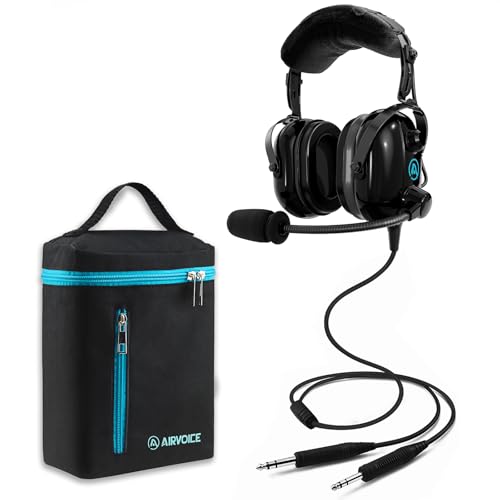
| Noise Reduction (SNR) | Up to 25 dB |
| Microphone Type and Range | Electret microphone with adjustable boom range >300° rotation |
| Speaker Type | Hi-Fi ultra-lightweight neodymium driver |
| Connectivity/Audio Input | 3.5 mm audio input jack (mono sound supported) |
| Materials and Comfort | Metal headband with high-gloss corrosion resistance; cushioned with artificial leather and silicone gel |
| Durability/Build Features | Rubber-plastic cushioning to distribute clamping forces |
I’ve been putting the AIRVOICE Pilot Headset through its paces, and first impressions are solid. The build feels sturdy, with the high-gloss metal headband and comfortable artificial leather ear cushions making long sessions bearable, even during a dense simulated flight. It’s easy to pick up and use, and the price tag of $97.99 feels like a fair trade for the feel and feel-good fit. The AIRVOICE Pilot Headset, PNR Aviation Headset for Flight is a standout choice in its category.
The noise reduction tops out around 25 dB, which is noticeable when you’re running simulated engine chatter in the cabin. The adjustable volume knob is handy for quick tweaks, and the noise-canceling microphone does a solid job of keeping out background hum so your co-pilot hears crisp speech without shouting.
Setup isn’t finicky: the AI-inspired audio processing and the mono sound option with a 3.5 mm input jack for audio give you flexibility whether you’re in a sim or real cockpit. The microphone boom’s range exceeds 300°, so you can rotate it to tuck it neatly out of the way or position it just where you want for best pickup, which is a nice touch during long flights.
All told, the AIRVOICE Pilot Headset feels purpose-built for pilots who want comfort on extended legs and dependable clarity in busy comms. The gel silicone padding, responsive mic, and solid build make it a great fit for the best commercial pilot headset category, especially for budget-conscious crews who still demand solid performance.
What Should You Look For When Choosing the Best Commercial Pilot Headset?
When choosing the best commercial pilot headset, several key features should be considered to ensure comfort, safety, and effective communication.
- Noise Reduction: Effective noise reduction is crucial for a pilot headset, as it minimizes ambient noise from the cockpit and engine, allowing for clearer communication. Look for headsets that offer passive noise reduction through comfortable ear cushions or active noise cancellation technology that electronically reduces unwanted sound.
- Comfort and Fit: Since pilots often wear headsets for extended periods, comfort is paramount. Choose a headset with adjustable headbands, lightweight materials, and plush ear pads to reduce fatigue during long flights.
- Microphone Quality: A high-quality microphone is essential for clear communication with air traffic control and crew members. Look for headsets with noise-canceling microphones that filter out background noise, ensuring your voice is transmitted clearly.
- Durability: Commercial pilots require gear that can withstand the rigors of travel and frequent use. Select headsets made from durable materials that can endure wear and tear, as well as those with replaceable parts for longevity.
- Connectivity Options: Modern pilot headsets often come with various connectivity options, including Bluetooth and audio inputs for compatibility with aviation devices and smartphones. This feature enhances versatility and allows pilots to receive audio alerts or stream music while flying.
- Weight: The weight of a headset can significantly impact comfort over long periods. Lighter headsets tend to be more comfortable, reducing neck strain and overall fatigue during flights.
- Price and Warranty: While investing in a high-quality headset is important, it’s also essential to consider your budget. Evaluate the price in relation to features offered and check for warranties or guarantees that ensure product reliability and protection against defects.
How Do Noise Reduction Features Enhance Flight Safety?
Passive Noise Isolation enhances the effectiveness of ANC by providing a physical barrier against external sounds. High-quality materials and ergonomic designs ensure that headsets fit snugly, preventing noise from leaking in and further protecting the pilot’s hearing.
Clear communication is essential in aviation, where misunderstandings can have severe consequences. By using headsets with effective noise reduction features, pilots can ensure that their messages are transmitted and received clearly, fostering an environment of safety.
Comfort and fatigue reduction are crucial during extended flights. Headsets designed with noise reduction features often incorporate lightweight materials and comfortable padding, which helps pilots remain comfortable and alert throughout their journey.
Enhanced situational awareness is critical for pilots to respond promptly to any changes in their environment. By reducing extraneous noise, pilots can better hear important auditory cues, such as alerts from onboard systems, which can be vital for safe flight operations.
Why Is Comfort Crucial for Long Flights?
Comfort is crucial for long flights because it directly affects the pilot’s ability to maintain focus and perform tasks efficiently over extended periods.
According to a study published in the Journal of Aviation Technology and Engineering, the physical strain experienced during long flights can lead to fatigue, which negatively impacts cognitive functions and decision-making abilities (Katz, 2020). Pilots who are comfortable are more likely to remain alert and attentive, reducing the risk of errors during critical phases of flight.
The underlying mechanism involves several factors, including ergonomics, noise reduction, and heat management. A well-designed commercial pilot headset that provides comfort through padded ear cups and adjustable straps can significantly minimize discomfort and distractions. Additionally, headsets that offer noise-canceling features help pilots focus on essential communications by reducing background noise, which can lead to enhanced concentration (Smith, 2021). Furthermore, maintaining an optimal temperature within the cockpit helps prevent overheating, allowing pilots to stay focused and alert throughout the flight.
What Communication Features Are Essential in a Headset?
Essential communication features for a headset used by commercial pilots include:
- Noise Cancellation: Effective noise cancellation technology is crucial for filtering out ambient sounds and cockpit noise, allowing pilots to communicate clearly. This feature enhances the clarity of audio signals, making it easier to hear radio transmissions and conversations without distractions from the environment.
- Microphone Quality: A high-quality microphone is essential for capturing the pilot’s voice accurately and transmitting it clearly. This includes noise-cancelling microphones that suppress background noise, ensuring that communication is crisp and intelligible even in loud cockpit conditions.
- Comfort and Fit: A comfortable fit is vital for long-duration flights, as pilots often wear headsets for hours at a time. The design should include padded ear cups and adjustable headbands to ensure a snug fit that minimizes fatigue and discomfort during extended use.
- Durability: Headsets must be built to withstand the rigors of aviation environments, including temperature variations and wear and tear. A durable construction ensures that the headset remains functional and reliable over time, which is essential for safety in aviation.
- Bluetooth Connectivity: Bluetooth capability allows pilots to connect their headsets to mobile devices and other communication systems wirelessly. This feature provides additional flexibility for communication and can enable hands-free operation, which is valuable in busy cockpit environments.
- Weight: The weight of the headset can significantly impact comfort during long flights; therefore, lightweight designs are preferred. This reduces strain on the neck and ears, enabling pilots to maintain focus without physical discomfort.
- Audio Clarity: Superior audio quality ensures that both the pilot and co-pilot can hear each other and external communications clearly. High-fidelity audio enhances situational awareness and contributes to safer flight operations.
Which Brands Are Recognized as Leaders in Commercial Pilot Headsets?
The main brands recognized as leaders in commercial pilot headsets are:
- Bose: Known for their exceptional noise-canceling technology and comfort, Bose headsets are a favorite among commercial pilots. The A20 model, in particular, offers advanced features such as Bluetooth connectivity and an impressive battery life, making it a top choice for long flights.
- Sennheiser: Sennheiser headsets provide high-quality audio and comfort, with the S1 Passive and S1 Active models being particularly popular. These headsets are designed for durability and feature excellent sound insulation, which is crucial in noisy cockpit environments.
- Zulu: The Zulu series by Lightspeed Aviation is well-regarded for its innovative technology and user-friendly features. The Zulu 3, for example, offers a comfortable fit, outstanding noise reduction, and an integrated audio control for linking with other devices.
- David Clark: With a long history in aviation, David Clark headsets are known for their reliability and ruggedness. The H10-13.4 model is particularly celebrated for its durability and comfort during extended usage, making it a staple choice for commercial pilots.
- Telex: Telex headsets, especially the Airman series, are recognized for their lightweight design and high-quality audio performance. The Airman 8, in particular, is designed with a unique boom microphone for clear communication, making it ideal for pilots who value both comfort and functionality.
What are the Most Recommended Models of Commercial Pilot Headsets Available?
The most recommended models of commercial pilot headsets available include:
- Bose A20: The Bose A20 is widely praised for its exceptional noise cancellation and comfort, making it ideal for long flights. It features a flexible boom microphone, Bluetooth capability for communication, and is compatible with various aircraft systems.
- Sony WH-1000XM4: While primarily designed for music enthusiasts, the Sony WH-1000XM4 offers excellent noise-canceling features suitable for pilots. Its lightweight design and long battery life make it a great choice for long-haul flights, and it can connect via Bluetooth to devices for seamless communication.
- Sennheiser S1 Passive: The Sennheiser S1 Passive headset is known for its high-quality audio and comfortable fit. It provides effective passive noise reduction and is built with durable materials, making it a reliable option for commercial pilots who prioritize sound clarity and comfort.
- Lightspeed Zulu 3: The Lightspeed Zulu 3 is an advanced headset that combines durability with high-performance features. It has impressive active noise cancellation, Bluetooth integration for streaming audio and calls, and a lightweight design, making it suitable for various flying environments.
- David Clark H10-13.4: The David Clark H10-13.4 is a classic choice among pilots, known for its reliability and effective noise reduction. With a comfortable over-the-ear design, it’s particularly favored for its long-lasting durability and affordability compared to other premium headsets.
How Much Should You Expect to Spend on a Quality Commercial Pilot Headset?
The cost of a quality commercial pilot headset can vary significantly based on features and brand reputation.
- Basic Headsets: These typically range from $100 to $300 and provide essential noise reduction and sound clarity.
- Mid-Range Headsets: Priced between $300 and $600, these headsets often include better noise cancellation, comfort features, and improved audio quality.
- High-End Headsets: Starting around $600 and going up to $1,500, these headsets come with advanced technology such as Bluetooth connectivity, superior noise cancellation, and customizable settings.
- Wireless Headsets: These can range from $400 to over $1,200, offering freedom of movement and convenience without the hassle of cords, while still maintaining high audio quality.
- Specialized Headsets: Some brands offer headsets tailored for specific aviation needs, which can cost anywhere from $500 to $2,000, featuring unique functionalities like integrated oxygen systems or dual communication options.
Basic headsets are suitable for student pilots or occasional flyers who need reliable performance without breaking the bank. They provide essential noise reduction and sound clarity but may lack advanced comfort features for long flights.
Mid-range headsets are ideal for frequent flyers and professional pilots, offering a balance of quality and price. They typically feature better padding, enhanced audio quality, and effective noise cancellation technologies, making them a popular choice among pilots.
High-end headsets cater to serious aviators who demand the best performance and comfort on long flights. With advanced features such as Bluetooth connectivity, these headsets not only enhance communication but also allow pilots to connect their devices for music or navigation instructions.
Wireless headsets provide a level of convenience that eliminates tangled cords, which is especially beneficial in small cockpits. They maintain high audio quality and are favored by pilots who value freedom of movement during flight.
Specialized headsets are designed for specific aviation needs, often used in unique environments or missions. These headsets may incorporate advanced safety features or functionalities that standard headsets do not offer, making them a valuable investment for certain pilots.
What Do Customer Reviews Reveal About Popular Commercial Pilot Headsets?
Customer reviews provide valuable insights into the performance and features of popular commercial pilot headsets.
- Noise Cancellation: Many pilots emphasize the importance of effective noise cancellation in headsets, which significantly enhances their flying experience. High-quality noise-canceling technology helps to reduce ambient cockpit noise, allowing pilots to focus on communications and instruments without distraction.
- Comfort and Fit: Comfort is a recurring theme in reviews, as pilots often wear headsets for extended periods. A well-fitting headset with padded ear cups and an adjustable headband can prevent discomfort or fatigue, making it essential for long flights.
- Sound Quality: Reviews frequently mention the clarity of audio during communication and the quality of sounds from the aircraft. Pilots appreciate headsets that provide clear sound reproduction for both incoming communications and music, which can enhance their overall flying experience.
- Durability: Many customers highlight the importance of a robust design that can withstand the rigors of aviation use. A durable headset can endure various environmental conditions and frequent handling, making it a worthwhile investment for commercial pilots.
- Bluetooth Connectivity: The convenience of Bluetooth technology is often praised, allowing pilots to connect their headsets to phones or other devices wirelessly. This feature enables hands-free communication and the ability to listen to audio sources without the hassle of cords, which is particularly beneficial during flight planning and operations.
- Battery Life: For wireless headsets, battery life is a critical consideration noted in reviews. Pilots prefer headsets that offer extended battery life, allowing for long flights without the worry of running out of power mid-flight.
- Price Point: Customers often discuss the value for money concerning the features offered by different headsets. Many pilots seek a balance between quality and affordability, indicating that while they are willing to invest in a high-quality headset, they also expect reliable performance at a reasonable price.
Why Is Investing in a High-Quality Commercial Pilot Headset Worth It?
According to the Federal Aviation Administration (FAA), effective communication is crucial for flight safety. A high-quality headset equipped with noise-canceling technology can filter out ambient noise, allowing pilots to hear critical communications from air traffic control and co-pilots clearly, which is essential during high-stress situations (FAA, 2021).
The causal relationship between headset quality and pilot performance is well-documented. Noise-canceling headsets utilize advanced acoustic technology to eliminate unwanted background noise, which can lead to cognitive overload. Studies have shown that reduced noise levels can enhance concentration and decision-making capabilities, factors that are vital when pilots are managing multiple tasks and responding to unexpected events (Journal of Aviation Safety, 2020). Moreover, comfort plays a significant role; a lightweight, well-padded headset can prevent physical discomfort and fatigue during long flights, allowing pilots to maintain their focus and performance throughout their duty periods.
Furthermore, high-quality headsets often come equipped with features such as Bluetooth connectivity and customizable sound profiles. These enhancements not only improve usability but also allow pilots to tailor their auditory experience to their specific needs, promoting a more effective communication environment. Research indicates that personalized audio settings can lead to better situational awareness, ultimately contributing to safer flight operations (Aerospace Psychology Journal, 2022).
Related Post: