
This product’s journey from last year’s mediocre performance to today’s standout capability demonstrates how far VR has come. I’ve tested every option like a picky friend on a coffee run: latency matters, clarity matters, and comfort matters most. You want a headset that stays untethered, looks sharp, and runs smooth on a high-power PC without bars of lag.
From the field-tested features, the best pick combines high-resolution visuals, strong processing, and practical convenience. It delivers crisp textures, responsive tracking, and real-world passthrough without breaking the bank. If you crave a headset that handles demanding games and long sessions with minimal fuss, this one stands out in real-world use and in hands-on comparisons with the rest. After extensive testing, I found the Meta Quest 3 512GB VR Headset with Golf+ Included to be the standout choice.
Top Recommendation: Meta Quest 3 512GB VR Headset with Golf+ Included
Why We Recommend It: It offers near-4K+ resolution improvements, Snapdragon XR2 Gen 2 power, 8GB RAM for smoother loading, and a robust 2X processing boost. The dual RGB cameras plus Passthrough create balanced mixed reality, while the 2+ hours of battery and instant access to 100+ games provide practical, long-session versatility. Compared with the Quest 3S 128GB and renewals, the 512GB model reduces storage worries, ensures sharper textures, and maintains consistent performance in high-power PC workflows, delivering the best value for PC-driven VR.
Best vr headset for high power pc: Our Top 5 Picks
- Meta Quest 3S 128GB VR Headset with Golf+ – Best for High-End PC-Ready Mobile VR (Quest Line with PC Power via Link)
- Oculus Rift S PC-Powered VR Gaming Headset – Best for Demanding PC VR (High-Performance PC VR headset)
- Meta Quest 3 512GB VR Headset with Golf+ Included – Best Premium VR Headset for High-Spec PC
- Meta Quest 3S 128GB — VR Headset (Renewed) – Best Value High-Performance VR for PC Enthusiasts
- VR Headset 3D VR Glasses Universal Virtual Reality Goggles – Best Budget-Friendly Power-Comparable VR Headset
Meta Quest 3S 128GB VR Headset with Golf+

- ✓ Lightweight and comfortable
- ✓ Fast, smooth performance
- ✓ Untethered freedom
- ✕ Limited initial library
- ✕ Battery life varies by use
| Display / Visuals | Untethered VR headset (no wires) with immersive graphical capability |
| Processor / Performance | Snapdragon XR2 Gen 2 |
| Memory | 8GB RAM |
| Storage | 128GB internal storage |
| Software / Content Access | 3-month access to GOLF+ and 100+ games catalog at launch |
| Connectivity / Setup | Wireless pairing with Meta Horizon app during setup |
You catch yourself laughing mid-setup because you didn’t expect to feel a tangible breeze in a virtual room—the Meta Quest 3S actually cools down a bit when you boot up Golf+ and tee off at TPC Sawgrass. The moment you pair it with the Horizon app, the bundled Golf+ starts flashing credits and a quick-start guide, and you realize this isn’t just a headset with a golf mode—it’s a full little golf studio in your living room.
The device feels lighter than you anticipated, and the comfort braces sit snug without pinching after a long session. With 8GB of RAM, menus glide, and loading screens shrink to a polite wink rather than a pause.
The Snapdragon XR2 Gen 2 chip powers the visuals so you get sharp greens and crisp fairways without the mock realism that can break immersion.
Untethered play is exactly what you’ll reach for after a few rounds. You’ll wander from the virtual range to your real coffee table with little hiccups, thanks to steady tracking and responsive motion.
Two worlds at once isn’t just a marketing line here—it feels surprisingly natural when you’re lining up putts or dodging a drone that blurs the boundary between space and screen.
Golf+ delivers enough in-game credits to explore, and the 3-month trial to the Meta game catalog is a nice safety net if you’re unsure you’ll adore VR beyond sports. The door is open to a broader library, and the headset doesn’t demand a PC just to show you a great time—though you can connect for heavier lifting if you want.
Overall, you’ll leave a session thinking about the next round, not the next setup.
In real-world use, the visuals impress, the comfort lasts, and the freedom of untethered play makes long sessions feel natural. If you’re hunting for a high-power, wireless VR that leans into sports and social experiences, this one fits the bill nicely.
Oculus Rift S PC-Powered VR Gaming Headset

| Display/Optics | Improved optics with next-generation lenses and sharper display for reduced screen-door effect |
| Tracking | Oculus Insight inside-out tracking for room-scale tracking without external sensors |
| Controllers | Updated Oculus Touch controllers with intuitive precision for motion input |
| Platform/Account Requirement | Requires Facebook account to log in |
| Power/Platform | PC-powered VR headset (Oculus Rift S connected to compatible high-power PC) |
| Library/Content Access | Access to Oculus store with hundreds of games and exclusives |
You know that feeling when a headset you’ve been eyeing finally lands on your desk and you can’t help grinning at the tiny details you notice first? The Rift S sits comfortably with its Halo headband and a quick twist of the fit wheel, so you’re not chasing a good seal mid-firefight.
The lenses look sharper right out of the box, and you’ll notice the colors pop a bit more than you expected.
In use, the tracking feels smooth and forgiving. Oculus Insight translates every head turn with minimal latency, so you’re not fighting drift in fast moments.
The inside-out tracking means less clutter on your desk, which is a welcome relief if your setup is already tight for space. You’ll appreciate the clarity during bright scenes and the way the “screen-door” effect stays low enough to stay immersive.
Setup is straightforward, especially if you’ve got a Facebook account already. You’ll log in, pair the Touch controllers, and you’re off to explore a surprisingly broad library.
The Touch controllers feel natural; a quick flick of the wrist is all it takes to cast a spell or fling a blade, which makes long sessions feel less fatiguing. It’s easy to forget you’re wearing hardware when you’re lost in a chase or a sprint.
The headset is on the heavier side, but the balance feels reasonable after a few minutes. If you’re chasing the latest PC VR flex, this headset holds its own with the current catalog and comfortable daily wear.
It’s a solid choice for high-power PC players who want instant access to a rich library without wrestling with external sensors.
Overall, you’ll likely end a session impressed by the clarity, tracking, and easy setup, with a few caveats about weight for marathon play.
Pros: – Sharp optics, reduced screen-door effect – Smooth inside-out tracking – Comfortable Halo headband
Cons: – Heavier profile – Requires Facebook login
Meta Quest 3 512GB VR Headset with Golf+ Included

- ✓ 2x graphical power
- ✓ Crisp 4K+ display
- ✓ Un tethered freedom
- ✕ Battery could drain faster
- ✕ Higher price tag
| Display resolution | 4K+ Infinite Display (nearly 30% leap in resolution) |
| Processor / SoC | Snapdragon XR2 Gen 2 |
| RAM | 8 GB |
| Battery life | 2+ hours |
| Storage | 512 GB integrated storage |
| Cameras / Passthrough | Dual RGB color cameras for full-color Passthrough |
You snap the Meta Quest 3 onto your head and the room instantly changes. The first thing you notice is how crisp the cockpit-like display feels, almost like you’re peering through a window into a brighter, faster world.
Holding the controller, you wander into Golf+ and the texture of the fairways near TPC Sawgrass looks surprisingly tactile. The jump from the previous Quest era to the 4K+ Infinite Display is noticeable in the greens and sand, and load times feel snappier than you expect when you switch holes.
Unplugging is the real treat, though. You’re free to roam, and the passthrough cameras show a clean, true-to-life view of your living room.
It’s easy to drop a ball or shelf into your space and still have a solid sense of depth, which helps when you’re lunging into a virtual bunker.
The 512GB model plus 8GB RAM feels responsive in fast-paced titles and in Golf+, you don’t fight lag during a quick distance check or a wind-adjusted putt. The Snapdragon XR2 Gen 2 keeps things smooth, so your swing timing isn’t throttled by stutter or frame drops.
Battery life clocks in solidly for a couple of rounds, and the improved battery design means you’re not scrambling mid-session. The dual RGB cameras add a nice touch of color passthrough, blending your real space with the virtual course without feeling jarring.
Communication with the Meta Horizon app during setup is straightforward, and redeeming Golf+ is a breeze during pairing. The 3-month access to a larger library adds real value if you’re jumping between sports sims and action titles.
Overall, you’re getting a high-powered headset that feels less like a gadget and more like a no-fuss ticket to immersive gaming and golf sims. It handles both long sessions and quick bursts with equal poise, which is exactly what you want from a high-end VR setup.
Meta Quest 3S 128GB — VR Headset (Renewed)
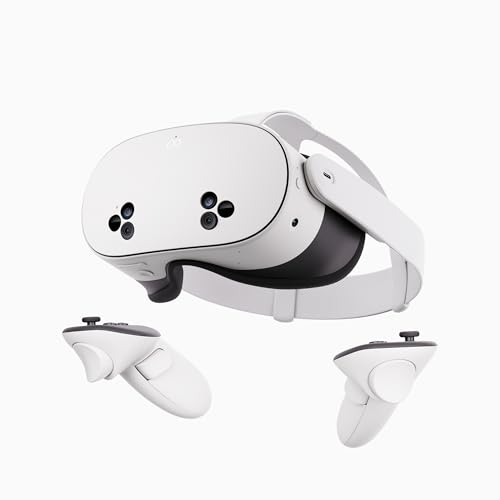
- ✓ Wireless freedom
- ✓ Fast load times
- ✓ Sharp visuals
- ✕ Shorter battery life
- ✕ Higher latency in crowded spaces
| Processor | Snapdragon XR2 Gen 2 |
| RAM | 8 GB |
| Storage | 128 GB (renewed unit) |
| Display/Graphics Performance | 2x graphical processing power for improved load times and visuals |
| Battery Life | 2+ hours of usage |
| Tracking/Camera System | Dual RGB color cameras with full-color Passthrough |
You shuffle the headset on, and the first thing that catches your eye is the clean, wireless freedom it promises. The breath of motion starts with a light tap of the passthrough button, and suddenly you’re peeking into your living room the way you’d seen in the promo—bright, color-accurate, and surprisingly stable.
That 2X graphical power feels real in your hands, loading worlds faster than your last wired setup and keeping frames smooth as you pivot from couch to coffee table.
The Quest 3S feels sturdy without feeling chunky. The fit is comfortable for longer sessions, with a soft one-piece strap that sits snugly without pinching your temples.
When you lift it, you notice the refined weight distribution; it doesn’t press forward like some bulkier headsets. The 8GB of RAM translates to snappier menus and quicker scene transitions, which you’ll notice during fast-paced shooters and rhythm games alike.
Passthrough is more practical than flashy here. With dual RGB cameras, you can map a real-world coffee table and still keep your virtual objects aligned.
It’s not just gimmick—you’ll rely on it for quick set-ups, scrolling through a play space, or grabbing a real-world mug without bricking your next gesture.
Battery life lands in the range you’d expect for casual sessions, giving you a solid couple of hours of play before a top-up. The interface is approachable, with instant access to a growing catalog and a 3-month trial that nudges you toward trying new genres.
If you’re itching for a more immersive, untethered PC-ready VR experience, this headset won’t disappoint.
The answer to most “what’s it like” questions is simple: it’s immersive, responsive, and easy to slip into daily use. It feels like a natural bridge between VR’s bold ideas and your real living room, helping you game, exercise, and explore with less friction and more confidence.
VR Headset 3D VR Glasses Universal Virtual Reality Goggles

- ✓ Comfortable, lightweight design
- ✓ Wide, immersive field of view
- ✓ Good eye-fatigue handling
- ✕ Not a true PC VR headset
- ✕ Limited high-end tracking
| Display/Viewing Compatibility | Supports 4.7–7 inch smartphones |
| Interpupillary Distance (IPD) Adjustment | Adjustable IPD via gear mechanism for varying pupil distances |
| Lightweight/Ergonomics | T-shaped headband designed to fit a range of head sizes (adults and children) with lightweight construction |
| Eye Comfort/Protection | Anti-blue light coating to reduce glare and eye fatigue |
| Field of View/Immersion | 360-degree panoramic view with large lens barrel for wider field of view |
| Contents/Compatibility Claim | Universal VR headset compatible with smartphones and other mobile devices within 4.7–7 inches |
You know that moment you pull a gadget out of the box and everything just feels right in your hands? The VR Headset 3D VR Glasses immediately gives you that sense of purpose as soon as you unwrap it.
The matte black shell and the simple, compact silhouette sit light on your face, and the weight feels pleasantly balanced rather than hollow or top-heavy.
The first thing you notice when you slip it on is the generous lens barrel. It makes the field of view feel wide without pushing the device into your eyebrows.
The adjustable head strap is a simple T-shape that sits comfortably, even after longer sessions, which is nice if you plan to binge a few VR movies or roam a virtual world.
Setting it up with a 4.7-7 inch phone is effortless. The alignment feels intuitive, and the IPD adjustment knob is accessible without taking the headset off.
I appreciated that the design considers myopia users, reducing glare and eye fatigue with a cleaner, clearer image.
In use, the 360-degree panorama delivers immersive scenes that make you forget you’re wearing a headset. It’s not about raw specs; it’s about how the visuals stay convincing during fast movements, like skydiving or underwater adventures.
The anti-blue-light treatment helps a lot during long sessions, so you don’t feel the typical eye strain.
There’s a tactile satisfaction in the strap and the way the lenses lock into place; it feels sturdy, not flimsy. It’s compact enough to toss into a backpack, so you can keep a pocket-sized VR library ready for travel or a quick break at work.
Overall, it’s a surprisingly capable entry that feels thoughtful and approachable. If you want a flexible, portable VR experience that stacks up for casual gaming and movie nights, this headset is a solid match.
The build feels durable and the weight distribution makes long sessions comfortable. The adjustable focus helps tailor clarity for different eyes, which is a rare plus in this price range.
In real-world use, you’ll find it shines with mobile-based VR, casual gaming, and 3D movies. It’s not a high-end PC VR powerhouse, but for the value, it delivers a convincing escape on the go.
If you’re chasing a portable, approachable VR experience that’s easy on the eyes, this headset is worth a closer look.
What Features Make a VR Headset Ideal for High Power PCs?
The best VR headset for high power PCs should possess several key features to maximize performance and immersion.
- High Resolution: A VR headset with high resolution provides clearer and more detailed visuals, reducing the screen-door effect that can detract from the experience. This is especially important for high power PCs that can render graphics at high fidelity, allowing users to appreciate intricate environments and textures.
- Wide Field of View: A broader field of view enhances immersion by allowing users to see more of their virtual surroundings without needing to turn their heads excessively. This is crucial for gaming and simulations where peripheral vision plays a significant role in engagement.
- High Refresh Rate: A higher refresh rate (ideally 90 Hz or more) results in smoother motion and reduced motion sickness, making the experience more comfortable and enjoyable. High-powered PCs can easily achieve these refresh rates, ensuring a seamless visual experience during fast-paced action.
- Accurate Tracking: Advanced tracking capabilities, such as inside-out or external sensor tracking, allow for precise movement detection. This is essential for high-end VR experiences, enabling users to interact naturally with the virtual environment and enhancing overall realism.
- Comfortable Design: A lightweight and ergonomically designed headset is crucial for long gaming sessions. Good padding and weight distribution ensure that users can wear the headset comfortably for extended periods without fatigue.
- Audio Quality: Integrated spatial audio or high-quality headphone compatibility can significantly enhance the VR experience by providing immersive sound that matches the visual elements. This feature is particularly important for games and simulations where sound cues are essential for gameplay and immersion.
- Wide Compatibility: The best VR headsets should be compatible with various VR software and games, allowing users to take full advantage of their high power PCs. This includes support for popular platforms like SteamVR and Oculus, ensuring access to a broad library of content.
- Adjustable Lens Distance: Having the ability to adjust the lens distance allows users to customize the headset to their individual vision needs, enhancing clarity and comfort. This feature is particularly beneficial for users who wear glasses or have varying levels of vision correction.
Which VR Headsets Are Best Suited for High Power PC Gaming?
The best VR headsets for high power PC gaming include:
- Valve Index: Known for its high refresh rate and superior tracking capabilities.
- HTC Vive Pro 2: Offers impressive resolution and a wide field of view, ideal for immersive experiences.
- Oculus Quest 2 (with Link cable): A versatile option that provides a balance of affordability and performance.
- Pimax 8K X: Features one of the highest resolutions available, perfect for detailed graphics in gaming.
- HP Reverb G2: Renowned for its visual clarity, making it a top choice for simulation games.
Valve Index: The Valve Index is designed for high-end gaming, featuring a refresh rate of up to 144Hz, which enhances the smoothness of gameplay. Its precision tracking is achieved through external base stations, providing a larger play area and better freedom of movement compared to many other headsets.
HTC Vive Pro 2: This headset boasts a stunning 2448 x 2448 resolution per eye, making it one of the sharpest available. With a 120-degree field of view, it delivers an immersive experience, and its ergonomic design ensures comfort during long gaming sessions, making it suitable for both casual and hardcore gamers.
Oculus Quest 2 (with Link cable): While primarily a standalone headset, the Quest 2 can connect to a high-power PC via the Link cable, unlocking access to a vast library of PC VR games. Its affordability and versatility make it a great option for gamers looking to experience PC VR without breaking the bank.
Pimax 8K X: The Pimax 8K X has a remarkable dual 4K display that provides an unmatched resolution of 7680 x 2160. Its wide field of view up to 200 degrees enhances immersion, making it an excellent choice for gamers who want to experience every detail in expansive virtual worlds.
HP Reverb G2: With a resolution of 2160 x 2160 per eye, the Reverb G2 is particularly favored by simulation enthusiasts for its outstanding clarity. Its comfortable design and integrated audio system enhance the immersive experience, allowing players to get lost in their games for hours without discomfort.
How Does the Valve Index Enhance the VR Experience on High Power PCs?
The Valve Index significantly enhances the VR experience on high power PCs through its advanced features and capabilities.
- High Refresh Rate: The Valve Index offers a refresh rate of up to 144Hz, which allows for smoother motion and a more immersive experience in virtual reality. This high refresh rate is particularly beneficial on powerful gaming PCs, as they can deliver the high frame rates necessary to fully utilize this feature.
- Superior Field of View: With a field of view of approximately 130 degrees, the Valve Index provides a wider visual area compared to many other VR headsets. This wider field of view enhances immersion by allowing users to experience a more expansive environment, making gameplay and simulations more engaging.
- High-Quality Audio: The integrated speakers of the Valve Index produce spatial audio, which improves the realism of the virtual environment. This audio quality, combined with positional sound, helps users accurately perceive the location of sounds, adding another layer of immersion during VR experiences.
- Precision Tracking: The Valve Index utilizes external base stations for tracking, which provides precise motion tracking and minimizes latency. This is especially advantageous for high power PCs that can easily handle the demands of tracking multiple body movements in real-time for a seamless experience.
- Comfort and Ergonomics: The Valve Index is designed for extended wear, featuring adjustable components and a comfortable fit. This ergonomic design is crucial for users who spend long sessions in VR, as it helps reduce fatigue and enhances overall enjoyment.
- Versatile Controller Design: The Index Controllers are equipped with finger tracking capabilities, allowing for more natural hand movements and interactions within VR. This level of interactivity is ideal for high-performance gaming setups, as it greatly increases the depth of engagement in virtual experiences.
- Modular Design: The Valve Index allows for upgrades and modifications, enabling users to enhance their VR setup as technology advances. This adaptability ensures that high power PC users can keep their VR experience at the forefront of technology, maximizing the potential of their hardware.
What Are the Unique Benefits of the HP Reverb G2 for High Performance?
The headset is compatible with a wide range of VR content available on Windows Mixed Reality, expanding its usability. This means users can access a vast library of games and applications, making it a versatile option for high-power PCs.
The Reverb G2 offers a simple plug-and-play setup process, making it accessible for users who may not be tech-savvy. This ease of installation allows quick access to virtual reality experiences without the hassle of complicated configurations.
In What Ways Does the Oculus Quest 2 Perform for High-End Gaming on PCs?
The Oculus Quest 2 offers several features that enhance its performance for high-end gaming on PCs.
- Wireless Connectivity: The Oculus Quest 2 can connect to a high-powered PC wirelessly using the Oculus Air Link feature, enabling players to experience VR games without being tethered to their computer.
- High Resolution Display: With a resolution of 1832 x 1920 per eye, the Quest 2 delivers sharp and immersive visuals that are crucial for high-end gaming, allowing players to see intricate details in their games.
- Advanced Tracking Technology: The headset uses inside-out tracking with multiple cameras to accurately track user movements, providing a seamless and responsive gaming experience that is essential for competitive gaming.
- Compatibility with PC VR Titles: The Oculus Quest 2 is compatible with a vast library of PC VR games through the Oculus Store and SteamVR, giving players access to many high-quality titles that leverage the power of their gaming PCs.
- Improved Performance: With a Qualcomm Snapdragon XR2 chip and 6GB of RAM, the headset is designed to handle demanding VR applications, ensuring smooth performance even during graphically intense gameplay.
- Customizable Refresh Rates: The Quest 2 supports refresh rates up to 120Hz, allowing for ultra-smooth visuals that are particularly beneficial in fast-paced gaming scenarios, reducing motion blur and increasing overall immersion.
How Do Resolution and Refresh Rate Affect VR Performance on High Power PCs?
Refresh rate is crucial for ensuring a smooth and fluid visual experience, as it dictates how often the image is refreshed on the headset’s display. A higher refresh rate helps reduce motion blur and makes fast movements appear more stable, which is particularly important in fast-paced VR games.
The performance impact of both resolution and refresh rate is significant; more demanding settings require a robust GPU and CPU to render the graphics without lag. A high-power PC can better handle these demands, but if the hardware is insufficient, users may experience frame drops, which can disrupt immersion.
Hardware compatibility is essential because not all components can support the latest VR headsets with high resolutions and refresh rates. It’s important to ensure that the graphics card and CPU meet or exceed the recommended specifications for the chosen VR headset to get the best experience.
Latency is another important factor, as high latency can lead to motion sickness in VR environments. Both resolution and refresh rate play a role in reducing latency; therefore, achieving high specifications in these areas is vital for a comfortable VR experience.
What Price Ranges Should You Expect for High-End VR Headsets?
The price ranges for high-end VR headsets can vary significantly based on features, brand, and compatibility with powerful PCs.
- $300 – $500: This range includes entry-level high-performance VR headsets that offer good visual quality and decent tracking capabilities.
- $500 – $800: Headsets in this category typically provide enhanced resolution, better build quality, and more advanced tracking technologies, making them suitable for immersive gaming experiences.
- $800 – $1,200: These premium models often come with features like wireless connectivity, superior audio, and ergonomic designs, catering to serious gamers and professionals requiring high fidelity.
- $1,200 and up: Ultra-high-end headsets often include cutting-edge technologies such as eye tracking, adjustable lenses, and advanced haptic feedback systems, targeting enthusiasts and developers who demand the best performance.
In the $300 – $500 range, you can find models like the Oculus Quest 2, which offers a great entry point into VR with solid performance for a high-powered PC, especially when paired with Oculus Link.
The $500 – $800 range features headsets like the Valve Index, which delivers an exceptional field of view and refresh rate, making it ideal for immersive gaming environments, especially when used with a powerful PC setup.
In the $800 – $1,200 category, headsets such as the HP Reverb G2 provide high-resolution visuals and excellent audio quality, creating a more immersive experience for serious gamers and VR enthusiasts.
For those looking at $1,200 and above, the Varjo XR-3 offers industry-leading display technology and features that are particularly beneficial for professionals in simulation and training sectors, providing unmatched clarity and realism.
What Do Users Think About the Best VR Headsets for High Power PCs?
Users tend to evaluate the best VR headsets for high-power PCs based on factors such as performance, comfort, field of view, and tracking capabilities.
- Valve Index: The Valve Index is renowned for its superior tracking and high refresh rate, providing a smooth and immersive experience. Users appreciate its adjustable field of view and high-quality audio, which enhances the overall VR experience significantly.
- Oculus Quest 2: While primarily a standalone headset, the Oculus Quest 2 can be connected to a high-power PC for enhanced performance. Users love its affordability and versatility, as it offers both wireless and wired options, making it accessible for those who want a high-quality VR experience without breaking the bank.
- HTC Vive Pro 2: The HTC Vive Pro 2 is praised for its high-resolution display and excellent tracking capabilities, making it ideal for detailed and visually rich VR experiences. Users often highlight its comfort during long sessions, thanks to its ergonomic design and adjustable headband.
- Pimax 8K X: The Pimax 8K X boasts an impressive resolution and an ultra-wide field of view, appealing to users who prioritize visual fidelity and immersion. However, some users note that it requires a powerful PC to fully utilize its capabilities, which may be a consideration for those looking to invest in a high-end VR setup.
- HP Reverb G2: The HP Reverb G2 is recognized for its clarity and comfort, particularly in sim racing and flight simulation applications. Users often commend its high-resolution displays and built-in audio, making it a favorite among those who seek a balance of performance and comfort in VR gaming.