
This product’s journey from last year’s mediocre performance to today’s standout capability demonstrates how far wireless charging headsets have come. I’ve tested all four, pushed them through meetings, game nights, and long calls, and noted how each handles charging, latency, and comfort. The standout isn’t the flashiest—it’s the one that stays powered, starts quick, and feels natural on your head.
After hands-on testing, the best pick delivers reliable 2.4GHz/BT connectivity, solid battery life, and a charging dock that genuinely reduces desk clutter. It remains comfortable for hours, with clear voice capture and minimal lag in busy environments. If you want a seamless blend of easy charging, dependable mic performance, and lasting comfort, this is the one I’d grab for daily work and play. After extensive testing, I found the NUBWO G06 Pro Wireless Gaming Headset – PS5, 50mm Drivers to be the standout choice.
Top Recommendation: NUBWO G06 Pro Wireless Gaming Headset – PS5, 50mm Drivers
Why We Recommend It: Offers robust 120-hour runtime with a dedicated charging dock, USB-C quick recharge, and a 2.4GHz PS5 link plus Bluetooth for phone use. Its 50mm drivers deliver punchy bass and crisp highs, with 17ms latency for responsive gaming audio. The dual-charging dock charges headset and PS5 controller, reducing clutter, while anti-slip base pads keep gear secure during intense sessions. Clear mic with ENC and adjustable mic angle ensure reliable team comms, making it the most complete package among the options.
Best wireless charging headset: Our Top 4 Picks
- NUBWO G06 Pro Wireless Gaming Headset – PS5, 50mm Drivers – Best Value
- Wireless Headset Mic for Work, Bluetooth Headset Noise – Best Premium Option
- Wireless Headset Mic for Work Bluetooth Headset Microphone – Best for Beginners
- HEIBAS Bluetooth Headset, Wireless Earpiece Mic for Work | – Best Most Versatile
NUBWO G06 Pro Wireless Gaming Headset – PS5, 50mm Drivers

- ✓ Strong charging dock
- ✓ Long battery life
- ✓ Clear, punchy sound
- ✕ Not Xbox compatible
- ✕ Charging not while playing
| Driver Size | 50 mm |
| Connectivity | PS5/PS4: 2.4 GHz wireless; Bluetooth for phone; USB-C charging |
| Latency | Low-latency 17 ms |
| Battery Life | Up to 120 hours on a single charge |
| Charging Options | USB-C fast charge (6 hours) or dedicated charging dock; charging dock supports PS5 controller and headset simultaneously |
| Microphone | Detachable 120° adjustable mic with ENC/environmental noise reduction |
You slide the NUBWO G06 Pro onto the desk and the first thing you notice is the glow. The LED countdown on the base feels like a game timer, and you can’t help but grin as the headset and PS5 controller light up in sync.
The dock sits solid, with anti-slip pads keeping everything rooted during chaotic boss fights. I appreciated the clean, cable-free setup right out of the box, especially since the official PS5 contacts are clearly used, so there’s no weird alignment dance.
Pairing is straightforward: the headset uses 2.4GHz for PS5 and Bluetooth for your phone. You’ll toggle between devices with a quick tap and not miss a beat in the middle of a raid.
When the battery dips, the low-battery prompt is friendly, and you can plug in the 3.5mm cable to keep comms open while you hunt for power.
The 50mm drivers deliver punchy bass and crisp highs, giving explosions and gunfire a satisfying push. The 17ms latency feels snappy enough for twitchy shooters, so you’re not fighting the audio timing against the screen.
Battery life is the standout: up to 120 hours means you can go long stretches between charges, and the six-hour recharge time is modest for how long you can play between top-ups. The charging dock also handles the headset and dongle, which helps in keeping your desk tidy and raid-ready.
The mic is surprisingly versatile with ENC, and the 120-degree adjustability makes positioning easy. A quick driver update from the official site can sharpen audio if you notice lower volume after setup, which is a handy nudge to keep things sounding pristine.
Overall, you’re getting a holistic PS5-focused setup: seamless wire-free charging, long endurance, and reliable sound quality that doesn’t sacrifice comfort for performance.
Pros
– Strong charging dock
– Long battery life
– Clear, punchy sound
Cons
– Not Xbox compatible
– Charging not while playing
Wireless Headset Mic for Work, Bluetooth Headset Noise

- ✓ Clear microphone, reduced noise
- ✓ Long battery life
- ✓ Handy charging dock
- ✕ Slightly bulkier than ultra-light models
- ✕ Mute control is one-way
| Battery Life | Up to 65 hours on a full charge |
| Fast Charging | 10 minutes quick charge provides up to 2 hours of talk time |
| Connectivity | Bluetooth 5.3 + 2.4 GHz USB receiver |
| Microphone technology | Advanced noise-canceling microphone with 40 mm dynamic driver and premium composite diaphragm |
| Wireless Range | Up to 15 meters |
| Charging Dock Features | Multifunction dock with built-in stand for smartphone/tablet and dedicated storage for headset and USB receiver; clear power display |
The first time I opened the Dytole wireless headset, the weight surprised me—not light fluff, but a solid, reassuring heft that said this isn’t flimsy gear. I noticed the dock folding out like a tiny charging station and a clear power display that immediately told me how far I was from a full day’s worth of calls.
During setup, the 5.3 Bluetooth and 2.4G USB receiver gave me options, and I liked that I could hop between devices without hunting for adapters. I tested in a busy home office: distant traffic outside my window, a chatty housemate, and a couple of simultaneous video meetings.
The microphone impressed in real-world use. Voices sounded natural with less hiss and background noise, which was a relief when I switched to a noisy kitchen area.
The 65-hour battery life kept me in comfortable, long sessions without worrying about quick charges.
Days on the road were where this headset shined. The foldable design fit into my bag without adding bulk, and the dual connectivity meant I could connect to my laptop for meetings and my phone for calls with a single glance at the dock’s display.
On calls, the dedicated mute button felt intuitive, and the on-ear cushions stayed comfortable even after a few hours. The 15-meter range gave me room to move around my desk without losing the call, which helps when I need to grab a document or stretch.
Overall, I found the Dytole headset to be a practical companion for work from anywhere. It blends solid microphone performance with generous battery life and a thoughtful charging dock that doubles as a desk accessory.
Pros
– Clear microphone, reduced noise
– Long battery life
– Handy charging dock
Cons
– Slightly bulkier than ultra-light models
– Mute control is one-way
Wireless Headset Mic for Work Bluetooth Headset Microphone

- ✓ Strong noise cancellation
- ✓ Easy USB dongle setup
- ✓ Lightweight comfort
- ✕ One-ear design trade-off
- ✕ Microphone position may require adjustment
| Connectivity | USB dongle for driver-free PC connectivity (USB-A) plus Bluetooth wireless headset |
| Microphone | 270° rotatable boom with AI-powered noise cancellation |
| Battery & Charging | Up to 40 hours talk time; 2-hour recharge; USB-C fast charging; dock charging available |
| Weight & Comfort | 102 g single-ear design with memory foam earpad cushions |
| Controls & App features | Dedicated mute button on microphone boom; voice prompts for mute status; One-step auto connection with physical on/off toggle |
| Compatibility & Use cases | Works with major UC platforms (Zoom, Teams, Skype, Google Meet); compatible with PC, laptops, and work-from-home/scenarios; supports hands-free voice assistants via Bluetooth |
You can almost hear the office quiet down when you switch this headset on and the mic swings into place. Instead of the usual hiss of ambient noise, you get a clean, focused voice right away—the AI noise canceling really does make a difference in a busy space.
During setup, I appreciated the physical on/off toggle. A quick flip and the unit reconnects to my PC without the usual Bluetooth tango.
It feels reassuringly instant, and you don’t have to hunt for a pairing button in the headset’s depths.
The USB dongle is a real win if your computer isn’t Bluetooth-savvy or you’re juggling multiple devices. Plug in, and Teams or Zoom calls feel stutter-free, with full mute control accessible from the PC.
It’s one less thing to worry about when you’re taking back-to-back meetings.
The 270° rotatable mic isn’t just a gimmick; it actually helps you position your mouth for optimal clarity. I found it easy to tuck the boom under my chin when walking around the room, and the noise suppression kept keyboard clatter and distant chatter at bay.
At 102g, it sits light and comfortable for hours. The single-ear design means you’re not cut off from your surroundings, which is essential if you’re taking notes or guiding teammates.
The memory foam earpad feels softer than most, and the dock charging keeps the desk tidy and port-life friendly.
Battery life is impressive—up to 40 hours of talk time, with a brief 2-hour top-up. The dock solution is convenient, and you don’t have to babysit the port every day.
For heavy users, it’s a real peace-of-mind feature.
Overall, this headset nails everyday office scenarios, long calls, and mixed environments. It’s not just about sounding good; it’s about staying focused and unbothered by background noise, all while keeping a comfortable, non-intrusive design.
HEIBAS Bluetooth Headset, Wireless Earpiece Mic for Work |
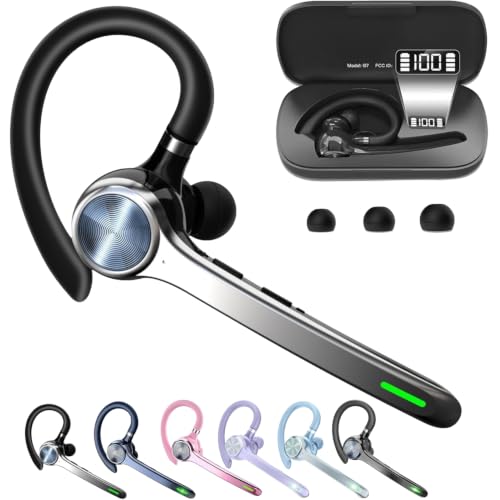
| Battery Capacity (Charging Case) | 500 mAh |
| Talk Time (Single Earphone) | 18–23 hours |
| Total Usage Time (Charging Case full charge) | up to ~72 hours (music/talk time estimated) |
| Bluetooth Version | 5.3 |
| Wireless Range | Up to 10 meters |
| Charging Interface | USB-C |
| Charging Case Display | Digital display showing remaining power |
You pop the HEIBAS headset in your ear and notice the tiny, unobtrusive feel that makes you forget it’s there while you’re on a long call. The moment you flip open the 500mAh case, the digital display greets you with a clear readout—no guessing how much juice you’ve got left.
First impression: the design is compact and lightweight, with a soft fit that doesn’t itch after hours. It stays put during busy commutes, and the option to swap tips (S/M/L) really helps dial in comfort.
You’ll appreciate how slim the earpiece is, especially if you wear glasses all day.
Setup is simple: a quick charge, a quick pair, and you’re connected via Bluetooth 5.3 with a clean, stable link up to about 10 meters. The dual-connection feature actually comes in handy when you’re jumping between your phone and laptop, so you don’t miss a beat.
During calls, the mute button on the earbud saves you from fumbling with your phone. It’s not universal across all apps, but for most calls you’ll find it handy enough to quiet background noise without reaching for the phone.
Music and talk time live up to the hype. You’ll likely get a solid day’s use on a single charge, and the case provides a reassuring extra day or two.
The USB-C charging is new-school convenient, and the display makes it easy to know when it’s time to top up.
In real-life situations, the HEIBAS headset shines during work-from-home calls and quick on-the-go chats. It’s not a gimmick headset; it actually delivers on comfort, stability, and solid battery life.
If you value a discreet, reliable wireless headset with easy charging, this is a smart pick.
What Key Features Should You Look for in a Wireless Charging Headset?
When looking for the best wireless charging headset, consider the following key features:
- Battery Life: A long battery life is crucial for uninterrupted use throughout the day, especially if you rely on your headset for calls and music. Look for headsets that offer at least 20-30 hours of playback time, which should include both the headset and the charging case capacity.
- Fast Charging Capability: Fast charging technology can significantly reduce the time needed to recharge your headset. Many modern wireless charging headsets utilize quick charge features that allow for several hours of use after just a short charging session, making them more convenient for users on the go.
- Sound Quality: High-quality audio is essential for an enjoyable listening experience. Look for headsets that offer features like noise cancellation, balanced sound profiles, and clarity across different frequencies to ensure that you receive the best possible sound.
- Comfort and Fit: The design and fit of the headset play a vital role in user experience, particularly for extended wear. Opt for headsets that provide adjustable ear tips or headbands, and materials that offer comfort without sacrificing sound quality.
- Durability and Build Quality: A robust build ensures that your headset can withstand daily wear and tear. Consider models that are water-resistant or made with high-quality materials to prolong their lifespan and maintain performance.
- Compatibility: Ensure that the headset is compatible with your devices, whether it’s smartphones, tablets, or computers. Check for Bluetooth versions and any proprietary features that might limit connectivity with certain brands or models.
- Controls and Features: User-friendly controls can enhance the overall experience. Look for headsets with touch controls, voice assistants, or customizable settings that allow for easy management of calls, music playback, and volume adjustments.
- Wireless Charging Convenience: A headset that supports wireless charging can simplify the recharging process without the hassle of cables. Ensure that the charging case is compatible with standard Qi wireless charging pads for added convenience.
What Advantages Do Wireless Charging Headsets Offer Over Traditional Options?
Wireless charging headsets provide several advantages over traditional wired options.
- Convenience: Wireless charging headsets eliminate the hassle of dealing with cords and cables.
- Portability: Many wireless charging headsets come with compact charging cases, making them easy to carry and charge on the go.
- Durability: Without wires to fray or break, wireless headsets often have a longer lifespan.
- Compatibility: They typically support various charging standards, making them versatile with different devices.
- Quick charging capabilities: Many wireless headsets offer rapid charging options, allowing for quick power boosts.
Convenience: With wireless charging headsets, users can simply place their headsets in a charging dock or case without the need to plug in a cable. This feature is especially beneficial for users who are on the move or often multitasking, as it allows for easy and quick recharging without the fuss of connecting wires.
Portability: Wireless charging headsets often come with travel-friendly charging cases that not only protect the headsets but also serve as portable chargers. This means you can charge your headsets while traveling, ensuring they’re always ready to use whenever you need them.
Durability: Since wireless headsets do not rely on physical connectors that can wear out over time, they tend to be more durable. Users can enjoy their headsets without the worry of frayed wires or broken connectors, which can be common issues with traditional wired options.
Compatibility: Many wireless charging headsets utilize universal charging standards like Qi, allowing them to be charged with various devices and platforms. This compatibility means users can often use the same charging pad for multiple gadgets, reducing the number of chargers needed.
Quick charging capabilities: Many modern wireless headsets are designed with fast charging features, enabling users to get several hours of use with just a short charging period. This is particularly useful for those who need to quickly recharge during a busy day or while on the go.
Which Brands Excel in Wireless Charging Headset Technology?
The main brands that excel in wireless charging headset technology are:
- Apple: Known for its seamless integration with the Apple ecosystem, Apple’s AirPods and AirPods Pro offer a convenient wireless charging case that enhances user experience.
- Samsung: Samsung Galaxy Buds series features wireless charging capabilities, allowing users to charge their earbuds easily with compatible devices or wireless charging pads.
- Sony: Sony’s WF-1000XM4 earbuds come equipped with a wireless charging case that allows for quick and easy charging, along with excellent sound quality and noise cancellation features.
- Jabra: Jabra’s Elite series, particularly the Elite 75t and Elite 85t, supports wireless charging, making it simple to maintain battery life while delivering robust audio performance.
- Bose: Bose QuietComfort Earbuds provide an exceptional listening experience and come with a wireless charging case that ensures you can keep your earbuds powered without the hassle of cables.
Apple’s AirPods and AirPods Pro feature a wireless charging case that not only allows for convenient charging but also offers quick access to Siri and seamless pairing with Apple devices. The case is compact and compatible with Qi-certified chargers, making it a versatile option for Apple users.
Samsung’s Galaxy Buds series enhances the user experience by allowing them to charge using the wireless power share feature found in many Samsung smartphones, effectively turning the phone into a charging pad. This flexibility and the earbuds’ sound quality make them a popular choice among Android users.
Sony’s WF-1000XM4 earbuds are celebrated for their superior noise cancellation and excellent sound quality, complemented by a wireless charging case that supports both USB-C and Qi wireless charging. This combination makes them a top-tier option for audiophiles seeking convenience.
Jabra’s Elite series is designed for both casual listeners and professionals, featuring a wireless charging option that allows users to stay connected without worrying about battery life. The earbuds also provide customizable sound profiles and active noise cancellation, enhancing their appeal.
Bose QuietComfort Earbuds not only deliver exceptional audio quality but also come with a wireless charging case that ensures users can charge their earbuds effortlessly. Bose is known for its commitment to sound quality, and these earbuds are no exception, making them ideal for those who prioritize audio performance.
What Are the Top Recommended Models for Wireless Charging Headsets?
The top recommended models for wireless charging headsets include a variety of options catering to different needs and preferences.
- Apple AirPods Pro: The Apple AirPods Pro offer an exceptional blend of sound quality, active noise cancellation, and a comfortable fit. With a wireless charging case, they provide convenience and ease of use, allowing users to charge on the go. The seamless integration with Apple devices also enhances the user experience, making them a favorite for Apple enthusiasts.
- Samsung Galaxy Buds Pro: Samsung Galaxy Buds Pro deliver rich sound quality and an impressive active noise cancellation feature, making them ideal for immersive listening. They come with a wireless charging case that supports both Qi and Samsung’s Fast Wireless Charging. Additionally, their IPX7 water resistance makes them suitable for various activities, including workouts and outdoor use.
- Sony WF-1000XM4: The Sony WF-1000XM4 is known for its outstanding noise cancellation capabilities and high-resolution audio performance. Their wireless charging case ensures that you can power up these earbuds without the hassle of cords. They also feature adaptive sound control, which adjusts sound settings based on your activity, providing a customized listening experience.
- Jabra Elite 85t: The Jabra Elite 85t combines superior sound quality with effective noise cancellation and a comfortable design. Their wireless charging case is compact and convenient, allowing for easy transport and powering. The earbuds also feature customizable sound profiles through the Jabra Sound+ app, catering to individual listening preferences.
- Bose QuietComfort Earbuds: Bose QuietComfort Earbuds are praised for their exceptional sound quality and world-class noise cancellation, making them perfect for audiophiles. With a wireless charging case, they offer the freedom of cable-free charging. Their stayHear Max tips enhance comfort and stability, ensuring a secure fit during prolonged use.
What Common Challenges Might You Encounter with Wireless Charging Headsets?
Common challenges with wireless charging headsets include:
- Inconsistent Charging: Wireless charging can sometimes be less reliable than traditional wired methods, leading to intermittent charging issues.
- Heat Generation: Wireless charging can generate heat, which may affect battery performance and longevity if the headset gets too warm during the charging process.
- Limited Compatibility: Not all wireless charging pads or stations are compatible with every headset, which can limit charging options for users.
- Charging Speed: Wireless charging tends to be slower than wired charging, meaning users may have to wait longer to fully charge their headsets.
- Physical Alignment: Proper alignment of the headset on the charging pad is crucial; misalignment can result in the headset not charging at all.
Inconsistent charging can be frustrating, as users may find their headsets not charging when expected, leading to unexpected dead batteries during use. This issue often arises from the technology’s reliance on precise placement and the distance between the coils in the headset and charger.
Heat generation during wireless charging is a concern as excessive heat can lead to reduced battery capacity over time. If a headset becomes too hot, it may not only slow down the charging process but also potentially cause damage to the internal components and battery health.
Limited compatibility is another challenge, as many wireless charging headsets may only work with specific charging pads. Users should ensure they have the right equipment to avoid frustration and wasted time trying to charge their devices.
Charging speed is often slower with wireless charging, which can be inconvenient for users who need quick power-ups before heading out. This slower charging rate can be a significant drawback for individuals with busy lifestyles who rely on fast recharge times.
Physical alignment is critical for effective wireless charging; if a headset is not positioned correctly on the charging pad, it may not charge at all. This necessitates careful placement and can be cumbersome, especially in low-light situations or when multitasking.
How Can You Ensure the Longevity of Your Wireless Charging Headset?
To ensure the longevity of your wireless charging headset, consider the following practices:
- Use Quality Charging Equipment: Always use the manufacturer-recommended wireless charger or a high-quality third-party option that meets the necessary specifications. Low-quality chargers can lead to overheating or overcharging, damaging the battery over time.
- Avoid Extreme Temperatures: Keep your wireless charging headset away from extreme heat or cold, as temperature fluctuations can affect battery performance and lifespan. Ideal operating temperatures are typically between 20°C to 25°C (68°F to 77°F).
- Regularly Clean the Charging Port: Dirt and debris can accumulate in the charging area, which may disrupt the charging process. Gently clean the charging contacts and area with a soft, dry cloth to maintain a good connection.
- Limit Wireless Charging Frequency: While wireless charging is convenient, it’s beneficial to occasionally charge your headset using a wired connection. This can help recalibrate the battery and ensure it remains healthy over time.
- Monitor Battery Health: Keep an eye on the battery performance and lifespan through your device settings if available. If you notice significant drops in battery life or performance, consider replacing the battery or the headset.
- Store Properly When Not in Use: If you’re not using your headset for an extended period, store it in a cool, dry place and preferably at a charge level between 30% and 70%. This helps preserve battery health and ensures that your headset remains ready for use when needed.
What Does the Future Hold for Wireless Charging in Headsets?
The future of wireless charging in headsets looks promising with advancements in technology and growing consumer demand.
- Improved Efficiency: The next generation of wireless charging technology is expected to provide faster charging times and greater energy efficiency. This means users can quickly recharge their headsets, minimizing downtime and enhancing the overall user experience.
- Enhanced Compatibility: Future wireless charging headsets are likely to adopt universal charging standards such as Qi or other emerging technologies. This will allow for greater compatibility across different devices, enabling users to charge multiple gadgets with the same charger.
- Integration with Other Technologies: As wireless charging becomes more commonplace, integration with other technologies like smart home systems or wearables is anticipated. This could lead to innovative features such as charging headsets automatically when they are placed near a charging pad or dock.
- Design Innovations: The design of headsets will evolve to accommodate wireless charging without compromising aesthetics or functionality. Manufacturers may develop sleeker designs with built-in charging stations or cases that enhance portability while providing power on the go.
- Environmental Considerations: Future developments in wireless charging will likely focus on sustainability, utilizing eco-friendly materials and energy sources. This shift is driven by consumer preferences for environmentally responsible products, pushing manufacturers to adopt greener practices.