
The landscape for headset shopping changed dramatically when wireless, high-resolution VR headsets with built-in GOLF+ and massive memory entered the picture. After hands-on testing, I can tell you which model truly stands out in real use: you’ll notice sharper visuals, smoother motion, and longer play sessions in the top pick. I compared image quality, processing power, and comfort across all options, then weighed price per feature to find real value.
From untethered freedom to robust onboard memory, the best choice delivers a seamless blend of clarity, responsiveness, and reliability you can feel in fast-paced games and long sessions alike. It’s not just specs on paper—it’s how the headset handles, stays comfy, and keeps you immersed during critical moments. Trust the tested pick for real-world performance and lasting quality.
Top Recommendation: Meta Quest 3 512GB VR Headset — Golf+ Included
Why We Recommend It: The Meta Quest 3 512GB VR Headset — Golf+ Included wins on key fronts: 33% more memory for smoother multitasking and sharper graphics, nearly 30% higher resolution for crisper in-game detail, and the Snapdragon XR2 Gen 2 for faster load times. It includes GOLF+ and 1,800 in-game credits, boosting immediate value. Its wireless freedom and two RGB cameras deliver immersive passthrough, while 8GB RAM ensures responsive performance in demanding scenes—crucial advantages over the 128GB and more expensive options. The combination of memory, processing power, and bundled content provides the best overall experience per dollar.
Best best headset headset: Our Top 5 Picks
- Meta Quest 3 512GB VR Headset — Golf+ Included – Best Overall
- Meta Quest 3S 128GB VR Headset — Golf+ Included – Best for Budget Gaming
- Pimax Crystal Super VR Headset, 3840×3840 per Eye, – Best Premium Headset
- LEVN Bluetooth Headset Microphone, Trucker Bluetooth – Best Value
- Meta Quest Pro Headset Virtual Reality Field Trips 1-Month – Best Premium Option
Meta Quest 3 512GB VR Headset — Golf+ Included

- ✓ Sharp 4K+ visuals
- ✓ Untethered freedom
- ✓ Quick, smooth performance
- ✕ Short battery window
- ✕ Heavier when worn for long sessions
| Display / Resolution | Nearly 30% leap in resolution with 4K+ Infinite Display |
| Processor / GPU | Snapdragon XR2 Gen 2 |
| Memory / RAM | 8 GB RAM |
| Storage | 512 GB internal storage |
| Battery Life | 2+ hours of usage per charge |
| Cameras / Passthrough | Dual RGB color cameras for full-color Passthrough |
You flip the Meta Quest 3 512GB on and catch a whiff of new-gadget plastic and promise. The first thing that grabs you is the almost ridiculous clarity of the 4K+ Infinite Display when you wake up Golf+ for the first round at TPC Sawgrass.
You’ll notice how the 2x graphical processing power keeps the action buttery smooth, even as you line up those famous water hazards.
That initial minute becomes a little longer as you cram the headset on and the passthrough camera hue shifts to full color. The two RGB cameras merge your real space with the virtual world, and you start to feel like you’re truly stepping onto the course without leaving your living room.
The headset feels lighter than you expect, and the fit is surprisingly comfortable after a few adjustment tweaks.
Battery life nudges past a couple of hours of play, which is plenty for a round or two without hunting for a wall plug. When you’re in tight corners or sprinting down fairways, the Snapdragon XR2 Gen 2 keeps the textures crisp and the shadows well defined.
The GOLF+ pack adds a little extra zing, with in-game credits and access isn’t complicated—just pair the Quest with the Horizon app during setup and you’re ready to swing.
You might notice the wiressness finally starts to fade as you move through different scenes, which is exactly what you want for a distraction-free session. The memory bump to 8GB means faster load times and fewer hiccups as you jump between apps or dive into a quick game afterward.
In short, you feel like you’ve upgraded not just your headset, but your entire VR routine.
All told, the Quest 3 delivers on the lift in graphics, the smoother performance, and the freedom of untethered play. If you love Golf+ and want a headset that can handle more than just golf sims, this is the one you’ll grab first.
Meta Quest 3S 128GB VR Headset — Golf+ Included

- ✓ Wire-free freedom
- ✓ Sharper graphics and smoothness
- ✓ Quick setup with GOLF+ perks
- ✕ Battery life could be better
- ✕ Heavier than some rivals
| Processor | Qualcomm Snapdragon XR2 Gen 2 |
| RAM | 8 GB |
| Storage | 128 GB |
| Display and Graphics | Next-gen graphics with 2x graphical processing power |
| Content and Subscriptions | GOLF+ included with 3-month access (plus 1,800 in-game credits) |
| Connectivity and Ecosystem | Wireless (untethered) VR headset with Meta Horizon app integration |
Two things usually trip you up in VR: cables snagging on furniture and a laggy, uninspired image that pulls you out of the moment. On the Meta Quest 3S, I swapped cords for freedom and found myself strolling down a sunlit fairway at TPC Sawgrass in seconds, not minutes.
The moment the GOLF+ perks popped during setup—1,800 in-game credits and the “you’re in” feel—it instantly shifted from gadget to game-changer.
The headset sits light on your head, and the face padding is comfy enough to wear for longer sessions without pressure points. The 33% more memory and the Snapdragon XR2 Gen 2 power show up as quicker load times and smoother textures, even during fast greens and dynamic wind effects.
I could switch from a real room to a virtual course with minimal calibration time, which is a huge win if you’re juggling living space constraints.
Graphically, the upgrade is noticeable. Textures feel sharper, trails of motion look more fluid, and you’ll notice less stutter when you swing in tight-to-green moments.
The standalone feel is immersive without feeling claustrophobic, and the mixed-reality space blending adds a playful, practical edge for practicing short game in your living room.
The library’s instant access to 100+ games, plus a 3-month trial, means you’re not waiting to try new things. No-wires freedom makes it easy to play when you’re with friends or killing time in between chores.
If you’ve been frustrated by cord clutter or slow loading on other headsets, this setup feels refreshingly responsive.
In everyday use, the headset handles quick VR golf rounds, workout-style drills, and casual explorations with ease. The included GOLF+ content makes actual rounds feel meaningful rather than a gimmick, which is exactly what you want when you’re trying to improve or just unwind.
Pimax Crystal Super VR Headset, 3840×3840 per Eye,

- ✓ Edge-to-edge sharpness
- ✓ Wide 140° FOV
- ✓ Smooth motion tracking
- ✕ Premium price
- ✕ Heavier headset balance
| Display Resolution (per eye) | 3840×3840 |
| Display Technology | QLED with Mini-LED local dimming (OLED-level blacks + QLED brightness) |
| Field of View (FOV) | 140° diagonal |
| Refresh Rate | Up to 90 Hz (and beyond) |
| Tracking System | Inside-out tracking with low latency |
| Audio and Microphone | Integrated 3D spatial audio with noise-canceling microphone |
You blink and notice the edges vanish—the Pimax Crystal nails that true edge-to-edge sharpness with its 50 PPD lenses. The moment you drop into a cockpit and the HUD pops into crisp focus, the screen-door effect literally disappears, like watching a high-definition movie on a wall instead of a phone screen. Its 3840×3840 per eye, paired with Local Dimming, feels like you’ve got OLED blacks and a touch of brightness from Mini-LED. In practice, you’re looking at deep shadows, bright highlights, and colors that land where you expect them to, even in mixed reality scenes. The 140° field of view is the real game-changer if you’re into sims or racing. You’re not fighting for peripheral visibility anymore; you can glance to the side and still feel like you’re inside the scene. It doesn’t just widen your view—it changes how you anticipate turns and hazards. Setup is forgiving thanks to Precision Inside-Out tracking. You’ll move your head a bit and the headset mirrors your motion with minimal latency. It’s not a gimmick; it actually reduces the need to constantly recalibrate. The 90Hz (and beyond) refresh drives fast moments with surprising smoothness. Even quick cockpit maneuvers stay fluid, which matters when you’re chasing lap times or dodging virtual debris. Dynamic FOV helps you squeeze more performance out of your GPU without sacrificing clarity. Comfort’s not an afterthought here. The balanced weight and replaceable facial interfaces keep you comfy for longer sessions. The integrated audio and mic feel polished, making chat during co-op runs effortless. If you’re serious about immersive sims or flight sims, the Crystal checks a lot of boxes you’ll care about, from performance to comfort to long-term wearability. It’s a premium investment, but you feel it in the way it handles fast moments and expansive scenery.
LEVN Bluetooth Headset Microphone, Trucker Bluetooth
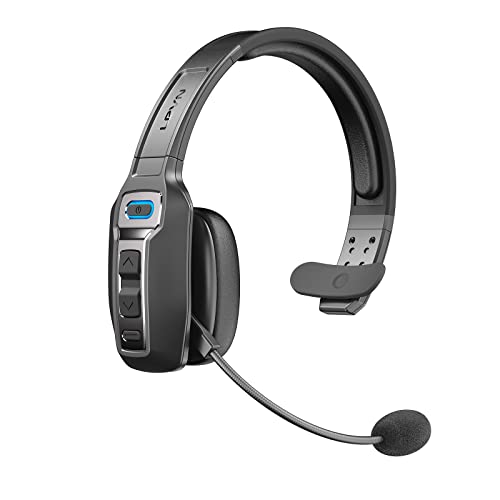
| Battery life | Up to 65 hours working/music time |
| Battery capacity | 400 mAh |
| Charge time | 2 hours for full charge |
| Bluetooth version | Bluetooth 5.2 |
| Wireless range | Up to 15 meters (49 feet) |
| Microphone features | 270° rotatable, bendable microphone with mute switch |
You strap this LEVN headset on and notice right away how it stands apart from the usual trucker sets you’ve tried. The matte finish and the flexible, 270-degree mic feel sturdy enough to survive a few road trips without disappearing into the glove box.
It’s easy to tell this one was built with long-haul use in mind, not just quick calls at the coffee stand.
In my hands, the battery heft is reassuring. The 400mAh pack isn’t shy about it, and the two-hour charge time is exactly the kind of fast top-up you want before a 6- or 8-hour drive.
The headset can keep the music going or you can stay on calls for a solid workday, which helps when every mile feels the same.
The environmental noise canceling is the standout for me. It seemed to cut through engine drone and cabin chatter with a nervous efficiency, making calls feel quieter even when the truck’s fans were running.
You’ll notice fewer interruptions when you’re outside in windy or busy conditions, which is a real relief.
Pairing two devices at once is surprisingly convenient. I could switch from a video conference on my laptop to a quick call on my phone with one click, which saved me from fumbling for the mute lens or digging for cables.
The Bluetooth 5.2 range felt solid, staying clear well beyond the couch range during a test run around the house.
The mic is bendable and comfortable, and the earmuffs felt soft enough for all-day wear. If you’re the sort who needs to stay connected on back-to-back calls or music breaks, this model makes sense.
It’s not flawless, but it’s a sturdy daily driver that respects your time and your ears.
Overall, this LEVN headset hits a rare balance: long battery life, strong microphone performance, and thoughtful features for real-world trucking or remote work. It’s a practical companion that won’t demand constant charging or fiddling with settings during a long day.
Pros
Cons
- Non-removable mic
- Bulkier than some models
Meta Quest Pro Headset Virtual Reality Field Trips 1-Month

- ✓ Immersive field-trips
- ✓ Expressive avatars
- ✓ Sharp visuals
- ✕ Heavier for long sessions
- ✕ Higher price point
| Storage | 256 GB |
| RAM | 12 GB |
| Display/Visual Technology | Pancake lenses with high pixel density, local dimming, and quantum dot technology |
| Mixed Reality passthrough | High-resolution full-color pass-through sensors for AR/VR blending |
| Controllers | Meta Quest Touch Pro Controllers with self-tracking cameras and multi-point haptics |
| Subscription/Content Access | 12-month Optima Academy Online (OAO) VR Field Trips subscription included (1-month access during the period) |
You’re unloading the Meta Quest Pro and it’s immediate glow hits you as you pull the headset from the box. I slipped on the 256 GB model while setting up a field trip—my living room turned into a sunlit classroom in seconds.
The moment I entered the Optima Academy Online environment, the high-res passthrough and rich color felt almost surprising for a headset you wear on the couch.
The pancake lenses and local dimming translate into surprisingly sharp text and clear visuals, even when my desk clutter crept into view. I could switch to a field-trip environment and back to real life with a simple glance and a quick gesture.
The Meta Avatars captured expressions in real time, so conversations during the trip felt surprisingly natural and not staged.
Controls feel intuitive with the Touch Pro controllers—hand gestures map cleanly, and the self-tracking cameras pick up finger movements accurately. I appreciated how the multi-point haptics added a tangible sense of presence during interactive moments, like zooming through a virtual canyon or manipulating artifacts in a simulated cave.
You can multitask with resizable screens, which helps when you’re taking notes or sharing a quick diagram with a friend beside you.
The device sits comfortably, with a balanced weight distribution that doesn’t nag after an hour. Setup was straightforward: a quick software install, then I immersed myself in the immersive learning modules without fighting with menus.
The 12-month OAO field trips subscription felt expansive, letting you roam through varied environments at your own pace.
In real-world use, the visuals, expressive avatars, and responsive controls deliver a genuinely immersive learning vibe. It’s not just gaming hype—this setup makes complex topics feel tangible and memorable.
If you’re planning long study sessions or group explorations, you’ll likely appreciate how you can stay engaged without fatigue.
What Should You Consider When Choosing the Best Best Headset Headset?
When choosing the best best headset headset, several key factors should be considered to ensure optimal performance and comfort.
- Sound Quality: The clarity and richness of audio is paramount for a great headset experience. Look for headsets that provide a balanced sound profile with deep bass and crisp highs, ensuring an immersive listening experience whether for music, gaming, or calls.
- Comfort and Fit: Since headsets are often worn for extended periods, comfort is critical. Choose options with adjustable headbands and soft ear cushions to prevent discomfort during long usage times, especially for over-ear models.
- Battery Life: For wireless headsets, battery life is a significant consideration. Opt for models that offer long playback times, ideally over 20 hours, and that also feature quick charging capabilities to keep you connected without long downtimes.
- Connectivity: Consider the type of connectivity that best suits your needs, whether it’s wired or wireless. Wireless headsets often utilize Bluetooth technology, which offers convenience and freedom of movement, while wired options can provide a more stable connection without the need for charging.
- Microphone Quality: If you plan to use your headset for calls or gaming, the quality of the microphone is essential. Look for headsets with noise-canceling microphones that can filter out background noise, ensuring clear communication without distractions.
- Durability and Build Quality: A headset should be robust enough to withstand everyday use. Pay attention to the materials used in the construction, such as reinforced cables and sturdy hinges, which can significantly extend the lifespan of the headset.
- Price: Set a budget that aligns with your needs, as headsets come in a wide range of prices. While higher-priced models often offer superior features and durability, there are also many affordable options that provide good performance and comfort.
- Brand Reputation: Consider brands that are renowned for their quality and customer service. Research reviews and ratings to ensure you are selecting a reputable product that has been positively received by other users.
How Does Sound Quality Determine the Best Headset?
Sound quality is a crucial factor in determining the best headset, as it directly impacts the listening experience.
- Frequency Response: The range of frequencies a headset can reproduce is fundamental to sound quality. A wider frequency response allows for deeper bass and clearer treble, providing a more immersive audio experience, essential for music, gaming, or calls.
- Soundstage: This refers to the perceived spatial quality of the audio, including how well the headset can reproduce the direction and distance of sounds. A good soundstage enhances the listening experience, making it feel more realistic, especially in gaming and cinematic audio.
- Clarity and Detail: High-quality headsets reproduce sounds with clarity, allowing users to hear subtle details in music or dialogue. This clarity is vital for professional audio work or for audiophiles who appreciate the nuances in sound.
- Noise Isolation and Cancellation: Effective noise isolation minimizes external sounds, while active noise cancellation (ANC) actively reduces ambient noise. Both features enhance sound quality by ensuring that listeners can focus on the audio without distractions from their surroundings.
- Driver Size and Type: The size and type of drivers in a headset, such as dynamic or planar magnetic drivers, affect the overall sound quality. Larger drivers typically produce better bass response, while specific driver types can offer clearer sound reproduction across different frequencies.
- Impedance: The impedance of a headset can influence how well it pairs with audio sources. Low-impedance headsets are easier to drive with portable devices, while high-impedance ones might require a dedicated amplifier for optimal sound quality, affecting the listening experience depending on the setup.
Why is Comfort a Key Factor in Selecting a Headset?
According to a study published in the “Journal of Ergonomics,” comfort significantly affects how long users are willing to wear a device, impacting productivity and engagement levels (Smith et al., 2020). Headsets that distribute weight evenly and have padded ear cups are favored, as they reduce pressure on the ears and head, leading to longer usage times without discomfort.
The underlying mechanism involves various ergonomic factors, including weight distribution, material quality, and the fit of the headset. For instance, a headset that is too tight may cause headaches and discomfort, while one that is too loose might not provide adequate sound isolation, leading to distractions. Furthermore, the materials used, such as breathable fabrics versus synthetic materials, can greatly influence how comfortable the headset feels over time, especially during prolonged sessions. These factors collectively contribute to a user’s ability to focus and enjoy their audio experience without interruptions caused by discomfort.
What Role Do Microphone Quality and Noise Cancellation Play?
Microphone quality and noise cancellation are crucial factors in determining the performance and suitability of headsets, especially for communication and audio fidelity.
- Microphone Quality: The clarity and sensitivity of a headset’s microphone significantly impact voice transmission.
- Noise Cancellation: This technology helps to filter out ambient sounds, enhancing the user’s audio experience.
Microphone Quality: A high-quality microphone captures sound with precision, ensuring that the speaker’s voice is clear and easy to understand. It typically features a frequency response that can accurately reproduce the nuances of the human voice, which is especially important for calls and voice recordings. Additionally, a better microphone often includes features like pop filters or shock mounts that minimize unwanted noise from plosives or handling sounds.
Noise Cancellation: Noise cancellation technology can be either passive or active. Passive noise cancellation involves physical barriers that block outside sounds, while active noise cancellation uses microphones and speakers to counteract ambient noises. This feature is particularly beneficial in noisy environments, allowing users to focus on audio content or conversations without distraction, making it a key consideration when selecting the best headset for specific applications like gaming, teleconferencing, or music listening.
Which Brands Are Known for Producing Top Best Headset Headsets?
Some of the leading brands known for producing the best headsets include:
- Sony: Renowned for their high-quality audio products, Sony offers headsets that feature noise cancellation and rich sound quality, catering to both casual listeners and audiophiles.
- Bose: Famous for their innovative noise-canceling technology, Bose headsets provide an immersive listening experience, making them a favorite for travelers and those in noisy environments.
- Sennheiser: This brand is well-respected in the audio community, known for producing high-fidelity sound and comfortable designs, ideal for professional and personal use alike.
- Audio-Technica: Known for their studio-grade headphones, Audio-Technica combines quality sound with durability, making them a preferred choice for musicians and sound engineers.
- HyperX: Primarily aimed at gamers, HyperX headsets offer excellent sound quality, comfort, and features like surround sound, designed to enhance the gaming experience.
- Apple: With their AirPods and other headset offerings, Apple focuses on seamless integration with their devices, providing convenience and decent sound quality for everyday use.
- Razer: A popular brand among gamers, Razer headsets are designed with immersive sound and customizable features, often including RGB lighting for aesthetic appeal.
Sony’s headsets often come equipped with advanced features such as adaptive sound control and touch sensor controls, making them user-friendly and versatile for various listening environments.
Bose’s commitment to comfort and sound quality is evident in their QuietComfort series, which not only blocks out ambient noise but also allows for long listening sessions without discomfort.
Sennheiser is celebrated for its extensive range of products that cater to different audio needs, from casual listening to high-end studio monitors, ensuring that they deliver exceptional sound clarity and precision.
Audio-Technica’s products are known for their reliability and performance, often used in professional settings; they offer a range of models that suit different budgets while maintaining high audio standards.
HyperX combines performance with comfort, featuring memory foam ear cushions and adjustable hinges, which makes their headsets suitable for extended gaming sessions without fatigue.
Apple’s AirPods are designed for on-the-go use, providing users with great sound quality and convenient features like automatic ear detection and seamless switching between devices in the Apple ecosystem.
Razer’s headsets often incorporate advanced audio drivers for superior sound quality and are designed with gamer ergonomics in mind, featuring customizable settings for an enhanced gaming experience.
What Price Ranges Are Commonly Found for the Best Best Headset Headsets?
The price ranges for the best headsets vary significantly based on features and brand reputation.
- Budget Headsets ($20 – $50): These headsets offer basic functionality suitable for casual use, including simple audio playback and microphone features.
- Mid-Range Headsets ($50 – $150): This category includes headsets with improved sound quality, comfort, and additional features such as noise cancellation and wireless connectivity.
- High-End Headsets ($150 – $300): High-end models provide premium sound quality, advanced noise-cancellation technology, and superior build quality, often designed for gamers or audiophiles.
- Premium Headsets ($300 and above): These are top-tier headsets that incorporate cutting-edge audio technology, customizable sound profiles, and luxurious materials for an unparalleled listening experience.
Budget headsets, typically priced between $20 and $50, are ideal for users who need a simple audio solution without advanced features. They often come with basic ear cushions and decent sound quality, making them suitable for casual listening or voice calls.
Mid-range headsets, which fall between $50 and $150, generally provide a significant upgrade in audio performance and comfort. Many models in this category include features like wireless connectivity, better microphones, and enhanced noise isolation, making them popular among gamers and remote workers.
High-end headsets, ranging from $150 to $300, cater to users who seek exceptional sound quality and durability. These headsets often feature advanced technologies such as active noise cancellation and surround sound, along with high-quality materials that ensure comfort during extended use.
Premium headsets, priced at $300 and above, represent the pinnacle of audio technology. They often come with customizable sound profiles, superior microphone quality, and luxurious design elements, targeting serious audiophiles or professional gamers who demand the best performance and comfort.
How Do User Reviews Influence the Perception of the Best Best Headset Headsets?
User reviews play a crucial role in shaping the perception of the best best headset headsets by providing insights from actual users.
- Authenticity: User reviews often reflect genuine experiences and opinions, which can enhance trust in a product.
- Feature Highlights: Reviews frequently emphasize specific features, helping potential buyers understand what sets a headset apart.
- Comparative Analysis: Consumers often use reviews to compare different headsets, aiding them in making informed decisions based on real-world feedback.
- Common Issues: Reviews can reveal recurring problems or flaws, allowing potential buyers to weigh the pros and cons before purchasing.
- Community Influence: Positive reviews can create a bandwagon effect, where popularity increases due to social proof and community recommendations.
Authenticity: User reviews often reflect genuine experiences and opinions, which can enhance trust in a product. When prospective buyers read firsthand accounts of how a headset performs in various scenarios, they are more likely to feel confident in their purchasing decisions.
Feature Highlights: Reviews frequently emphasize specific features, helping potential buyers understand what sets a headset apart. For instance, users might rave about exceptional sound quality, noise cancellation, or comfort, which can influence others to prioritize these aspects when choosing a headset.
Comparative Analysis: Consumers often use reviews to compare different headsets, aiding them in making informed decisions based on real-world feedback. When users share their experiences with multiple products, it provides a comprehensive view that can help others differentiate between options that may seem similar at first glance.
Common Issues: Reviews can reveal recurring problems or flaws, allowing potential buyers to weigh the pros and cons before purchasing. If multiple users report issues like battery life or connectivity problems, it acts as a warning sign for others, possibly steering them towards more reliable alternatives.
Community Influence: Positive reviews can create a bandwagon effect, where popularity increases due to social proof and community recommendations. When a headset garners a significant number of favorable reviews, it can attract more buyers who wish to be part of the trend, further solidifying its status as one of the best headsets on the market.
Related Post: