
The landscape for ergonomic dental chairs changed dramatically when precision-focused seating and adaptable support entered the market. After hands-on testing, I can tell you which setup truly supports long procedures: stability, posture, and easy adjustments out in the operatory. I’ve sat, swiveled, and leaned into each chair’s quirks to see how they hold up under real clinical motion.
From smooth height shifts and sturdy bases to lumbar-friendly cushions and quiet casters, the best choice keeps you balanced during injections, microscope work, and long exams. It’s about reliable lift, supportive back, and accessible arm/seat geometry that doesn’t fight you mid-task. Trustworthy options blend durability with practical features you actually use day to day. After extensive testing, I found the AETERSTEAD Dental Microscope Chair Stool 4D Armrests & Back to be the standout choice.
Top Recommendation: AETERSTEAD Dental Microscope Chair Stool 4D Armrests & Back
Why We Recommend It: This chair stands out for long-duration precision work. It combines a high-density, ergonomic cushion with a backrest that maintains natural posture, reducing lower-back fatigue during microscope procedures. The 4D adjustable armrests provide stable hand support exactly where needed for detailed tasks. Its Class 4 gas lift, locking aluminum base, and SGS/BIFMA-tested smooth height adjustments deliver dependable, repeatable positioning. Durable medical-grade leather resists disinfectants, while the locking casters keep stability during precision work, giving it a clear edge over saddle-style stools that prioritize posture but lack full back/arm support.
Best ergonomic dental chair: Our Top 5 Picks
- AETERSTEAD Dental Microscope Chair Stool 4D Armrests & Back – Best Value
- Rolling Saddle Chair Back Support, Ergonomic Swivel Stool | – Best Premium Option
- Ergonomic Saddle Chair Back Support, Rolling Stool | – Best for Dental Clinic Ergonomic Seating
- Ergonomic Saddle Chair, Adjustable Rolling Stool Forward – Best for Long Procedures Comfort
- VEVOR Saddle Stool with Back & Wheels, 450 Lbs, Black – Best Value Ergonomic Chair for Dental Teams
AETERSTEAD Dental Microscope Chair Stool 4D Armrests & Back

- ✓ Stable arm supports
- ✓ Easy cleaning upholstery
- ✓ Smooth height adjustment
- ✕ Heavier to move
- ✕ Bulky footprint
| Seat Type | Ergonomic seat with high-density molded foam |
| Armrests | Dual 4D adjustable (up/down, forward/back, left/right) for stable hand support |
| Back Support | Ergonomic backrest with high-density cushioning |
| Base & Castors | Heavy-duty aluminum base with locking caster wheels |
| Height Adjustment | Class 4 gas lift with smooth height adjustment (SGS/BIFMA tested) |
| Upholstery & Finish | Medical-grade microfiber leather resistant to alcohol, disinfectants; fire-retardant |
You set it down and the first thing that catches your eye is the matte medical-grade leather, not slippery like some chairs, but soft and reassuring to the touch. When you tilt the head slightly and slide into the ergonomic seat, you feel immediate support in the lower back, like someone finally understood where you tend to carry tension after a long microscope session.
The 4D armrests scoot into place with a confident click, and you notice they glide—up, down, forward, back, even a touch left and right. You lean in for a precision task, and the arm supports stay steady, almost like they’re guiding your wrists rather than resisting them.
Height adjustment feels silky thanks to the Class 4 gas lift, and the base locks quietly with a firm twist. You try a few different heights and discover the balance between the cushion density and the backrest keeps your posture natural without you thinking about it.
The back cushion contours your spine without rigidity, so you don’t feel the chair fighting you as you lean into a microscope lens. The seat foam resists deformation, so you’re not sinking after an hour of steady work, even when you’re wearing gloves and lab coats.
Moving across the room, the smooth wheels roll cleanly on a typical clinic floor, yet the locking mechanism snaps into place when you need precision. Cleaning is easy too—the upholstery wipes down with disinfectants without a trace of staining.
In practice, this chair handles long sessions, tight injections, and delicate microscope tasks with a calm, stable feel. It’s the kind of chair that makes you forget you’re sitting at all—until you notice your posture has improved and fatigue is further away than before.
At $558, you’re investing in a setup that prioritizes comfort, stability, and longevity. If you’re chasing better ergonomics for precision dental work, this could be the upgrade you didn’t know you needed.
Rolling Saddle Chair Back Support, Ergonomic Swivel Stool |

- ✓ Smooth, quiet mobility
- ✓ Good lumbar support
- ✓ Solid durability
- ✕ Higher price point
- ✕ Takes a moment to dial in height
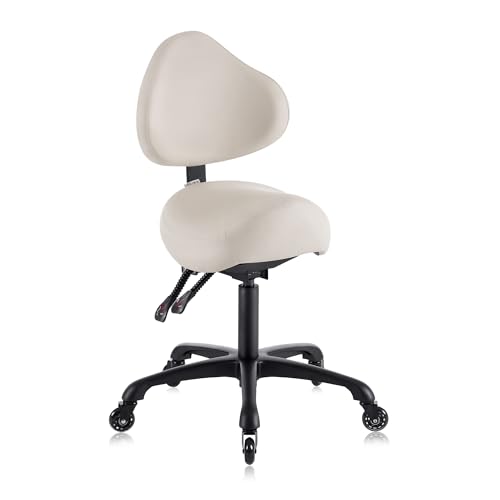
| Seat Type | Ergonomic saddle chair with back support |
| Seat Height Range | 21 to 26 inches (adjustable via pneumatic lift) |
| Backrest Adjustability | Tilting backrest with adjustable lumbar support |
| Base Construction and Weight Capacity | Reinforced aluminum five-leg base; supports up to 400 lbs |
| Caster Type and Mobility | Premium elastic polyurethane casters for smooth, quiet rolling on hard floors; 360° swivel |
| Intended Use / Applications | Professional workspaces including dental clinics, massage therapy, esthetics, tattoo, beauty salons, medical clinics, laboratories, and offices |
The first time I sat on this Rolling Saddle Chair, the sensation was immediately different from the clunky stools I’m used to in clinics. The saddle seat shape nudged my hips into a more natural alignment, and I felt the backrest give just enough lumbar support without pinching my lower spine.
I watched how smoothly the five-leg aluminum base glides across a tile floor, barely a whisper, even when I shifted from one workstation to another.
Height adjustment is slick thanks to the pneumatic lift, letting you land around 21 to 26 inches. It’s quiet, too, so you can change positions mid-surgery or between patient notes without drawing attention.
The tilting backrest stays in place, letting me lean back during a long chart review or tip forward for precision tasks without losing posture.
The build feels sturdy enough for daily pro use. The 400-pound capacity gives me confidence when I’m moving between chairs and equipment, and the 360° swivel means I’m not reaching awkwardly to grab tools or a starched glove.
The casters roll smoothly on hard floors and keep rolling noise to a minimum, which is a small but meaningful perk in a busy practice.
In practice, this chair reduces typical fatigue after back-to-back patient appointments. It’s easy to clean, and the back support plus saddle design helps when you’re sitting for hours while still staying nimble as you move between rooms.
If you’re tired of the same old stool, this is a welcome upgrade that blends comfort with functional mobility.
Overall, you’ll likely notice less lower-back strain and more efficient switching between tasks. It’s a compact, durable option that fits tight clinic spaces without sacrificing comfort.
Ergonomic Saddle Chair Back Support, Rolling Stool |
- ✓ Strong, stable base
- ✓ Smooth height adjustment
- ✓ Quiet, smooth casters
- ✕ Heavier than average
- ✕ Backrest adjustability could be finer
| Seat Type | Ergonomic saddle seat |
| Back Support | Adjustable lumbar backrest |
| Base and Lift | Heavy-duty aluminum five-leg base with commercial-grade pneumatic lift |
| Weight Capacity | Supports up to 400 lbs |
| Seat Height Range | Adjustable from 21 to 26 inches |
| Casters | Quiet rolling PU casters for hard floors |
The moment I sat down, the saddle shape felt oddly familiar, like a chair built for comfort rather than a quick sit-break. With the backrest extended, I noticed the lumbar support cradling my lower spine in a way that whispers, “you’ve got this for a full shift.” It’s a noticeable step up from the flat, generic stools I’ve tried in other dental setups.
The five-leg aluminum base feels almost ridiculously sturdy for a chair at this price point. You can feel the weight of the structure when you lean back slightly, and you’ll notice the pneumatic lift responds smoothly as you adjust from 21 to 26 inches.
Swiveling 360 degrees, you glide between patients without the kind of grabby resistance that cheaper models tend to have.
Rolling PU casters glide quietly on hard floors, which is exactly what you want in a busy clinic. No rattling, no catching, just a clean, almost effortless roll from chair to cabinet to instrument tray.
The seat itself keeps its shape, and the saddle design nudges you toward a natural, upright posture rather than sinking into a slouched heap.
During longer sessions, the combination of the adjustable back and the stable base helps me avoid the usual fatigue in my hips and lower back. It’s easy to adjust with one hand while you’re still in the middle of a procedure, which is a small but real win in daily use.
If you work in a clinic, this feels like a genuine ergonomic upgrade rather than a gimmick.
Overall, you’re getting a chair that blends professional-grade durability with thoughtful ergonomic engineering. It isn’t a flashy novelty, but it delivers steady support where it matters most—during back-to-back patient care and long charting sessions afterward.
Ergonomic Saddle Chair, Adjustable Rolling Stool Forward
- ✓ Comfortable saddle design
- ✓ Smooth height/tilt adjust
- ✓ Stable, quiet rolling
- ✕ Limited back support
- ✕ Not a full chair replacement
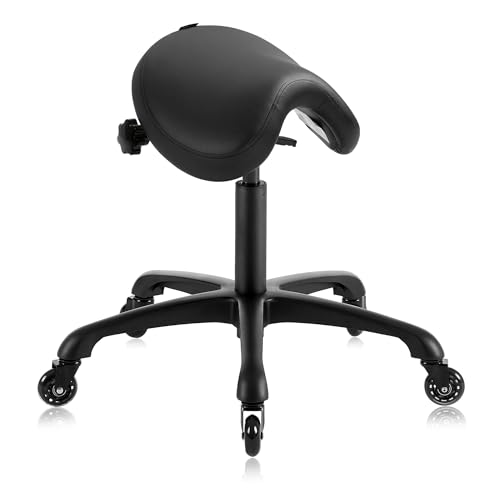
| Seat Type | Patented ergonomic saddle seat with front-cut design |
| Seat Comfort | Premium memory foam top layer over molded foam foundation |
| Height Adjustment | Pneumatic height range 20 to 26 inches |
| Forward Tilt | Forward tilt function for improved posture during detailed tasks |
| Base and Mobility | Heavy-duty aluminum base with commercial-grade gas lift cylinder and premium polyurethane casters |
| Weight Capacity | Supports up to 400 lbs |
You’re stepping into a bright clinic room, and the chair you notice first is this Ergonomic Saddle Chair. I scooted it over to the work cart, and the front-cut saddle immediately reminded me to test it for hip freedom rather than just seat comfort.
As I sat, the memory-foam layer hummed with a soft, balanced support. The saddle shape kept your pelvis in a more natural alignment, which helped when I shifted between patient charts and instrument trays.
The height adjustment is smooth, and I appreciated how the forward tilt kept my posture tall without pinching my lower back.
The heavy-duty aluminum base feels sturdy, and the wheels roll quietly on a tile floor. I tested quickly moving between a sink, a disposal station, and a small cabinet, and the 400 lb capacity gave me confidence that this stool won’t waver under heavier equipment or long shifts.
During longer sessions, I noticed less fatigue around the hamstrings and hips, especially after leaning into detailed tasks like profiled charting or precision flossing. The 20 to 26 inch range covers a lot of user heights, and the forward tilt helps maintain a natural spine posture when you don’t want to lean on the chair back.
In a real-world setting, this isn’t just a seat—it’s a posture companion. It doesn’t pretend to replace a full ergonomic chair, but for quick, focused tasks, it keeps you moving comfortably without sacrificing control.
If you’re juggling daily patient load and need something that travels smoothly between stations, this stool earns its keep. The 1-year warranty from DR.LOMILOMI adds peace of mind for the price you’re paying.
Bottom line: it’s a strong, adaptable option for dental pros who crave posture-support and mobility on a budget.
VEVOR Saddle Stool with Back & Wheels, 450 Lbs, Black

- ✓ Comfortable cushion
- ✓ Smooth 360° wheels
- ✓ High weight capacity
- ✕ Limited color options
- ✕ Base bulk for tight spaces
| Weight Capacity | 450 lbs (204 kg) maximum load |
| Seat Type | Saddle seat design with ergonomic contour |
| Seat Dimensions | 14.8 x 14.1 inches (37.6 x 35.8 cm) with 2.4 inches thickness |
| Seat Height Range | 21.7 to 28.0 inches (55 to 71 cm) adjustable |
| Base and Stability | Wide base 21.3 inches (54.9 cm) with sturdy metal frame |
| Wheels and Mobility | Five 360° PU wheels for smooth, quiet rolling on multiple floor types |
The saddle seat feels like it was made for long shifts, and the first moment I noticed is the way the cushion hugs your sit bones without digging in. You’ll feel the 2.4-inch thick foam give just enough to avoid that sinking sensation after hours of work.
The leather surface stays breathable and clean, even after a few cups of coffee and a quick wipe-down.
The ergonomic saddle design immediately changes how you position your hips and back. Instead of squishing into a traditional stool, you align your legs with the seat, which helps keep your spine more neutral.
It’s the kind of tweak that adds up when you’re moving between patients or tasks all day.
I tested the height range from 21.7 to 28 inches, and the range covers most operators and assistants comfortably. The gas lift feels solid, and I didn’t notice any wobbles when you shift weight to reach a tray or cabinet.
The 450-pound capacity is reassuring, especially when you’re juggling tools or stands.
Rolling on five 360° PU wheels is quiet and smooth. They glide across tile and carpet without leaving marks, which is a small win if your lab has a mixed floor.
I appreciate that the base is wide enough for stability, yet not so bulky it crowds your space.
In real-world use, it’s a solid option for dental rooms, salons, or labs where posture and mobility matter. It presents a comfortable, low-maintenance seat that won’t break the bank.
If you’re chasing a balance of support, movement, and durability, this stool checks those boxes.
What Features Make a Dental Chair Ergonomic?
Several key features contribute to the ergonomic design of a dental chair, enhancing comfort and usability for both the patient and the dentist.
- Adjustable Height: The ability to adjust the chair’s height allows dentists to position it at a comfortable working level, reducing strain on their back and neck. This feature also accommodates patients of different sizes, ensuring an optimal angle for treatment.
- Contoured Seat and Backrest: A contoured seat and backrest support the natural curves of the body, promoting proper posture and reducing fatigue during extended procedures. This design minimizes pressure points, enhancing patient comfort and allowing for longer sessions without discomfort.
- Articulating Headrests: An articulating headrest provides support for the patient’s head and neck, which can be adjusted to various positions. This feature helps maintain proper alignment during treatment and enhances accessibility for the dentist, improving visibility and reducing the need to twist or bend awkwardly.
- Multi-Position Foot Control: A multi-position foot control allows the dentist to adjust the chair hands-free, enabling them to focus on the patient without interruption. This feature enhances workflow efficiency and minimizes unnecessary movements that can lead to discomfort or injury.
- Built-in Lumbar Support: Built-in lumbar support is essential for maintaining the lower back’s natural curve and reducing strain during long procedures. This feature is especially beneficial for dentists who spend significant time seated, helping to prevent back pain and promoting overall well-being.
- Quality Upholstery: High-quality, breathable upholstery is crucial for patient comfort and easy cleaning. It should be designed to withstand regular use while also providing a soft and supportive surface, enhancing the overall experience for patients while minimizing slip during treatment.
- Stability and Mobility: An ergonomic dental chair should have a stable base with smooth casters for easy mobility. This feature allows for quick repositioning in the operatory without compromising the chair’s stability, ensuring safety and comfort for both the dentist and patient.
How Do Ergonomic Dental Chairs Enhance Comfort for Dental Professionals?
The best ergonomic dental chairs are designed to enhance comfort for dental professionals by providing support, adjustability, and improved posture.
- Adjustable Height: Ergonomic dental chairs typically feature adjustable height settings, allowing dental professionals to customize the chair to their optimal working level. This reduces strain on the back, neck, and shoulders while enabling better visibility during procedures.
- Supportive Design: Many ergonomic dental chairs are built with contoured cushions and lumbar support that conform to the body’s natural curves. This supportive design helps maintain proper posture, which is essential for long hours of practice and minimizes fatigue.
- Mobility Features: Some of the best ergonomic dental chairs include wheels or a swivel base, facilitating easy movement around the treatment area. This mobility allows dental professionals to reach for instruments or adjust positions without excessive strain, promoting efficiency in their workflow.
- Reclining Capability: Ergonomic dental chairs often come with reclining features that can be adjusted to various angles. This adaptability not only enhances patient comfort but also allows dental professionals to work in a more relaxed posture, reducing the risk of musculoskeletal issues.
- Easy-to-Clean Materials: The upholstery of ergonomic dental chairs is usually made from materials that are easy to clean and maintain. This is crucial in a dental environment to ensure hygiene while also providing comfort to both the dentist and the patient.
Which Ergonomic Dental Chairs Provide Optimal Back Support?
When selecting ergonomic dental chairs that provide optimal back support, several key features should be taken into account. A chair that promotes proper posture is essential for both dentist and patient comfort during procedures. Here are notable examples:
-
Thickness and Firmness of Padding: Chairs with dense foam padding can distribute weight evenly, reducing pressure points on the back. Brands like A-dec and KaVo often incorporate high-density foam for improved support.
-
Adjustable Lumbar Support: Look for chairs equipped with adjustable lumbar support mechanisms. This feature allows custom tailoring to fit the lumbar curve of the practitioner’s back. For instance, the Belmont dental chair series is known for its excellent lumbar adjustment options.
-
Recline Range: A chair that offers a broad recline allows for versatile positioning while maintaining ergonomic integrity. The Midmark dental chair provides a significant recline angle, helping hygienists and dentists maintain neutral spine alignment.
-
Seat Height Adjustability: Ensuring the chair can easily adapt to different heights of users aids back support by preventing awkward postures. Many modern chairs, including those from Sirona, feature smooth height adjustment controls.
Choosing a chair that combines these features can greatly enhance comfort and reduce the risk of back strain for dental professionals.
How Important is Adjustability in Ergonomic Dental Chairs?
Adjustability is a critical feature of ergonomic dental chairs, as it directly impacts the comfort and efficiency of both the dentist and the patient.
- Height Adjustment: The ability to adjust the height of the chair ensures that dental professionals can work comfortably at their preferred level, reducing strain on their back and neck. This feature also allows for easy access and positioning for patients of various sizes, facilitating better treatment and care.
- Backrest Angle Adjustment: Chairs that offer adjustable backrest angles help support the natural curvature of the spine, which is essential for maintaining proper posture during long procedures. This feature can be tailored to accommodate the patient’s comfort and preferences, enhancing their overall experience in the dental chair.
- Armrest Adjustment: Adjustable armrests provide additional support and comfort for patients, particularly during lengthy treatments. They can be positioned to suit the patient’s individual needs, reducing tension in the shoulders and arms and allowing for better relaxation.
- Leg Support Adjustment: Ergonomic dental chairs often come with adjustable leg rests, which help ensure proper leg positioning and circulation for patients. This feature can alleviate pressure points and enhance comfort, making it easier for patients to remain still during procedures.
- Headrest Adjustability: A customizable headrest accommodates different patient heights and neck alignments, providing essential support that can lead to a more comfortable experience. Proper head positioning also allows the dentist to have better visibility and access to the oral cavity, improving efficiency during treatment.
What Role Do Materials and Design Play in Ergonomic Dental Chairs?
Materials and design are crucial in ensuring that ergonomic dental chairs provide comfort and support for both patients and practitioners.
- Supportive Foam Padding: The type of foam used in dental chairs significantly impacts patient comfort during procedures. High-density foam provides better support and helps distribute weight evenly, reducing pressure points that can lead to discomfort over time.
- Adjustable Features: Ergonomic dental chairs often include adjustable components such as height, backrest angle, and leg support. These adjustments allow dental professionals to customize the chair to fit the patient’s body, ensuring optimal positioning for both comfort and accessibility during treatment.
- Durable Upholstery: The choice of upholstery material affects not only the chair’s longevity but also its ease of cleaning. Materials that are resistant to stains and easy to wipe down contribute to maintaining hygiene standards in dental practices while offering a comfortable surface for patients.
- Design Ergonomics: The overall design of the dental chair should promote good posture for dental professionals. Features such as a rotating base and easy-to-reach controls can minimize strain on the dentist’s back and neck, allowing for prolonged use without discomfort.
- Weight Distribution: An ergonomic design that incorporates proper weight distribution helps in stabilizing the chair and enhances the patient’s sense of security. This feature is particularly important during procedures that require a significant amount of time in the chair.
- Accessibility Features: Chairs designed with accessibility in mind can accommodate a wider range of patients, including those with mobility challenges. Elements like lower height options and wider seating areas ensure that all patients can be comfortably and safely positioned for treatment.
How Do Ergonomic Dental Chairs Contribute to Practice Efficiency?
Ergonomic dental chairs play a crucial role in enhancing practice efficiency by improving comfort, accessibility, and workflow for both dental professionals and patients.
- Patient Comfort: Ergonomic dental chairs are designed to provide optimal comfort for patients during procedures. With adjustable features and soft padding, these chairs help reduce anxiety and discomfort, allowing patients to remain still and relaxed, which can lead to more efficient treatment times.
- Operator Positioning: These chairs allow dentists to adjust the height and position according to their own ergonomic needs. By minimizing strain on the back, neck, and arms, dental professionals can work more efficiently without fatigue, leading to improved focus and productivity during long procedures.
- Accessibility: Many ergonomic dental chairs feature swivel capabilities and a low height, making it easier for dentists to access different areas of the patient’s mouth. This design reduces the time spent repositioning and allows for smoother transitions between procedures, enhancing overall workflow.
- Integrated Technology: The best ergonomic dental chairs often come equipped with integrated technology, such as built-in lights, monitors, and instruments. This integration reduces the need for additional equipment and clutter, streamlining the workspace and allowing for quick access to necessary tools during treatment.
- Durability and Maintenance: High-quality ergonomic dental chairs are built to withstand the rigors of daily use in a dental practice. Their durable materials and easy-to-clean surfaces not only enhance longevity but also facilitate quick maintenance, ensuring that the practice runs smoothly without interruptions.
What Are the Drawbacks of Non-Ergonomic Dental Chairs?
The drawbacks of non-ergonomic dental chairs can significantly impact both dental professionals and patients.
- Patient Discomfort: Non-ergonomic chairs often lack adequate support and adjustability, which can lead to discomfort for patients during extended procedures. This discomfort may cause patients to fidget or express anxiety, potentially affecting the quality of care.
- Increased Strain on Dentists: Dentists using non-ergonomic chairs may experience physical strain due to poor posture or lack of proper support. This can lead to musculoskeletal issues over time, resulting in decreased productivity and increased absenteeism due to pain or injury.
- Poor Accessibility: Non-ergonomic chairs may not provide the necessary adjustability for different patient heights or conditions, making it challenging for dental professionals to access the oral cavity effectively. This can hinder the dentist’s ability to perform procedures efficiently and safely.
- Reduced Workflow Efficiency: The lack of ergonomic features can slow down the workflow as dentists may need to make frequent adjustments or reposition patients. This can lead to longer appointment times and decreased patient turnover, ultimately affecting the practice’s profitability.
- Negative Impact on Patient Experience: A non-ergonomic chair can contribute to a negative patient experience, as discomfort or difficulty in positioning can enhance anxiety and fear associated with dental visits. A poor experience may lead to patients avoiding necessary dental care in the future.
How Can You Choose the Best Ergonomic Dental Chair for Your Practice?
When selecting the best ergonomic dental chair for your practice, several factors should be considered to ensure comfort and functionality for both the patient and the dental professional.
- Adjustability: The best ergonomic dental chairs should offer multiple adjustment options to accommodate patients of different sizes and to allow the dentist to work comfortably at various angles. Look for chairs that can be adjusted in height, backrest angle, and seat depth, enabling personalized positioning for optimal access and comfort.
- Support and Comfort: A well-designed dental chair should provide adequate lumbar and neck support to enhance patient comfort during procedures. Look for high-density foam padding and upholstery that is easy to clean yet soft enough to ensure a pleasant experience for patients who may be seated for extended periods.
- Durability and Quality: The construction materials of the dental chair should be robust to withstand daily use while also being resistant to stains and wear. High-quality chairs are typically made from sturdy metal frames and durable upholstery that can endure the rigors of a dental practice, ensuring a long lifespan and lower replacement costs.
- Mobility and Accessibility: A good ergonomic dental chair should facilitate easy access for both the patient and the dental team. Features such as a swivel base and a compact design can help in maneuvering the chair into position, making it easier for practitioners to provide treatment without straining themselves or the patient.
- Integration with Technology: Modern dental chairs should seamlessly integrate with existing technology, such as dental lights, delivery systems, and patient monitoring devices. Look for chairs that provide easy access to electrical outlets and sufficient space for additional equipment, ensuring a streamlined workflow during procedures.
- Patient-Centric Features: Consider additional features that enhance the patient’s experience, such as adjustable headrests, armrests, and footrests. Some chairs come equipped with massage functions or heating elements, which can help to alleviate patient anxiety and promote relaxation during dental visits.