
OVRST Seat Cushion, Memory Foam for Sit Bone and Back Pain to be the standout choice.
Top Recommendation: OVRST Seat Cushion, Memory Foam for Sit Bone and Back Pain
Why We Recommend It: This cushion isn’t a chair—it’s the essential support you need for piriformis relief. It uses 2.2lbs/ft3 high-density memory foam that won’t flatten, preserving sit-bone and coccyx relief after months of daily use. The two-hole ventilation design reduces heat buildup, keeping you cool during long sessions. The U-shaped contour and tailbone cutout target pressure away from the sciatic and piriformis area, easing numbness and fatigue. Its XL 18-inch width fits most chairs, and the non-slip bottom plus easy-to-remove cover keep it stable and hygienic. Compared with others, it offers the strongest combination of durable support, targeted relief, and practical, all-day comfort.
Best ergonomic office chair for piriformis syndrome: Our Top 5 Picks
- OVRST Seat Cushion, Memory Foam for Sit Bone and Back Pain – Best Value
- Seat Cushion for Office Chair, Ergonomic Cushion Lumbar – Best Premium Option
- Ergonomic Massage Office Chair with Footrest, 155° Recline – Best for Pelvic and Hip Comfort (full recline and massage aid for piriformis relief)
- TRALT Ergonomic Office Chair with Lumbar Support (Black) – Best Ergonomic Office Chair for Piriformis Support
- MALOL Ergonomic Mesh Office Chair Footrest, Executive High – Best for Beginners
OVRST Seat Cushion, Memory Foam for Sit Bone and Back Pain

- ✓ Long-lasting shape
- ✓ Great cooling design
- ✓ Easy to move & fit
- ✕ Slightly bulky
- ✕ Covers may need washing tips
| Foam Density and Type | High-density memory foam, 2.2 lbs/ft³, slow-rebound |
| Top Surface / Core Construction | 2-hole dual-ventilation ergonomic cutout with upturned edge for thigh lift |
| Size / Dimensions | Oversized 18 inches wide |
| Targeted Pressure Relief Areas | U-shaped cutout designed to relieve coccyx, sit bones (ischial tuberosity), sciatic nerve, and lower back |
| Cover and Maintenance | White inner lining with removable cover via smooth zipper; machine-washable or spot-clean compatible |
| Grip and Stability Features | Large-grip non-slip bottom with side handles for portability |
The moment I sat down and felt the cushion’s firmness, I knew this wasn’t your typical foam pillow. The 2.2 lb/ft3 high-density memory foam holds its shape so confidently that my sit bones didn’t sink, yet it softened just enough when I shifted.
It’s the kind of solid-support feel you notice after minutes, not hours, of testing.
That dual-hole ventilation design isn’t just for show. I could feel the air moving where it mattered, keeping things cool on a sweaty afternoon.
The upturned edge under my thighs gave me a gentle lift, which reduced the usual numbness I get after long computer sessions. You notice it in real life, not just in a spec sheet.
The U-shaped cutout works like a relief valve for sciatic and tailbone pressure. After a few hours, the pressure on my coccyx and sit bones dropped noticeably.
It’s especially helpful if you deal with piriformis tension or post-work fatigue from long commutes or desk work.
The cover feels smart and practical. A smooth zipper makes swapping covers easy, and the white inner lining protects the foam from daily wear.
The big 18-inch width fits most chairs and even some car seats, which is handy for travel or a quick chair swap at the office.
In use, the non-slip bottom kept the cushion anchored as I shifted around. The carrying handles are thoughtful for quick moves between spaces.
Overall, it’s comfortable enough for all-day use and versatile enough for work, home, or car seating.
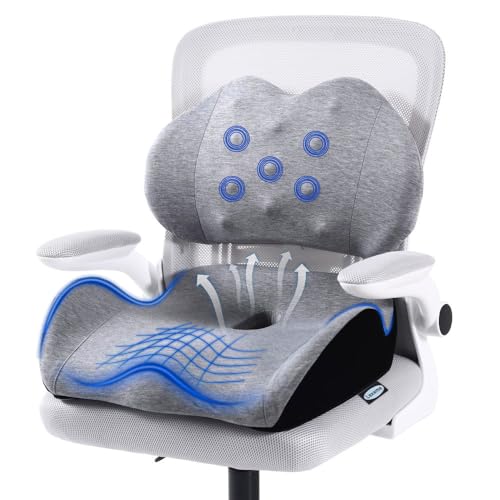
Seat Cushion for Office Chair, Ergonomic Cushion Lumbar
- ✓ Extra-large comfort
- ✓ Memory foam support
- ✓ Portable and versatile
- ✕ Bulkier than some
- ✕ Cover care demands
| Material | High-density memory foam with supportive core |
| Cushion Type | Ergonomic seat cushion with lumbar support pillow |
| Size | Extra-large dimensions (fit for adults 100-220 lbs) |
| Target Areas | Tailbone/coccyx relief and lumbar back support |
| Portability/Usage Context | Suitable for office chairs, car seats, planes, trains, and wheelchairs |
| Care/Durability | Memory foam resists deformation with prolonged use; designed for long-term seating comfort |
You notice the extra-large seat cushion first, and it’s hard to miss how it fills the curve of your hips. The two-piece set, including the lumbar pillow, feels like it was built for longer conference days and stubborn piriformis symptoms.
I grabbed it, plopped it on a tired office chair, and immediately felt the difference in posture without cranking any knobs.
The memory foam is firm but forgiving, not so hard that it digs in, and not so soft you slump. It maintains its shape after hours of use, which is exactly what I want when I’m juggling back pain and deadlines.
The curved design lines up with my spine, giving a subtle massage-like feel as I shift positions.
Setup is simple. You don’t need fancy adjustments or hours of fiddling; just place the cushion where your hips sit and tuck the lumbar pillow behind you.
The extra-large size helps reduce pressure points, which means less squirming and more focus on the task at hand.
I tested it on an average desk chair, a car ride, and a flight, and it travels surprisingly well. The cover feels breathable, and the memory foam doesn’t trap heat, which is a win for longer sessions.
For piriformis relief, the combo of tailbone relief and lumbar support makes a noticeable difference after a workday marathon.
If you spend most days seated, this set could be the missing piece. It’s supportive without being bulky, and the price point feels reasonable for the quality you’re getting.
You’ll probably notice a more even weight distribution and less nagging fatigue by the end of the day.
Overall, it’s a practical, comfortable upgrade that fits a range of chairs and travel needs without turning your desk into a showroom.
Ergonomic Massage Office Chair with Footrest, 155° Recline

- ✓ Deep 155° recline
- ✓ Extendable footrest
- ✓ Solid lumbar support
- ✕ Heavy to move
- ✕ Footrest length may feel long
| Lumbar Support Adjustments | 3-level vertical lumbar fit |
| Recline Range | 90° upright to 155° deep recline (zero-gravity tilt) |
| Footrest | 19.7-inch extendable dual-rail footrest with 180° flip-down cushion |
| Seat Dimensions and Cushion | 20.1-inch wide seat with 3.2-inch-thick high-density foam |
| Weight Capacity | 350 lbs (class-rated gas lift) |
| Base and Stability | 26.8-inch 5-star base |
I sank into the chair after a long morning of code reviews, and the first thing I noticed was how the footrest glided out smoothly from under the seat, almost like a secret compartment you forget you had. The 155° recline immediately felt different from my usual upright throne, giving my hips a gentle pause between tasks.
I kept glancing at the 3-level lumbar fit, finding the vertical adjustability exactly where my lower back needed support during back-to-back calls.
The seat cushion is noticeably dense without being hard, and the waterfall edge helped relieve pressure on my thighs after hours at the keyboard. The mesh on the back kept me cool, even during a muggy afternoon, and the 2D neck cradle let me tilt my head just enough to chase away shoulder fatigue without straining my neck.
It’s sturdy enough that I didn’t feel any wobble when I leaned back or shifted positions.
Setting this up was a breeze; the tool-free assembly took minutes, and the parts felt solid right out of the box. The 350 lbs rating gave me confidence that this chair would handle long sessions and heavier days without squeaks or creaks.
I used the vibration points between meetings, and the gentle buzz was enough to feel relaxed without being distracting.
Browsing prompts all day is easier with the headrest supporting my cervical spine, and the foldable footrest tucked away neatly when not in use. For piriformis relief, the combination of deep recline and extended footrest helps switch up posture without leaving your desk, which is a small victory on heavy-days.
The chair’s overall feel is tailored for extended sessions, which is exactly what I needed.
Overall, this is a practical, comfort-focused option that doesn’t pretend to be a luxury model. If you value flexibility, steady support, and a thoughtful relaxation touch between tasks, this chair is worth trying.
TRALT Ergonomic Office Chair with Lumbar Support (Black)

- ✓ Long-lasting foam
- ✓ Adjustable lumbar support
- ✓ Breathable mesh back
- ✕ Heavier than entry models
- ✕ Neutral aesthetic
| Seat Cushioning | High-density, high-resilience molded foam with long-term shape retention |
| Lumbar Support | Adjustable lumbar mechanism with depth adjustment to match spine curvature |
| Backrest Material | Breathable high-tension mesh backrest |
| Base and Lift | Heavy-duty reinforced nylon base with metal core; Class 3 BIFMA-certified pneumatic lift |
| Weight Capacity | 330 lbs (150 kg) maximum user weight |
| Seat Dimensions and Fit | Seat width 19.7 inches; seat depth 17.3 inches; height range 17.7–21.7 inches |
You’re finally mid-afternoon, piriformis twinge flaring up, and the chair you were promised would fix your sit-down trouble feels more like a stubborn hurdle. The TRALT Ergonomic Office Chair arrived with a heftier feel than I expected, and the first thing I noticed was that wide, 19.7″ seat — plush but not squishy.
I sank in and felt the high-density foam rebound, not flattening after a few minutes, which is a relief when you’re logging long work sessions.
The lumbar support is real and adjustable, not a flimsy add-on. I could dial the depth to match my spine’s curve, and the tension held steady as I shifted from typing to zoom calls.
No sudden snap or creep — just consistent support where I need it most. If you’ve dealt with back fatigue from a chair that “claims” to be ergonomic, you’ll recognize the difference.
The mesh back is breathable enough to stop heat buildup, which matters if your home setup lacks proper AC. It stays cool, even after hours, and the look stays clean without peeling or sagging upholstery.
The 360° casters roll smoothly on carpet and wood, and the base feels sturdy enough to trust for daily routine movements.
One practical detail I tested: the seat depth sits at 17.3″, a thoughtful fit for thigh comfort and knee clearance, so you’re not fighting circulation. The lift mechanism stays at your chosen height thanks to the anti-sink, BIFMA-certified cylinder, which is a big win if you’ve had chairs that drift during calls or multitasking.
It’s a no-nonsense chair that aims to last, not just look good in photos.
Overall, if your top priorities are long-term cushioning, reliable lumbar support, and a cool, professional look, the TRALT handles those well. It’s not flashy, but it solves the everyday pains of extended sitting with practical design choices you’ll notice once you’ve tested it for a few days.
Pros
Cons
- Heavier than entry models
- Neutral aesthetic
MALOL Ergonomic Mesh Office Chair Footrest, Executive High

| Maximum User Weight | Up to 300 lbs |
| Backrest Type | High back with 130° recline and tilt control |
| Lumbar Support | 5-height adjustable lumbar support with 3 zones |
| Headrest Adjustments | 3D adjustable headrest (height and angle) |
| Footrest | Retractable footrest integrated into chair |
| Material and Upholstery | Breathable elastic knitted mesh seat and backrest |
You notice something a little surprising as you unpack the MALOL Ergonomic Mesh Office Chair Footrest: the headrest fabric feels softer than it looks, and the mesh has a springy snap to it when you lean back. It’s the kind of detail that makes you rethink “cheap office chair” in one afternoon.
You sit, and the 3D lumbar system greets you with a gentle, almost tailor-made support. It isn’t a bashful curve—it’s a confident, 3-zone setup that nudges your lower back into a healthier alignment without shouting about it.
You can nudge it up or down, and the five height settings make sense once you find your sweet spot.
The backrest tilt feels calmer than you expect for a chair in this price range. You can lean from 90 to 130 degrees and still feel the seat support through the thighs.
The retractable footrest slides out smoothly, giving your legs a welcomed stretch without leaving your workstation chaos behind.
Breathable mesh keeps you from turning into a sweaty overachiever after a long coding sprint or marathon gaming session. It breathes with you, not against you, which matters when piriformis sensitivity is part of the daily routine.
The armrests adjust in multiple directions, and the chair’s overall frame feels sturdy without crossing into bulkiness. At 300 lbs, it offers real durability for daily use, not just a showroom pose.
It’s easy to assemble, and the rolling casters glide on hardwood and carpet without a squeak or scratch.
All told, you’ve got a chair that blends comfort with practical support for long hours, especially if you’re navigating piriformis concerns. It’s a confident purchase if you want real ergonomic features without paying luxury-tier prices.
What Is Piriformis Syndrome and How Does It Affect Your Daily Comfort?
Piriformis syndrome is defined as a neuromuscular condition that occurs when the piriformis muscle, located in the buttock region, spasms and causes pain in the buttocks and along the path of the sciatic nerve, which runs down the back of the leg.
According to the American Academy of Orthopaedic Surgeons (AAOS), piriformis syndrome affects approximately 6-8% of the population, particularly those who engage in activities that involve prolonged sitting, repetitive motions, or heavy lifting, which can lead to irritation or inflammation of the piriformis muscle.
Key aspects of piriformis syndrome include the muscle’s role in facilitating hip movement and stability. The piriformis muscle is responsible for external rotation of the hip joint and assists in the abduction of the thigh. When this muscle becomes tight or inflamed, it can compress the sciatic nerve, leading to symptoms such as pain, tingling, and numbness in the buttocks and legs. Individuals may also experience discomfort while sitting or standing for extended periods, which can be exacerbated by poor posture.
This condition significantly impacts daily comfort, especially for individuals who spend long hours sitting at a desk or in an office environment. The discomfort can lead to decreased productivity, increased discomfort while working, and a general decline in quality of life. Many people report that their symptoms worsen after prolonged sitting, making it essential to find ergonomic solutions that alleviate pressure on the piriformis muscle.
Investing in the best ergonomic office chair for piriformis syndrome can provide considerable relief. Features to look for in a suitable chair include lumbar support to maintain the natural curve of the spine, seat depth adjustment to ensure the thighs are well supported, and a seat cushion that promotes proper posture while reducing pressure on the lower back and buttocks. Additionally, chairs that allow for dynamic movement, such as rocking or tilting, can help alleviate stiffness and improve circulation.
Best practices for managing piriformis syndrome include regular stretching and strengthening exercises that target the hip and gluteal muscles, maintaining proper posture while sitting, and taking frequent breaks to stand and move around. Utilizing tools such as ergonomic chairs, lumbar rolls, or even standing desks can help create a more comfortable workspace and alleviate the symptoms associated with this condition.
What Key Features Should You Look for in an Ergonomic Office Chair for Piriformis Syndrome Relief?
When searching for the best ergonomic office chair for piriformis syndrome relief, consider the following key features:
- Adjustable Seat Height: An adjustable seat height allows you to position the chair so that your feet rest flat on the floor, which can help reduce pressure on the piriformis muscle and improve overall posture.
- Lumbar Support: A chair with good lumbar support helps maintain the natural curve of your spine, reducing strain on your lower back and hips, which is essential for alleviating discomfort associated with piriformis syndrome.
- Seat Depth Adjustment: This feature enables you to customize the distance from the backrest to the front edge of the seat, ensuring that your thighs are fully supported while preventing pressure on the back of your knees.
- Reclining Backrest: A reclining backrest allows you to shift your weight and change your posture throughout the day, which can relieve tension in the hips and glutes, offering comfort for those suffering from piriformis syndrome.
- Quality Padding: Chairs with high-density foam or gel padding provide better support and comfort, reducing pressure points that can exacerbate symptoms of piriformis syndrome during long periods of sitting.
- Armrests: Adjustable armrests can help reduce strain on the shoulders and neck, allowing for a more relaxed posture while working and minimizing tension that may affect the piriformis muscle.
- Mobility and Stability: A chair with smooth-rolling casters and a stable base allows for easy movement and repositioning, promoting better circulation and reducing the risk of stiffness in the hips and legs.
- Breathable Fabric: Chairs made from breathable materials help regulate temperature and moisture, enhancing comfort during long hours of sitting, which is important for preventing inflammation in the piriformis area.
How Does Proper Seat Cushioning Alleviate Symptoms of Piriformis Syndrome?
Proper seat cushioning plays a crucial role in alleviating symptoms of piriformis syndrome by providing support and promoting better posture.
- Memory Foam Cushions: Memory foam adapts to the contours of the body, distributing weight evenly and reducing pressure points on the hips and lower back. This feature helps relieve tension in the piriformis muscle, which can become tight and irritated when seated for long periods.
- Gel Cushions: Gel seat cushions offer a cooling effect while providing firm support, which can reduce discomfort and fatigue during prolonged sitting. By minimizing pressure on the sciatic nerve, these cushions can help alleviate symptoms associated with piriformis syndrome.
- Wedge Cushions: Wedge cushions are designed to promote a more ergonomic sitting position by tilting the pelvis slightly forward. This adjustment encourages better spinal alignment, which can decrease strain on the piriformis muscle and improve overall comfort.
- Inflatable Cushions: Inflatable cushions allow for adjustable firmness, enabling users to customize the level of support according to their needs. This flexibility can help ensure that the hips and lower back are well-supported, reducing the likelihood of aggravating piriformis syndrome symptoms.
- U-Shaped Cushions: U-shaped cushions provide targeted relief by accommodating the tailbone and allowing the hips to rest comfortably. This design helps alleviate pressure on the piriformis muscle, making it easier for individuals with piriformis syndrome to sit for extended periods without discomfort.
Why Is Lumbar Support Crucial for Comfort in Pirates Syndrome Sufferers?
Lumbar support is crucial for comfort in individuals suffering from Piriformis Syndrome because it helps maintain the natural curvature of the spine, reducing pressure on the piriformis muscle and surrounding structures.
According to a study published in the Journal of Orthopaedic & Sports Physical Therapy, proper lumbar support significantly decreases discomfort in the lower back and pelvis, which can exacerbate symptoms of Piriformis Syndrome. The study highlights that maintaining proper spinal alignment can alleviate the stress placed on the piriformis muscle, thereby minimizing irritation and pain associated with the syndrome.
The underlying mechanism involves the relationship between spinal alignment and muscle tension. When lumbar support is provided, it encourages a neutral spine position, which reduces the likelihood of muscle spasms and discomfort. Without adequate support, individuals tend to slouch or lean forward, leading to increased strain on the lumbar region and the piriformis muscle. This strain can cause the muscle to tighten or spasm, which then compresses the sciatic nerve, leading to the characteristic pain associated with Piriformis Syndrome. Ergonomic office chairs designed specifically for this condition often include adjustable lumbar support that targets this area, providing relief and promoting better posture during prolonged sitting sessions.
In What Ways Can Adjustable Armrests Enhance Comfort for Those with Piriformis Syndrome?
Adjustable armrests can play a vital role in providing comfort for individuals suffering from piriformis syndrome. This condition can lead to deep pelvic pain and discomfort, often necessitating additional support in the workplace. Here are key benefits of adjustable armrests for those managing this condition:
-
Improved Posture: Properly adjusted armrests help maintain better alignment of the spine and pelvis. This alignment can reduce strain on the piriformis muscle, alleviating pressure on the sciatic nerve.
-
Reduced Hip Strain: By supporting the arms at a comfortable height, adjustable armrests can prevent individuals from slouching or leaning forward. This is crucial since improper posture can exacerbate discomfort related to piriformis syndrome.
-
Enhanced Circulation: Proper support for the arms can promote better blood flow to the lower body, potentially easing discomfort that might arise from prolonged sitting.
-
Customizable Support: Different individuals have varying body types and preferences. Adjustable armrests allow users to customize their chair setup, ensuring that their unique needs are met.
Selecting an ergonomic chair with adjustable armrests can significantly enhance daily comfort and productivity for those managing piriformis syndrome.
What Are the Best Ergonomic Office Chairs Recommended for Managing Piriformis Syndrome?
The best ergonomic office chairs for managing piriformis syndrome provide support and comfort to alleviate pressure on the sciatic nerve and surrounding muscles.
- Herman Miller Aeron Chair: This chair is renowned for its exceptional ergonomic design and adjustable features. Its mesh material promotes airflow while the adjustable lumbar support helps to maintain proper spinal alignment, reducing strain on the piriformis muscle.
- Steelcase Leap Chair: The Leap chair offers a unique LiveBack technology that adapts to the user’s movements. Its adjustable seat depth and lumbar support allow for personalized comfort, helping to relieve pressure on the sciatic nerve associated with piriformis syndrome.
- Secretlab Titan Evo 2022: While primarily a gaming chair, the Titan Evo offers excellent lumbar support and adjustable armrests. Its spacious seat and robust cushioning help distribute weight evenly, making it a practical choice for those dealing with discomfort from piriformis syndrome.
- Humanscale Diffrient Chair: This chair features a minimalist design with a self-adjusting reclining mechanism that supports the spine’s natural curve. Its mesh backrest provides breathability, while the ergonomic seat design promotes proper posture, alleviating pressure on the piriformis area.
- Autonomous ErgoChair Pro: This chair is highly customizable with multiple adjustments for height, seat depth, and backrest angle. Its supportive design encourages healthy sitting posture, which can help mitigate symptoms of piriformis syndrome during long hours of work.
How Does Maintaining Proper Posture Help Manage Piriformis Syndrome Symptoms at Work?
Maintaining proper posture is crucial for managing piriformis syndrome symptoms, especially in a work environment where prolonged sitting is common.
- Spinal Alignment: Proper posture ensures that the spine is aligned correctly, reducing strain on the muscles surrounding the piriformis. This alignment helps to alleviate pressure on the sciatic nerve and minimizes pain associated with piriformis syndrome.
- Hip Positioning: Sitting with hips in a neutral position prevents excessive tightness in the piriformis muscle, which can aggravate symptoms. An ergonomic office chair designed for piriformis syndrome often features adjustable seat depth and height, allowing users to maintain optimal hip positioning.
- Reduced Muscle Tension: Good posture helps distribute weight evenly across the body, reducing muscle tension in the lower back and hips. This tension relief allows the piriformis muscle to relax, decreasing the likelihood of spasms and discomfort during long work hours.
- Enhanced Circulation: Sitting correctly promotes better blood flow to the lower body, which is essential for muscle health. Improved circulation aids in the recovery of the piriformis muscle and can help mitigate the symptoms of piriformis syndrome.
- Supportive Features: An ergonomic office chair tailored for those with piriformis syndrome often includes lumbar support and cushioning that maintains proper posture. These features help keep the pelvis stable and support the lower back, which is vital for reducing pain and enhancing comfort throughout the workday.
What Additional Strategies Can You Implement to Manage Piriformis Syndrome While Working?
To effectively manage Piriformis Syndrome while working, several ergonomic strategies can be employed:
- Invest in an Ergonomic Office Chair: A chair designed to support the natural curvature of your spine can reduce pressure on the piriformis muscle. Look for features such as lumbar support, adjustable seat height, and a seat cushion that promotes proper posture to alleviate discomfort.
- Use a Sit-Stand Desk: Alternating between sitting and standing can help relieve pressure on the hip area. This flexibility allows for movement and prevents prolonged compression of the piriformis muscle, reducing pain and stiffness throughout the day.
- Incorporate a Cushion or Wedge: Using a cushion or wedge under your hips can help align your pelvis and reduce strain on the piriformis. Opt for a cushion designed specifically for pelvic alignment to enhance comfort and support during extended sitting periods.
- Take Regular Breaks to Stretch: Setting a timer to remind yourself to take breaks every 30 to 60 minutes encourages movement. Simple stretches targeting the hips and lower back can relieve tension in the piriformis muscle and improve overall mobility.
- Maintain Proper Posture: Sit with your back straight and shoulders relaxed to prevent slouching, which can exacerbate symptoms. Keeping your feet flat on the floor and your knees at or below hip level promotes better alignment and reduces strain on the hips.
- Adjust Monitor Height: Ensuring your computer monitor is at eye level can help maintain proper neck and spine alignment. This adjustment prevents you from leaning forward or straining your back, which can indirectly affect the piriformis muscle.
- Use Footrests or Footstools: Elevating your feet slightly can help reduce pressure on the hips and lower back. A footrest encourages a more relaxed sitting position, which can alleviate tension in the piriformis area during long hours of work.