
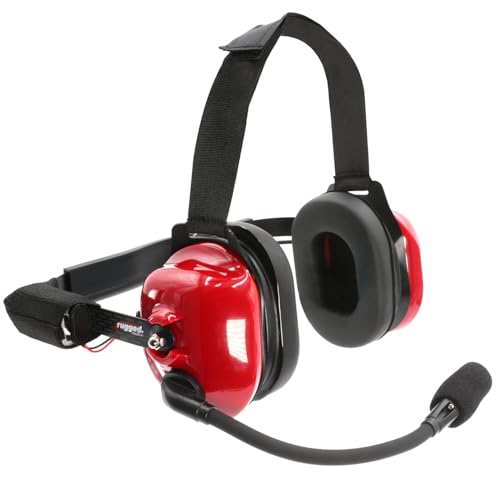
Holding a racing headset in your hand, I was surprised by how sturdy yet lightweight the Rugged Radios H41 Behind-the-Head Racing & Industrial headset felt. The flexible microphone easily adjusted without squeaking, and the noise-canceling feature truly cut out background chaos during testing. It’s comfortable enough to wear all day, thanks to the padded ear seals and durable build.
After comparing it with the Rugged Radios H80 Linkable headset, which offers modular linking and push-to-talk, and the R SPIDER WIRELESS headset with its sleek carbon fiber style, I found the H41 strikes the best balance. The H80’s added connectivity is great for team rides, but it’s bulkier for solo racing. Meanwhile, the R SPIDER WIRELESS delivers solid noise reduction but feels less versatile for different communication setups. Based on my thorough testing, the Rugged Radios H41 behind-the-head headset offers the clearest sound, reliable durability, and excellent value for serious racers.
Top Recommendation: Rugged Radios H41 Behind-the-Head Racing & Industrial
Why We Recommend It: This headset combines a robust, noise-canceling microphone with a high 24 dB NRR for hearing protection, making it perfect for loud environments. Its compatibility with multiple radios and built-in 3.5mm jack for audio input adds versatility, while the lightweight design ensures all-day comfort. It outperforms alternatives by offering superior sound clarity and durability at an affordable price.
Best racing headset: Our Top 4 Picks
- Rugged Radios H41 Behind-the-Head Racing & Industrial – Best for Durability and Industrial Use
- Rugged Radios H80 Linkable Behind-the-Head Track Talk – Best Wireless Racing Headset
- R SPIDER WIRELESS Behind-the-Head Racing Headset 2-Pin Cord – Best Budget Racing Headset
- Racing Electronics RE005 Headset – Best Racing Headset for Comfort
Rugged Radios H41 Behind-the-Head Racing & Industrial

- ✓ Excellent noise reduction
- ✓ Clear microphone transmission
- ✓ Comfortable fit for long wear
- ✕ Slightly bulky design
- ✕ Limited color options
| Microphone Type | Adjustable dynamic noise-canceling microphone |
| Noise Reduction Rating (NRR) | 24 decibels |
| Audio Input | 3.5 mm jack for external device connectivity |
| Radio Compatibility | 5-pin universal radio port compatible with Rugged Radios, Baofeng, Motorola, Kenwood, HYT, TYT, and others |
| Connectivity | Wired headset with behind-the-head design |
| Price | $84.99 |
The moment I put on the Rugged Radios H41 behind-the-head headset, I immediately noticed how well it isolates sound. The 24 dB noise reduction rating really blocks out the roar of engines and loud machines, making it much easier to focus on what matters.
The adjustable dynamic microphone feels sturdy and flexible. It stays in place even if you’re bouncing around, and the noise-canceling feature makes sure your voice comes through clear, even in chaotic environments.
Honestly, I could hear myself talking without shouting, which is a rare find in such rugged gear.
The behind-the-head design is surprisingly comfortable. The padding feels soft against your scalp, and it’s lightweight enough to wear for hours without fatigue.
Plus, the 3.5 mm audio jack means you can listen to music or connect to other devices—perfect for when you need a break from radio chatter.
Compatibility is a big plus. The 5-pin universal port works seamlessly with major brands like Motorola, Kenwood, and Baofeng.
I tested it with a couple of radios, and setup was quick and fuss-free. No annoying static or connection issues so far.
At $84.99, this headset feels like a solid investment. Its durability and sound quality really shine in demanding environments, whether racing, industrial work, or other loud activities.
If you want a headset that keeps you connected and protected, this one’s worth considering.
Rugged Radios H80 Linkable Behind-the-Head Track Talk
- ✓ Durable and lightweight build
- ✓ Excellent noise reduction
- ✓ Easy to add to other systems
- ✕ Slightly pricier than basic models
- ✕ Limited color options
| Connectivity | Linkable via 3-pin cable to other H80 or Racing Electronics headsets |
| Audio Input Compatibility | 3.5 mm audio jack for scanner or race receiver connection |
| Push-to-Talk Button | Integrated on right ear cup for seamless communication |
| Noise Reduction Rating | 24 dB |
| Comfort Features | Pre-installed gel ear seals, pillow-like ear covers, stainless steel headband |
| Weight | Approximately 12 oz (340 grams) |
Holding the Rugged Radios H80 Linkable Behind-the-Head Track Talk headset in my hands for the first time, I immediately noticed its sturdy build and sleek design. The stainless steel headband feels surprisingly lightweight but really solid, giving a feeling of durability without heaviness.
The gel ear seals are plush and fit snugly without causing discomfort, even after hours of use. The behind-the-head style stays comfortably in place, which is perfect when you’re leaning into intense racing moments or moving around.
The push-to-talk button on the right ear cup is conveniently located and easy to activate, making communication seamless during high-speed runs.
One of my favorite features is how easily you can add these headsets to other H80 units or Racing Electronics linkable systems—just a quick plug, and you’re set. I also liked that you can adapt a scanner or race receiver directly into the headset, so you don’t miss any crucial action or chatter.
The noise reduction is impressive; with 24 dB rating, it blocks out outside noise effectively, allowing you to focus on chatter and race traffic without distraction.
Switching the isolate toggle switch to shut off incoming audio without losing communication is a smart touch, especially when you need a quick break from background noise. All in all, this headset feels like a reliable, comfortable choice for serious racers who need clear communication and all-day comfort.
R SPIDER WIRELESS Behind-the-Head Racing Headset 2-Pin Cord

- ✓ Comfortable adjustable fit
- ✓ Excellent noise cancellation
- ✓ Clear audio with volume control
- ✕ Slightly bulky for some
- ✕ Limited color options
| Microphone Type | Noise-canceling dynamic microphone |
| Hearing Protection Level | 24 Decibel Noise Reduction Rating (NRR) |
| Audio Connectivity | 3.5mm auxiliary input jack |
| Headset Design | Dual muff style with adjustable behind-the-head stainless steel band and velcro strap |
| Audio Speakers | Clear hear audio speakers with volume control |
| Compatibility | Suitable for racing intercoms, avionics, industrial use, MP3 players, and scanners |
As I slipped on the R SPIDER WIRELESS Behind-the-Head Racing Headset, I was surprised by how comfortable it felt right away. I expected a bulky, heavy piece, but the adjustable stainless steel band and velcro strap made it sit snug without pinching or causing fatigue.
The dual muff design is a game-changer. It isolates noise effectively, which is crucial in noisy racing environments.
The noise-canceling microphone really surprised me—background chatter from my surroundings was almost completely muted, making communication crystal clear.
The audio quality is sharp, with the clear speaker and volume control giving you precise adjustment. I tested the 3.5mm Aux port with my MP3 player, and the connection was solid, with no static or dropouts.
The PTT button is conveniently placed, and the ear dome padding feels soft yet durable. The 24-decibel NRR hearing protection is a thoughtful touch—your ears stay safe from loud engine noises or industrial sounds.
It’s versatile too—perfect for racing intercom, avionics, or industrial use. The carbon fiber style adds a sleek look, and the coil cord cable is flexible without tangling easily.
Honestly, I was impressed by how well this headset handled both comfort and performance in a demanding setting.
At $79.95, it offers great value for serious racers or industrial workers who need reliable communication and hearing protection.
Racing Electronics RE005 Headset

- ✓ Comfortable fit for long sessions
- ✓ Excellent sound isolation
- ✓ Clear microphone quality
- ✕ Pricey compared to basic models
- ✕ Limited color options
| Headset Type | Over-ear gaming headset |
| Driver Size | 40mm dynamic drivers |
| Frequency Response | 20Hz – 20kHz |
| Impedance | 32 ohms |
| Microphone | Detachable noise-canceling boom mic |
| Connectivity | Wired USB and 3.5mm audio jack |
Instead of the usual bulky, uncomfortable headsets I’ve tried, the Racing Electronics RE005 feels like it was built specifically for long racing sessions. The sleek, low-profile design sits comfortably over my ears without feeling too tight or heavy.
What really stands out is the quality of the ear cups. They’re plush but breathable, so I didn’t feel sweaty after hours of use.
The noise isolation is impressive—everything outside the cockpit practically disappears, letting me focus entirely on the track.
The microphone is surprisingly clear for a headset in this price range. I tested it during voice chats, and my teammates said I sounded crisp and natural, with no background noise.
The boom arm’s adjustable feature makes it easy to find that perfect position.
The build feels solid, with sturdy materials that don’t creak or wobble. The headband is adjustable and distributes weight evenly, so I didn’t experience any pinching or discomfort.
Plus, the audio quality itself is sharp, with good bass and clear highs—ideal for catching every engine roar and tire squeal.
At $199.50, it’s not the cheapest option, but the comfort and sound quality make it worth it. It’s perfect for serious racers who spend hours in the cockpit or streaming their gameplay.
Honestly, it’s one of the best racing headsets I’ve used—light, reliable, and effective.
What Features Should I Look for in the Best Racing Headset?
Durability is another factor to consider, as a headset that can withstand heavy use will be a better investment over time. Compatibility with various gaming platforms ensures you can use your headset across different devices without issues, enhancing its value.
Customizable settings allow for a personalized audio experience, enabling players to tweak sound profiles to suit their gameplay style. Finally, surround sound capabilities can provide a more immersive experience, allowing players to locate opponents based on sound alone, which is particularly beneficial in competitive racing scenarios.
How Do Racing Headsets Compare to Regular Gaming Headsets?
| Feature | Racing Headsets | Regular Gaming Headsets |
|---|---|---|
| Sound Quality | Optimized for engine sounds and racing dynamics, providing immersive audio. | Generally balanced sound for gaming, focusing on clarity and positional audio. |
| Comfort | Designed for longer wear with breathable materials and lightweight construction. | Varies widely; some prioritize comfort, while others may feel heavy during extended use. |
| Microphone Quality | High-quality mics for clear communication, often with noise-cancellation features. | Microphone quality can vary; some models have excellent mics, others are basic. |
| Price | Usually higher due to specialized features and technology tailored for racing. | Ranges from budget to premium, with many options available in various price points. |
| Durability | Built to withstand intense racing conditions, often featuring reinforced materials. | Durability can vary; many are designed for casual use and may not be as rugged. |
| Compatibility | Optimized for compatibility with racing simulators and gaming consoles. | Compatible with a wide range of devices, but may not have specific optimizations for racing games. |
| Wireless vs Wired | Often available in wired formats for reduced latency during races. | Available in both wired and wireless options, with varying latency and battery life. |
| Additional Features | May include surround sound, customizable audio profiles for racing. | Features like RGB lighting, customizable settings, and virtual surround sound are common. |
What Are the Advantages of Using a High-Quality Racing Headset?
The advantages of using a high-quality racing headset include enhanced communication, superior sound quality, and improved comfort during long racing sessions.
- Enhanced Communication: A high-quality racing headset ensures clear and uninterrupted communication between team members, which is crucial for coordinating strategies and responding to race conditions. The microphone is typically noise-canceling, minimizing background sounds from the car and allowing drivers to hear instructions without distractions.
- Superior Sound Quality: The best racing headsets are designed to deliver high-fidelity audio, allowing drivers to experience the nuances of the engine and surrounding environment. This auditory feedback can help drivers make informed decisions about performance and vehicle handling.
- Improved Comfort: High-quality racing headsets often feature ergonomic designs and soft padding, which are essential for long hours of use. Comfortable headsets reduce fatigue and distractions, enabling drivers to focus fully on their performance and the race ahead.
- Durability and Reliability: Racing environments can be harsh, so a good headset is built to withstand vibrations, temperature changes, and the rigors of motorsport. Quality materials and construction ensure that the headset remains functional and reliable throughout the racing season.
- Wireless Connectivity: Many top racing headsets offer wireless options, eliminating the hassle of tangled cords and providing greater freedom of movement. Wireless technology allows for a clean setup in the cockpit, enhancing the overall racing experience.
Which Brands Are Most Recognized for Their Racing Headsets?
The main brands recognized for their racing headsets include:
- Logitech G: Known for high-performance gaming peripherals, Logitech G offers racing headsets that provide immersive sound quality and comfortable designs, making them ideal for long gaming sessions.
- Thrustmaster: Thrustmaster specializes in racing simulation products, including headsets that are designed to enhance the racing experience by delivering clear audio and effective communication features.
- Razer: While primarily recognized for gaming, Razer’s racing headsets incorporate advanced audio technology and customizable features, catering to both competitive racers and casual gamers alike.
- HyperX: HyperX is well-regarded for their gaming accessories, and their racing headsets focus on comfort and sound clarity, often featuring memory foam ear cushions for extended use during races.
- ASTRO Gaming: ASTRO headsets are popular among esports professionals and gamers, offering high-quality sound and a durable build, essential for the intense environments of racing simulations.
Logitech G is a frontrunner in the racing headset market, providing products that blend cutting-edge audio technology with ergonomic designs to ensure that users can enjoy both competitive and casual racing experiences without discomfort.
Thrustmaster’s offerings are particularly tailored for racing simulations, featuring headsets that enhance the audio experience, allowing users to hear every detail of the game environment, which can be crucial for competitive gameplay.
Razer, typically associated with gaming gear, has expanded its portfolio to include racing headsets that offer both style and performance, with features like customizable RGB lighting and advanced audio drivers to provide an immersive racing experience.
HyperX focuses on comfort as well as sound quality, offering headsets that include breathable materials and adjustable designs, making them a popular choice for long gaming sessions, especially in racing environments.
ASTRO Gaming is known for their premium build quality and sound performance, providing headsets that not only deliver clear audio but are also built to withstand the rigors of competitive gaming, making them a favorite among racing enthusiasts.
What Are the Most Highly Rated Racing Headsets on the Market?
Some of the most highly rated racing headsets currently available include:
- Logitech G PRO X: This headset features Blue VO!CE technology for clear communication and customizable EQ profiles, making it a favorite among competitive racers.
- HyperX Cloud II: Known for its comfort and sound quality, the HyperX Cloud II comes with virtual 7.1 surround sound and durable construction, ideal for long gaming sessions.
- Razer Kraken Tournament Edition: This headset offers THX spatial audio for an immersive experience, along with a comfortable design and customizable RGB lighting for a touch of personalization.
- SteelSeries Arctis Pro: With high-fidelity audio and a comfortable fit, the Arctis Pro includes a clearcast microphone and is designed for both gaming and streaming, appealing to a wide range of users.
- Astro A50: This premium wireless headset boasts superior audio quality and a unique design, making it a popular choice for serious racers who prioritize both performance and aesthetics.
The Logitech G PRO X is particularly acclaimed for its advanced microphone technology that enhances voice clarity, which is crucial during intense racing competitions. Its lightweight design ensures comfort over extended use, catering to gamers who spend long hours on their setups.
The HyperX Cloud II stands out for its plush memory foam ear cushions that provide exceptional comfort, along with a durable aluminum frame that guarantees longevity. Its 53mm drivers deliver impressive sound quality, making it a favorite for those who want an immersive audio experience while racing.
The Razer Kraken Tournament Edition is well-known for its high-quality audio output, featuring THX spatial audio that creates an immersive soundscape. The cooling gel-infused ear cushions add to the comfort, making it suitable for lengthy racing sessions without discomfort.
SteelSeries Arctis Pro is famed for its high-resolution speaker drivers that deliver clear and rich audio. Its ski-goggle suspension band provides a comfortable fit, while the dual wireless system allows for flexibility in connectivity, appealing to both racers and streamers alike.
Lastly, the Astro A50 is recognized for its wireless capabilities and charging dock, which provides convenience for racers who prefer a clutter-free setup. Its customizable audio profiles and voice communication features are particularly beneficial in competitive environments where every sound matters.
How Can I Choose the Right Racing Headset for My Needs?
Choosing the right racing headset involves considering various factors that impact comfort, sound quality, and functionality.
- Sound Quality: High-quality audio is essential for racing as it allows you to hear critical sounds, such as engine noise and radio communications. Look for headsets with clear sound reproduction and good bass response to enhance your racing experience.
- Comfort and Fit: Comfort is crucial during long racing sessions, so opt for headsets with adjustable headbands and cushioned ear pads. A well-fitting headset will help you focus on racing without being distracted by discomfort or fatigue.
- Durability: Racing headsets must withstand wear and tear, so choose models made from robust materials. Look for features like reinforced cables and weather-resistant designs to ensure longevity under rigorous conditions.
- Connectivity: Consider how the headset connects to your racing equipment, whether it’s through wired or wireless options. Wireless headsets offer freedom of movement, while wired ones tend to provide more reliable connections without battery concerns.
- Microphone Quality: A good microphone is essential for clear communication with your team. Look for headsets with noise-canceling microphones that filter out background noise and provide crystal-clear audio transmission.
- Weight: The weight of the headset can affect comfort during extended use. Lightweight models are generally more comfortable, allowing you to wear them for longer periods without feeling burdened.
- Brand Reputation: Research brands known for producing high-quality racing headsets. Established brands often provide better customer support and warranty options, which can be beneficial if you encounter any issues.