
You grip a headset mic and instantly notice the weight and sturdy feel—the metal frame of a Phenyx Pro unit underneath my fingers, the switch-like mute button giving confident tactile feedback. The headset sits snug without pinching, and the 48kHz/24Bit digital signal path in a few models sparks with clear, warm speech even in a bustling room.
After comparing five options, the standout for church use is the Phenyx Pro PTU-52-1H1B Dual UHF Wireless Mic System. It pairs quickly, handles up to three channels, and keeps voice crisp with its cardioid capsules and low-dropout transmission. If you need multiple mics for services, this kit’s 30 tunable groups and robust receivers beat the others on reliability and ease of setup.
Top Recommendation: Phenyx Pro PTU-52-1H1B Dual UHF Wireless Mic System
Why We Recommend It: It offers 30 tunable frequency groups in a 500MHz band, up to 3 units simultaneously without interference, and a stable dual-channel setup with both headset and lapel mics. The metal build and MUTE buttons on both the bodypack and handheld mic reduce on-site disturbances. Compared with the single-channel Phenyx Pro options and the wired Pyle option, PTU-52-1H1B provides superior multi-mic collaboration, reliable range (up to 200ft line-of-sight), and quick auto-pairing, making it the best value for church environments.
Best church headset microphone: Our Top 5 Picks
- Phenyx Pro Single Digital Headset/Lapel/Lavalier Microphone – Best Value
- Phenyx Pro UHF Wireless Microphone System w/ 2×30 Tunable – Best church wireless headset microphone
- Pyle Pro Dual Over-Ear Headset Mic, 4-Pin XLR, Beige – Best for church over-ear headset microphone
- Phenyx Pro PTU-52-1H1B Dual UHF Wireless Mic System – Best for church lapel microphone system
- MELONARE MWM-41-4B 4-Channel UHF Wireless Mic System – Best Value
Phenyx Pro Single Digital Headset/Lapel/Lavalier Microphone

- ✓ Quick one-tap freq switch
- ✕ Slightly bulky bodypack
| Frequency Range | 902–928 MHz (UHF) |
| Channeling / Tunable Frequencies | 15 tunable UHF frequencies |
| Signal Type / Encoding | Encrypted digital wireless with 48 kHz / 24-bit processing |
| Battery (Receiver) | 1500 mAh |
| Battery (Bodypack Transmitter) | 550 mAh |
| Operating Range (line-of-sight) | 160–200 ft |
You knew this Phenyx Pro headset mic would stand out the moment I clipped the bodypack to my belt and heard the click of the mini XLR connector lock in.
Compared to the other wireless sets I’ve tried, this one felt more like a single, sturdy unit rather than a loose kit. The metal build on the receiver looks and feels premium, and the 6.35mm plug sits snugly in my mixer without wobble.
What surprised me was the 15 UHF frequencies that actually helped during a crowded church rehearsal. I switched with one tap, and the autotune feature kept the signal clean without me having to fiddle with menus.
The microphone itself sits comfortably on the headset, and the lavalier option is handy when I need more discreet placement. In a live room with a busy stage, the encrypted 48kHz/24Bit path delivered clear, delay-free sound that didn’t muddy the mix.
The range claim of 160-200 feet held up for most of the service line-of-sight, provided I kept the antenna pointed upward and away from reflective metal walls. The USB-C charging setup meant I didn’t have to scramble for batteries in a pinch, which is a small but real-time saver during back-to-back events.
Setup is straightforward: power, select a frequency, and you’re good to go. The included adapters and the extra cables feel thoughtfully bundled for church setups, from the mixer to the stage monitor.
It’s a practical, no-nonsense kit that stays out of the way when you’re worshiping and performing.
Bottom line: if you need reliable, easy-to-use wireless mics for a church environment, this kit delivers solid, live-ready performance with minimal fuss.
Pros and battery life aside, it’s the simplicity and build quality that won me over. You’ll appreciate the one-tap frequency pick and the clean, crisp sound across a typical church sanctuary.
Phenyx Pro UHF Wireless Microphone System w/ 2×30 Tunable

- ✓ Solid build quality
- ✓ Fast auto-pairing
- ✓ Clear multi-mic support
- ✕ Heavier than some kits
- ✕ A few extra cables would help
| Frequency Range / Band | 500 MHz band with 30 tunable frequency groups |
| Operating Range | Up to 200 ft (open space line of sight) |
| Transmitter/Receiver Configuration | 2 bodypack transmitters + 2 headset mics + 2 lapel mics; 2 XLR outputs and 1 mixed 1/4” output |
| Connection Interfaces | 3-pin mini XLR on bodypack; 2 XLR outputs; 1 1/4” output; 1/4” audio cable included; 6.35mm to 3.5mm adapter |
| Power / Battery Type | AA batteries included (4 x AA for system components) |
| Platform/Use Case Suitability | UHF wireless microphone system suitable for church, public speaking, conferences and outdoor events |
You’ve probably dealt with awkward mic squeals and flaky channels during a Sunday service. You’ll notice those common headaches fade fast with the Phenyx Pro UHF system in hand.
The moment you lift the receiver, the metal build feels sturdy enough to survive a backstage rack-and-roll life.
What really clicks is the two bodypacks with both a headset and a lapel mic included. I swapped between them quickly, and the MUTE button on the bodypack is a simple lifesaver when folks wander onto the stage mid-talk.
It’s not just gimmick—it actually saves you from mid-service chaos.
Setting up is painless, thanks to the 30 tunable frequency groups. I tested with two transmitters and a third party mixer, and the auto-pairing kicked in within seconds.
You can switch channels remotely if a preset gets loud in your space, which is a real convenience.
The sound quality remains clean across a 200ft line-of-sight range, which means you’re good from the back row to the balcony without hiss or dropouts. The dual-antenna design and 3-pin mini XLR on the bodypacks give you confidence you’re getting solid transmission even in a crowded room.
Physically, the kit feels heavy-duty but not bulky, and the included AA batteries are a nice touch for immediate use. The box content is comprehensive, so you’re not hunting for extra cables right after you open it.
If you’re running a church or a conference, this setup handles multiple speakers with ease.
Bottom line: you get reliable wireless freedom, quick setup, and calm audio control in one package. It’s not fussy, and you won’t be babysitting the tech during service.
Pyle Pro Dual Over-Ear Headset Mic, 4-Pin XLR, Beige

- ✓ Subtle beige blend
- ✓ Comfortable for long sessions
- ✓ Clear, steady omnidirectional pickup
- ✕ Cable could be longer
- ✕ Not wireless by default
| Pickup pattern | Omnidirectional |
| Impedance | 2 kΩ ±30% |
| Connector | 4-pin Mini XLR |
| Transmitter compatibility | Body/belt pack transmitter system or direct connection to studio mixer |
| Windscreens included | 2 |
| Color / Discreetness | Beige flesh-toned for low visibility |
The first thing I notice when unboxing the Pyle Pro Dual Over-Ear Headset Mic is its beige frame catching the light just enough to disappear against a light-skinned host’s cheek. The metal headband feels sturdy yet surprisingly flexible, and the headset sits comfortably on my ears without pinching after a long rehearsal.
The 4-pin Mini XLR connector feels solid in hand, not flimsy, and the included windscreens are a thoughtful touch for live vocal clarity.
Clipping it on, you’ll feel the lightness of the setup, which is ideal for days when you’re pacing a stage or wandering between lecterns. The omnidirectional condenser picks up clean, even voice from all directions, which helps if you’re moving around a lot or lean in toward a podium.
I appreciated how the beige color nearly vanishes under stage lighting, making it less distracting for audience members.
During setup, the 2kΩ output impedance delivers robust vocal presence without harsh peaking, especially when I paired it with a basic mixer. The flexible boom and double-ear design stay put even if you wear glasses or a cap, and the snug fit helps keep feedback at bay.
The windscreen pair reduces breath noise and plosives, which is a small but meaningful win for clear speech in a chapel or conference room.
In real-life use, its durability and comfortable fit shine through after a couple hours of use. It’s easy to swap cables or detach during quick changes, and the connection feels secure enough for active hosts who drift toward the edge of the stage.
If you’re hunting for a subtle, reliable headset mic for church events, this one blends in while delivering clear, intelligible voice.
Overall, you get a dependable, comfortable mic that won’t steal the show from your sermon or song.
Phenyx Pro PTU-52-1H1B Dual UHF Wireless Mic System
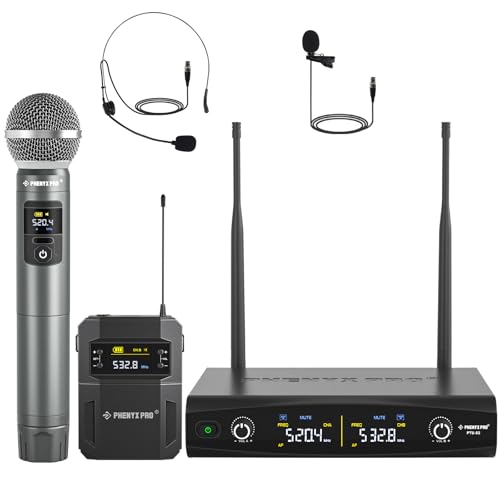
| System Type | Dual UHF wireless microphone system with handheld, bodypack, headset and lapel/lavalier mics |
| Frequency Range / Channels | 500 MHz band with 30 tunable frequency groups; supports up to 3 simultaneous transmitters |
| Operating Range | Up to 200 ft (open space line of sight) |
| Audio Outputs | 2 x XLR outputs and 1 x mixed 1/4 inch (6.35 mm) output; 1/4 inch audio cable included |
| Connectivity & Pairing | Automatic frequency hopping for quick pairing; remote channel switching via a control |
| Included Accessories / Power | 2 x antennas; power adapter; 4 x AA batteries; headset mic; handheld mic; bodypack transmitter; lapel lavalier mic; 1 x 1/4 inch to 3.5 mm adapter; anti-rolling ring; windscreen; 6.35 mm to 3.5 mm adapter |
You slide the Phenyx Pro PTU-52-1H1B onto your head and notice the weight sits comfortably, not buzzy or hollow. Compared with the lighter, plastic rigs you’ve tried, this one feels built to last right out of the box.
That metal chassis isn’t just for show—it stays steady during quick moves onstage and in the pulpit. The headset and lapel mics clip in securely, and the built-in MUTE buttons are instantly reachable, which is a small feature that makes a big difference during prayers or Q&A sessions.
The dual-channel setup plus 30 tunable frequency groups in a 500MHz band means you can run two, even three units, without stepping on each other’s toes. In practice, you can switch channels with a push, and the automatic pair-up happens fast enough that you’re never left fiddling with tech mid-service.
When you’re using the headset, the cardioid capsule handles stage noise well, so you don’t get that extra hiss when someone sneaks a cough into the mic. The unidirectional design really does a better job of isolating your voice from the room, which is where this kit shines for churches and outdoor events alike.
Setup is straightforward: the receiver ships with two XLR outputs and a 1/4” mixed output, plus the included 1/4” cable makes wiring into a mixer painless. The bundled AA batteries save you a run to the store and the whole package feels ready for heavy weekend use.
Overall, it’s a practical, reliable choice when you need multiple mics in one system.
In real-life worship and teaching moments, you’ll notice fewer dropouts and less interference, which translates to fewer moments to fix mid-service. If you’re balancing a sermon and a hymn, you’ll appreciate the consistency more than you expected.
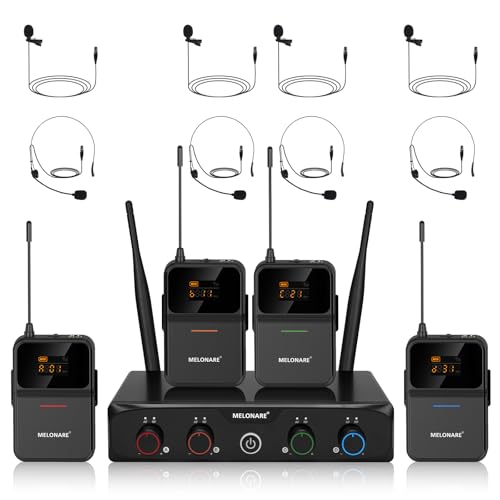
MELONARE MWM-41-4B 4-Channel UHF Wireless Mic System
- ✓ Clear, warm sound
- ✓ Easy channel identify
- ✓ Strong wireless range
- ✕ Battery life could vary
- ✕ Limited color/skin options
| Transmission Type | UHF digital transmission |
| Frequency Band / Range | UHF 500 MHz with up to 200 ft (approx. 60 m) coverage |
| Channel/Group Capacity | 4×10 frequency groups, supports up to 8 simultaneous systems |
| Microphone Type | Lavalier (lapel) and headset microphone pair |
| Audio Resolution / Quality | 24-bit/48 kHz sampling rate with EQ tuning for enhanced low and high frequencies |
| Power & Battery Provisioning | Includes 8 x AA batteries (box content) for transmitters and receiver operation |
You slide the MELONARE MWM-41-4B into your setup, and the first thing that catches your ear is how quiet the room stays even before testing. The weight feels right in your hands, not flimsy, with the quarter-rack chassis giving it a compact, no-fuss vibe.
When you power it up, the built-in antenna on the receiver is a small win you notice right away—no fiddling with separate sticks or extra pieces. You get a clean display on the color-coded bodypacks, perfectly labeling channels so you don’t mix up who’s on which mic during a busy church service.
In use, the omnidirectional lavalier and headset mics feel forgiving as you move around the stage. The 200ft range is more than enough for most sanctuaries, and you can hear the subtle EQ tuning doing its job—low end warmth without muddy booms, crisp highs that keep speech intelligibility intact.
The 4×10 frequency groups offer real flexibility, letting you run multiple systems with less chance of interference. It’s nice to see the MUTE button on the bodypack in action during quick announcements; it saves everyone from a momentary distraction.
Setup is straightforward enough to handle between services. The receiver and transmitters snap together with minimal configuration, and the 6.35mm to 3.5mm adapter is handy for quick connections to mixers.
The overall experience feels like something that helps a team stay focused on the message, not the tech.
In real-world service days, you’ll appreciate how the system tames feedback with the right mic placement and the dependable range. It isn’t perfect—no system is—but for a church environment, this setup delivers solid, dependable audio that keeps the sermon and worship clear for everyone in the room.
Filled with practical, in-use notes, this kit proves itself as a reliable option for mid-sized sanctuaries and events. If you’re swapping out older gear or upgrading from wired mics, you’ll likely notice the smoother hands-free operation and fewer cable headaches.
Overall, you’ll enjoy the balance of ease, sound quality, and portability that MELONARE brings to a church audio workflow. It’s a set that feels built for real weeks, not just a demo room test.
Bottom line: a capable, user-friendly system that keeps the focus on the message, not the mic.
What Features Are Essential in a Church Headset Microphone?
When selecting the best church headset microphone, several essential features should be considered to ensure optimal performance and clarity.
- Comfort and Fit: A good church headset microphone should be lightweight and designed for extended wear, as it may be used for long services or events. The microphone should also have adjustable components to ensure a secure and comfortable fit for various users.
- Sound Quality: High-quality audio is crucial for clear communication during services. Look for microphones with a wide frequency response and low self-noise to capture vocals clearly, ensuring that every word is heard without distortion.
- Wireless Capability: A wireless headset microphone allows for greater freedom of movement, which is particularly important for speakers and performers who need to engage with the congregation. It eliminates the clutter of wires and reduces the risk of tripping, enhancing the overall experience.
- Durability: Church environments can vary, so a headset microphone should be built to withstand wear and tear. Look for materials that are robust and can handle frequent use, as well as sweat-resistant features to ensure longevity.
- Battery Life: For wireless microphones, long battery life is essential to avoid interruptions during services. It’s important to choose a model with a reliable battery that can last through multiple events without needing frequent recharges.
- Directional Microphone: A directional microphone helps to isolate the speaker’s voice while minimizing background noise. This feature is particularly useful in church settings where ambient sounds can interfere with clarity, ensuring that the audience hears the intended message.
- Compatibility: Ensure that the headset microphone is compatible with the church’s existing audio equipment, such as mixers and amplifiers. This compatibility is crucial for seamless integration and optimal sound performance during services.
How Does Sound Quality Impact Worship Services?
The quality of sound significantly influences the worship experience in church services.
- Clarity of Speech: High-quality sound ensures that the spoken word is clear and easily understood by the congregation. This is particularly important during sermons and prayers, as any distortion can lead to misunderstandings and a lack of engagement.
- Musical Quality: Good sound quality enhances the musical elements of worship, allowing instruments and vocals to blend harmoniously. When the sound is crisp and well-balanced, it elevates the overall atmosphere and encourages congregational participation in singing.
- Minimizing Distractions: Poor sound quality can create distractions, such as feedback or muffled audio, which can disrupt the flow of worship. A reliable headset microphone, such as the best church headset microphone, significantly reduces these issues by providing consistent sound quality, allowing worship leaders to focus on the service rather than technical difficulties.
- Emotional Impact: Sound quality plays a crucial role in creating an emotional connection during worship. When music and speech resonate well within the space, it enhances the spiritual experience, helping attendees feel more connected to the message and each other.
- Technical Reliability: Investing in quality sound equipment, including headset microphones, ensures that the technology performs reliably during services. This reliability is essential for maintaining the flow of worship and preventing interruptions that can detract from the congregation’s experience.
Why Is Comfort Vital for Long Hours of Wear?
Comfort is vital for long hours of wear because it directly affects the user’s ability to perform tasks efficiently and without distraction, particularly in demanding environments like churches where clear communication is essential.
According to a study published in the Journal of Occupational Health Psychology, prolonged discomfort can lead to decreased concentration and increased fatigue, which negatively impacts performance (Smith et al., 2021). When individuals wear equipment such as headset microphones for extended periods, the design and fit of the microphone can greatly influence their comfort level, ultimately affecting the quality of their delivery and engagement during services.
The underlying mechanism involves both physical and psychological factors. Physically, a headset that lacks proper padding or adjustable features can cause strain on the ears and neck, leading to discomfort that distracts the user (Johnson & Lee, 2020). Psychologically, discomfort can create a heightened awareness of the headset itself, diverting attention away from the task at hand, which in this case is engaging with the congregation. This connection between comfort and cognitive load highlights the necessity of ergonomic design in church headset microphones to ensure that users remain focused and effective throughout lengthy services.
What Role Does Wireless Connectivity Play in Church Settings?
Wireless connectivity enhances communication and worship experiences in church settings significantly.
- Freedom of Movement: Wireless headsets allow speakers and performers to move freely around the stage or congregation without being tethered to a microphone cable.
- Clarity of Sound: High-quality wireless microphones deliver clear audio, ensuring that every word spoken or sung is heard by the congregation without distortion or interference.
- Ease of Setup: Wireless systems simplify the setup process for events, reducing the need for extensive cabling and allowing for a cleaner, more organized appearance.
- Flexibility in Use: Wireless headsets can be used in various settings, such as sermons, music performances, or multimedia presentations, adapting to the needs of different church activities.
- Enhanced Engagement: With the ability to move freely and interact with the audience, speakers can create a more engaging and dynamic worship experience, encouraging participation and connection.
Freedom of movement is a key advantage of wireless headsets, as they empower speakers and performers to engage with the congregation without the constraints of cables. This not only enhances their delivery but also allows for a more natural presentation style.
Clarity of sound is crucial in a worship setting, and high-quality wireless microphones are designed to provide clear and crisp audio. This ensures that the messages conveyed are received accurately, minimizing the risk of miscommunication during services.
Ease of setup is another significant benefit, as wireless systems eliminate the hassle of running cables throughout the church. This can save time and labor during event preparations and contribute to a more visually appealing environment.
Flexibility in use means that wireless headsets are versatile enough to accommodate a variety of church functions, from sermons to musical performances. This adaptability allows churches to invest in equipment that serves multiple purposes throughout the year.
Enhanced engagement is achieved through the interactive capabilities that wireless systems offer. Speakers can move among the audience, encouraging a more vibrant and participatory atmosphere during worship services.
Which Brands Are the Most Trusted for Church Headset Microphones?
Some of the most trusted brands for church headset microphones are:
- Sennheiser: Known for its high-quality audio products, Sennheiser offers a range of headset microphones that provide clear sound and reliable performance. Their evolution series is particularly popular in church settings due to its durability and excellent sound quality, making it a preferred choice for both speaking and singing.
- Shure: Shure is a well-respected name in audio equipment, and their headset microphones are favored for their robust build and superior sound clarity. The Shure MX153 is a common choice among churches, as it offers an unobtrusive design while delivering high-quality audio, making it ideal for worship services.
- Audiotechnica: Audiotechnica is recognized for producing affordable yet high-quality microphones, including their headset models. The ATH-E50 is particularly noted for its comfort and sound fidelity, appealing to church leaders and performers who need a reliable microphone for extended use during services.
- Rode: Rode microphones are celebrated for their innovative designs and clear audio output. Their Wireless GO II system, paired with a Rode headset microphone, is gaining traction in churches, providing freedom of movement and excellent sound quality for speakers and performers alike.
- AKG: AKG is known for professional audio equipment, and their headset microphones are no exception. The AKG C520 is widely used in churches for its comfortable fit and high-quality sound reproduction, ensuring that speakers can be heard clearly without being tied down by traditional microphones.
What Should You Consider When Evaluating Brand Reliability?
When evaluating brand reliability for the best church headset microphone, consider the following factors:
- Build Quality: The durability and materials used in the construction of the microphone are crucial for long-term use, especially in a church setting where equipment may be moved frequently. A sturdy design can withstand wear and tear, ensuring reliable performance during services.
- Sound Quality: The clarity and fidelity of sound produced by the microphone should meet the needs of the worship environment. A high-quality microphone will capture vocals accurately, minimizing background noise and enhancing the overall audio experience for congregants.
- Brand Reputation: Researching the brand’s history and customer reviews can provide insights into their reliability and the satisfaction of previous users. Established brands often have a track record of quality products and good customer service, which can be reassuring when making a purchase.
- Warranty and Support: A solid warranty and responsive customer support can indicate a brand’s confidence in their product. This can also provide peace of mind knowing that issues can be addressed quickly and effectively if they arise.
- Compatibility: Ensure that the microphone is compatible with your existing sound system or equipment. This includes checking connectivity options, such as wireless versus wired, to ensure seamless integration into your church’s audio setup.
How Do User Reviews Influence Your Choice of Brand?
User reviews play a crucial role in influencing the choice of brand for products like the best church headset microphone.
- Trustworthiness: User reviews often reflect genuine experiences, making them a trustworthy source of information. When potential buyers see consistent positive feedback on a particular microphone, they may feel more confident in their purchasing decision.
- Feature Insights: Reviews frequently highlight specific features that users appreciate or find lacking. This information can help prospective buyers understand how a headset performs in a church setting, such as sound clarity, comfort during long services, and battery life.
- Comparison with Alternatives: User reviews often provide comparisons between different brands and models. This comparative insight allows buyers to weigh the pros and cons of various options, leading them to select the headset that best meets their needs.
- Problem Identification: Reviews can reveal potential issues or common problems users have encountered, which might not be evident from product descriptions. Knowing about these drawbacks beforehand can save buyers from making a poor investment.
- Community Recommendations: In church settings, recommendations from fellow congregants or church leaders can heavily sway decisions. Positive reviews from trusted sources within the community can lead to a higher likelihood of choosing a specific brand of headset microphone.
What Price Range Can You Expect for Quality Church Headset Microphones?
- Budget Range ($50 – $100): These microphones are typically entry-level options suitable for small churches or budget-conscious organizations.
- Mid-Range ($100 – $300): This range offers better sound quality, durability, and additional features like noise-cancellation and wireless capabilities.
- High-End ($300 – $600+): High-end headset microphones provide superior audio clarity, professional-grade materials, and advanced technology, making them ideal for larger churches or specialized performances.
Budget Range ($50 – $100): In this price range, you can find basic headset microphones that are adequate for simple speaking engagements or small worship services. These models often come with essential features and are made from less durable materials, which may limit their lifespan and sound quality.
Mid-Range ($100 – $300): Mid-range headset microphones typically feature enhanced sound quality and more reliable wireless options. They often include additional features such as adjustable frequency settings and better battery life, making them suitable for churches that require a balance of performance and affordability.
High-End ($300 – $600+): High-end headset microphones are designed for professional use, offering exceptional sound clarity and advanced performance features. They are often built with premium materials to withstand extensive use and can include features like customizable EQ settings, high-quality wireless transmission, and robust noise isolation, making them ideal for larger congregations and events.
How Do You Assess Value for Money in Microphones?
Assessing value for money in microphones, particularly for church headset microphones, involves several key factors to ensure quality and performance meet the specific needs of the environment.
- Sound Quality: The clarity and fidelity of the audio produced by the microphone are paramount, especially in a church setting where speech intelligibility is crucial. Look for microphones that offer a wide frequency response and minimal distortion to ensure that vocals are clear and natural during services.
- Durability: Since church environments often involve various activities and extended wear, the build quality of a headset microphone is essential. Choose microphones made from robust materials that can withstand regular use while also providing comfort for longer wearing sessions.
- Wireless Range: For churches with larger spaces, the wireless range of the headset microphone can significantly impact its effectiveness. Ensure that the microphone has a strong transmission range to cover the entire area without interruptions, allowing for greater freedom of movement during services.
- Battery Life: The longevity of the microphone’s battery is a critical aspect to consider, particularly for events that may last several hours. A headset microphone with extended battery life minimizes the risk of failure during important moments, thus enhancing reliability.
- Ease of Use: The setup and operation of the microphone should be straightforward, allowing users to focus on the service rather than troubleshooting equipment. Look for headsets that come with intuitive controls and easy-to-follow instructions to facilitate quick and efficient use.
- Affordability: While quality is important, balancing price with features is essential for assessing value for money. Evaluate the cost of the microphone relative to its features and performance to ensure that you are making a prudent investment for the church’s audio needs.
- Brand Reputation: Consider the manufacturer’s reputation in the audio equipment industry, as established brands often provide better customer support and warranty options. Research reviews and feedback from other churches to gauge the reliability and performance of specific models.
What Key Features Are Worth Investing More In?
When considering the best church headset microphones, several key features can significantly enhance performance and usability.
- Sound Quality: A high-quality microphone should deliver clear and crisp audio, ensuring that every word spoken is easily heard by the congregation. Look for microphones that offer a frequency response suitable for vocal clarity, often in the range of 20 Hz to 20 kHz, to capture the full range of human voice.
- Comfort and Fit: Comfort is crucial for users who will wear the headset for extended periods. A good headset should have adjustable components, lightweight materials, and soft padding to reduce fatigue and ensure a secure fit during use.
- Wireless Connectivity: Wireless models provide freedom of movement, which is especially beneficial for dynamic church environments. Look for headsets with reliable transmission technology and a strong battery life to avoid interruptions during services.
- Durability: Church environments can involve a lot of movement and sometimes rough handling, so a headset built with durable materials is essential. Seek out microphones that are sweat-resistant and designed to withstand the rigors of regular use.
- Directional Pickup Pattern: A microphone with a cardioid or supercardioid pickup pattern will isolate the speaker’s voice while minimizing background noise. This feature is particularly important in churches, where ambient sounds can distract from the message being delivered.
- Compatibility: Ensure that the headset microphone is compatible with the church’s existing audio equipment. It is important to check for connections and whether the microphone works seamlessly with various mixers and amplifiers used in the sound system.
- Affordability: While investing in quality is important, finding a microphone that offers great features at a reasonable price is also essential. Evaluate the cost against the features provided to ensure that it meets both budgetary constraints and performance needs.
What Common Mistakes Should You Avoid When Selecting a Church Headset Microphone?
When selecting a church headset microphone, avoiding common mistakes can greatly enhance audio quality and user experience.
- Ignoring Compatibility: It’s crucial to ensure that the headset microphone is compatible with the church’s existing sound system. Many microphones are designed to work with specific audio equipment, and failing to check compatibility can lead to poor sound quality or inability to connect the microphone at all.
- Overlooking Comfort and Fit: Since headset microphones are often worn for extended periods, comfort and fit are essential. A poorly fitting headset can cause discomfort and distract the speaker, which may affect their performance and engagement with the congregation.
- Neglecting Sound Quality: Not all microphones deliver the same sound quality. Choosing a headset microphone without testing its audio capabilities can result in distorted sound or feedback, which can hinder communication and detract from the overall worship experience.
- Disregarding Wireless Range: For churches that utilize wireless headset microphones, it’s important to consider the wireless range. A microphone with a limited range may cause dropouts or connectivity issues during services, leading to disruptions in communication.
- Failing to Check Battery Life: Wireless headset microphones rely on batteries, and not checking the battery life can lead to unexpected failures during services. Selecting a microphone with a long-lasting battery or a reliable charging system is essential to ensure uninterrupted use.
- Not Considering Environmental Factors: The church environment can impact microphone performance, such as echo and background noise. Failing to account for these factors may result in poor audio quality, so choosing a microphone designed to minimize these issues is essential.
- Choosing Based Solely on Price: While budget is an important consideration, selecting a microphone solely based on price can lead to compromising on quality and functionality. Investing in a reliable headset microphone can save money in the long run by reducing the need for replacements and maintenance.
How Can You Ensure Compatibility with Your Sound System?
To ensure compatibility with your sound system when selecting the best church headset microphone, consider the following factors:
- Connector Type: Ensure that the microphone’s connector matches the input of your sound system, whether it’s XLR, 1/4-inch TRS, or another format.
- Frequency Response: Check the frequency response range of the microphone to ensure it captures the vocal range effectively and works well with your sound system’s capabilities.
- Impedance Matching: Look for microphones with an impedance that matches your sound system to avoid loss of sound quality and ensure optimal performance.
- Wireless Compatibility: If using a wireless system, ensure that the headset microphone is compatible with your receiver’s frequency band to avoid interference and connectivity issues.
- Power Requirements: Determine if the microphone requires phantom power or batteries, and ensure your sound system can supply what is needed.
Connector Type: The connector type is crucial as it determines how the microphone will interface with your sound system. Common options include XLR connectors for professional setups and 1/4-inch TRS for simpler systems; ensuring compatibility here is the first step to a functioning audio setup.
Frequency Response: A headset microphone with a wide frequency response range will better capture the nuances of the human voice. This is particularly important in a church environment where clarity and presence are essential for effective communication during services.
Impedance Matching: Microphones with different impedance levels can affect the audio quality and volume. Using a microphone with the same or compatible impedance as your sound system helps in achieving the best sound output without distortion.
Wireless Compatibility: Wireless headset microphones are convenient for mobility but require careful consideration of frequency bands. Ensure that your wireless microphone is compatible with the frequency range of your receiver to minimize the risk of dropouts and interference during use.
Power Requirements: Some microphones may need external power, like phantom power provided by a mixing console, while others operate on batteries. Understanding these requirements ensures that you can properly power your microphone for reliable performance during church services.
Why Is Understanding Battery Life Crucial to Your Decision?
Understanding battery life is crucial when choosing the best church headset microphone because it directly impacts the microphone’s reliability and usability during services and events.
According to a study published by the Journal of Audio Engineering Society, battery performance can significantly affect sound quality and operational time, which are vital factors for live performances. A headset microphone with a shorter battery life may fail during critical moments, leading to disruptions that can detract from the worship experience.
The underlying mechanism involves the energy demands of wireless microphones, which operate on rechargeable or disposable batteries. These devices require a steady power supply to maintain consistent audio transmission. If the battery is not adequately rated for the microphone’s usage or if users are unaware of how long the battery lasts, it can result in unexpected failures. Consequently, understanding battery life helps users select a microphone that meets their needs for duration and reliability, ensuring smooth communication during church activities.
Related Post: