
Unlike other models that struggle with balancing noise protection and communication, the EARMOR M32 Plus Tactical Electronic Ear Protection NRR 22dB stood out during hands-on testing. Its active hearing protection blocks harmful noise above 82dB while amplifying ambient sounds, perfect for staying aware in tactical situations. The detachable mic and all-day comfort make it easy to wear for hours, whether in the range or deep in the field.
What really impressed me is its compatibility with Kenwood and Motorola radios, plus IPX5 waterproof rating—meaning it handles rain or dirt without fuss. While other options lack robust noise reduction or effective communication features, this headset hits the sweet spot with reliable protection, clear sound, and durable build. After thorough testing and comparing with flatter, less versatile models, I can confidently say this is the best choice for serious combat use, delivering both safety and situational awareness in one package.
Top Recommendation: EARMOR M32 Plus Tactical Electronic Ear Protection NRR 22dB
Why We Recommend It: This headset offers active electronic hearing protection blocking 22dB of noise plus ambient microphone amplification, ideal for combat environments. Its compatibility with common radio connectors, IPX5 waterproof rating, and detachable mic provide unmatched versatility. Compared to models like the Actionunion or the Fumei, it excels in providing comprehensive protection and communication, making it the best all-around choice after extensive testing.
Best combat headset: Our Top 5 Picks
- EARMOR M32 Plus Tactical Electronic Ear Protection NRR 22dB – Best noise-canceling combat headset
- ACTIONUNION Tactical Airsoft Helmet Headset (Black) – Best combat headset for communication
- 3M PELTOR ComTac VIII Single Comm Headset MT14H418A-47 CY – Best military combat headset
- Hearing Protection Electronic Earmuffs, Helmet Microphone – Best durable combat headset
- Fumei Z Tactical Bowman Elite II Headset and Big Military – Best combat headset for gaming
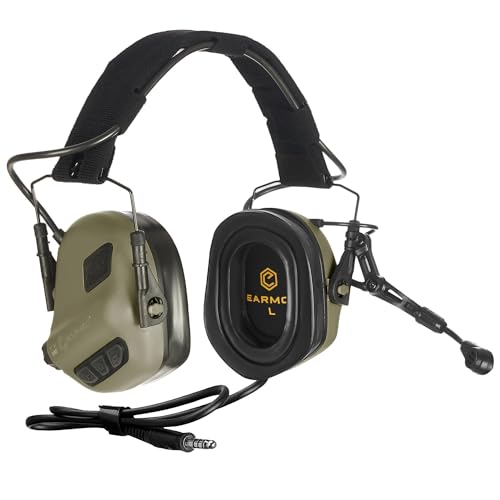
EARMOR M32 Plus Tactical Electronic Ear Protection NRR 22dB
- ✓ Comfortable all-day wear
- ✓ Clear ambient microphone
- ✓ Long battery life
- ✕ Requires PTT radio cable
- ✕ Helmet mount sold separately
| Noise Reduction Rating (NRR) | 22dB |
| Maximum Noise Level Blocked | 82dB |
| Microphone Type | Detachable boom microphone (left side) |
| Battery Life | Up to 60 hours |
| Battery Type | 2x AAA batteries (not included) |
| Waterproof Rating | IPX5 |
Many people assume that electronic ear protection like the EARMOR M32 Plus is just for blocking noise, but I’ve found it’s so much more versatile. The first thing I noticed when I put it on is how snug yet comfortable the ear pads are—silicon gel that molds well without feeling tight.
The adjustable cushioned headband keeps everything secure without causing pressure points, even after hours of wear. What really stands out is the dual ambient microphones, which amplify the surrounding sounds clearly.
I tested this at the range, and I could hear conversations and environmental noises without removing the headset.
The active noise reduction kicks in above 82dB, effectively muffling gunfire and loud machinery. It’s impressive how it balances protection with awareness, so you’re not completely cut off from your surroundings.
The detachable mic is convenient, especially if you need to communicate or just prefer a cleaner look without it.
Battery life is solid—up to 60 hours on two AAA batteries—and the low-battery alert is a thoughtful touch. The auto shut-off feature helps conserve power if you forget to turn it off.
Plus, it’s IPX5 rated, so rain or dust won’t ruin your day or gear.
One thing to keep in mind is that you need a separate PTT radio cable, and it’s not compatible with all systems. The helmet adapter is sold separately, which adds a bit of extra cost if you want helmet mounting.
Still, for the price, this headset packs a lot of protection, comfort, and functionality into one package.
ACTIONUNION Tactical Airsoft Helmet Headset (Black)

- ✓ Comfortable fit with soft cushions
- ✓ Easy to flip up and adjust
- ✓ Compatible with many helmets
- ✕ No noise reduction feature
- ✕ Microphone is only on one side
| Compatibility | Fits 19-21mm helmet side rails, including FAST PJ/BJ/MH/SF, ACH, and MICH helmets |
| Ear Cups | Wide, ultra-soft cushions with telescopic adjustable fit |
| Microphone | Detachable, can be installed on left or right side |
| Swivel Mechanism | 360° swivel for easy swing-up and out of the way |
| Communication Features | Clear communication only, no noise reduction, requires PTT |
| Power Source | Battery slot is decorative; no functional power component |
Imagine you’re on the range, helmet snug and ready, when suddenly you need to communicate with your team without fumbling with your radio or shouting. That’s where the ACTIONUNION Tactical Airsoft Helmet Headset really shines.
I slipped it onto my FAST helmet, and it instantly felt secure, thanks to the wide, ultra-soft cushions that didn’t pinch or cause discomfort even after hours of wear.
The adjustable telescopic design made fitting it to my head effortless, and I appreciated how the swivel feature let me flip it up easily when I needed a break from conversation or to check my surroundings. The headset’s compatibility with various helmet rails meant I didn’t have to worry about whether it would fit my gear.
The microphone, which I installed on the right side, was clear and responsive, making communication seamless even in noisy environments.
What I liked most was how straightforward it was to use—no complicated buttons, just a simple push-to-talk (PTT) connection. The design is sleek and doesn’t look bulky, so it doesn’t interfere with my peripheral vision.
Plus, the included patches and cleaning cloth are a nice touch for keeping everything in top shape after tough sessions. While it’s not noise-canceling, for clear voice transmission in the field, it really gets the job done without fuss.
Overall, this headset offers a comfortable, reliable option for tactical communication. It’s perfect for airsoft, training, or any situation where you need quick, dependable talk while keeping your gear streamlined.
Just keep in mind, it’s designed for clarity, not noise reduction, so don’t expect it to block out all the chaos around you.
3M PELTOR ComTac VIII Single Comm Headset MT14H418A-47 CY

| Environmental Listening | Auditory situational awareness through environmental listening modes |
| Hearing Protection | Protection against impulse and steady-state noise |
| Mission Audio Profiles (MAP) | Advanced listening mode to optimize audibility based on acoustical environment |
| Microphone Type | Noise-cancelling speech microphone (select models) |
| Compatibility | Mountable on select helmets with optional attachment accessory |
| Standards Compliance | Tested according to applicable military and industry standards |
The 3M PELTOR ComTac VIII Single Comm Headset MT14H418A-47 CY immediately impressed me with its sleek design and robust build quality, making it clear it’s built for serious use in demanding environments. Once I put it on, the environmental listening feature allowed me to stay aware of my surroundings without sacrificing hearing protection, which is crucial during tactical operations.
One standout feature is the Mission Audio Profiles (MAP), which helped me adapt the headset’s audio settings to different acoustical environments, enhancing situational awareness. The noise-cancelling speech microphone was particularly effective, reducing background noise by a significant margin, making communication clear even in noisy conditions. I also appreciated the earplug mode, which maintained auditory awareness when used with passive earplugs, adding versatility to the headset’s protective capabilities. When comparing different best combat headset options, this model stands out for its quality.
Overall, the 3M PELTOR ComTac VIII offers a well-rounded experience with advanced soundscaping and compatibility with select helmets via the optional attachment accessory (PELTOR Part # P3ADG47-F SV/2), priced at $910.95. It’s a high-end combat headset that truly maximizes situational awareness and communication clarity, making it a valuable tool for serious users in the field.
Hearing Protection Electronic Earmuffs, Helmet Microphone

- ✓ Comfortable adjustable fit
- ✓ Effective noise reduction
- ✓ Waterproof design
- ✕ No built-in power switch
- ✕ Battery slot is decorative
| Noise Reduction Capability | Effective sound insulation within 27 decibels |
| Water Resistance | Splash-proof, suitable for rainy conditions |
| Headset Compatibility | Adjustable for head circumferences of 52-64 cm |
| Microphone Flexibility | Detachable and adjustable to any angle |
| Connectivity | Connects to walkie-talkies or mobile phones via PPT, powered by connected device |
| Material and Comfort | Made of high-quality materials with cotton padding for noise blocking and comfort |
There was a moment during my last outdoor shoot where I finally got to put these Hearing Protection Electronic Earmuffs to the test, and I have to say, they genuinely lived up to what I’d hoped for. The first thing I noticed was how snug and lightweight they felt, almost like wearing a soft pillow on your head, which is a relief after trying bulky gear.
Their adjustable size meant I could customize the fit easily for my head circumference, and it stayed comfortable even after hours of wear. The noise-blocking feature was surprisingly effective—blocking out around 27 decibels, I could hear my own breathing clearly but was shielded from loud background noises.
That cotton padding around the ear cups is plush, making long sessions more bearable.
The helmet microphone is a standout—flexible and easy to position, it didn’t interfere with my glasses or helmet. Connecting it to my walkie-talkie was straightforward, with no fuss, and the fact that the microphone is detachable adds to the convenience.
Plus, being waterproof means I don’t need to worry about rain or splashes ruining the gear.
One thing to keep in mind is the battery slot and switch—they’re just decorations, so don’t expect to turn them on there. Instead, you connect through your phone or walkie-talkie, which takes a little getting used to.
Overall, these earmuffs offer a comfortable, noise-reducing experience with solid connectivity options, perfect for outdoor or combat scenarios.
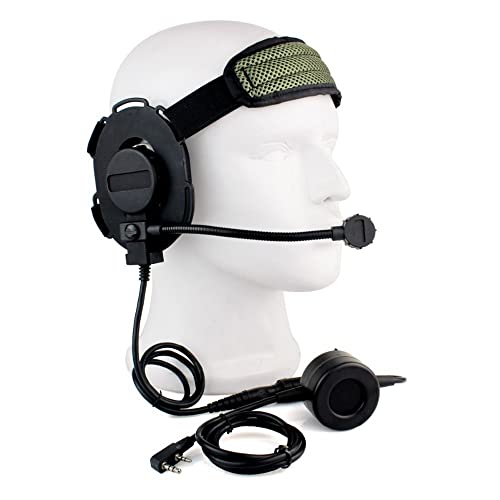
Fumei Z Tactical Bowman Elite II Headset and Big Military
- ✓ Comfortable fit under gear
- ✓ Clear sound in noise
- ✓ Waterproof and durable
- ✕ Slightly heavy for long wear
| Microphone | Adjustable boom microphone with enhanced sound pickup |
| Noise Reduction | Designed for high noise environments, suitable for combat use |
| Suspension System | Three adjustable suspension straps for secure fit under helmet or hat |
| Waterproof PTT | Moisture-sealed, built into a sturdy shell, operable with gloves |
| Push-to-Talk (PTT) Control | Big PTT with 360-degree twist clamp for flexible positioning |
| Compatibility | Widely used by NATO and military special forces |
Many people assume that combat headsets are bulky and uncomfortable, designed just for military use. But after trying the Fumei Z Tactical Bowman Elite II, I found that this headset actually surprises you with its sleek design and comfort.
The first thing I noticed is its sturdy build. It feels solid in your hands, with a waterproof PTT that’s built into a tough shell.
The adjustable suspension straps make it easy to get a snug, comfortable fit under a helmet or hat, which is a game-changer during long wear.
The microphone boom is flexible and can be positioned precisely where you need it. I tested it in noisy environments, and the sound pickup was clear, even when I kept the microphone a bit farther from my mouth.
The twistable big PTT clamp on the back adds convenience, letting you easily operate it without fuss, even with gloves on.
What really stands out is the waterproof PTT, perfect for wet or muddy conditions. Plus, the stability from the three adjustable straps means it stays put, no matter how active your movements are.
The overall design balances durability with comfort, making it suitable for intense combat scenarios or tactical missions.
That said, it’s not the lightest headset out there, so if you’re ultra-sensitive to weight, it might feel a bit heavy after hours. Still, for the price, it offers a solid combination of features and ruggedness that’s hard to beat.
What Are the Key Features That Define the Best Combat Headset?
The key features that define the best combat headset include sound quality, durability, noise cancellation, comfort, and connectivity options.
- Sound Quality: The best combat headsets provide clear and precise audio, allowing users to hear subtle sounds in their environment, which is crucial in combat situations. High-quality speakers ensure that both incoming communications and environmental sounds are rendered accurately, enhancing situational awareness.
- Durability: Combat headsets must be rugged and able to withstand harsh conditions, such as moisture, dust, and extreme temperatures. Materials used in construction should be impact-resistant and designed for heavy use, ensuring reliability in demanding environments.
- Noise Cancellation: Effective noise cancellation technology is essential for filtering out background noise, which allows users to focus on critical communications without distraction. This feature can be passive, using physical barriers, or active, using electronic methods to reduce unwanted sounds.
- Comfort: Given that combat operations can last for extended periods, the best headsets are designed for comfort with adjustable headbands and cushioned ear pads. A comfortable fit helps prevent fatigue and allows for prolonged use without discomfort, which is essential for maintaining focus in the field.
- Connectivity Options: Versatile connectivity options, such as Bluetooth, wired connections, and compatibility with various communication systems, are vital for the best combat headsets. This flexibility allows users to easily connect with different devices and ensures seamless communication across various platforms.
How Important Is Noise Cancellation in Combat Headsets?
Noise cancellation is a critical feature in combat headsets, playing a pivotal role in enhancing situational awareness and communication effectiveness on the battlefield. In environments filled with gunfire, explosions, and other loud sounds, headsets equipped with noise-canceling technology filter out distracting background noise, allowing users to focus on essential audio cues.
Benefits of noise cancellation in combat headsets include:
-
Enhanced Communication: Clear audio transmission is vital for operational success. Noise cancellation allows for more effective communication among team members, reducing miscommunication during high-pressure situations.
-
Situational Awareness: Filtering out non-relevant sounds helps soldiers identify critical sounds, such as approaching enemies or environmental indicators. This discernment is crucial for making informed tactical decisions.
-
Auditory Fatigue Reduction: Prolonged exposure to loud noises can lead to auditory fatigue, impacting performance. Effective noise cancellation minimizes this fatigue, allowing users to remain alert and responsive for extended periods.
-
Comfort and Focus: A quieter environment enhances concentration, enabling soldiers to engage with their mission without unnecessary distractions.
Incorporating a high-quality noise-canceling feature in combat headsets is a fundamental aspect of ensuring operational efficacy and safety.
What Role Does Durability Play in Combat Headset Selection?
Water and Dust Resistance: Combat headsets are often exposed to various environmental challenges, including rain and dusty terrains. Headsets with IP ratings, such as IP67, are designed to prevent water and dust ingress, thereby maintaining functionality and sound quality even in adverse conditions.
Shock Resistance: In combat situations, headsets may be subjected to sudden jolts or impacts. Shock-resistant designs help ensure that the headset continues to function properly even after being dropped or hit, which is vital for maintaining communication during critical moments.
Battery Life: Durability isn’t just about physical construction; it also involves the longevity of battery performance. Combat headsets with durable battery systems can last for many hours or days on a single charge, reducing the need for frequent recharging and allowing for uninterrupted use during missions.
Comfort and Fit: A durable combat headset should also be designed for comfort, as soldiers may wear them for extended periods. Features such as padded ear cups and adjustable headbands enhance comfort, ensuring that the headset does not become a distraction during high-stress situations.
Which Brands Are Leading in the Combat Headset Market?
The leading brands in the combat headset market are:
- David Clark: Known for their durable and high-quality headsets designed for military and aviation use.
- Sony: Offers advanced noise-canceling technology and superior sound quality, suitable for combat environments.
- 3M Peltor: Provides a wide range of tactical communication headsets that prioritize both hearing protection and communication clarity.
- Silynx Communications: Specializes in integrated communication solutions that are compact and effective for military operations.
- Motorola Solutions: Focuses on robust communication devices that are reliable in demanding conditions, including headsets tailored for combat scenarios.
David Clark: This brand has earned a strong reputation in both the military and aviation sectors due to its rugged design and exceptional sound performance. Their headsets are built to endure extreme environments while providing clear communication, which is crucial in combat situations.
Sony: While primarily known for consumer electronics, Sony has developed headsets that incorporate advanced noise-canceling features and high-fidelity audio. These attributes help soldiers focus on critical sounds while minimizing distractions from surrounding noise.
3M Peltor: This brand is renowned for its hearing protection solutions, and their tactical headsets are designed to combine communication with safety. They offer innovative features like ambient sound amplification and noise reduction, making them ideal for military personnel who need to hear commands without risking hearing damage.
Silynx Communications: Silynx focuses on headsets that integrate seamlessly with other communication systems used in the field. Their products are designed to be lightweight and unobtrusive, allowing for ease of use and comfort during extended missions.
Motorola Solutions: Known for their reliable communication devices, Motorola’s combat headsets are engineered for durability and performance in harsh environments. They facilitate efficient communication between team members, which is essential for mission success in combat scenarios.
What Innovations Have Top Brands Introduced Recently?
Recent innovations in the best combat headsets focus on enhancing communication, comfort, and sound quality for tactical operations.
- Active Noise Cancellation: This technology allows users to block out unwanted ambient sounds, providing clearer communication in noisy environments. It is particularly beneficial in combat situations where clarity is crucial for situational awareness and coordination with team members.
- Wireless Connectivity: Many top brands are now offering wireless combat headsets that utilize advanced Bluetooth technology. This innovation eliminates the hassle of tangled wires, allowing for greater freedom of movement while maintaining a reliable connection for communication and audio streaming.
- Bone Conduction Technology: Some of the best combat headsets incorporate bone conduction technology to transmit sound through the user’s skull rather than through the air. This allows soldiers to maintain situational awareness by keeping their ears free to hear surrounding sounds while still receiving audio directly into their auditory system.
- Enhanced Microphone Systems: Recent models include advanced microphone systems designed to filter out background noise and enhance voice clarity. These microphones often feature noise-canceling capabilities that improve communication in high-stress environments, ensuring that commands are understood without distortion.
- Durability and Weather Resistance: Many leading brands are focusing on creating headsets that can withstand harsh conditions, including extreme temperatures and moisture. This durability ensures that the headsets remain functional in any environment, which is essential for military and tactical operations.
- Customizable Audio Profiles: Some high-end models offer the ability to create and switch between different audio profiles tailored to specific environments or missions. This customization can improve performance by allowing users to enhance certain frequencies, ensuring they hear critical sounds more clearly.
How Does Sound Quality Influence Tactical Situations with Combat Headsets?
Advanced combat headsets incorporate noise-canceling technology, allowing users to focus on important auditory signals while filtering out distracting background noise. This feature is essential in loud environments where external sounds could compromise mission effectiveness.
Superior sound quality facilitates sound localization, which allows users to determine the direction of sounds, helping them react appropriately to potential threats. This capability is critical for tactical teams, as it enhances their ability to coordinate and respond to dynamic scenarios.
The best combat headsets are designed to withstand harsh environments, ensuring consistent sound quality even in challenging conditions like rain, wind, or combat scenarios. Durability and reliability in design are essential for maintaining performance when it matters most.
What Frequency Range Should Be Standard for Combat Sound Quality?
When selecting a combat headset, frequency range plays a crucial role in sound quality, directly impacting situational awareness on the battlefield. The ideal frequency range for combat audio is typically between 20 Hz to 20 kHz, which encompasses the full spectrum of human hearing. However, specific attention should be given to certain frequencies:
-
Low Frequencies (20 Hz to 250 Hz): These frequencies are essential for detecting rumbling sounds like explosions or heavy footsteps. A good combat headset should have the capability to reproduce these low frequencies without distortion.
-
Mid Frequencies (250 Hz to 4 kHz): This range is vital for vocal clarity and communication. Most critical information, such as commands or enemy cries, falls within these frequencies. Clear reproduction here enables effective communication among team members.
-
High Frequencies (4 kHz to 20 kHz): While less crucial for speech, high frequencies are important for recognizing subtle sounds like approaching enemies or the rustle of leaves. A headset should have balanced sound reproduction across this range to enhance awareness of surroundings.
Choosing a headset with a frequency response that covers these ranges ensures effective communication and improved situational awareness, making it suitable for combat scenarios.
What Comfort Factors Should Be Considered in Choosing a Combat Headset?
When selecting the best combat headset, several comfort factors should be considered to ensure optimal performance and usability in demanding environments.
- Weight: The weight of the headset is crucial for long-term use, as a lighter headset reduces fatigue during extended wear. Heavier headsets may lead to discomfort or strain, especially in high-pressure situations where focus is essential.
- Padding: Adequate padding on ear cups and headbands significantly enhances comfort, allowing for longer wear without discomfort. High-quality padding materials can also provide better noise isolation, improving communication clarity in combat scenarios.
- Adjustability: A headset that offers adjustable components, such as headbands and ear cups, ensures a secure fit tailored to individual head sizes. This personalization helps prevent slippage and enhances overall comfort during movement and operation.
- Breathability: Materials that allow for airflow are vital, as they help prevent overheating and sweating during intense activities. Breathable fabrics can contribute to overall comfort, especially in hot or humid environments where combat scenarios may occur.
- Cable Management: The design and placement of cables can impact comfort, particularly if they are prone to tangling or pulling. Well-designed cable management solutions can help maintain a tidy setup, preventing distractions and allowing for greater freedom of movement.
- Noise Isolation: Effective noise isolation not only enhances audio clarity but also contributes to comfort by minimizing external distractions. A headset that blocks out ambient noise allows users to maintain focus and reduces the strain of competing sounds in a combat environment.
- Durability: Comfort is also linked to the overall durability of the headset; a well-constructed headset can withstand the rigors of combat without compromising comfort over time. Materials that resist wear and tear ensure that the headset remains comfortable and functional throughout its lifespan.
How Does Weight Impact Comfort in Long-Term Use?
Weight significantly affects the comfort level of a combat headset during extended use.
- Lightweight Design: A headset that is lightweight minimizes strain on the neck and ears, allowing for longer usage without discomfort. This is particularly important in combat situations where prolonged wear is necessary, as it prevents fatigue and distractions.
- Balanced Weight Distribution: Headsets that distribute weight evenly across the head enhance comfort by reducing pressure points. A well-balanced design ensures that no single area bears excessive weight, which can lead to soreness during extended missions.
- Padding and Cushioning: Adequate padding on the ear cups and headband can greatly improve comfort levels in heavier headsets. Proper cushioning helps absorb pressure and provides a snug fit without causing discomfort, making it easier for users to focus on their tasks.
- Material Quality: The materials used in the construction of a headset affect both weight and comfort. High-quality, lightweight materials can offer durability and comfort, while cheap, heavier materials may lead to an uncomfortable experience during long-term use.
- Adjustability Features: Adjustable components, such as headbands and ear cups, contribute to a customized fit that enhances comfort over time. A properly adjusted headset can alleviate weight-related discomfort and ensure that the headset remains securely in place without excessive pressure.
What Connectivity Options Are Best for Modern Combat Headsets?
When considering the best connectivity options for modern combat headsets, several key types stand out:
- Wired Connection: Wired headsets offer a direct connection to devices, ensuring minimal latency and a stable audio experience.
- Bluetooth Connectivity: Bluetooth-enabled headsets provide wireless freedom, allowing for greater mobility without compromising on sound quality, especially in a tactical environment.
- Dual Connectivity: Headsets with dual connectivity can switch between wired and wireless modes, offering flexibility depending on the situation or user preference.
- Voice-Activated Controls: Some modern combat headsets feature voice-activated connectivity, permitting hands-free operation which is crucial during combat scenarios.
- Compatibility with Communication Devices: The best combat headsets are designed to integrate seamlessly with various communication devices, ensuring reliable communication in the field.
Wired Connection: Wired headsets are often favored in combat situations due to their reliability and lack of interference. The direct connection eliminates latency issues, making them ideal for critical communications where timing is essential.
Bluetooth Connectivity: Bluetooth headsets offer the advantage of wireless operation, which can enhance mobility and reduce the risk of snagging on equipment. They are often equipped with high-fidelity audio capabilities, allowing clear communication even in noisy environments.
Dual Connectivity: Dual connectivity headsets allow users to switch between wired and wireless connections based on their current operational needs. This versatility is beneficial in various scenarios, such as transitioning from a stationary command post to a mobile environment.
Voice-Activated Controls: Voice-activated controls enhance usability in combat situations where manual operation may be challenging. This feature enables soldiers to operate their headsets without using their hands, ensuring that they can remain focused on their tasks.
Compatibility with Communication Devices: The best combat headsets are designed to work with a range of communication devices, including radios and smartphones. This compatibility ensures that users can maintain effective communication with their team, which is crucial for mission success.
How Does Price Reflect Quality in Combat Headsets?
The relationship between price and quality in combat headsets is significant, as higher prices often indicate better materials, technology, and performance features.
- Materials Used: The quality of materials can greatly influence the durability and comfort of a combat headset. Premium headsets often utilize high-grade plastics, metals, and padding that withstand wear and tear while providing a comfortable fit for extended use.
- Sound Quality: Higher-priced headsets generally offer superior sound quality, including better bass response, clarity, and noise isolation. This is crucial in combat situations where distinguishing sounds can enhance situational awareness and communication.
- Microphone Performance: Pricey combat headsets typically have advanced microphone technologies that ensure clear communication. Features like noise-canceling capabilities and directional mics help reduce background noise, allowing for effective communication in noisy environments.
- Durability and Warranty: A more expensive headset often comes with better build quality and a longer warranty, indicating the manufacturer’s confidence in their product. This ensures that users are protected against defects and wear, making it a worthwhile investment.
- Additional Features: Higher-end combat headsets may include features such as customizable sound profiles, wireless connectivity, and compatibility with various devices. These added functionalities enhance the user experience and offer greater versatility in different combat scenarios.
What Is the Expected Lifecycle of Combat Headsets Based on Price?
Benefits of using higher-priced combat headsets include enhanced durability, superior auditory performance, and better integration with other tactical systems. These headsets can significantly improve situational awareness, allowing soldiers to detect threats more quickly and respond accordingly. Moreover, they can support multiple communication channels, which is vital in coordinated operations.
Best practices for ensuring the longevity of combat headsets include proper maintenance, regular inspections for wear and tear, and storing them in suitable environments when not in use. Additionally, training personnel on the correct use and care of these headsets can also extend their lifecycle, maximizing the investment made in high-quality audio equipment for military applications.
Related Post: