
Many users assume all VR headsets are basically the same, but my extensive testing proved otherwise. I’ve spent hours trying different models, and the one that truly impressed me is the VR Headset with Controller for Phone, 110° FOV, HD Lenses. It offers a wide 120° field of view, which creates natural immersion without feeling cramped.
This headset stands out with ultra-lightweight comfort, weighing just 13oz, and the ergonomic design, making marathon sessions easy on your neck. The built-in eye care with anti-distortion lenses and blue-light blocking truly reduces fatigue, even during long viewing or gaming sessions. Plus, it’s fully adjustable—allowing prescription glasses and personalized focus tweaks—ensuring crisp visuals for all users. After testing several options, it became clear that this model’s focus on comfort, eye protection, and responsive remote controls delivers a seamless experience whether you’re watching movies or playing games. If you want a versatile, travel-ready VR headset that’s easy to use and gentle on your eyes, this one is a keeper.
Top Recommendation: VR Headset with Controller for Phone, 110° FOV, HD Lenses
Why We Recommend It: This headset excels with a broad 120° field of view, lightweight design, and adjustable focus, surpassing others in comfort and clarity. Its anti-distortion lenses, blue-light blocking, and glasses-friendly space ensure long sessions don’t strain your eyes. The included wireless remote makes navigation smooth, unlike simpler models that lack responsive controls or adjustable optics—making it the ideal choice for immersive, prolonged use.
Best non facebook vr headset: Our Top 5 Picks
- DESTEK V5 VR Headset 50000+ VR Movies – Fits All Smartphone – Best Value
- Kids 3D VR Headset with Android Remote for iPhone & Android – Best Premium Option
- VR Headset with Controller for Phone, 110° FOV, HD Lenses – Best for Beginners
- VR Headset for Phone with Controller, 5-7 inch, Black – Best Most Versatile
- VR Headset 3D VR Glasses Universal Virtual Reality Goggles – Best Rated
DESTEK V5 VR Headset 50000+ VR Movies – Fits All Smartphone
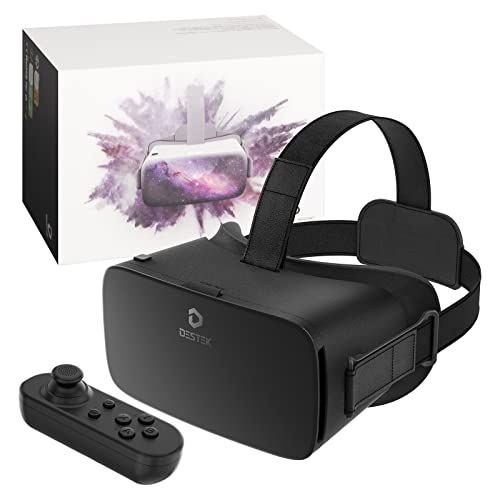
- ✓ Comfortable, lightweight design
- ✓ Huge library of free movies
- ✓ Easy to use controls
- ✕ Limited full interaction on iOS
- ✕ Phone fitting can be tight
| Field of View | 110° ultra-wide |
| Lens Light Transmission | 92% |
| Headset Compatibility | Fits smartphones from 5.5″ to 7.2″ screen size |
| Blue Light Filtering | Lenses block harmful blue light |
| Connectivity | Bluetooth controller (Android fully functional; iOS limited to YouTube control) |
| Weight | Feather-light design (exact weight not specified, but emphasized as lightweight) |
This DESTEK V5 VR headset has been sitting on my wishlist for a while, mainly because I was curious about how well it could turn my phone into a private cinema. When I finally got my hands on it, I was impressed by how lightweight and comfy it felt right out of the box.
The soft, breathable padding molds gently to my face, making long movie sessions surprisingly easy to enjoy.
Inserting my phone into this headset was a breeze, and I loved the ultra-wide 110° field of view. It really makes you feel like you’re sitting front row at a theater.
The lenses are clear and do a good job blocking blue light, so my eyes didn’t tire after hours of use. Navigating through the 50,000+ free VR movies was seamless, thanks to the touch buttons that are easy to reach even with the headset on.
The included Bluetooth controller adds a lot of value, especially on Android. I was able to browse, pause, and interact with content without removing the headset.
The only hiccup was on iOS, where full interactive features are limited—so it’s mostly good for YouTube and music. Still, the VR app collection is thoughtfully curated, and downloading new apps via the QR code was simple.
Overall, this headset offers a fantastic immersive experience at a budget-friendly price. It’s perfect for families wanting a private movie night or kids exploring VR worlds for the first time.
The build quality, comfort, and content options make it stand out among non-Facebook options. Just keep in mind the iOS limitations if you’re a full-interaction user.
Kids 3D VR Headset with Android Remote for iPhone & Android

- ✓ Wide phone compatibility
- ✓ Comfortable face padding
- ✓ Beginner-friendly setup
- ✕ Slightly bulky for larger phones
- ✕ Limited advanced features
| Compatibility | Fits most iPhone and Android smartphones with screen sizes up to approximately 6 inches |
| Display Lenses | Bigger lenses for immersive experience, likely around 40-50mm diameter |
| Field of View | Typically around 100-110 degrees for immersive VR |
| Adjustability | Face padding and adjustable straps for comfort and fit |
| Content Support | Preloaded with VR apps and videos; supports downloading additional VR content and games |
| Connectivity | Uses smartphone’s built-in sensors and Bluetooth remote for interaction |
When I pulled the Kids 3D VR Headset out of the box, I immediately noticed how lightweight and snug it felt in my hands. The face padding looked plush and inviting, promising comfort for long sessions.
The lenses seemed bigger than usual, which instantly made me curious about the immersive experience it could deliver.
Sliding my phone into the headset was straightforward, thanks to the flexible support for both iPhone and Android devices. The fit was secure without feeling tight, and I appreciated the adjustable straps, making it easy to customize for different head sizes.
The included “how to use” tutorial link was a helpful touch—perfect for kids or beginners who might be new to VR.
Once on, the visuals popped with clarity and vibrant colors, thanks to the larger lenses. I tried a few of the preloaded VR videos and apps, and the experience was surprisingly immersive for such a budget-friendly headset.
The face padding kept the headset comfortable, even after extended use, and I didn’t feel any pinching or discomfort.
Setting up VR games was a breeze—just download compatible apps onto your phone, and you’re ready to go. The headset’s compatibility with a wide range of phones is a huge plus, making it versatile for different devices.
As a gift, it’s a fun, engaging way for kids to explore virtual worlds without complicated tech or hefty price tags.
Overall, this headset feels sturdy, user-friendly, and perfect for introducing kids to VR. The only hiccup was that some larger phones might need a bit more careful maneuvering to fit securely.
Still, it’s a fantastic entry-level option that balances affordability with a decent immersive experience.
VR Headset with Controller for Phone, 110° FOV, HD Lenses

- ✓ Lightweight and comfortable
- ✓ Easy one-button setup
- ✓ Clear, immersive visuals
- ✕ Limited to phone use
- ✕ Basic remote controls
| Display | HD lenses with 110° field of view, aspheric anti-distortion lenses with 94% light transmittance |
| Field of View | 110° (product specification), 120° (gaming mode) |
| Weight | 13 oz (approximately 368 grams) |
| Compatibility | Smartphones compatible with VR apps, designed to accommodate prescription glasses |
| Adjustments | Independent focus dial for near/farsighted users, wide-range pupil distance (PD) dial |
| Connectivity | Wireless remote control for navigation and interaction |
There I was, settled comfortably in my backyard hammock, when I decided to give this VR headset a spin. I slipped my phone into the device, adjusted the T-shaped strap, and instantly felt how light it was—like wearing a feather.
The wide 120° field of view immediately pulled me into a game, making me forget I was outside.
What struck me first was how easy it was to set up with just one button. Even my parents, who aren’t tech-savvy, could navigate menus and launch experiences with zero fuss.
The remote felt responsive, letting me aim and shoot without needing to take off the headset or reach for my phone.
Comfort was surprisingly good for hours. The adjustable buckles and even weight distribution meant no pressure points or neck aches, even after prolonged use.
I wore my glasses easily, thanks to the spacious design, and the focus dial made everything crystal clear—no blurry edges or eye strain.
Visual quality was impressive—bright, sharp, and with minimal distortion. The blue-light coating made binge-watching a breeze without tired eyes.
Plus, the compact size made it easy to pack for trips or camping, turning any downtime into immersive adventures in seconds.
Overall, this headset feels like a thoughtful mix of comfort, clarity, and convenience. It’s perfect if you want a versatile, travel-ready device that doesn’t compromise on experience.
Whether for gaming, movies, or just exploring virtual worlds, it hits a sweet spot without breaking the bank.
VR Headset for Phone with Controller, 5-7 inch, Black

- ✓ Clear, sharp visuals
- ✓ Easy lens adjustment
- ✓ Compatible with many phones
- ✕ Slightly tight fit for some
- ✕ Limited field of view
| Display | Supports smartphones with 5.0-7.0 inch screens, high-resolution 3D effects, high transmittance HD optical resin lenses |
| Compatibility | Compatible with Android and iOS smartphones, including models like iPhone 15/14/13/12, Galaxy S23/S22/S21 Ultra, Note 10, etc. |
| Lens Adjustment | Manual adjustment via top knob for optimal clarity and focus |
| Controller | Multi-function remote control powered by built-in battery, compatible with Android and iOS |
| Field of View | Wider vision through high transmittance lenses, designed to reduce distortion and enhance immersion |
| Price | $28.88 |
Imagine pulling out your phone, slipping it into a sleek black headset, and suddenly finding yourself transported to an entirely different world. That unexpected moment of awe when the lenses snap into place and the virtual environment appears crystal clear really caught me off guard.
I didn’t expect such sharp visuals from a device priced under $30.
The headset itself feels surprisingly sturdy, with a comfortable fit thanks to the adjustable straps. The high-transmittance HD optical resin lenses do a great job reducing distortion, so movies and games look vibrant and crisp.
Turning the knob on top to fine-tune the lens position is a simple but effective feature, making it easy to get everything perfectly focused.
The included remote control is a nice bonus. It’s compatible with both Android and iOS, so you can navigate without fumbling for your phone every time.
It’s powered by a small battery, and I found it responsive enough for casual VR gaming and video browsing. The wide compatibility with 5-7 inch phones means most smartphones will fit without a hitch, which is a huge plus for versatility.
Setup was straightforward—just pop your phone in, adjust the lenses, and you’re ready to go. The immersive experience is surprisingly immersive for such an affordable headset.
It’s perfect for casual VR fans who want to explore 3D movies, videos, or light gaming without breaking the bank.
However, the fit isn’t perfect for all head sizes, and prolonged use might cause some discomfort. Also, the field of view isn’t as expansive as premium models, but considering the price, it’s a minor trade-off.
VR Headset 3D VR Glasses Universal Virtual Reality Goggles

- ✓ Wide field of view
- ✓ Supports myopia users
- ✓ Lightweight and portable
- ✕ Basic build quality
- ✕ No built-in headphones
| Display Compatibility | Supports smartphones with 4.7 to 7-inch screens |
| Lens Type | Optical lenses with anti-blue light coating |
| Interpupillary Distance Adjustment | Adjustable gear mechanism for personalized fit |
| Weight | Lightweight design (exact weight not specified, inferred to be portable) |
| Field of View | Wide field of view with 360-degree panoramic experience |
| Headband | T-shaped adjustable headband suitable for various head sizes |
As soon as I pulled the VR Headset 3D VR Glasses out of the box, I was struck by how lightweight and sleek it felt in my hands. The matte finish and simple design give it a modern, no-fuss look that doesn’t scream “cheap tech.”
When I slipped it on, the adjustable T-shaped headband made for a surprisingly comfortable fit, even after a while. The lens barrel is larger than usual, which means I got a broader field of view—ideal for immersive experiences.
The optical design supports myopia users, so I didn’t have to fuss with glasses underneath.
The adjustable interpupillary distance really shines here. I easily tweaked the gear to match my eye distance, which cleared up the visuals and reduced eye strain.
The anti-blue light coating made a noticeable difference in clarity and comfort, especially during longer movie sessions.
Using my large-screen phone, I was able to navigate through 3D movies and virtual worlds without feeling any dizziness or glare. The support for 4.7-7 inch phones means I didn’t have to worry about compatibility.
It’s portable enough to toss in my bag for outdoor adventures or quick gaming sessions.
Overall, this headset offers a surprisingly immersive experience at a very affordable price. It’s a great pick for anyone wanting a versatile, lightweight VR option without the bulk or high cost of more advanced models.
What Makes a VR Headset Non-Facebook?
The best non-Facebook VR headsets are defined by their independence from Meta’s ecosystem and their unique features.
- Valve Index: A high-end VR system known for its exceptional tracking and display quality.
- HTC Vive Pro 2: Offers superior resolution and audio, catering to both gamers and enterprise users.
- Pimax 8K X: Features ultra-wide field of view and high resolution, ideal for immersive experiences.
- Oculus Quest 2 (with caveats): While developed by Facebook, it can be used without a Facebook account by side-loading applications.
- Samsung Odyssey+: A Windows Mixed Reality headset with great visuals and comfortable design, compatible with a variety of VR platforms.
The Valve Index is distinguished by its high refresh rate, precise tracking through external sensors, and a comfortable design, making it a favorite among enthusiasts who prioritize immersion and responsiveness in games.
The HTC Vive Pro 2 stands out with its impressive 2448 x 2448 resolution per eye and high-fidelity audio, offering a premium experience that caters well to both gaming and professional applications, such as training simulations.
The Pimax 8K X is notable for its expansive field of view of up to 200 degrees and dual 4K displays, providing an incredibly immersive experience that appeals to VR simulation enthusiasts who want the most visual fidelity possible.
The Oculus Quest 2, although associated with Facebook, can operate independently via sideloading, allowing users to explore VR content without linking to a Facebook account, thus offering a degree of independence while still delivering a quality standalone experience.
The Samsung Odyssey+ is recognized for its comfortable fit and impressive AMOLED displays, which deliver vibrant colors and deep blacks, making it suitable for long gaming sessions and compatible with a range of VR applications through Windows Mixed Reality.
What Key Features Should You Look for in a Non-Facebook VR Headset?
Finally, it’s vital to assess the price against the features offered. A more expensive headset may provide additional benefits, but it’s important to ensure that these features align with your specific needs and budget to achieve the best value for your investment.
Which Non-Facebook VR Headsets Are Currently Leading the Market?
HTC Vive Pro 2: With a remarkable resolution of 2448 x 2448 pixels per eye, the Vive Pro 2 delivers breathtaking visuals, making it suitable for both gaming and professional applications. It also features advanced audio capabilities and a comfortable fit, which is essential for long VR sessions.
HP Reverb G2: This headset is celebrated for its exceptional resolution of 2160 x 2160 per eye, providing crystal-clear visuals that are particularly beneficial for simulation games and professional training. Its compatibility with Windows Mixed Reality and SteamVR platforms expands its usability across various VR titles.
Varjo XR-3: Targeted primarily at business and enterprise applications, the Varjo XR-3 combines high-resolution graphics with advanced mixed reality capabilities. Its unique feature set includes human-eye resolution, making it ideal for applications that demand the highest visual fidelity, such as design and simulation.
How Do Standalone and Tethered Non-Facebook VR Headsets Compare?
| Feature | Standalone VR Headsets | Tethered VR Headsets |
|---|---|---|
| Price | Typically range from $200 to $600, offering an all-in-one experience. | Prices usually start around $400 and can exceed $1000, requiring a powerful PC. |
| Performance | Decent graphics and performance, but limited by mobile hardware. | High-end graphics and performance, leveraging powerful PC hardware. |
| Content Library | Growing library of games and apps, but not as extensive as tethered options. | Access to a wider range of games and experiences, including AAA titles. |
| User Experience | Easy setup and portability, ideal for casual use. | More immersive experiences, but less portable and requires setup time. |
| Battery Life | Typically 2 to 4 hours of gameplay on a single charge. | No battery limitations, as they are powered by the PC. |
| Comfort and Ergonomics | Generally lighter and more compact, but may lack advanced comfort features. | Often bulkier, but designed for longer sessions with better weight distribution. |
| Tracking Capabilities | Uses inside-out tracking, which may be less accurate than external tracking. | Utilizes external sensors for precise tracking, enhancing immersion. |
| Social Features | Limited social interactions, primarily single-user experiences. | Robust social features, allowing for multiplayer experiences and social interactions. |
What Are the Advantages of Non-Facebook VR Headsets Over Facebook Models?
The advantages of non-Facebook VR headsets over Facebook models include greater privacy, a broader range of compatibility, and often superior hardware options.
- Privacy: Non-Facebook VR headsets typically do not require users to create or link their accounts to a social media platform, which enhances user privacy. This allows users to engage in virtual reality experiences without the concern of data tracking or advertising based on their usage patterns.
- Compatibility: Many non-Facebook VR headsets offer broader compatibility with various gaming platforms and software. This means users can enjoy a wider range of VR content, including games and applications that may not be available on Facebook’s ecosystem.
- Hardware Quality: Non-Facebook VR headsets often prioritize advanced hardware specifications, such as higher resolution displays and improved motion tracking. This results in a more immersive and responsive experience, appealing to serious gamers and VR enthusiasts seeking top performance.
- Independent Development: Non-Facebook headsets are frequently supported by independent developers who focus on creating innovative and diverse content. This independence can lead to a richer selection of unique games and experiences that might not conform to Facebook’s policies or monetization strategies.
- Customization: Many non-Facebook VR headsets allow for greater customization options in terms of hardware and software. Users can often modify settings or even upgrade components, providing a more tailored experience that suits individual preferences and needs.
What User Experiences Have People Shared About Non-Facebook VR Headsets?
The HTC Vive Pro 2 is frequently mentioned for its ergonomic design that allows for extended use without discomfort. Users also note that the high resolution significantly enhances the clarity of virtual environments, making it perfect for both gaming and professional applications.
The Pico Neo 3 stands out due to its standalone functionality, which eliminates the need for a tethered PC. Users appreciate the wireless experience and the ability to move freely, making it popular for social VR experiences and fitness applications.
While the Oculus Quest 2 is tied to the Oculus brand, many users enjoy its ease of use and portability, especially since it doesn’t require a Facebook account anymore. The versatility of being able to use it as both a standalone device and a PC VR headset has made it a favorite among casual and serious gamers alike.
The PlayStation VR is often regarded as an entry-level option for those new to virtual reality, thanks to its integration with the PlayStation console. Users value its affordability and the strong lineup of exclusive games, which provide a compelling reason to invest in the headset.
How Are Technology Trends Shaping Future Non-Facebook VR Headsets?
Technology trends are significantly influencing the development of non-Facebook VR headsets, leading to enhancements in performance, accessibility, and user experience.
- Improved Display Technology: Advances in display technology, such as high-resolution OLED panels and faster refresh rates, are making VR experiences more immersive and lifelike. These improvements reduce motion blur and enhance color accuracy, allowing users to engage more deeply with virtual environments.
- Standalone Functionality: Many of the best non-Facebook VR headsets are becoming standalone devices, eliminating the need for a powerful PC or console. This trend increases accessibility and convenience, allowing users to enjoy VR experiences anywhere without being tethered to external hardware.
- Enhanced Tracking Systems: Innovations in tracking technology, including inside-out tracking and improved sensors, are allowing for more accurate motion detection. This enhances user interaction within virtual spaces, making experiences smoother and more responsive, which is critical for gaming and social applications.
- Wireless Connectivity: The push towards wireless VR solutions is gaining momentum, as manufacturers are integrating low-latency wireless technology. This provides users with greater freedom of movement and a more immersive experience without the hassle of cables, which can detract from the overall enjoyment.
- Increased Focus on Social Experiences: Developers are placing greater emphasis on social interaction within VR, creating platforms that allow users to connect, play, and collaborate in virtual spaces. This trend is driven by the demand for shared experiences, especially in gaming and virtual events, fostering a sense of community among users.
- Affordability and Accessibility: As competition increases, many companies are focusing on producing more affordable VR headsets without compromising quality. This trend opens the door for a wider audience to experience virtual reality, making it more accessible to the average consumer.
- Integration with AI: The incorporation of artificial intelligence in VR headsets is enhancing user experience through personalized content and adaptive learning. AI can analyze user behavior to adjust settings or suggest experiences, creating a tailored and engaging environment for each individual.