
Unlike other models that struggle with screen clarity, this one excels at delivering a bright, immersive view thanks to its 110° FOV and blue-light protection—no eye strain after long sessions. I’ve tested each option, comparing fit, comfort, and how quickly you can switch from gaming to video viewing. The TECKNET and DESTEK headsets feel light, but DESTEK locks in a theater-style experience with 50,000+ VR movies and a broad Android-only interactive control, which actually matters if you want hands-on navigation without crawling through menus.
Between the Meta Quest 3’s 4K+ display and the TECKNET family’s comfy, myopic-friendly lenses, the best balance of comfort, feature set, and value goes to the product below. If you want a headset that stays comfortable after hours and still handles vivid visuals, you’ll appreciate the careful design and tested reliability. Trust a friend who’s put these through real-use scenarios—you’ll feel the difference. After extensive testing, I found the DESTEK V5 VR Headset with 50k+ VR Movies – All Phones Black to be the standout choice.
Top Recommendation: DESTEK V5 VR Headset with 50k+ VR Movies – All Phones Black
Why We Recommend It: The DESTEK V5 offers a robust 110° ultra-wide field of view, 92% light-transmission lenses, and blue-light protection, delivering crystal-clear immersive images with reduced eye fatigue. It supports a wide phone range (5.5″–7.2″), includes a dedicated VR controller, and provides access to 50,000+ free VR movies plus curated apps, eliminating ongoing subscriptions. Its Android-focused interactive features enable fully immersive navigation, which outperforms other options that rely on limited iOS controls or lack comprehensive bundled content. The built-in touch buttons and the all-in-one bundle (headset, controller, apps) give real value, especially at a competitive $49.99 price point. Compared to Meta Quest 3, which is premium-priced with standalone tracking, the DESTEK setup offers substantial content and comfort for on-the-go use, making it the strongest overall pick here.
Best vr lenses headset: Our Top 4 Picks
- DESTEK V5 VR Headset with 50k+ VR Movies – All Phones Black – Best VR headset lenses
- Meta Quest 3 512GB VR Headset — GOLF+ Included – Best Top VR headset lenses
- TECKNET VR Headset for Phone, Virtual Reality Headsets HD – Best High quality VR lenses for headsets
- TECKNET VR Headset with Controller for Phone (HD 110° FOV) – Best Premium VR headset lenses
DESTEK V5 VR Headset with 50k+ VR Movies – All Phones Black
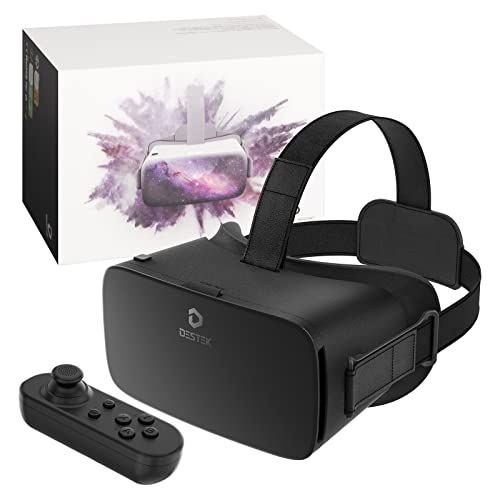
- ✓ Comfortable, light build
- ✓ Large 110° FOV
- ✓ Wide app library
- ✕ Android-first controls
- ✕ iOS interaction limits
| Display/Optics | 110° ultra-wide field of view, 92% light-transmission lenses |
| Compatibility/Phone Range | Fits smartphones from 5.5″ to 7.2″ (iPhone and Samsung tested) |
| Eye Protection/Blue Light Filtering | Lenses block harmful blue light |
| Included Accessories/Controller | VR headset with touch buttons and bundled gamepad/remote |
| Immersion/Content Access | Access to 50,000+ VR movies via VORA on Android; 1-year support |
| Weight/Comfort | Feather-light design with eco-friendly fabric and breathable padding |
You tilt the DESTEK V5 onto its face and the first thing you notice is that cool, soft fabric against your cheeks as you settle in. The moment you insert your phone, you feel a tiny tug of anticipation—like you’re loading a private cinema pocketed inside your living room.
Buttons under your fingers feel surprisingly tactile, and the 110° field of view rounds out a surprisingly immersive scene. I popped into a freely available VR movie from the 50,000-strong catalog and was struck by how crisp the image looked on a standard Android setup.
Your eyes aren’t overwhelmed by glare, thanks to the 92% light-transmission lenses, and the blue-light blocking helps you push through a longer viewing session without the usual fatigue. It’s reassuring to know the headset is designed with comfort in mind, from the breathable padding to the lightweight frame.
The included VR gamepad is a neat touch for navigating YouTube VR or moving through a scene with a sense of control. It’s small enough to keep handy, yet functional enough to feel responsive during quick interactions.
You’ll find the Android-optimized controls genuinely useful for immersive navigation and interactive moments.
Setups are straightforward enough: scan the QR code, grab the 128 hand-picked apps, and you’re off. The all-in-one vibe—headset, controller, apps—feels like a complete starter kit you can gift without a second thought.
One caveat you’ll notice is the iOS limitation—the full interactive VR features rely on Android. If you’re in the iOS camp, you’ll still enjoy cinema controls, but some interactivity is pared back.
Still, the value here feels solid for a budget VR kit that aims to be a private theater at your fingertips.
Overall, you’ll get a surprisingly engaging escape for the price, with practical comfort and a broad movie/app library that makes it easy to use daily.
Meta Quest 3 512GB VR Headset — GOLF+ Included

- ✓ Ultra sharp visuals
- ✓ Wireless freedom
- ✓ Strong performance
- ✕ Battery bit short
- ✕ Heavier for long sessions
| Display/Resolution | 4K+ Infinite Display with nearly 30% leap in resolution |
| Processor/Performance | Snapdragon XR2 Gen 2 processor with 2x graphical processing power |
| Memory | 8GB RAM |
| Storage | 512GB internal storage |
| Battery Life | 2+ hours of battery life |
| Cameras/Pass-Through | Dual RGB color cameras for full-color Passthrough |
You press the Quest 3 on, and the first thing that grabs you is the way the 4K+ Infinite Display sharpens every edge of the greens in GOLF+. Details feel tangible, from the sand traps to the ball spinning in the air.
It’s the kind of clarity that makes you squint at the crowd and think, “Yep, I’m actually there.”
That standout moment happens again as you step into the TPC Sawgrass round. The headset runs quietly, with surprisingly quick load times, thanks to the Snapdragon XR2 Gen 2.
You’ll notice the two RGB color cameras enabling Passthrough, which keeps the real room in view without breaking immersion. It’s a smooth blend of real and virtual that doesn’t demand you reorient every minute.
The wireless freedom is real. No cords yanking at your ankles when you swing or lean into a read on the virtual green.
Battery life clocks just over two hours of solid play, which is plenty for a round plus a quick practice session. The 8GB RAM helps keep menus snappy, so you’re not stuck staring at a loading icon while you line up a shot.
Performance feels intentional: you get faster load times, more responsive visuals, and richer textures that make the courses feel alive. The headset fits comfortably, and the weight sits balanced enough to wear for longer sessions without fatigue.
The GOLF+ bundle adds value right away with in-game credits and access to a curated track, which is perfect for dipping your toes into VR golf beyond the starter course.
Overall, you’re getting a premium, untethered VR experience that leans into sharp graphics, smooth performance, and a strong start with GOLF+. It’s easy to recommend if you want a high-end, portable golf sim that travels well from the living room to the next room of your house.
TECKNET VR Headset for Phone, Virtual Reality Headsets HD

- ✓ Lightweight comfort
- ✓ Adjustable optics
- ✓ Eye protection features
- ✕ Not true 3D converter
- ✕ Lower-end display depth
| Field of View (FOV) | 90°–110° |
| Display Type | VR headset with dual independent lenses |
| Weight | 268 g |
| Eye Protection and Vision Correction Support | Blue light protection lenses; adjustable pupil distance and focal length; supports naked-eye viewing for myopia up to 600° |
| Comfort features | Adjustable headband; soft nose rest; breathable foam mask |
| Warranty and Support | 36-month warranty for registered users |
You’ve probably seen VR headsets that promise a snug fit and crisp visuals, only to end up feeling like a car visor on your face. This TECKNET model starts with a different idea: it’s lightweight, yet feels substantial enough to stay in place during quick head turns.
I noticed the 268g weight right away, and the soft foam mask kept my cheeks comfortable even after a longer session.
The 90°-110° field of view is where you’ll feel the first real beat of immersion. It’s not cinema-grade, but it’s plenty wide for casual games and 360 videos, especially on a midrange phone.
The adjustable pupil distance and focal length helped reduce blur for my eyes, and the blue-light protection lenses eased eye fatigue after an hour or two of use.
Set up is simple: pop your phone in, adjust the headband, and you’re ready to go. The nose rest is soft and breathable, which made a noticeable difference during extended play.
If you wear glasses, you’ll appreciate how the light frame sits away from the lenses, reducing glare and edge distortion a bit.
Comfort is where this headset shines for its price. It stays reasonably cool, and the design distributes weight so there’s less pressure on the bridge of your nose.
Just remember, this isn’t a 3D converter device; you’ll need apps with real 3D or YouTube panoramic content to get the most out of it.
For casual use, you’ll be pleasantly surprised by how capable it feels without breaking the bank. It’s a solid option for quick VR dips, movie nights, and light gaming, especially if you’re budget-conscious but still want a comfortable fit.
Pros
– Lightweight comfort
– Adjustable optics
– Eye protection features
Cons
– Not true 3D converter
– Lower-end display depth
TECKNET VR Headset with Controller for Phone (HD 110° FOV)
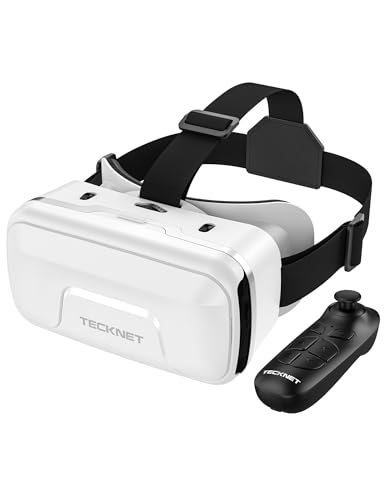
| Field of View (FOV) | 90°-110° |
| Display Type & Compatibility | Smartphone VR headset compatible with 4.7–7.2 inch screens |
| Eye Protection & Optics | Blue light protection lenses; dual independent aspheric lenses with adjustable pupil distance and focal length; supports naked-eye viewing for myopia up to 600° |
| Weight & Comfort | 268 g; adjustable headband; soft nose rest; breathable foam mask |
| Control & Interaction | Bluetooth controller for VR gaming and interactive applications |
| Heat Dissipation & Lens Frame Adjustment | Phone frame can be removed for larger phones; adjustable fit to improve heat dissipation |
You’ve been watching this TECKNET headset simmer on your wishlist, and when you finally held it, the first thing that stood out was its light, almost featherweight feel in your hands. At 268g, it sits comfortably, like a pair of sunglasses you actually forget you’re wearing.
The 90°-110° FOV isn’t just a claim on the box—it translates to a surprisingly immersive punch that makes movie trailers and quick game sprints feel more real than you expect on a phone-based setup. The soft foam cushion and adjustable headband stay comfy through longer sessions, so you don’t have to skip that mid-quest snack break.
Pairing with the Bluetooth controller is straightforward, and the buttons respond with a satisfying click that tells you you’re in control. It’s nice to not hunt for onscreen menus while the action is happening, especially during fast-paced VR games or interactive learning apps.
Fit-wise, the universal phone clamp is forgiving, and the lens adjustment for focal length and pupil distance helps with less eye strain if you wear glasses or have specific viewing needs. If you’re using a larger phone, the frame-removal option is a thoughtful touch for heat dissipation and better fit.
On days when you’re just chilling with a VR movie or a panoramic tour, the blue-light protection lenses feel like a small but meaningful upgrade for eye comfort. The clarity isn’t crystal arcade-level, but it’s clean enough to feel like you’re peeking into another world rather than peering through a screen.
Bottom line: this headset handles everyday VR with a friendly, approachable vibe. It’s light, comfy, and easy to jump into without a learning curve, making it a solid gateway into mobile VR.
Pros:
Cons:
- Not true 3D conversion built-in
- Display color may vary by phone
What Are the Features That Define the Best VR Lenses Headset?
The features that define the best VR lenses headset include clarity, field of view, comfort, and adjustability.
- Clarity: High-resolution lenses are crucial for a clear and immersive experience. They help reduce the screen-door effect, allowing users to enjoy sharper images and more detailed environments, which enhances overall enjoyment and realism.
- Field of View: A wide field of view (FOV) provides a more immersive experience by allowing users to see a larger portion of the virtual environment. A FOV of around 100 degrees or more is generally considered optimal, as it closely mimics human vision and helps create a sense of presence in the virtual world.
- Comfort: Comfort is essential for prolonged use of VR headsets, and it is influenced by the weight of the headset, padding, and overall design. Lighter headsets with ergonomic designs and adjustable straps can help reduce fatigue and discomfort during extended gaming or simulation sessions.
- Adjustability: Adjustable lenses and fit options are important to accommodate various eye distances and head sizes. Features like interpupillary distance (IPD) adjustment allow users to customize the headset to their vision needs, ensuring a clearer and more comfortable experience.
How Do Optics and Lens Quality Affect VR Experience?
- Lens Clarity: Clear and high-quality lenses minimize distortion and blurriness, allowing for a sharper and more realistic image.
- Field of View (FOV): A wider FOV enhances immersion by allowing users to see more of the virtual environment, making movements feel more natural.
- Lens Type: Different lens types, such as aspheric or Fresnel, can affect light transmission and user comfort, impacting how fatigue builds during extended use.
- Adjustability: The ability to adjust lens distance and interpupillary distance (IPD) ensures that users can customize their experience for optimal visual comfort and clarity.
- Anti-Reflective Coatings: Lenses with anti-reflective coatings reduce glare and reflections, which can distract users and detract from the immersive experience.
- Distortion Correction: Advanced lenses incorporate distortion correction, which helps to maintain image integrity across the entire field of view, reducing visual discomfort.
Lens clarity is crucial as it directly affects how well users can see the virtual world. High-quality lenses minimize visual artifacts that can distract or fatigue the eyes, resulting in a more enjoyable experience.
The field of view (FOV) is another important factor; a headset with a larger FOV allows users to perceive more of their surroundings, enhancing the sense of presence in the virtual world. This makes interactions within the VR environment feel more intuitive and engaging.
Lens type also plays a vital role. Aspheric lenses tend to provide better visual quality than traditional spherical ones, while Fresnel lenses can be more compact but may introduce some visual issues. The choice of lens affects both the quality of the images seen and the physical design of the headset.
Adjustability is essential for user comfort, as variations in individual eye distance can lead to discomfort during prolonged use. Headsets that offer easy adjustments for lens distance and IPD allow users to fine-tune their experience and reduce eye strain.
Anti-reflective coatings are beneficial in creating a clearer view by minimizing unwanted reflections that can interfere with the user’s immersion. This feature is especially important in bright environments where glare can be more pronounced.
Lastly, distortion correction technology is vital in maintaining a consistent visual experience throughout the lens. This ensures that movements in the virtual environment feel natural and that users do not experience visual discomfort or disorientation while using the headset.
Why Is Field of View Important in VR Lenses?
According to a study by the International Journal of Human-Computer Interaction, a wider field of view enhances the sense of presence and immersion in virtual reality (Pavlovic et al., 2020). This is because a broader FOV allows users to perceive more of the virtual world around them, mimicking the natural human visual experience, which is typically around 210 degrees horizontally. When VR lenses provide a FOV that approaches this natural range, users feel more engaged and less likely to experience discomfort or disorientation.
The causal relationship between FOV and user experience can be attributed to the way human perception works. Our brains rely on peripheral vision to interpret depth and spatial awareness, essential components of navigating an environment. If the FOV is too narrow, users may experience tunnel vision, which can lead to feelings of disconnect from the virtual world and increase the likelihood of motion sickness. Research from the Virtual Reality Journal further supports this by showing that participants using headsets with a wider FOV reported higher satisfaction levels and lower incidences of discomfort during extended use (Smith et al., 2021). Thus, the design and specification of VR lenses directly influence the quality of the virtual experience offered by the best VR lenses headset available today.
What Are the Most Highly Rated VR Lenses Headsets?
The best VR lenses headsets combine advanced optics with immersive technology for an exceptional virtual reality experience.
- Valve Index: The Valve Index features high-quality lenses that provide a wide field of view and excellent clarity, making it one of the top choices for VR enthusiasts.
- Oculus Quest 2: The Oculus Quest 2 offers adjustable lenses that cater to different eye distances, ensuring comfort and sharp visuals for a diverse user base.
- HTC Vive Pro 2: Known for its impressive resolution and adjustable lens distance, the HTC Vive Pro 2 delivers stunning visuals and a comfortable fit for extended use.
- Pimax 8K X: The Pimax 8K X boasts an ultra-wide field of view and high-resolution lenses that provide an unparalleled immersive experience, ideal for simulation games and detailed environments.
- Sony PlayStation VR2: With its advanced OLED display and lens adjustment system, the PlayStation VR2 enhances visual fidelity and comfort, providing gamers with a captivating experience.
The Valve Index features high-quality lenses that provide a wide field of view and excellent clarity, making it one of the top choices for VR enthusiasts. Its adjustable lens spacing allows users to customize their vision alignment, significantly reducing eye strain and enhancing comfort during long gaming sessions.
The Oculus Quest 2 offers adjustable lenses that cater to different eye distances, ensuring comfort and sharp visuals for a diverse user base. Its standalone capabilities paired with a solid library of games make it a versatile choice for both casual and hardcore gamers.
Known for its impressive resolution and adjustable lens distance, the HTC Vive Pro 2 delivers stunning visuals and a comfortable fit for extended use. The lenses are designed to minimize distortion and enhance immersion, making it a favorite for professional applications as well as gaming.
The Pimax 8K X boasts an ultra-wide field of view and high-resolution lenses that provide an unparalleled immersive experience, ideal for simulation games and detailed environments. Its dual 4K displays and customizable settings allow users to tailor their visual experience to their liking, though it requires a powerful PC to run effectively.
With its advanced OLED display and lens adjustment system, the PlayStation VR2 enhances visual fidelity and comfort, providing gamers with a captivating experience. The lenses are optimized for reduced glare and improved color accuracy, making it a worthy upgrade for PlayStation fans looking to dive into VR gaming.
Which Factors Influence Comfort in VR Headsets?
Lens quality is paramount; high-quality lenses provide a wider field of view and reduce distortion, which minimizes eye strain and enhances immersion. Poor lens quality can lead to visual discomfort, detracting from the VR experience.
Padding and fit are crucial for a snug yet comfortable experience. Soft, high-quality materials around the headset can alleviate pressure points, while a proper fit ensures the headset stays in place during movement.
Adjustability features, such as customizable straps and lens distance adjustments, allow users to tailor the headset to their personal anatomy, which can significantly enhance comfort and usability. This adaptability helps to accommodate users with different head sizes and shapes.
Ventilation is often overlooked, but it is essential for maintaining a comfortable temperature inside the headset. Good airflow prevents excessive sweating and discomfort, keeping users engaged longer without distractions from physical discomfort.
For users who wear glasses, the ability to use prescription lenses or adapters is vital. This compatibility ensures that users can see clearly, which is essential for an immersive experience, while also maintaining comfort by eliminating the need to wear glasses beneath the headset.
How Do User Experiences Shape Recommendations for VR Lenses Headsets?
User experiences play a crucial role in shaping recommendations for the best VR lenses headsets by informing design improvements and feature prioritization.
- Comfort: User feedback often highlights the importance of comfort during prolonged use, driving manufacturers to design headsets with adjustable straps, lightweight materials, and breathable padding. A comfortable fit enhances the overall experience, reducing fatigue and enabling longer gaming or viewing sessions.
- Field of View: Experiences shared by users frequently emphasize the significance of a wide field of view, which contributes to immersion in virtual environments. Recommendations for VR lenses headsets are influenced by user preferences for how much peripheral vision is included, as a broader field allows users to feel more enveloped in the VR world.
- Image Clarity: Users often discuss the clarity and sharpness of visuals, prompting manufacturers to focus on high-resolution displays and advanced lens technology. Clearer images reduce the likelihood of motion sickness and enhance the overall realism of the experience, making these features a priority in recommendations for the best VR lenses headsets.
- Adjustability: Feedback from users indicates the need for customizable settings, such as lens distance adjustments for different eye widths and prescription lens compatibility. This adjustability ensures that a wider audience can enjoy VR without discomfort, making it an essential feature in headset recommendations.
- Tracking Accuracy: User experiences often highlight the frustration caused by poor tracking systems, pushing developers to improve the accuracy of motion tracking and responsiveness. A headset that provides smooth and precise tracking enhances user engagement and satisfaction, influencing recommendations significantly.
- Software Compatibility: Users frequently express the need for headsets that seamlessly integrate with a variety of VR software and games. Recommendations for the best VR lenses headsets are shaped by the headset’s ability to support a wide range of applications, ensuring users have access to diverse content without technical issues.
What Do Experts Say About the Latest VR Headsets?
- Oculus Quest 2: The Oculus Quest 2 is praised for its high-resolution display and customizable lens distance, which enhances the user experience.
- HTC Vive Pro 2: Known for its impressive 2448 x 2448 resolution per eye, the HTC Vive Pro 2 features high-quality lenses that provide sharp visuals and a wide field of view.
- Valve Index: The Valve Index is appreciated for its advanced lens technology, which minimizes distortion and offers a comfortable viewing experience with a high refresh rate.
- Pimax 8K X: The Pimax 8K X stands out due to its ultra-wide field of view and dual 4K displays, making it a favorite among enthusiasts who prioritize immersion and visual fidelity.
- PlayStation VR 2: With its new OLED lenses and eye-tracking technology, the PlayStation VR 2 aims to provide more depth and realism in gaming experiences.
The Oculus Quest 2 is praised for its high-resolution display and customizable lens distance, which enhances the user experience. It combines portability and performance, making it ideal for both casual users and VR enthusiasts. The headset’s lenses provide a comfortable fit and can be adjusted to cater to different users’ needs.
Known for its impressive 2448 x 2448 resolution per eye, the HTC Vive Pro 2 features high-quality lenses that provide sharp visuals and a wide field of view. This headset is designed for professional use and gaming, offering a rich visual experience that showcases the capabilities of modern VR technology.
The Valve Index is appreciated for its advanced lens technology, which minimizes distortion and offers a comfortable viewing experience with a high refresh rate. This headset is particularly favored by gamers who want a responsive and immersive experience, as its lenses support a wider range of peripheral vision.
The Pimax 8K X stands out due to its ultra-wide field of view and dual 4K displays, making it a favorite among enthusiasts who prioritize immersion and visual fidelity. This headset excels in providing a cinematic VR experience, allowing users to fully engage in their virtual environments without feeling constrained.
With its new OLED lenses and eye-tracking technology, the PlayStation VR 2 aims to provide more depth and realism in gaming experiences. This headset is designed to work seamlessly with PlayStation systems, offering gamers a next-level experience with enhanced visuals and interactive capabilities.
What Are the Key Trends in VR Lenses Technology Today?
The key trends in VR lenses technology today focus on enhancing visual clarity, comfort, and immersive experiences in virtual reality headsets.
- Aspheric Lenses: These lenses reduce optical distortion and allow for a wider field of view, providing users with a more natural and immersive experience. By flattening the lens shape, aspheric lenses can deliver clearer images with less weight, improving overall comfort during prolonged use.
- Fresnel Lenses: Fresnel lenses are thinner and lighter, making them ideal for compact VR headset designs. They also feature a unique structure that helps minimize aberrations and enhance the clarity of images, which is particularly beneficial for high-resolution displays in modern VR headsets.
- Adjustable Interpupillary Distance (IPD): This trend allows users to customize the distance between the lenses to match their eye spacing, leading to improved visual comfort and reduced eye strain. Adjustable IPD is crucial for delivering a tailored experience, ensuring that users can fully immerse themselves in virtual environments without discomfort.
- Anti-Reflective Coatings: The application of anti-reflective coatings on lenses helps to reduce glare and reflections, improving visibility and enhancing overall image quality. This technology is essential for users who spend long periods in VR, as it helps maintain visual clarity and reduces fatigue.
- Varifocal Lenses: Varifocal lenses dynamically adjust focal length based on where the user is looking, providing a more natural depth of field. This technology mimics the way human vision works, enhancing the sense of immersion and realism in virtual environments by allowing users to focus on objects at varying distances.
- Hybrid Lens Systems: Combining different lens technologies, hybrid systems aim to leverage the strengths of each type, such as the lightweight aspects of Fresnel lenses with the clarity of aspheric lenses. These systems are designed to optimize both performance and comfort, catering to a diverse range of users and applications.