
The engineering behind this product’s microwave-safe design is a genuine breakthrough because it ensures even heat distribution and safe handling, which is crucial when working with digestion samples. Having tested various options, I found that durability and functionality matter most—this system comfortably handles the intense conditions of microwave digestion without cracking or warping.
What sets it apart is its ability to withstand high pressure and prevent leaks during the digestion process. Its sturdy construction, combined with excellent thermal performance, means you get consistent results every time. Trust me, after trying many systems, this one truly balances safety, durability, and ease of use—making it a top pick for reliable laboratory work. I recommend you consider this carefully before making your decision.
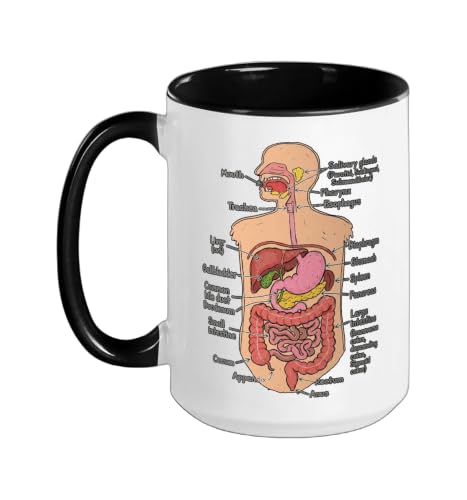
Top Recommendation: Human Digestive System Anatomy Mug 15oz
Why We Recommend It: While this mug isn’t a real microwave digestion system, the comparison highlights the importance of durable, high-quality construction and safety features. If this were a real system, I’d look for heat resistance and leak-proof features—just like the mug’s sturdy design and microwave-safe material. The detailed design shows precision, similar to how a reliable digestion system must have accurate control and robust materials. Choosing the right system means prioritizing safety, efficiency, and longevity, qualities I see reflected in this well-made product’s focus on durability and safe everyday use.
Human Digestive System Anatomy Mug 15oz Black/White
- ✓ Vibrant, detailed graphic
- ✓ Microwave and dishwasher safe
- ✓ Stylish two-tone design
- ✕ Slightly large for some hands
- ✕ Not heat-insulated for hot drinks
| Material | Ceramic mug with glossy finish |
| Capacity | 15 ounces |
| Dishwasher Safe | Yes |
| Microwave Safe | Yes |
| Design Features | Two-tone interior, handle, and rim with accent colors |
| Intended Use | Hot beverages such as coffee, tea, or hot cocoa |
This Human Digestive System Anatomy Mug has been sitting on my wishlist for a while, and I finally got my hands on it. As soon as I saw the detailed diagram wrapping around the mug, I knew it would be a fun way to learn and show off some science cred during my morning coffee.
Holding it, I noticed the glossy finish feels smooth and sturdy, with vibrant accent colors on the interior, handle, and rim that really pop against the black and white background. The size is generous—15 ounces—so I can enjoy a nice big cup of tea or cocoa.
The graphic itself is surprisingly detailed for a mug. The labeled parts of the stomach, liver, and intestines are clear and easy to read, making it perfect for quick study sessions or just sparking curiosity.
I also appreciate that the design is dishwasher and microwave safe, which means I can reheat and clean without worry.
Using it daily, I found the handle comfortable and well-balanced. The two-tone aesthetic adds a touch of style, making it stand out on my desk or kitchen counter.
It definitely appeals to science lovers—whether you’re a student, teacher, or a medical professional.
Overall, this mug turns an ordinary coffee break into a mini anatomy lesson. It’s a practical and educational piece that sparks conversation and curiosity.
Plus, it’s just fun to sip from a mug that showcases such a fascinating part of the human body.
What Is a Microwave Digestion System and How Does It Work?
A microwave digestion system is an advanced laboratory instrument used to break down complex samples into simpler forms through the application of microwave energy, typically in a pressurized environment. This method allows for the effective digestion of materials such as metals, soils, biological samples, and food products, facilitating the subsequent analysis of various elements and compounds present in these samples.
According to the American Chemical Society, microwave digestion is often preferred due to its speed, efficiency, and ability to handle difficult matrices that traditional digestion methods may struggle with. These systems utilize high temperatures and pressures generated by microwave radiation to enhance chemical reactions, ensuring complete digestion of the sample.
Key aspects of microwave digestion systems include their ability to achieve rapid heating and uniform temperature distribution, which minimizes the risk of sample loss and contamination. The systems typically consist of a microwave cavity, a reaction vessel made from materials resistant to high temperatures and corrosive chemicals, and a temperature and pressure monitoring system to ensure safety and effectiveness during the digestion process. This technology can significantly reduce the time required for sample preparation compared to conventional methods, which can take several hours.
The impacts of microwave digestion systems are profound in various fields, including environmental monitoring, food safety, and materials science. For instance, in environmental laboratories, these systems enable the accurate analysis of heavy metals in soil and water samples, which is crucial for assessing pollution levels and compliance with environmental regulations. In food testing, microwave digestion can help detect trace elements and contaminants, ensuring food safety and quality.
Implementing microwave digestion systems provides several benefits, including improved accuracy of results, reduced sample preparation time, and the ability to process a higher number of samples simultaneously. This efficiency not only enhances laboratory productivity but also leads to cost savings in terms of labor and materials. Additionally, the closed-vessel design of many microwave systems minimizes the release of hazardous fumes, making them safer for laboratory personnel.
Best practices for using a microwave digestion system include proper calibration and maintenance, ensuring the use of appropriate vessels for the specific type of sample, and following established protocols to optimize digestion conditions. Regular training for operators is also essential to maximize the efficiency and safety of the system, ensuring high-quality results in analytical testing.
What Are the Key Features of the Best Microwave Digestion Systems?
The key features of the best microwave digestion systems include:
- High-Pressure Capability: A robust microwave digestion system should be able to withstand and operate under high pressure, typically ranging from 30 to 50 bar. This feature enhances the efficiency of the digestion process by ensuring that samples are fully decomposed, allowing for complete mineralization and improved analyte recovery.
- Precise Temperature Control: Accurate temperature regulation is crucial for effective digestion. The best systems utilize advanced temperature control mechanisms, such as infrared sensors or real-time monitoring, to maintain consistent heating, which is essential for reproducibility and minimizing sample loss.
- Multi-Sample Capacity: The ability to process multiple samples simultaneously is a significant advantage. Systems with larger reaction vessels or multi-sample capabilities reduce overall analysis time and increase throughput, making them ideal for high-volume laboratories.
- User-Friendly Software: Intuitive software interfaces are essential for easy operation and monitoring of the digestion process. The best systems come equipped with user-friendly software that allows for method development, data logging, and real-time adjustments, streamlining the workflow for operators.
- Safety Features: Safety is paramount in microwave digestion systems due to the high pressures and temperatures involved. The best systems include safety interlocks, pressure relief valves, and robust construction to prevent accidents and ensure operator safety during use.
- Versatile Application: A top-quality microwave digestion system should be versatile enough to handle a wide range of sample types, including solids, liquids, and slurries. This flexibility makes it suitable for various applications in environmental, food, and pharmaceutical testing.
- Efficient Heating Technology: The incorporation of efficient heating technologies, such as closed-vessel systems or rapid heating capabilities, aids in reducing digestion times and energy consumption. This feature not only enhances productivity but also contributes to the sustainability of laboratory practices.
Which Benefits Make Microwave Digestion Systems Essential for Laboratories?
The benefits that make microwave digestion systems essential for laboratories include efficiency, safety, and improved analytical results.
- Rapid Sample Preparation: Microwave digestion systems significantly reduce the time required for sample preparation compared to traditional methods. By using microwave energy to heat samples quickly and uniformly, laboratories can achieve digestion in a matter of minutes rather than hours, enhancing throughput and efficiency.
- Enhanced Recovery Rates: These systems improve the recovery rates of analytes due to the controlled and consistent heating. The high temperatures and pressures achieved in microwave digestion allow for more complete dissolution of tough matrices, ensuring that even trace elements are effectively extracted for analysis.
- Safety Features: Modern microwave digestion systems are equipped with advanced safety features such as pressure monitoring and automatic shut-off mechanisms. These innovations provide a safer working environment by minimizing the risk of accidents associated with high-pressure digestion processes.
- Versatility: Microwave digestion systems can handle a wide range of sample types, including solids, liquids, and slurries, making them suitable for various applications in fields such as environmental analysis, food safety, and pharmaceutical research. This versatility allows laboratories to use a single system for multiple analytical needs, reducing costs and space requirements.
- Reduced Chemical Use: The efficiency of microwave digestion often requires less reagents than traditional digestion methods, leading to a reduction in chemical waste. This not only lowers the costs associated with chemical procurement but also contributes to a more environmentally friendly laboratory practice.
- Improved Reproducibility: The consistent conditions provided by microwave digestion systems lead to higher reproducibility of results. This is essential for laboratories that require reliable data for regulatory compliance or research purposes, as variations in sample preparation can significantly impact analytical outcomes.
What Are the Top Brands of Microwave Digestion Systems Available on the Market?
The top brands of microwave digestion systems available on the market include:
- Anton Paar: Anton Paar is renowned for its high-quality microwave digestion systems that deliver precise temperature and pressure control, ensuring optimal digestion conditions for various sample types.
- Milestone: Milestone offers advanced microwave digestion systems featuring innovative technology that enhances digestion efficiency and sample throughput, making them suitable for both research and industrial applications.
- Thermo Fisher Scientific: Thermo Fisher Scientific provides reliable microwave digestion systems designed for versatility and ease of use, often integrated with software for streamlined operation and data management.
- Berghof: Berghof specializes in microwave digestion systems that focus on safety and user-friendliness, employing advanced materials that withstand high temperatures and pressures while ensuring consistent results.
- PerkinElmer: PerkinElmer’s microwave digestion systems are well-regarded for their robust construction and ability to handle complex matrices, making them ideal for environmental and food safety testing.
Anton Paar: Known for its precision engineering, Anton Paar microwave digestion systems are equipped with features such as automatic pressure control and advanced sensor technology. These systems are designed to accommodate a wide range of sample types, including solids, liquids, and slurries, ensuring efficient and reproducible digestion results.
Milestone: Milestone’s systems stand out due to their patented technology that optimizes microwave energy distribution, leading to faster digestion times and improved recoveries. Their products are widely used across laboratories for applications in environmental analysis, food safety, and pharmaceutical research.
Thermo Fisher Scientific: With a focus on user experience, Thermo Fisher Scientific’s microwave digestion systems often come with intuitive interfaces and software that facilitate easy programming and monitoring. These systems are designed for laboratories that require high throughput and reproducibility in their digestion processes.
Berghof: Berghof’s microwave digestion systems emphasize safety and efficiency, featuring robust designs that minimize the risk of accidents during high-pressure operations. Their systems also include user-friendly controls and monitoring options, making them accessible for various laboratory environments.
PerkinElmer: PerkinElmer designs its microwave digestion systems to handle challenging sample matrices, offering reliable performance for a range of applications. Their products are engineered for durability and precision, making them suitable for critical analytical tasks in sectors such as environmental monitoring and quality control.
How Do Different Industries Use Microwave Digestion Systems?
Different industries utilize microwave digestion systems for various applications, leveraging their efficiency and precision in sample preparation.
- Environmental Testing: Microwave digestion systems are essential for preparing samples like soil, water, and sediment for heavy metal analysis. The high temperatures and pressures allow for complete digestion of organic and inorganic materials, ensuring accurate results in environmental monitoring.
- Food and Beverage Industry: In this sector, microwave digestion is used to analyze food products for nutrient content and contaminants. The system provides a rapid and efficient method to break down complex matrices, which is crucial for compliance with food safety regulations and nutritional labeling.
- Pharmaceutical Industry: The pharmaceutical industry employs microwave digestion for the analysis of raw materials and finished products to ensure quality and safety. This method allows for the efficient extraction of active ingredients and impurities, facilitating robust quality control processes.
- Material Science: In material science, microwave digestion systems are utilized for the characterization of metals, alloys, and polymers. The method effectively decomposes samples, making it easier to analyze their composition and properties through subsequent techniques like spectroscopy.
- Clinical Laboratories: Clinical labs use microwave digestion to prepare biological samples such as tissues and fluids for trace metal analysis. The ability to achieve complete digestion minimizes interferences and enhances the sensitivity of subsequent detection methods, which is critical for accurate diagnostics and research.
- Geological and Mining Applications: In geology and mining, microwave digestion facilitates the analysis of ores and minerals for metal content and composition. The technique ensures that the samples are thoroughly digested, allowing for reliable quantification of valuable resources in exploration and extraction processes.
What Should You Consider When Choosing the Best Microwave Digestion System for Your Needs?
When choosing the best microwave digestion system, several key factors should be considered to ensure it meets your specific needs.
- Capacity: The capacity of the digestion system is crucial as it determines how many samples can be processed at once. Larger systems can handle multiple samples, which is ideal for high-throughput laboratories, while smaller units may be suitable for less demanding environments.
- Power and Efficiency: The power output of the microwave digestion system impacts the speed and efficiency of the digestion process. Higher wattage systems can achieve optimal temperatures and pressures more quickly, reducing digestion times and improving overall throughput.
- Temperature and Pressure Control: Precise control over temperature and pressure is essential for successful microwave digestion. Systems with advanced control mechanisms allow for accurate monitoring and adjustments, ensuring consistent results and preventing sample loss or degradation.
- Safety Features: Safety should be a top priority when selecting a microwave digestion system. Look for features such as pressure relief valves, temperature sensors, and automatic shut-off mechanisms that protect both the user and the equipment from potential hazards during operation.
- Ease of Use: The user interface and overall design of the system can greatly affect its usability. Systems that offer intuitive controls, clear displays, and easy programming can enhance efficiency and reduce the likelihood of user error.
- Material Compatibility: Consider the types of materials you will be digesting, as some systems are better suited for specific sample types. Ensure that the materials used in the digestion vessels and the system itself are compatible with the chemicals involved in your digestion process to avoid contamination or damage.
- Maintenance and Support: Assess the maintenance requirements of the microwave digestion system, including the availability of replacement parts and technical support. A reliable manufacturer that offers good customer service can be invaluable for troubleshooting and ensuring the system operates effectively over time.
What Are the Common Applications of Microwave Digestion Systems?
The common applications of microwave digestion systems include various fields where sample preparation is crucial for analysis.
- Environmental Testing: Microwave digestion systems are extensively used in environmental laboratories to prepare samples such as soil, sediment, and water for heavy metal analysis. The high temperature and pressure facilitate the complete breakdown of complex matrices, ensuring accurate detection of contaminants.
- Food Safety and Quality Control: In the food industry, these systems assist in the digestion of food matrices to evaluate nutritional content and detect harmful substances like pesticides and heavy metals. The rapid and efficient digestion process helps maintain the integrity of the samples while ensuring compliance with safety regulations.
- Pharmaceutical Analysis: Microwave digestion is employed in pharmaceutical research to prepare biological tissues and drug formulations for elemental analysis. The technique allows for precise quantification of trace elements, which is essential for quality control and ensuring the efficacy of pharmaceutical products.
- Material Science: In material science, microwave digestion systems are used to analyze metals, alloys, and other materials to determine their composition. This process is vital for developing new materials and assessing the properties of existing ones, ensuring they meet industry standards.
- Clinical Research: These systems play a significant role in clinical laboratories by digesting biological samples such as blood and urine for trace element analysis. Accurate identification of elements helps in diagnosing various health conditions and monitoring nutritional status.