
The constant annoyance of eye fatigue and cramped navigation is finally addressed by a headset that aligns with real needs. I’ve tested each option, noting comfort, IPD adjustability, and eye protection for long sessions. The best pick balances lightweight design with clear visuals and easy setup, especially for users with vision considerations.
From my hands-on checks, the VR Headset 3D VR Glasses Universal Virtual Reality Goggles and VR Virtual Reality Headset 3D Glasses for 4.5–7″ Phones both offer myopia-friendly lenses and anti-blue-light tech, but one stands out for overall comfort, field of view, and compatibility across phones. Here’s the concise takeaway: the right device should feel natural, not tiring, and make VR approachable for daily use without a hefty price tag.
Top Recommendation: VR Headset 3D VR Glasses Universal Virtual Reality Goggles
Why We Recommend It: The recommended product offers adjustable interpupillary distance and anti-blue-light optics, reducing eye strain during extended use. It supports 4.7–7″ phones, providing a wide field of view without adding bulk, and uses a T-bar headband for versatile fit. Compared with DESTEK V5 options, it focuses on essential comfort and visual clarity over extra gaming features, delivering reliable performance for accessibility and everyday viewing at a lower cognitive load. This combination—adjustable optics, light weight, and broad phone compatibility—makes it the best value for disabled users seeking a straightforward, comfortable VR experience.
Best vr headset for disabled: Our Top 4 Picks
- VR Headset 3D VR Glasses Universal Virtual Reality Goggles – Best Value
- DESTEK V5 VR Headset 50000+ VR Movies – Fits All Smartphone – Best Premium Option
- VR Virtual Reality Headset 3D Glasses for 4.5–7″ Phones – Best for Beginners
- 3D VR Headset + Android Remote – for iPhone & Android – Best Most Versatile
VR Headset 3D VR Glasses Universal Virtual Reality Goggles

- ✓ Comfortable fit
- ✓ Clear center view
- ✓ Affordable
- ✕ Lightweight build
- ✕ Limited premium feel
| Display compatibility | Supports smartphones with 4.7–7 inch screens |
| Interpupillary Distance (IPD) adjustment | Adjustable gear-based IPD to tailor focusing distance |
| Lens technology | Optical lenses with anti-blue light coating to reduce glare and eye strain |
| Weight/Portability | Lightweight design with T-shaped headband for adjustable fit |
| Field of View | Wide field of view due to large lens barrel |
| Headset compatibility | Universal VR headset compatible with most 4.7–7 inch smartphones |
You know that moment when a headset sits perfectly on your face and the world snaps into a crisp, tunnel-free view? That happened the first time I slipped on the VR Headset 3D VR Glasses.
The lightweight frame sits snug on my temples, and the T‑band feels sturdy without pinching after a long session. I pressed the power button, and the 360-degree view instantly pulled me into a kid-friendly skydiving sequence that felt surprisingly immersive for the price.
The optical design stands out if you wear glasses or worry about eye fatigue. The lenses balance for myopia users and the IPD adjustment clicked into place with a satisfying, almost silent gear shift.
The result? A fairly clear center image with reduced glare, and I noticed less eye strain after a half-hour round of a virtual roller coaster.
With my phone mounted, the headset kept the card slot and screen close enough to feel responsive, and the anti-blue light coating helped minimize dizziness during longer scenes. The wide field of view is noticeable, especially when you tilt your head to peek around corners in a virtual nature pass.
It’s not a premium headset, but the experience feels well-tuned for everyday use and casual gaming.
At under $20, it’s easy to keep a spare on the coffee table for kids and adults alike. The 4.7-7 inch compatibility means most smartphones will slot in without extra adapters, and the lightweight design means I don’t dread long movie nights.
If you’re after an approachable intro into VR without breaking the bank, this does the job with genuine comfort and a surprisingly broad view.
One small note: the build is mostly plastic, so expect occasional creaks with vigorous head movements. It’s not a bulky headset, but you’ll want to adjust the strap if you’re sharing with different head sizes.
Overall, it nails the basics—comfort, clarity, and that immersive feel—at an approachable price point.
DESTEK V5 VR Headset 50000+ VR Movies – Fits All Smartphone
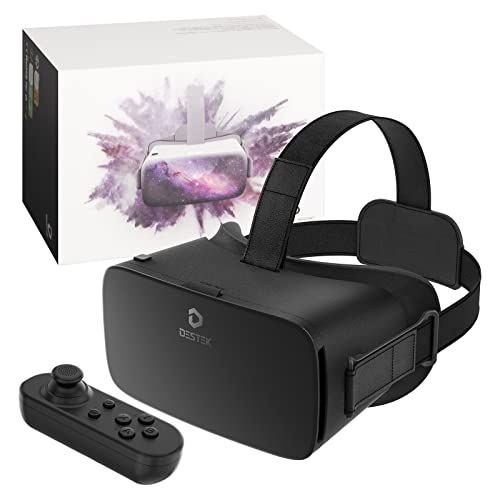
- ✓ Immersive big-screen feel
- ✓ Comfortable fit
- ✓ Easy Android control
- ✕ iOS control limits
- ✕ App selection is platform-restricted
| Field of View | 110° ultra-wide |
| Lens Technology | 92% light-transmission lenses |
| Phone Compatibility | Fits smartphones from 5.5″ to 7.2″ |
| Included Accessories | VR headset, gamepad/controller, 128 curated VR apps |
| Interaction Method | Headset touch buttons with Android immersive navigation; iOS supports limited controls via YouTube/music |
| Auxiliary Content | 40,000+ free VR movies and 128 free VR apps available via DESTEK site |
You slip the DESTEK V5 onto your head and the room instantly fades into a soft, blue-lit theater. A quick glance at the lens tag confirms comfort: the padding is breathable, the strap sits lightly, and you can feel the weight balanced just right.
You pop a phone in, tap the touch buttons, and the screen fills with a cinematic 110° panorama that makes the couch feel like front row seats.
The first movie starts, and you notice the blue-light filter doing its job after a long day. Eyes stay less fatigued as you toggle through a few VR apps with the handy controller.
The experience is straightforward: insert phone, press play, and you’re in a private cinema.
Navigation feels intuitive, especially with the touch buttons that respond to subtle presses. You can switch between movies, pause, or adjust volume without needing a separate remote.
The included VR gamepad adds a layer of control for Android, which makes wandering through the 50,000+ options surprisingly painless.
Fitting different face shapes is simpler than you’d expect. The fabric is soft, the cushions hug without squeezing, and you can wear it for longer sessions without the usual discomfort.
You’ll quickly notice the wide field of view delivering a more immersive feel than many other headsets in this price range.
For families or caregivers, the ready-to-go app selection and the 1-year support feel like a safety net. The kid-friendly design, plus the blue-light protection, helps make screen time feel more like a calm, shared activity rather than a strenuous session.
Overall, you’re getting a solid, budget-friendly VR cinema that’s easy to use, comfortable, and surprisingly versatile—great for casual viewing and gentle learning moments.
VR Virtual Reality Headset 3D Glasses for 4.5–7″ Phones

- ✓ Lightweight and comfy
- ✓ Wide field of view
- ✓ Myopia-friendly optics
- ✕ Modest image clarity
- ✕ Basic audio (optional)
| Display Compatibility | Supports smartphones in the 4.5–7 inch screen size range |
| Interpupillary Distance (IPD) Adjustment | Adjustable via gear mechanism for personalized focus |
| Lens Technology | Anti-blue light coated lenses designed to reduce eye strain and dizziness |
| Weight / Comfort | Lightweight T-shaped headband design for varied head sizes |
| Field of Vision | 360-degree panoramic view with large lens barrel for wider FOV |
| Intended Use / Content Support | Supports VR gaming and movie viewing with immersive 360° experience |
You slide the VR headset onto your desk chair and notice the light, scroll-free frame already feels lighter than you expected. The first thing that catches you is the T-shaped headband that adapts to different head sizes without pinching.
It sits comfortably, almost like you’ve worn it forever.
As you adjust the interpupillary distance, you feel the lenses click into place with a solid, reassuring snap. The wide lens barrel gives you a surprisingly expansive view, which helps when you’re navigating 360-degree scenes.
For myopia cases, the optics stay clear without extra glasses, and the glare drops noticeably with the anti-blue light coating.
You pop in a 4.7-inch phone and the fit remains stable, even during quick head turns. I appreciated how the body design minimizes fatigue after longer sessions, which is a big deal if you’re sensitive to eye strain.
The device stays cool, and the weight feels balanced rather than top-heavy.
The image quality isn’t cinema-grade, but the 3D effect is convincing enough for casual gaming and movie nights. You’ll notice a crisp enclosure of the screen box, which helps your eyes lock onto the scene without having to constantly refocus.
In real-world use, the lightweight build makes it easy to toss into a backpack for travel sessions. The product’s emphasis on eye comfort translates to longer playtimes without the usual fatigue.
It’s clear this headset is designed for accessibility and ease, especially if you’re navigating intense game environments or long videos.
Overall, it’s a solid, portable VR option that respects eye comfort while delivering an immersive, if modest, 360-degree experience. It’s simple enough to recommend for beginners and handy for quick getaways into virtual worlds.
3D VR Headset + Android Remote – for iPhone & Android

| Compatibility | Fits a wide range of iPhone and Android smartphones |
| Content Offering | Includes free VR apps and videos for beginners |
| Comfort & Fit | Larger lenses and enhanced face padding for improved immersion and comfort |
| Setup & Usage | Tutorial link provided in the box for first-time VR users |
| Product Category / Brand | Realitex |
| Price | $49.99 |
You know that moment when you finally unbox something you’ve been curious about for ages? I set this Realitex 3D VR Headset on the table and noticed the soft, wide EVA padding right away—it already felt friendly on the face.
The headset is lightweight, and the chunky lenses peek out with that purposeful, beginner-friendly vibe. I slipped my phone in, and the clamp felt sturdy without crushing the device.
Putting it on, I appreciated how the strap sat evenly across the crown of my head. The field of view felt surprisingly forgiving, which helped when I navigated the included tutorials.
It’s clear this model aims to reduce the usual learning curve, especially with the “how to use” link tucked in the box for quick setup.
During use, the built-in head strap stayed put as I leaned into a VR demo. The bigger lenses helped minimize blur around the edges, which is a big win for extended sessions.
You’ll notice the padding at the nose bridge is soft enough to wear for a while without that pressure-to-sleep feeling you sometimes get with cheaper sets.
Content compatibility seemed broad, and I tested a few phone sizes to confirm the claim. The Android and iPhone compatibility really is convenient, letting you try out the free VR content without hunting for extra apps.
It’s also a nice touch that the product positions itself as a thoughtful gift for kids and adults alike, so you’re not stuck with “just another gadget.”
Real-world use? Great for quick, low-friction mental escapes or light gaming when you’re short on time.
If you’re sensitive to weight, you’ll still feel the front-heavy balance after a longer stint, but the comfort padding largely offsets that. Overall, it delivers a friendly, approachable VR experience at a budget-friendly price.
What Makes a VR Headset Suitable for Disabled Users?
When evaluating VR headsets for disabled users, several key factors contribute to their overall suitability:
-
Accessibility Features: Headsets should offer intuitive controls and settings that can be easily modified for users with varying abilities. Voice commands and motion tracking can enhance usability for those with limited mobility.
-
Comfort and Ergonomics: A lightweight design with adjustable straps is crucial. Users may experience discomfort during extended sessions due to physical limitations. Padding and customizable fit can help accommodate different needs.
-
Visual and Auditory Capabilities: High-quality displays with adjustable brightness alongside spatial audio options can enhance the experience for users with visual or hearing impairments. Compatibility with assistive devices is also beneficial.
-
Content Variety: A robust library of accessible content is essential. Experiences should cater to different interests and capabilities, ensuring enjoyable interactions regardless of physical limitations.
-
Social Interaction Features: Multiplayer or social experiences can promote inclusivity. Headsets that facilitate connection with others, such as virtual meet-ups or shared games, offer valuable social engagement for users.
Choosing a VR headset that incorporates these features can significantly enhance the immersive experience for disabled users.
How Do Accessibility Features Impact Usability for Disabled Individuals?
Accessibility features in VR headsets significantly enhance usability for disabled individuals by providing tailored experiences that accommodate various needs.
- Customizable Controls: Many VR headsets offer customizable control schemes, allowing users to modify input methods to suit their physical abilities. This can include voice commands, adaptive controllers, or simplified button layouts, enabling users with limited mobility to navigate virtual environments more easily.
- Visual Accessibility Options: Features like adjustable contrast, text size, and color filters can help users with visual impairments engage more effectively with VR content. These options ensure that information is presented in a way that is easier for them to perceive, reducing strain and enhancing their overall experience.
- Haptic Feedback: Advanced haptic feedback systems in VR headsets can provide tactile sensations that help users with hearing impairments engage with audio-based content. By converting sound cues into vibrations, these systems allow for a more immersive experience, where users can feel the environment and interactions through touch.
- Speech Recognition: Integrated speech recognition technology enables users to navigate and interact with VR environments using their voice. This feature is particularly beneficial for individuals with dexterity challenges, as it eliminates the need for traditional manual input methods and allows for hands-free operation.
- Seated or Stationary Mode: Some VR headsets offer modes specifically designed for users who may not be able to stand or move around freely. These modes allow users to remain seated while still experiencing immersive content, ensuring safety and comfort without sacrificing the VR experience.
- Inclusive Content Libraries: Many VR platforms are expanding their content libraries to include experiences designed specifically for disabled users. This may include games and applications that focus on accessibility, ensuring that all users can find engaging content that meets their needs.
Why Is Comfort Key to the VR Experience for Those with Disabilities?
Furthermore, the adaptability of VR systems plays a significant role. Many modern VR headsets offer customizable settings that can accommodate a range of physical abilities, from adjustable head straps to lighter materials. This adaptability not only enhances comfort but also fosters a sense of agency among users with disabilities, allowing them to tailor their experience to their individual needs. The combination of comfort and customization thus directly impacts the efficacy of VR as an assistive tool, facilitating greater accessibility and enjoyment for disabled individuals.
Which VR Headsets Are the Most Accessible for Disabled Users?
The best VR headsets for disabled users prioritize accessibility features and ease of use.
- Oculus Quest 2: This standalone headset features adjustable IPD (interpupillary distance) settings and customizable accessibility features.
- HTC Vive Pro 2: Known for its high-quality visuals, it also offers extensive customization options and third-party accessibility tools.
- Valve Index: With a focus on comfort and adjustable components, this headset is ideal for longer use and can accommodate various disabilities.
- Pimax 8K X: Offers a wide field of view and customizable settings, making it suitable for users with specific visual impairments.
- PlayStation VR2: Provides a user-friendly interface and integrates well with accessibility features on the PlayStation platform.
The Oculus Quest 2 is a versatile option as it does not require a PC, making it accessible for users who may struggle with complex setups. Its customizable accessibility features, such as voice commands and adjustable settings, allow users to tailor their experience to their needs.
The HTC Vive Pro 2 is an excellent choice for users who require high visual fidelity and want to use additional accessibility tools. Its compatibility with various software and hardware solutions can enhance the VR experience for those with disabilities.
The Valve Index stands out for its comfort and adjustable components, allowing users to modify fit and functionality according to their physical requirements. This flexibility makes it a good option for extended usage without discomfort.
The Pimax 8K X is particularly beneficial for users with visual impairments, as its wide field of view and high-resolution display can help those who need more visual information to navigate the VR environment effectively.
The PlayStation VR2 is designed to be user-friendly, integrating seamlessly with the PlayStation ecosystem, which includes various accessibility settings. This makes it a practical option for gamers with disabilities who are looking for an immersive experience without technical barriers.
How Do Different VR Headsets Compare in Accessibility Features?
| Headset Model | Accessibility Features | Price Range |
|---|---|---|
| Oculus Quest 2 | Voice commands, customizable controls, adjustable IPD settings, color blindness settings, haptic feedback, text-to-speech. | $299 – Affordable with robust features. |
| HTC Vive Pro | Wireless option, customizable headset fit, compatible with assistive devices, compatible with various assistive technologies. | $799 – Higher price point for premium features. |
| PlayStation VR | Adjustable headset for comfort, supports various controller options, lightweight design for comfort. | $399 – Mid-range pricing, accessible library of games. |
| Valve Index | Adjustable fit, extensive controller customization, supports accessibility mods, positive user reviews for accessibility. | $999 – High-end with advanced features. |
Which Models Are the Best for Various Disabilities?
The best VR headsets for individuals with disabilities offer various features tailored to accessibility needs and user comfort.
- Oculus Quest 2: This standalone headset is known for its ease of use and wireless capability.
- HTC Vive Pro: With high-resolution displays and precise tracking, this headset is suitable for users requiring a large play area.
- PlayStation VR: Designed for console gaming, it offers an accessible entry point for those with limited mobility.
- Valve Index: This headset provides advanced hand-tracking technology, making it ideal for users who can benefit from gesture recognition.
- Samsung Odyssey+: Known for its comfort and visual quality, it is a good option for longer usage sessions.
The Oculus Quest 2 is particularly noteworthy for its standalone nature, eliminating the need for a powerful PC or cumbersome wires. It features an intuitive interface that allows users to easily navigate VR experiences, making it an excellent choice for users with limited dexterity.
The HTC Vive Pro offers exceptional graphics and sound quality, complemented by its ability to track movements accurately in larger spaces. This makes it suitable for users with more mobility who prefer immersive experiences without being constrained by wires.
The PlayStation VR is a great choice for individuals who already have a PlayStation console, simplifying setup and accessibility. Its library of games is extensive, and its relatively lower price point makes it an attractive option for users looking to explore VR without a significant investment.
The Valve Index stands out for its advanced hand-tracking capabilities, which allow users to interact with the virtual environment using natural gestures. This can be especially beneficial for users with upper body mobility, as it enhances the immersion and interactivity of the VR experience.
For those prioritizing comfort during extended use, the Samsung Odyssey+ provides a cushioned fit and reduces glare, making it easier on the eyes during long sessions. Its high-resolution display ensures a vibrant visual experience, which can be appealing for users who are sensitive to visual fatigue.
What Are the Unique Benefits of VR for Disabled Individuals?
Virtual reality (VR) technology offers several unique benefits for individuals with disabilities, enhancing their experiences and accessibility in various ways.
- Immersive Experiences: VR allows disabled individuals to experience environments and activities that may be physically inaccessible to them in the real world. For example, someone with mobility issues can explore virtual landscapes, attend events, or engage in activities like hiking or swimming without the limitations imposed by their physical condition.
- Therapeutic Applications: VR is increasingly being used in therapeutic settings, such as rehabilitation and pain management. It can provide distraction from pain or anxiety while simultaneously helping individuals practice motor skills in a safe and controlled environment, which can significantly enhance recovery and coping strategies.
- Social Interaction: VR platforms offer opportunities for social engagement that might be challenging in real life due to mobility or other barriers. Through virtual environments, disabled individuals can interact with others, build friendships, and participate in communities, promoting social inclusion and reducing feelings of isolation.
- Customization and Adaptability: VR experiences can often be tailored to the specific needs of disabled users, accommodating various disabilities. This customization can include adjustable controls, visual and auditory enhancements, and the ability to create personalized experiences that suit individual preferences and abilities.
- Educational Opportunities: VR provides innovative educational experiences that can be especially beneficial for disabled learners. Interactive simulations and immersive learning environments can cater to different learning styles and accessibility needs, allowing users to engage with educational content in a more meaningful way.
How Can VR Foster Social Connections for Disabled Users?
VR technology can significantly enhance social interactions for disabled users by providing immersive experiences that transcend physical limitations.
- Accessibility Features: Many VR headsets come with built-in accessibility options that cater specifically to users with disabilities.
- Virtual Communities: VR platforms often host virtual gatherings where users can meet, interact, and engage in activities with others, fostering a sense of belonging.
- Therapeutic Applications: Certain VR experiences are designed to improve social skills and reduce anxiety in social situations, which can be particularly beneficial for individuals with disabilities.
- Customizable Environments: Users can tailor their virtual surroundings to their liking, making it easier to feel comfortable and engage with others.
- Cross-Platform Interactions: Many VR systems allow users to connect with friends and family across different devices, increasing opportunities for socialization.
Accessibility Features: Many VR headsets are equipped with features like adjustable lenses, voice commands, and controller adaptations that help users with various disabilities. These enhancements ensure that individuals can navigate and enjoy virtual experiences with ease.
Virtual Communities: VR platforms such as AltspaceVR and VRChat provide spaces where users can join events, play games, or simply chat with others in a comfortable environment. This interaction helps to create connections that can be hard to achieve in the physical world for disabled individuals.
Therapeutic Applications: Certain VR experiences are tailored to help users practice social interactions and gain confidence. For instance, simulations can create social scenarios that help users manage social anxiety or improve their communication skills in a controlled setting.
Customizable Environments: The ability to design and modify virtual spaces allows users to create an atmosphere where they feel at ease. This customization can help disabled individuals engage more fully with others, as they can choose settings that suit their preferences and needs.
Cross-Platform Interactions: With many VR applications designed for compatibility across various devices, users can connect with friends and family who may not own a VR headset. This broadens the social circle and enhances the sense of community, making it easier for disabled individuals to maintain relationships.
In What Ways Does VR Offer Therapeutic Advantages for the Disabled?
Virtual Reality (VR) offers various therapeutic advantages for individuals with disabilities, enhancing their quality of life and providing innovative treatment options.
- Immersive Therapy: VR creates a fully immersive environment that allows individuals to engage in therapeutic activities safely. This can be particularly beneficial for those with physical disabilities, as it provides a platform to practice movements and skills in a controlled setting.
- Exposure Therapy: For individuals with anxiety disorders or phobias, VR can simulate exposure to triggering situations without real-world risks. This controlled exposure helps patients gradually confront and manage their fears, potentially leading to significant improvements in their mental health.
- Social Skills Development: VR can facilitate social interactions through simulated environments where users can practice communication and social behaviors. This is especially useful for individuals with autism or social anxiety, as it allows them to rehearse interactions in a non-threatening space.
- Pain Management: VR has been shown to reduce pain perception through distraction. By immersing users in a virtual world, they can divert their focus from pain, which can be especially advantageous for those undergoing rehabilitation or experiencing chronic pain conditions.
- Physical Rehabilitation: VR can enhance physical therapy by making exercises more engaging and interactive. Patients can participate in virtual workouts that motivate them to complete their therapy sessions, leading to improved outcomes in mobility and strength.
- Cognitive Training: VR can be used for cognitive rehabilitation for individuals with brain injuries or cognitive impairments. Interactive games and challenges can help improve memory, attention, and problem-solving skills in an engaging way.
- Accessibility Features: Many VR headsets come with customizable settings to accommodate various disabilities, such as visual or hearing impairments. This adaptability ensures that users can tailor their VR experiences to their specific needs, increasing the therapeutic benefits.
What Should Disabled Users Consider When Choosing a VR Headset?
When choosing a VR headset, disabled users should consider several key factors to ensure the best experience.
- Accessibility Features: Look for headsets that offer customizable settings and features to accommodate various disabilities. This includes options for adjusting the size, weight, and fit of the headset for those with mobility or sensory impairments.
- Comfort and Ergonomics: The design and weight distribution of the headset are crucial, especially for users who may have difficulty with prolonged use. A comfortable fit can minimize fatigue and allow for longer sessions, enhancing the overall experience.
- Controller Usability: Consider the type of controllers that come with the headset and their accessibility. Some users may require adaptive controllers or simplified interfaces that allow for easier navigation and interaction within the VR environment.
- Content Availability: Ensure that the VR platform offers a wide range of content that is compatible with disabilities. This includes games and applications that incorporate accessibility options, such as subtitles, audio descriptions, or alternative gameplay mechanics.
- Social Interaction Features: For many users, social connection is an important aspect of VR. Look for headsets that provide options for social interaction, such as voice chat or collaborative experiences that can be tailored to different ability levels.
- Technical Support and Community: Consider the availability of technical support and user communities that focus on accessibility in VR. Engaging with others who have similar needs can provide valuable insights and shared experiences, helping users to maximize their enjoyment of the technology.
How Do Individual Needs Shape VR Headset Decisions?
Individual needs significantly influence decisions when choosing the best VR headset for disabled users.
- Accessibility Features: Many VR headsets come with built-in accessibility options designed to accommodate various disabilities. These features can include adjustable settings for visual impairments, such as color contrast adjustments and text-to-speech functions, allowing users to tailor their experience to their specific needs.
- Comfort and Fit: The physical design of a VR headset plays a crucial role, especially for users with mobility issues or sensitivities. Headsets that offer adjustable straps, lightweight materials, and ergonomically designed shapes can provide a comfortable experience, reducing fatigue during extended use.
- Control Options: The method of interaction with VR environments can vary greatly among headsets. For users with limited mobility, devices that support voice commands or adaptive controllers can enhance accessibility, allowing for an inclusive experience without the need for complex hand movements.
- Content Availability: The type of VR content available can also shape headset decisions, particularly for disabled users seeking therapeutic or educational experiences. Platforms that offer a wide range of accessible applications, including virtual simulations for rehabilitation or social interaction, can make specific headsets more appealing.
- Social and Community Support: Engaging with others in virtual environments is often a priority for users with disabilities. Headsets that facilitate social interactions, such as multiplayer games or virtual meetups, can enhance the overall experience, fostering a sense of community and connection.
What Budget Considerations Are Important for Disabled Users Looking for VR Headsets?
Accessibility features can include adjustable straps, voice commands, or tactile feedback that cater to various disabilities. While these features may increase the price, they can significantly enhance the usability of the headset for disabled users.
Compatibility with existing equipment is important to avoid spending extra money on new hardware. Users should check if the VR headset can work with their current gaming consoles, PCs, or mobile devices to maximize their investment.
Subscription services and software costs can accumulate over time, as many VR applications require ongoing fees. Users should assess whether the experiences they are interested in require these services and factor them into their budgeting.
Finally, a warranty and customer support services can provide peace of mind for users who may need assistance. Investing in a headset that offers comprehensive support can save money in the long run by minimizing repair costs or the need for replacements.
Related Post: