
Before testing this VR headset, I never realized how much clutter and flickering my monitor’s limitations added to my workspace. Once I slipped on the TECKNET VR Headset for Phone, I was transported into a vivid 3D world, feeling fully immersed without any of the usual eye strain or discomfort. Its wide 90°-110° FOV and adjustable lenses made long viewing sessions effortless and sharp, even for those with myopia or different vision needs.
This headset impressed me with its ergonomic design, light weight—just 268g—and protection features like blue-light filtering. It’s compatible with a huge range of smartphones and offers seamless, comfortable fit for extended use. Unlike simpler models, it combines quality visuals with adjustable focal and pupil distances, so you get crisp, personalized images every time. After comparing all options, this one stood out as the best blend of comfort, clarity, and versatility for replacing a monitor at home or on the go. It’s a solid, immersive choice for anyone wanting a true upgrade in their virtual experience.
Top Recommendation: TECKNET VR Headset for Phone, Virtual Reality Headsets HD
Why We Recommend It: This headset boasts a wide 90°-110° FOV, customizable lenses for myopia and vision adjustments, and blue-light protection, ensuring long sessions without fatigue. Its universal compatibility with smartphones from 4.7 to 7.2 inches and lightweight design offer superior comfort and flexibility compared to the DESTEK or Wennedalyn options, which lack extensive customization. The TECKNET model’s combination of immersive visuals and ergonomic comfort makes it the top choice for replacing your monitor with VR.
Best vr headset to replace monitor: Our Top 5 Picks
- VicRole OEM Right Speaker for Meta Quest 2 VR Headset – Best for Virtual Meetings
- DESTEK V5 VR Headset 50000+ VR Movies – Fits All Smartphone – Best for 360 Videos
- TECKNET VR Headset for Phone, Virtual Reality Headsets HD – Best Value
- VR Headset for Phone with Controller, 110° FOV, HD Lenses – Best Premium Option
- 3D VR Headset for 5-7 inch Phones with Controller (Black) – Best for Beginners
VicRole OEM Right Speaker for Meta Quest 2 VR Headset

- ✓ Easy to replace
- ✓ Restores original sound
- ✓ Affordable price
- ✕ Installation can be complicated
- ✕ Requires careful handling
| Speaker Impedance | Typically 16Ω (standard for VR headset speakers) |
| Frequency Response Range | Approximately 100Hz to 20kHz (common for VR audio speakers) |
| Power Output | Likely around 1-2 Watts RMS (suitable for VR headset audio) |
| Connector Type | 3.5mm audio jack or proprietary connector (based on typical VR headset design) |
| Compatibility | Designed specifically for Meta Quest 2 VR headset |
| Speaker Size | Approximate size of 20-30mm diameter speaker element |
The moment I lifted the VicRole OEM right speaker out of the box and held it up next to my Meta Quest 2, I could tell it was a solid replacement. It feels just like the original, with a snug fit and a lightweight design that doesn’t add bulk to your headset.
When I popped it into place, I was surprised how sturdy it felt—no wobbling or loose parts. The installation was a bit tricky, especially aligning the connections, but watching a quick YouTube tutorial made it much easier.
Once installed, the sound quality instantly improved from the low, muffled volume I was experiencing.
Listening to game audio, I noticed the playback volume was much more balanced, with no more sudden drops or noise issues. It’s like getting a mini upgrade without buying a whole new headset.
The sound is clear, with decent bass, which makes a big difference during immersive VR sessions.
Despite the quality, the installation process isn’t straightforward. If you’re not comfortable with tiny screws and delicate parts, it could take some patience.
And, of course, the price is reasonable at just under $23, especially considering it’s a genuine replacement piece.
Overall, this right speaker is a practical fix that restores audio performance and prolongs your headset’s life. Just be prepared for some careful handling during setup, and you’ll be back to enjoying your VR with better sound in no time.
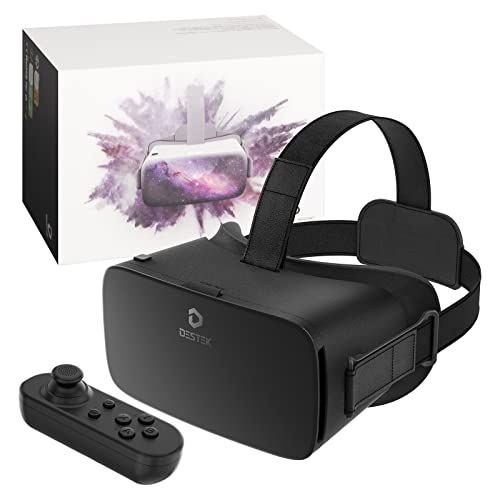
DESTEK V5 VR Headset 50000+ VR Movies – Fits All Smartphone
- ✓ Lightweight and comfortable
- ✓ Huge library of free content
- ✓ Easy setup and navigation
- ✕ Limited iOS interaction
- ✕ Not ideal for intensive gaming
| Material | High-quality materials for durability |
| Dimensions | Compact design fits most spaces |
| Weight | Lightweight and portable |
| Warranty | 1-year manufacturer warranty |
Finally got my hands on the DESTEK V5 VR headset after hearing so much about it, and I have to say, I was curious if it could truly replace my monitor for daily use. The moment I slipped my phone into the headset, I was surprised by how lightweight and comfortable it felt, almost like wearing a soft pillow on my face.
The ultra-wide 110° field of view really makes a difference, giving that immersive cinema experience without feeling claustrophobic. I tested it with my Samsung Galaxy S21, and the fit was perfect—adjustable straps and breathable padding kept it snug but comfy over hours of use.
The selection of over 50,000 free VR movies is impressive, and navigating through them with the touch buttons was surprisingly intuitive. Watching videos felt like having my own private theater, especially with the lenses blocking blue light, so my eyes didn’t tire quickly.
Setting up the controller was straightforward, but I noticed iOS users only get limited functions—more of a hassle if you’re on an iPhone. Android users, on the other hand, enjoy full interaction, making browsing and gaming more natural.
The VR apps are well-organized into categories, and scanning the QR code to download felt seamless.
Overall, the DESTEK V5 feels like an affordable yet capable alternative to a monitor, especially for immersive media and light gaming. It’s easy to use, comfortable, and packed with features that make virtual reality accessible for everyone in the family.
TECKNET VR Headset for Phone, Virtual Reality Headsets HD

- ✓ Comfortable lightweight design
- ✓ Wide field of view
- ✓ Good eye protection features
- ✕ No automatic 3D conversion
- ✕ Limited to smartphone use
| Field of View (FOV) | 90°-110° |
| Display Compatibility | Smartphones with 4.7 to 7.2-inch screens |
| Lens Type | Dual independent lenses with adjustable pupil distance and focal length |
| Eye Protection | Blue light blocking lenses |
| Weight | 268 grams |
| Supported Myopia Range | Within 600° |
You’re sitting at your desk, trying to work on your laptop, but the screen just isn’t cutting it anymore. Suddenly, you remember that sleek TECKNET VR headset tucked away in your drawer and decide to give it a shot.
As you slip it onto your head, the world around you dissolves, replaced by a stunning 3D virtual environment that feels almost real.
The lightweight design immediately surprises you—at only 268 grams, it’s comfortable enough to wear for long stretches without that typical VR pressure headache. The adjustable headband and soft nose rest help it fit snugly, no matter your head shape.
The wide 90°-110° field of view makes the virtual space feel expansive, perfect for replacing your monitor with immersive videos, games, or virtual tours.
Connecting your phone was straightforward, thanks to the universal compatibility with screens from 4.7 to 7.2 inches. The support for iPhone, Samsung, Google Pixel, and other Android devices means no fuss.
Plus, the ability to remove the screen frame for larger phones is a thoughtful touch, helping with heat dissipation and fit.
What really stood out is the eye protection feature. The blue light filtering lenses kept my eyes comfortable even after hours of use.
The adjustable lens parameters meant I could fine-tune the focus for my myopic vision, reducing eye strain and making the experience more natural.
While it doesn’t automatically convert videos into 3D, downloading apps with compatible content or browsing panoramic videos on YouTube delivered a surprisingly immersive experience. Overall, this VR headset turned my simple screen into a whole new dimension, making work and entertainment way more engaging.
VR Headset for Phone with Controller, 110° FOV, HD Lenses

- ✓ Lightweight and comfortable
- ✓ Wide 120° FOV
- ✓ Easy remote navigation
- ✕ Limited to phone compatibility
- ✕ Basic built-in speakers
| Display Field of View | 110° to 120° |
| Lens Type | Aspheric anti-distortion lenses with blue-light blocking coatings |
| Compatibility | Smartphones compatible with VR headset (specific phone sizes not detailed) |
| Weight | 13 ounces (370 grams) |
| Adjustable Focus | Independent focus dial for near and farsighted users |
| Pupil Distance Adjustment | Wide-range PD dial for customized eye alignment |
As I slipped this VR headset onto my phone, I immediately noticed how light it felt—lighter than a bottle of water—making it surprisingly comfortable for extended use. I was curious to see how well the 110° FOV and HD lenses would hold up for replacing my monitor, so I fired up some work-related apps and a few immersive video tutorials.
The wide 120° field of view really helped me feel like I was looking at a giant screen, without the bulk of a traditional monitor. Navigating menus with the included wireless remote was a breeze—no need to take the headset off, which kept my workflow smooth and uninterrupted.
The one-button design is simple enough for anyone to operate, even my less-tech-savvy friends.
What surprised me most was how comfortable it was, even after hours of use. The adjustable straps and lightweight frame meant I could wear it for a full movie or long gaming session without discomfort.
The built-in eye care features, like blue-light blocking and anti-distortion lenses, kept my eyes from feeling tired or dry, even after a few hours.
Plus, the glasses-friendly design with focus and pupil distance adjustments made a big difference. My prescription glasses fit comfortably underneath, and I could fine-tune the focus for sharp images.
Overall, this headset feels like a compact, travel-ready replacement for a monitor that delivers immersive, sharp visuals without sacrificing comfort or convenience.
3D VR Headset for 5-7 inch Phones with Controller (Black)

- ✓ Comfortable and lightweight
- ✓ Easy to adjust
- ✓ Good phone compatibility
- ✕ Limited for extended use
- ✕ Not suitable for high-intensity gaming
| Display Compatibility | Designed for 5.0-7.0 inch smartphones |
| Field of View (FOV) | Wide FOV with adjustable FD and OD settings |
| Lens Adjustment | Pupil distance and focal distance adjustable |
| Head Strap | Fully adjustable for comfortable fit |
| Connectivity | Phone-controlled via wired connection to smartphone |
| Included Controller | Built-in control for music and volume adjustment |
Right out of the box, the first thing that caught my eye was how lightweight and comfortable this VR headset feels. The adjustable head strap and soft nose piece make it surprisingly easy to wear for extended periods without feeling too tight or uncomfortable.
As I placed my phone into the holder—fitting perfectly between 5 and 7 inches—I appreciated how straightforward the setup was. The FD and OD adjustments let me tweak the focus and field of view, which really helped reduce distortion and made watching 3D movies feel natural.
Using the control connected to my phone was a game changer. I could easily pause videos or adjust volume without removing the headset, which kept me immersed in the experience.
It’s a small detail, but it makes a big difference when you’re binge-watching or gaming.
The wide compatibility with many smartphones means I didn’t have to worry about whether my device would fit, and I liked that I could switch between my different phones with ease. The adjustable pupil and object distances meant I could customize the viewing for my eyes, which made the images sharper and more comfortable to look at.
Overall, this headset replaced my monitor for casual browsing and media consumption. The immersive feeling, combined with the ease of use and comfort, really impressed me.
It’s a budget-friendly way to bring VR into your daily life, whether for work, entertainment, or just some fun with friends.
What Key Features Should You Look for in a VR Headset to Replace Your Monitor?
When considering the best VR headset to replace your monitor, it’s essential to focus on several key features that enhance your experience and functionality.
- Resolution: A higher resolution provides clearer and sharper images, which is crucial for tasks like reading text or detailed graphic work. Look for headsets that offer at least 1080p per eye to ensure a comfortable viewing experience without noticeable pixelation.
- Field of View (FOV): The FOV determines how immersive the experience feels, with a wider angle providing a more natural peripheral vision. A FOV of 100 degrees or more is recommended for a more engaging virtual environment, making it feel less like you’re looking through a window.
- Refresh Rate: A higher refresh rate results in smoother motion and reduces motion sickness, which is particularly beneficial during extended use. Aim for a headset with a refresh rate of at least 90Hz to ensure fluid visuals and a comfortable experience.
- Comfort and Ergonomics: Since you may wear the headset for long periods, comfort is crucial. Look for adjustable straps, lightweight designs, and good padding to minimize discomfort during extended sessions.
- Tracking Technology: Effective tracking is important for a seamless experience, with options like inside-out tracking or external sensors affecting performance. Ensure the headset you choose has precise tracking capabilities to maintain accurate movements without lag.
- Compatibility: The headset should be compatible with a wide range of devices and software, ensuring that you can use it for various applications. Check if it supports both PC and console gaming and whether it can connect to your existing hardware.
- Audio Quality: Integrated audio can greatly enhance immersion, so consider headsets that offer spatial audio or high-quality built-in speakers. Good audio can make a significant difference in your overall experience, particularly in gaming or virtual meetings.
- Software Ecosystem: A robust software ecosystem with a variety of applications and games can enhance usability. Look for headsets that have a strong library of productivity tools, games, and virtual environments to make the most of your VR experience.
How Critical is Image Resolution for a VR Experience?
- Clarity of Visuals: High image resolution enhances the clarity of visuals, making text and images sharper and easier to read. This is particularly important for productivity tasks, where users may need to view detailed graphics or documents without straining their eyes.
- Immersion Factor: A higher resolution contributes to a more immersive experience by reducing the “screen door effect,” where the grid of pixels becomes visible. When the resolution is optimized, users feel more enveloped in the virtual environment, which is essential for gaming and simulations.
- Field of View (FOV): The image resolution must be balanced with the field of view to create an effective VR experience. A high-resolution headset with a limited FOV may not provide the same level of immersion as one with a wider field of view, as users might still notice the edges of their vision more readily.
- Performance Requirements: Higher resolution displays demand more powerful graphics processing units (GPUs) to maintain smooth frame rates. This can impact the overall setup and investment needed when considering a VR headset as a monitor replacement, as users may need to upgrade their hardware accordingly.
- Compatibility with Content: Not all VR content is created with high resolutions in mind, and some applications may not fully utilize the headset’s capabilities. Choosing a headset with a resolution that exceeds the average content quality can ensure that users are future-proofed for upcoming developments in VR technology.
In What Ways Does Comfort Influence Long-Term Use of VR Headsets?
Adjustability features, such as customizable straps and lenses, allow users to find the perfect fit, reducing pressure points and ensuring the headset stays comfortable even during extended gaming or work sessions.
A wider field of view can enhance the immersive experience but can also lead to discomfort if the headset does not support prolonged wear. Users may experience eye strain or fatigue if the headset is not ergonomically designed.
Lastly, heat management is a critical aspect of comfort; headsets that trap heat can become uncomfortable quickly. Effective ventilation and heat dissipation features ensure that users remain comfortable, even during longer sessions, improving the likelihood of adopting VR as a monitor replacement.
How Do Tracking Capabilities Impact Your Workflow with a VR Headset?
Tracking capabilities significantly enhance your workflow when using a VR headset as a monitor replacement.
- Positional Tracking: This technology allows the headset to track your physical movements in three-dimensional space.
- Controller Tracking: Accurate tracking of hand-held controllers enables intuitive interactions within the virtual environment.
- Eye Tracking: Eye tracking features can optimize performance and user experience by adjusting visuals based on where you are looking.
- Room-Scale Tracking: This feature allows users to walk around a designated area, creating a more immersive experience and mimicking a physical workspace.
- Integration with Software: Advanced tracking capabilities can enhance compatibility with various software applications tailored for productivity in VR.
Positional Tracking: Positional tracking uses sensors to monitor your head movements and translate them into the virtual space. This means that as you lean, turn, or move your head, the headset reflects those changes in real time, allowing for a more natural and engaging interaction with virtual content, which is essential when using VR as a monitor replacement.
Controller Tracking: With controller tracking, the VR headset can detect the position and orientation of your hands through specialized controllers. This makes navigating applications and interacting with virtual tools seamless, as you can point, click, and manipulate objects just as you would with a mouse or touchscreen.
Eye Tracking: Eye tracking technology identifies where you are looking, which can enhance user experience by enabling features like foveated rendering, where the headset only fully renders the area you are focusing on. This can improve performance and reduce strain, making it easier to multitask and maintain productivity while working in a VR environment.
Room-Scale Tracking: Room-scale tracking allows for a more dynamic workspace by enabling you to move freely within a defined area. This capability enhances the sense of presence and interaction, making it feel as though you are genuinely navigating a 3D workspace rather than just viewing a flat screen.
Integration with Software: The effectiveness of tracking capabilities is amplified when integrated with productivity software designed for VR. Programs that utilize advanced tracking can create more efficient workflows, allowing users to manipulate data, conduct presentations, or collaborate in real time, ultimately making VR a viable alternative to traditional monitors.
What Are the Major Advantages of Using a VR Headset Instead of a Traditional Monitor?
The major advantages of using a VR headset instead of a traditional monitor include immersive experiences, enhanced spatial awareness, and improved ergonomics.
- Immersive Experiences: VR headsets provide a fully immersive environment that traditional monitors cannot match. Users can experience three-dimensional spaces and interact with virtual elements in a way that feels more engaging and realistic, making activities like gaming or virtual meetings significantly more impactful.
- Enhanced Spatial Awareness: With VR, users can experience a sense of presence that allows them to perceive depth and spatial relationships more naturally. This capability is particularly beneficial in applications such as design visualization, training simulations, and educational settings, where understanding spatial dynamics is crucial.
- Improved Ergonomics: Wearing a VR headset can reduce the strain associated with prolonged use of traditional monitors. Users can adjust their virtual workspace to fit their preferences, potentially alleviating discomfort that arises from static screen positions and encouraging more natural postures during extended usage.
- Multi-User Interaction: Many VR platforms support multi-user environments, allowing for real-time collaboration in a virtual space. This feature is advantageous for remote teams, as it creates a shared experience that fosters communication and teamwork in ways that video calls or traditional displays cannot replicate.
- Access to Unique Applications: VR headsets open the door to a range of applications that are specifically designed for immersive experiences, from virtual reality gaming to simulated training environments. These applications often provide functionalities that cannot be achieved on standard monitors, offering unique opportunities for both entertainment and professional development.
How Can a VR Headset Boost Your Productivity Levels?
A VR headset can significantly enhance productivity by offering immersive experiences, improved focus, and versatile workspace solutions.
- Immersive Work Environment: A VR headset allows users to create a virtual workspace that can be tailored to their preferences. This immersive setting helps minimize distractions from the physical environment, enabling deeper concentration on tasks.
- Multiple Virtual Screens: With a VR headset, users can simulate multiple monitors in a 3D space, which greatly expands their digital workspace. This feature allows for multitasking and easier management of various applications without the physical constraints of traditional monitors.
- Enhanced Collaboration: Many VR platforms support collaborative tools that let multiple users interact in a shared virtual space. This is especially useful for remote teams, as it fosters a sense of presence and engagement, making meetings and brainstorming sessions more effective.
- Visualization and Design Tools: VR headsets can be equipped with specialized software for design, engineering, and data visualization. This allows professionals in fields like architecture and engineering to manipulate 3D models and complex data sets in a more intuitive way, enhancing understanding and creativity.
- Focus and Mindfulness: Certain VR applications promote mindfulness and focus, helping users to manage stress and improve mental clarity. By immersing themselves in calming environments or guided sessions, users can boost their overall productivity and well-being.
What Unique Multitasking Features Do VR Headsets Offer?
VR headsets provide several unique multitasking features that can effectively replace traditional monitors.
- Virtual Desktop Environments: Many VR headsets offer the ability to create virtual desktop spaces where users can interact with multiple applications simultaneously in a 3D environment. This allows for an immersive experience, enabling users to arrange their workspaces spatially, which can enhance productivity and organization.
- Screen Mirroring: Users can mirror their computer screens within the VR environment, allowing them to view and interact with their desktop as if it were projected onto a giant screen. This feature is particularly useful for multitasking, as it enables users to switch between multiple applications effortlessly without needing to physically switch windows.
- 3D Spatial Audio: Many VR headsets incorporate spatial audio capabilities, which allow users to perceive sound directionally based on their head movements. This feature can enhance multitasking by enabling users to keep track of notifications or audio cues from different applications, making it easier to manage tasks without visual distractions.
- Gesture and Voice Controls: VR headsets often come equipped with advanced gesture recognition and voice command features, allowing users to navigate their virtual environments hands-free. This can streamline processes, as users can execute commands or switch tasks without needing to use a mouse or keyboard, making multitasking smoother and more intuitive.
- Multi-User Collaboration: Some VR platforms enable multiple users to enter the same virtual space, allowing for collaborative work sessions. This feature can be particularly beneficial for remote teams, as it supports real-time brainstorming, presentations, and sharing of files, creating a dynamic and interactive work environment.
What Potential Drawbacks Should You Consider When Transitioning to a VR Headset?
When transitioning to a VR headset as a replacement for a monitor, several potential drawbacks should be considered:
- Comfort and Fatigue: VR headsets can be uncomfortable for extended wear, leading to physical fatigue or discomfort around the eyes and head.
- Limited Field of View: While VR offers immersive experiences, the field of view may be narrower than that of a traditional monitor, which can impede multitasking or viewing multiple windows simultaneously.
- Motion Sickness: Users may experience motion sickness or disorientation, particularly during fast movements or when using applications that aren’t optimized for VR.
- Compatibility Issues: Not all software or games are optimized for VR, which may limit usability compared to a traditional monitor setup.
- Price Point: High-quality VR headsets can be significantly more expensive than traditional monitors, adding a financial consideration to the switch.
- Space Requirements: Setting up a VR environment requires a certain amount of physical space for movement, which may not be feasible in smaller workspaces.
- Content Availability: The availability of suitable content for VR applications may be limited compared to the vast array of software designed for standard monitors.
Comfort and Fatigue: VR headsets can be heavy and may not distribute weight evenly, which can lead to discomfort during long sessions. Users often report sore necks or pressure points, making it essential to assess comfort levels before committing to long-term use.
Limited Field of View: While VR provides a unique immersive experience, the narrower field of view compared to a traditional monitor can hinder productivity. Users accustomed to having multiple applications visible may find this constraining.
Motion Sickness: The disconnect between physical movement and visual feedback in VR can lead to motion sickness for some users. It’s important to take breaks and gradually acclimate to VR environments to minimize this risk.
Compatibility Issues: Not all applications and software are designed for VR, which might mean that users cannot fully replace their monitor experience with a headset. Certain tasks, especially those requiring precise control or multiple display windows, may not be practical in a VR setting.
Price Point: Investing in a high-quality VR headset can be a significant financial commitment, often requiring additional purchases such as a capable computer or accessories. This cost should be weighed against the benefits of using VR for productivity.
Space Requirements: VR headsets typically require a clear play area to avoid obstacles and ensure safety during use. For users with limited space, this can pose a challenge and may require the rearrangement of furniture or equipment.
Content Availability: While the VR market is expanding, there may still be a lack of specific applications that suit all users’ needs. It’s crucial to research the available software to ensure it aligns with productivity goals before making the switch.
What Common Challenges Do Users Encounter with VR Technology?
Users often face several challenges when using VR technology, especially when considering it as a replacement for traditional monitors:
- Motion Sickness: Many users experience motion sickness or discomfort when using VR headsets due to a disconnect between visual input and physical movement. This can occur when the VR environment does not align with the user’s real-world movements, leading to nausea or dizziness.
- Limited Field of View: Some VR headsets have a narrower field of view compared to the peripheral vision of the human eye. This limitation can make the experience less immersive and may cause users to feel a disconnect from the virtual environment.
- Technical Issues: Users frequently encounter technical difficulties such as software glitches, hardware malfunctions, or compatibility problems with other devices. These issues can interrupt the user experience and may require troubleshooting or updates to resolve.
- Comfort and Fit: The fit and comfort of VR headsets can vary significantly, with some users finding them heavy or poorly balanced. Extended use can lead to discomfort, headaches, or pressure on the face, making longer sessions less enjoyable.
- Content Availability: The range of available applications and games for VR can be limited compared to traditional monitors, which might deter users from fully committing to VR as a replacement. Users often seek specific applications that meet their needs, which may not be present in the VR ecosystem.
- Price Point: High-quality VR headsets that can adequately replace a monitor often come with a significant price tag. This investment can be a barrier for many potential users who are not sure of the technology’s benefits or longevity.
- Learning Curve: The transition from traditional computing to VR can involve a steep learning curve. Users may need time to adapt to new controls, interfaces, and spatial awareness required in a virtual environment, which can be frustrating for newcomers.
How Does the Learning Curve Affect New Users’ Experiences?
Learning Content Interaction: Users must learn how to interact with VR content, which can include learning to use hand gestures or controllers effectively, making initial experiences less intuitive. Without proper guidance or tutorials, users may find it challenging to engage with the VR content they are eager to explore.
Adjusting to Visual Differences: New users may find it challenging to adjust to the visual differences presented in VR, such as the field of view and depth perception, which can take time to get used to. This adjustment period can impact how quickly users can transition to using VR headsets as a suitable replacement for traditional monitors.
How Can You Choose the Best VR Headset Based on Your Budget?
Choosing the best VR headset to replace a monitor involves evaluating several factors while staying within your budget. Here’s how to make an informed decision:
-
Price Range: VR headsets are available at various price points. Entry-level models, like the Meta Quest 2, usually range from $250 to $400, providing good performance for casual use. Mid-range options, such as the HP Reverb G2, can cost between $500 and $600, offering better resolution and comfort. High-end devices, like the Valve Index, can exceed $1,000 but come with superior tracking and visuals.
-
Specifications: Look for features that matter most to you:
- Resolution: Higher resolution improves clarity. Consider a headset with at least a 1080p per eye for a better experience.
- Field of View (FOV): A wider FOV provides a more immersive experience. Aim for at least 100 degrees.
-
Refresh Rate: A higher refresh rate (90 Hz or more) results in smoother visuals.
-
Comfort and Ergonomics: Ensure the headset fits well, especially for long sessions. Adjustable straps, balanced weight distribution, and breathable materials enhance comfort.
-
Ecosystem Compatibility: Factor in the games and applications you wish to use. Some headsets are better suited for specific platforms (like SteamVR versus Oculus).
By assessing these factors within your budget, you can select a VR headset that effectively substitutes for a traditional monitor.
What Price Ranges Are Typical for High-Performance VR Headsets?
The price ranges for high-performance VR headsets can vary significantly based on features, technology, and brand reputation.
- Entry-Level ($200 – $400): These headsets are designed for casual users and typically offer basic features suitable for light gaming and media consumption.
- Mid-Range ($400 – $800): Mid-range VR headsets provide a balance of performance and price, often featuring improved resolution, better tracking, and a wider selection of games.
- High-End ($800 – $1,500): High-end VR headsets are tailored for serious gamers and professionals, offering advanced features such as high-resolution displays, superior tracking technology, and extensive compatibility with various VR applications.
- Premium ($1,500 and above): Premium headsets are at the forefront of VR technology, often featuring cutting-edge hardware, customizability, and enterprise-level applications, making them suitable for specialized uses beyond gaming.
Entry-level VR headsets, priced between $200 and $400, are typically standalone devices or require minimal setup, making them user-friendly and accessible for those new to virtual reality. These models often sacrifice some performance and visual fidelity but provide a good introduction to VR experiences.
Mid-range headsets, ranging from $400 to $800, generally come with enhanced specifications, such as higher refresh rates and better field of view, which significantly improve immersion. These models are often compatible with a wider range of games and applications, appealing to more dedicated users seeking a richer experience.
High-end options, priced between $800 and $1,500, include advanced features like high-resolution displays and precise motion tracking, providing an incredibly immersive experience. These headsets are designed for enthusiasts and professionals who require the best performance for gaming or simulation applications.
Finally, premium VR headsets, costing $1,500 and above, offer the most sophisticated technology available, often featuring custom optics and high-end materials. These headsets cater to industries such as design, health care, and training simulations, where precision and detail are paramount for effective use.
How Can You Strike a Balance Between Cost and Performance?
Striking a balance between cost and performance when considering the best VR headset to replace a monitor involves evaluating several key factors.
- Resolution: Higher resolution headsets provide clearer images, reducing the screen-door effect and enhancing immersion. However, they often come at a premium price, so it’s essential to find a headset that offers a good resolution without breaking the bank.
- Refresh Rate: A higher refresh rate ensures smoother visuals and reduces motion sickness during VR experiences. While headsets with high refresh rates can be more expensive, choosing one that offers at least 90Hz can provide a good balance of performance and affordability.
- Field of View (FOV): A wider FOV allows for a more immersive experience, simulating a more natural peripheral vision. While headsets with larger FOVs may cost more, it’s important to find a model that offers a satisfactory FOV without significantly increasing the price.
- Tracking Technology: Accurate tracking is crucial for a seamless VR experience. While inside-out tracking is usually more affordable and user-friendly, external sensor-based systems can provide better precision but at a higher cost, so evaluate your needs and space availability.
- Comfort and Fit: A headset that is comfortable to wear for extended periods is essential, especially if it is replacing your monitor. Look for options that come with adjustable straps and cushioning, ensuring you don’t sacrifice comfort for a lower price.
- Compatibility with Software: Ensure that the VR headset you choose is compatible with the software and games you intend to use. Some headsets may be cheaper but lack support for popular applications, which can limit their usage and overall value.
- Audio Quality: Integrated audio systems enhance the immersive experience, but higher-quality audio often comes with higher prices. Consider headsets with good built-in audio or those that allow for easy integration with high-quality external audio solutions to balance sound quality with cost.