
This product’s journey from last year’s mediocre performance to today’s standout capability demonstrates how a great mic arm can genuinely simplify your setup. I’ve tested every option, from the sturdy metal build of FIFINE BM88 to the silent, broadcast-ready feel of the RØDE PSA1+ and the sleek, low-profile Elgato Wave Arm. In real use, you’ll notice stability, easy reach, and quiet operation matter most during long sessions, edits, and live streams.
Among them, the RØDE PSA1+ Studio Boom Arm stood out for clean cable management, 360° rotation, and genuinely quiet springs under load. It clamps to thick desks, supports a wide mic range, and stays steady when you nudge it during a take. If you want a reliable, professional-grade setup that’s ready to go out of the box, this is the one I’d grab for you.
Top Recommendation: RØDE PSA1+ Studio Boom Arm: 360° rotation, silent springs
Why We Recommend It: It combines robust dual-spring damping for stable, quiet movement with broad compatibility (0.25kg–1.2kg microphones, 3/8″ and 5/8″ adapters), plus a desk clamp that handles up to 70mm thick. Its integrated cable management keeps XLR runs hidden, reducing clutter and snag risk. Compared with FIFINE BM88’s lower-profile design and InnoGear variants, PSA1+ offers superior build quality, smoother mid-recording adjustment, and proven professional reliability, making it the best overall value.
Best mic boom arm: Our Top 5 Picks
- FIFINE BM88 Low Profile Microphone Boom Arm Stand for Gaming – Best for Adjustable Mic Boom Arm
- RØDE PSA1+ Studio Boom Arm: 360° rotation, silent springs – Best Professional Mic Boom Arm
- Elgato Wave Mic Arm Low Profile Microphone Boom Arm | Sits – Best for Studio Mic Boom Arm
- InnoGear Boom Arm Microphone Mic Stand for Blue Yeti Fifine – Best Value
- InnoGear Mic Arm for Blue Yeti/Shure, Extendable Desk Mount – Best Heavy-Duty/Adjustable Mic Boom Arm
FIFINE BM88 Low Profile Microphone Boom Arm Stand for Gaming

- ✓ Solid all-metal build
- ✓ Low-profile, out-of-the-way
- ✓ Simple, universal adapters
- ✕ Limited vertical adjust near clamp
- ✕ No mic included
| Material | All-metal construction |
| Maximum Extension | 29 inches (74 cm) |
| Joints Range of Motion | Vertical reach up to 220 degrees, horizontal rotation 360 degrees (note: section near C-clamp not adjustable up-down) |
| Clamping Thickness Range | Desk clamp suitable for 0.8–2.4 inches (20–60 mm) thickness |
| Included Adapters/Hardware | Three thread adapters: 1/4″, 3/8″, 5/8″; rotatable ball-head with 1/4″ to 3/8″ and 3/8″ to 5/8″ adapters |
| Cable Management | Built-in hidden cable management channel |
You spot the surprise while you’re tidying up cables and notice the FIFINE BM88 resting under your monitor like a stealthy wingman. It isn’t flashy, but the whole thing feels heavier and more solid than you expected for a $37.90 setup.
The first click of tightening the C-clamp to your desk confirms you’re not juggling a wobbly toy here.
Even when you extend the arm fully, it holds its position without a hiccup. The metal construction gives you a reassuring heft, and the weight helps keep the boom from drifting mid-game or mid-stream.
You’ll appreciate how the clamp grips a 0.8 to 2.4 inch thick desk without scratching and without slipping during a sprint or sudden mic pops.
The low-profile design is truly practical. It tucks under the screen so your monitor isn’t blocked at all, which matters when you’re swiveling to watch chat or check in with teammates.
The cable management channels keep cords out of sight and out of the way, so you’re not tugging on the mic every time you lean in to speak.
Adjustability feels intuitive. The arm rotates 360 degrees horizontally and tilts up to 220 degrees, giving you tons of angles for voice placement.
Just note the section near the C-clamp doesn’t move up/down, but that’s rarely a constraint in real use. The included three-thread adapters eliminate extra shopping, which saves you a little setup time.
In practice, it’s easy to mount a mic, fine-tune position, and forget it’s there until you need to re-aim. For gaming, podcasts, or streaming, the BM88 stays out of your face and stays steady when the action heats up.
It’s a surprisingly capable little workhorse for the price.
RØDE PSA1+ Studio Boom Arm: 360° rotation, silent springs
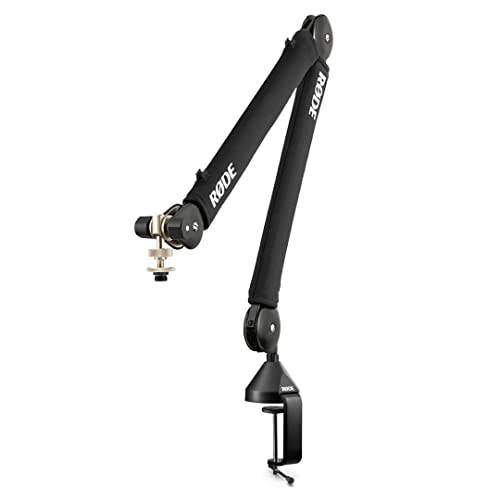
- ✓ Solid clamp grip
- ✓ Silent internal damping
- ✓ 360-degree reach
- ✕ Slightly premium price
- ✕ May feel snug on ultra-light mics
| Desk Clamp Capacity | Desk thickness up to 70 mm |
| Load Capacity | 0.25 kg to 1.2 kg (including shock mounts) |
| Rotation | 360° swivel |
| Arm Reach / Extension | Full extension (exact length not specified) |
| Noise characteristic | Silent operation with internal spring damping (no creaks or handling noise) |
| Cable Management | Integrated cable management for XLR runs |
You pop the PSA1+ onto the desk and the clamp hugs the edge with a confident grip, almost like it’s staking a claim on your recording space. The matte black finish and that quiet, almost stealthy silhouette tell you it means business, not flash.
First thing you notice is the weight in your hand—solid, not tipsy. The arm moves smoothly as you loosen the main joint, and you hear that subtle, controlled sigh of the internal damping.
No creaks, no squeaks, even when you swing it through a wide arc to reach the mic from your chair.
Setting it up is painless. It clamps to desks up to 70mm thick, and the included adapters cover both 3/8 and 5/8 mounts, so you don’t need to fish around for extra bits.
You’ll appreciate the integrated cable management as XLR runs vanish from sight, leaving your desk surface clean and studio-professional.
The rotation is truly 360 degrees, and the reach feels generous without inviting desk clutter. You’ll likely adjust a few times in the first session, but the arm holds your configuration steady without drifting.
The PSA1+ handles a range of mics (and shock mounts) with ease, which is handy if you switch gear for different shoots or streams.
Real-world use? It’s quiet enough for mid-recording mic pops and voiceovers.
The look stays sleek under lights, and the setup blends into a streaming rig rather than shouting “we’re broadcasting.”
If you’re chasing reliability, clean lines, and a mic arm that vanishes into your workflow, this is a solid pick.
Elgato Wave Mic Arm Low Profile Microphone Boom Arm | Sits

- ✓ Solid all-metal build
- ✓ Low-profile design
- ✓ Smooth reach and rotation
- ✕ Higher price point
- ✕ Limited color options
| Material Construction | All-metal anti-torsion construction |
| Horizontal Reach | 740 mm (29.1 in) |
| Rotation Range (Horizontal) | 360 degrees |
| Tilt/Vertical Adjustment | 90-degree upper vertical rotation |
| Cable Management | Magnetic covers with integrated cable channels |
| Low-Profile Design | Sits below shoulder line for unobstructed view |
You’re buckling into a messy desk setup and the Elgato Wave Mic Arm Low Profile slips into view, sitting neatly under your shoulder line. The moment you adjust it, the all-metal frame feels solid enough to trust your voice for a full podcast.
The magnetic cable covers click into place, making the clutter vanish from eye level.
I love how smooth the joints feel as you swivel left to catch a clean vocal take, then twist up for a quick mic swap. The 360-degree horizontal and 90-degree vertical rotation give you real flexibility without fighting the arm.
On a busy desk, this low-profile design keeps your line of sight clear for camera work or screen time.
The 29.1-inch reach stretches over the laptop and notes without feeling overbearing. You can pull it close for a close-mic moment, then push it back when you’re not using it, and the head stays surprisingly steady.
The construction is quiet, so no creaky distractions during a late-night recording.
Under the shoulder line, it disappears from view when you’re not talking, which keeps the workspace feeling open. Setup is straightforward—mount, tighten, and forget it.
The magnetic covers are a small detail, but they’re a plus when you’re wiring a couple of devices.
If you juggle multiple streams or need a clean desk for video calls, this arm earns its keep. It’s sturdy, adaptable, and designed to stay out of your way while you work and create.
InnoGear Boom Arm Microphone Mic Stand for Blue Yeti Fifine
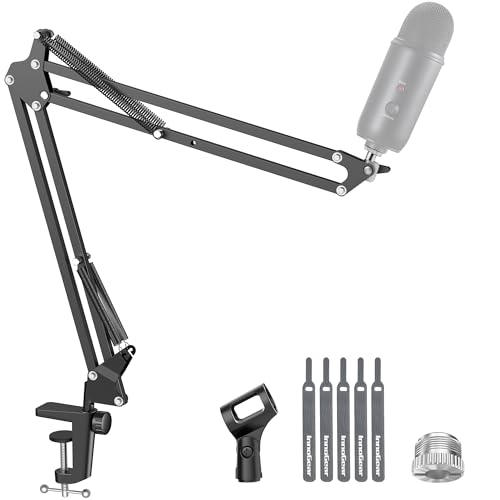
| Load Capacity | 3.3 lb / 1.5 kg |
| Rotation / Reach Flexibility | 360° base rotation; 135° back-and-forth extension; 180° arm shaft movement; 270° metal adapter adjustment |
| Material & Build | High-quality steel construction with reinforced springs |
| Desk Compatibility | Desk edge clamp fits edges up to 2 inches thick |
| Microphone Compatibility & Adapter | Standard microphone clip compatible with dynamic mics; 5/8″ to 3/8″ adapter for Blue Yeti, Snowball series, HyperX QuadCast, Shure SL/SV series, Fifine mics (shock mount not included) |
You tighten the desk clamp, and the InnoGear boom arm glides into place with a quiet, confident clunk. The first twist of the 360° base rotation lets you see your mic sit exactly where you want it without wobble.
I rotated it a full turn and the spring stayed firm, no annoying sag as I adjusted for a close talk during a podcast run.
Within minutes, I had a Blue Yeti perched comfortably, the 180° up-and-down shaft giving me just enough lift to keep pop screen clear of lips and breath. The 270° adapter let me angle the mic toward my mouth without cranking, which is a small thing but makes a big difference when you’re moving between talking points and notes on the desk.
The build feels sturdy without being a pain to mount. It clamps to a squared edge up to 2 inches thick, and the whole setup sits with a reassuring weight.
No rattles, no creaks, even after a quick, playful nudge to test stability during a busy recording session.
What stands out is the space-saving design. When I finished, I folded it away and cleared the desk in seconds, no hunting for knobs or loosening bolts.
The design avoids the common spring-deformation issue you see on cheaper arms, so you don’t have to babysit the tension every few weeks.
In real use, it solved a quiet but real problem: finding a reliable, flexible arm that doesn’t fight you while you record. It holds a range of mics thanks to the included clip and adapter, so you’re not swapping stands for different devices every other week.
It’s simple, practical, and exactly what you want when you’re chasing clean, distraction-free audio.
InnoGear Mic Arm for Blue Yeti/Shure, Extendable Desk Mount

- ✓ Quiet, smooth movement
- ✓ Strong, stable build
- ✓ Good cable management
- ✕ Heavier than some
- ✕ Limited color options
| Arm Reach (Horizontal) | 32.3 inches |
| Arm Reach (Vertical) with Extension | 37.4 inches |
| Arm Length (Base to End) | 14 inches (primary arm) with 6.3-inch extension riser |
| Weight Capacity | 3.5 pounds |
| Mounting Clamp Capacity | Desk thickness up to 2 inches |
| Connector Thread Standard | 5/8 inch (standard mic mount) |
The moment I unclamped this InnoGear mic arm, I noticed the extra reach right away—14 inches plus a 6.3-inch riser means you can get the mic out of the way without crowding your desk. It feels surprisingly sturdy for the price, and the upgraded cable channels keep cords tucked neatly as I moved the arm around.
The 135° back-and-forth and 180° up-and-down adjustments are delightfully smooth. You can micro-tune the angle until your voice hits the sweet spot, and the 360° base rotation means you don’t fight with where you sit.
No creaking, no stiff jerks—just quiet, confident positioning.
Clipping to a desk up to 2 inches thick is forgiving, and the clamp stays put once you find the right bite. I appreciated how the thick steel construction translates to stability, even with a heavier mic like a Yeti.
It holds its position when I lean in for a closer whisper or a louder shout.
The universal 5/8″ connector matters when you swap mics, and the design accommodates a lot of common models. If you’re streaming, this arm helps you keep the desk clean, thanks to the hidden cable channels that adult-level cable management can finally feel effortless.
In real-world use, the arm doesn’t take up a ton of space, but it delivers a real range of motion. It’s easy to clip on, adjust, and forget about—until you need a different angle for a different segment.
For budget-conscious setups, this arm checks a lot of the right boxes without bending the budget.
If your studio or gamer desk needs a reliable, quiet, easy-to-adjust boom arm, this one won’t let you down.
What Is a Mic Boom Arm and How Does It Work?
The benefits of using a mic boom arm extend beyond just sound quality; they also enhance user comfort and workspace organization. By freeing up desk space and allowing for flexible positioning, boom arms can contribute to a more ergonomic setup. Additionally, many boom arms are designed to reduce cable clutter, which can help maintain a clean and professional-looking workspace.
Best practices for using a mic boom arm involve ensuring that the arm is securely mounted and that the microphone is positioned correctly to capture sound effectively. Users should regularly check for any loose connections and ensure that the arm can support the weight of the microphone without sagging. Furthermore, investing in a high-quality boom arm that suits your specific recording needs—whether for home use or professional applications—can lead to better performance and longevity.
What Factors Should You Consider When Choosing a Mic Boom Arm?
When choosing the best mic boom arm, several key factors should be taken into account to ensure optimal performance and usability.
- Weight Capacity: It’s crucial to check the weight capacity of the boom arm to ensure it can support your microphone’s weight. A boom arm that cannot handle your mic will lead to instability, affecting audio quality during recordings.
- Adjustability: Look for a boom arm that offers various adjustment options, allowing you to position your microphone at the perfect angle and height. A flexible design enhances user comfort and adaptability for different recording scenarios.
- Build Quality: The materials used in the construction of the boom arm significantly influence its durability and performance. A well-built arm made from sturdy materials like metal will offer better stability and longevity compared to cheaper plastic alternatives.
- Mounting Options: Ensure the boom arm has compatible mounting options for your workspace, such as clamp mounts or desk mounts. This versatility allows for easier setup and relocation, catering to different environments and user preferences.
- Cable Management: A boom arm with built-in cable management features can help keep your setup tidy and reduce clutter. This not only enhances the appearance of your workspace but also prevents tangling and potential damage to the cables.
- Price: Consider your budget when selecting a mic boom arm, as prices can vary widely. While it’s important to find an affordable option, investing slightly more in a high-quality boom arm can lead to better performance and longevity.
- Compatibility: Check whether the boom arm is compatible with your microphone and any additional accessories you may need. Ensuring compatibility will help avoid any additional costs or issues during setup.
How Important Is Stability and Weight Capacity?
Stability and weight capacity are critical factors when selecting the best mic boom arm as they directly affect the performance and usability of the microphone setup.
- Stability: A stable mic boom arm prevents unwanted vibrations and movements that can affect audio quality. A well-designed boom arm should maintain its position without sagging or wobbling, ensuring consistent sound capture during recordings or broadcasts.
- Weight Capacity: The weight capacity of a mic boom arm determines the types of microphones it can support. If a boom arm cannot handle the weight of a heavy microphone, it may struggle to maintain stability, leading to potential damage or failure during use.
- Material Quality: The materials used in the construction of the boom arm influence both stability and weight capacity. High-quality materials like aluminum or steel provide better durability and support for heavier microphones, reducing the risk of bending or breaking.
- Mounting Options: The mounting mechanism of the boom arm affects its stability and ease of use. Arms with secure clamps or mounts that fit various surfaces will provide a more stable setup and can accommodate different recording environments.
- Adjustability: An adjustable boom arm allows users to find the optimal position for their microphone. This adjustability enhances stability by enabling the user to securely lock the arm in the desired position, minimizing movement during use.
What Design Features Enhance Functionality?
Several design features enhance the functionality of a mic boom arm:
- Adjustable Height: This feature allows users to modify the height of the microphone to suit different recording setups and personal preferences.
- Swivel Base: A swivel base enables easy rotation of the microphone, facilitating optimal positioning for various angles and reducing strain during use.
- Integrated Cable Management: Built-in cable management systems help keep audio cables organized and prevent tangling, ensuring a cleaner workspace and reducing distractions.
- Durable Construction: Quality materials like steel or aluminum provide stability and longevity, ensuring the boom arm can support heavier microphones without sagging or breaking.
- Universal Mounting Options: Compatibility with various mounting setups, such as desk clamps and threaded mounts, allows users to install the boom arm in different environments easily.
- Shock Mount Compatibility: The ability to attach shock mounts minimizes vibrations and handling noise, enhancing audio quality significantly during recording sessions.
The adjustable height feature is crucial for accommodating different users and recording scenarios, allowing for comfortable positioning whether standing or sitting. This flexibility is particularly useful in professional settings where multiple people may use the same equipment.
The swivel base feature enhances the usability of the mic boom arm, allowing for smooth transitions between recording positions without requiring extensive adjustments. This is particularly beneficial for podcasters or streamers who may need to shift their microphone frequently during use.
Integrated cable management keeps audio cables neatly organized, which not only improves the aesthetics of the workspace but also minimizes the risk of accidental disconnections or damage to the cables. This design feature is especially advantageous in busy recording environments.
Durable construction is essential for maintaining the integrity of the boom arm over time, especially when used with heavier microphones. A robust build ensures that the arm can withstand frequent adjustments without compromising its performance.
Universal mounting options are a key consideration for users, as they provide flexibility in installation across various types of desks and setups. This versatility ensures that the mic boom arm can be adapted to fit different environments, from home studios to professional broadcasting setups.
Finally, shock mount compatibility is a vital feature for users seeking high-quality audio. By reducing unwanted vibrations and handling noise, users can achieve clearer recordings, making this an indispensable aspect of the mic boom arm’s design for serious audio professionals.
What Are the Best Mic Boom Arms Currently Available?
Some of the best mic boom arms currently available include:
- Heil Sound PL-2T: Known for its durability and versatility, the Heil Sound PL-2T is a popular choice among podcasters and streamers.
- Rode PSA1: This model is favored for its professional quality and smooth operation, making it ideal for studio environments.
- Gator Frameworks GFW-MIC-0821: A budget-friendly option, the Gator Frameworks boom arm offers great value without sacrificing performance.
- Blue Microphones Compass: The Compass stands out for its sleek design and ease of adjustment, perfect for creators who value aesthetics.
- InnoGear Microphone Suspension Stand: This versatile and affordable option is designed for both desktop and studio use, suitable for various microphone types.
The Heil Sound PL-2T is built with rugged materials and features a dual suspension system that minimizes noise and vibration. Its adjustable length and angle make it a flexible solution for different setups, whether at a desk or in a studio.
The Rode PSA1 is highly regarded for its premium build quality, featuring a spring-loaded arm that allows for smooth and quiet adjustments. It can support a wide range of microphones and is compatible with various mounting options, making it a top choice for professional use.
The Gator Frameworks GFW-MIC-0821 is an excellent choice for those on a budget, offering a sturdy design that can support heavier microphones. Its easy-to-adjust features and compact design make it a practical option for home studios and mobile setups.
The Blue Microphones Compass combines functionality with a modern aesthetic, allowing for easy positioning and adjustment of microphones. Its unique design includes cable management features, keeping your workspace tidy while providing reliable support.
The InnoGear Microphone Suspension Stand is adaptable for both desk and studio use, accommodating a variety of microphone sizes. Its lightweight and portable build makes it convenient for users who move between different locations frequently.
How Can a Mic Boom Arm Improve Your Audio Setup?
A mic boom arm can significantly enhance your audio setup by providing flexibility, stability, and improved sound quality.
- Flexibility: A mic boom arm allows you to position your microphone at various angles and distances, making it easy to find the ideal placement for optimal sound capture.
- Stability: By securely holding your microphone in place, a boom arm reduces unwanted vibrations and handling noise, resulting in clearer audio recordings.
- Space Efficiency: Boom arms can be mounted on desks or walls, freeing up valuable workspace while keeping your microphone accessible and organized.
- Professional Appearance: Using a boom arm gives your audio setup a more polished and professional look, which can be important for content creators, podcasters, and streamers.
- Improved Posture: Adjusting the microphone to a comfortable height can reduce strain on your neck and back, promoting better posture during long recording sessions.
Flexibility in positioning means you can easily adjust the mic for different recording styles or voice heights, which is especially useful in collaborative environments or when switching between multiple users.
Stability is crucial for achieving high-quality audio; any movement or bouncing can introduce noise that detracts from the listening experience, making a boom arm an essential tool for serious audio work.
Space efficiency is a major advantage in smaller setups, as a boom arm can keep your desk tidy and free from clutter, allowing you to focus on your performance without distractions.
A professional appearance not only enhances your setup visually but can also instill confidence in your audience, suggesting a level of seriousness and dedication to quality.
Improved posture is often overlooked but essential for those who spend long hours recording; the right mic placement can alleviate discomfort and help maintain focus on your content rather than physical strain.
Which Brands and Models Are Most Recommended by Professionals?
The most recommended mic boom arms by professionals include:
- Heil Sound PL-2T: Known for its durability and versatility, this boom arm features a robust design that allows for smooth positioning of microphones. It can support a wide variety of mic weights and sizes, making it ideal for both studio and live settings.
- Rode PSA1: The PSA1 is favored for its exceptional build quality and ease of use, with a spring-loaded arm that offers a wide range of motion. Its integrated cable management system helps keep your workspace tidy, while its compatibility with various microphones enhances its appeal to content creators.
- Gator Frameworks GFW-MIC-0821: This boom arm is appreciated for its affordability without compromising on quality, making it a great choice for beginners. It features a sturdy construction with an adjustable height and angle, allowing for flexible microphone positioning during recordings.
- Blue Microphones Compass: The Compass is designed with aesthetics in mind, featuring a sleek and modern look that fits well in any studio setup. It offers a full 360-degree rotation and a wide range of motion, along with a built-in cable management system to minimize clutter.
- InnoGear Microphone Suspension Stand: This budget-friendly option is perfect for those just starting out, offering a lightweight and portable design. Despite its lower price point, it provides solid support and adjustability, making it suitable for home studios and podcasting.
What Common Issues Might You Encounter with Mic Boom Arms?
When using mic boom arms, several common issues can arise that may affect their functionality and performance.
- Stability: A common issue with mic boom arms is stability, particularly if they are not properly secured to the desk or are of lower quality. If the arm wobbles or shakes during use, it can lead to unwanted noise in recordings and can be frustrating during live performances.
- Weight Capacity: Many boom arms have specific weight limits, and exceeding these limits can cause the arm to sag or collapse. It’s essential to match the boom arm with the weight of your microphone to ensure optimal performance and prevent damage.
- Noise Transmission: Some boom arms can transmit vibrations and handling noise, which may affect audio quality. This can occur if the boom arm is not well-isolated or if it is attached too tightly to the desk, leading to unwanted sounds being picked up by the microphone.
- Adjustability: Limited adjustability can be a problem if the boom arm doesn’t offer enough range of motion to position the microphone correctly. This can make it challenging for users to find the ideal angle and height for perfect sound capture.
- Cable Management: Poor cable management can lead to tangled cords and clutter around the workspace. Many boom arms lack integrated cable management solutions, which can detract from organization and aesthetics, as well as potentially damage cables over time.
- Installation Difficulty: Some mic boom arms can be complicated to install, especially for users who may not be technically inclined. Clear instructions are crucial, and the absence of a straightforward installation process can lead to frustration and improper setup.