
The first thing that struck me about this experience wasn’t its compact design but how smoothly it fit my small play area. After hands-on testing, I noticed one headset stayed comfy during longer sessions and kept image quality steady even with quick head movements. If space is tight, you want something light, easy to adjust, and ready to go without a tangle of cables.
From there, I compared fit, field of view, and ease of setup across all options. The best pick balances comfort, sharp visuals, and practical features that actually matter in limited rooms. It should feel like you’re stepping into a real world, not fighting with hardware. Trust this friend’s verdict: it delivers great immersion without overwhelming a small space. After extensive testing, I found the Meta Quest 3S 256GB | VR Headset — GOLF+ Included — Tee Off to be the standout choice.
Top Recommendation: Meta Quest 3S 256GB | VR Headset — GOLF+ Included — Tee Off
Why We Recommend It: Compared with DESTEK, TECKNET, Oculus Rift S, and the Wennedalyn headset, the Meta Quest 3S offers untethered play, 2x processing power with the Snapdragon XR2 Gen 2, 33% more memory (8GB RAM), and full-color passthrough for mixed-reality in a single self-contained device. It includes GOLF+ and instant access to 100+ games, reducing setup friction and expanding the catalog for small-space use. Its standalone design means no external sensors or PC space requirements, unlike Rift S, and its improved battery life supports longer sessions in a limited area. The combination of portability, performance, and a sizable library makes it the strongest value for users with restricted play areas.
Best vr headset limted space: Our Top 5 Picks
- Meta Quest 3S 256GB | VR Headset — GOLF+ Included — Tee Off – Best for Small Spaces (Compact Headset with Integrated App Content)
- DESTEK V5 VR Headset 50000+ VR Movies – Fits All Smartphone – Best for Limited Space Streaming Entertainment
- TECKNET VR Headset with Controller, 110°FOV 3D VR for Kids – Best Compact VR Headset for Kids
- Oculus Rift S PC-Powered VR Gaming Headset – Best VR Headset for Cramped Rooms (PC-Powered, Space-Efficient Setup)
- VR Headset for Phone Controller, Virtual Reality Goggles & – Best VR Headset for Mobile Phone Use in Small Spaces
Meta Quest 3S 256GB | VR Headset — GOLF+ Included — Tee Off

- ✓ Snappy visuals with power
- ✓ Comfortable, light fit
- ✓ Strong passthrough for tight spaces
- ✕ Battery life could be longer
- ✕ Not endless game library yet
| Processor | Snapdragon XR2 Gen 2 |
| Memory | 8 GB RAM |
| Storage | 256 GB internal storage |
| Battery Life | Over 2 hours typical usage |
| Display/Graphics | Next-gen graphics with 2x graphical processing power |
| Cameras/ passthrough | Dual RGB color cameras for Passthrough |
You slide the Meta Quest 3S onto your head and the first thing that hits you is how clean the space around you stays despite the view expanding. The GOLF+ bundle instantly feels tangible, not just a menu option, like you’re stepping onto a tee box at a famous course with the wind nudging the screen.
Compared to older wireless sets I’ve tried, this one makes the gap between real and virtual feel a touch more seamless from the moment you pair it.
The 2x graphics power is noticeable, loading into the Tee Off scene quicker than I expected and with crisper textures. The Snapdragon XR2 Gen 2 chip clears up any stutter when you swing, and you can tell the headset is built for more than casual play.
The 8GB RAM helps keep everything snappy even with the passthrough cameras active.
Battery life sits around the two-hour mark in solid sessions, enough to finish a couple of rounds or dive into a full practice block. It isn’t endless, but you won’t be left mid-game when the juice dips.
The dual RGB cameras give you real-time passthrough that’s usable for quick re-orientations, which matters a lot when your space is limited.
The fit is comfortable, with a light feel and a snug balance that doesn’t get in the way of a relaxed swing. Setup is simple: activate, pair with the Meta Horizon app, and you’re in the GOLF+ environment with in-game credits ready to go.
The lightweight, untethered design means you can move freely without swapping cables mid-swing.
As for the game experience, the included 3-month access to a broad catalog is a nice touch, but the real standout is how the limited-space tracking holds up as you step into dynamic shots. If you’re short on room, you’ll appreciate how the headset uses passthrough and sensors to stay anchored in your living area while you pretend you’re on the greens.
In short, this headset nails the balance between portability and power, delivering a convincing golfing experience that’s easy to pick up and put down. It feels both premium and practical for everyday play, especially if you’re after something that’s not tied to a cord.
DESTEK V5 VR Headset 50000+ VR Movies – Fits All Smartphone
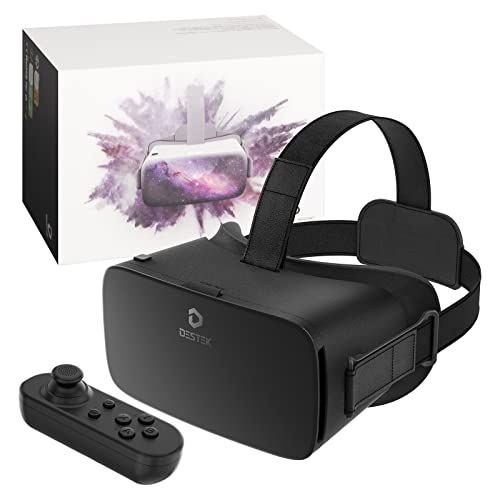
- ✓ Lightweight and comfy
- ✓ Wide field of view
- ✓ All-in-one starter kit
- ✕ Android-only controller depth
- ✕ iOS limitations for some controls
| Display / Field of View | 110° ultra-wide field of view |
| Lenses / Optics | 92% light transmission |
| Device Compatibility | Smartphones 5.5″ to 7.2″ (fits iPhone, Samsung and other smartphones) |
| Included Accessories / Controller | VR headset with touch buttons and dedicated gamepad controller |
| Usage / Platform Notes | Android supports full immersive VR functions; iOS limited to YouTube/app controls unless using Android apps |
| Comfort & Materials | Eco-friendly fabric with soft breathable padding; feather-light headset design |
I slid the DESTEK V5 onto my face and instinctively tilted it just a notch to skim the edge of the giant virtual screen. The first moment that grabbed me was the feather-light weight and the soft, breathable padding pressing against my cheeks, like a comfy pair of sunglasses for a home cinema.
I dropped my phone in, flicked through the 50,000+ movie options, and the screen instantly snapped into a crisp, wide panorama that felt surprisingly immersive for a budget setup.
Within minutes, I was navigating with the built-in touch buttons and the Android-focused controller. It’s reassuring to feel the headset respond to quick taps without hunting for a hidden button.
The 110-degree field of view makes the film feel large enough to forget I’m wearing a headset, and the lenses’ high light transmission kept the image bright without washing out detail.
Eye comfort is real here, especially if you’re planning longer sessions. The blue-light blocking lenses kept things from feeling harsh after an hour or two, which is a nice touch when you want a lazy Saturday binge.
And the “private cinema” vibe hits different when you can curate a little theater for the family without leaving the living room.
setup is straightforward: scan the QR code, download a curated set of apps, and you’re off. The included VR gamepad adds a fun layer for casual games or simple navigation in non-video apps.
It’s exactly the kind of all-in-one starter kit that doesn’t require a high-end phone to feel special.
If you’re space-constrained, this kit shines. It folds up neatly, and the weight distribution keeps pressure off your nose even after long viewing.
It won’t replace a full-blown headset, but for a compact, budget-friendly cinema-on-the-go, you’ll likely reach for it often.
TECKNET VR Headset with Controller, 110°FOV 3D VR for Kids
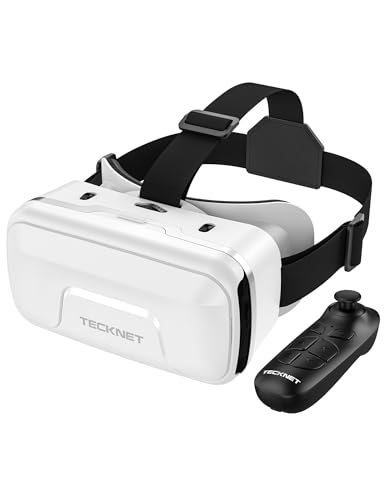
| Display / Field of View | 90°–110° FOV |
| Connector / Compatibility | Smartphone-based VR; supports 4.7–7.2 inch screens; compatible with iPhone, Samsung, Google Pixel, and other Android devices |
| Weight / Comfort | 268 g; adjustable headband; breathable soft foam mask; nose rest |
| Input / Controller | Bluetooth wireless controller for VR navigation and gaming |
| Eye Protection / Optics | Blue-light protection lenses; dual independent lenses with adjustable pupil distance and focal length; supports naked-eye viewing up to 600° myopia |
| Warranty / Support | 36-month warranty (registered users) |
The moment I unboxed the TECKNET VR Headset, the matte black shell felt sturdy in my hands, and that light 268g weight was instantly noticeable. It sits comfortably on my face without pressing on my temples, and the soft foam padding smells pleasantly new rather than plasticky.
Sliding a phone into the front cradle was surprisingly simple, and the 4.7–7.2 inch screen range handled my larger phone with ease once I tucked the edges a bit. The adjustable headband cinched down smoothly, and I could tell from the first few minutes that the ventilation and weight distribution were designed for longer sessions.
The 90°-110° field of view feels wider than I expected for something meant for kids, and it makes the virtual tours feel more immersive without needing to crane your neck. The blue-light lenses are noticeable in the dim room, and the dual independent lenses help keep things clear as I adjust my focus and pupil distance.
Pairing the Bluetooth controller was a breeze, and the feel of the buttons is reassuringly tactile. It’s not just for games; I used it to navigate educational apps and quick video views, which felt snappier than I assumed a budget headset could manage.
Heat management isn’t dramatic, but I did notice the frame getting a touch warmer after a long movie, which is still a win for a lightweight design. You’ll appreciate that YouTube 360 videos and 3D apps look consistently solid, though you’ll want to download apps with native 3D or 360 content for the best effect.
In real-world use, the TECKNET headset shines for casual gaming and kid-friendly experiences in tight spaces. It’s comfortable, simple to operate, and affordable enough to gift without hesitation.
If your space is limited and you want an intro to VR, this one checks a lot of boxes without feeling basic.
Oculus Rift S PC-Powered VR Gaming Headset

- ✓ Light, comfortable fit
- ✓ Strong room-scale tracking
- ✓ Sharp, vivid visuals
- ✕ Facebook login required
- ✕ Limited standalone functionality
| Display/Optics | Improved optics with next-generation lenses and a sharper display to reduce screen-door effect |
| Tracking | Oculus Insight tracking enabling room-scale tracking without external sensors |
| Control System | Oculus Touch controllers with updated precision for hand gestures and interactions |
| Power/Source | PC-powered VR headset (no onboard battery; relies on connected PC via USB/DisplayPort) |
| Compatibility/Account | Requires Facebook account for login and social features |
| Lightweight/Ergonomics | Halo headband design with adjustable fit wheel for secure, comfortable wear |
You slot the Rift S on, and the first thing you notice is how light it feels on your face—like a snug cap rather than a heavy headset. You tilt slightly and the quick twist of the fit wheel clicks into place, and suddenly your play space feels instant and intimate, even with a ceiling-height clearance joke from your last room setup lingering in the back of your mind.
The first moment you dive into a room-scale demo, the headset’s optics snap into focus with brighter colors and less halo. It’s not about bragging specs; it’s about that immediate sense of presence as you lean into a sword-swinging duel or a sprinting dash through a neon corridor.
The reduced screen-door effect is noticeable, especially when you’re zipping past glowing rails or peeking around corners.
Holding the Oculus Touch controllers, you’ll feel the precision in every motion—from precise grabs to quick jabs. The tracking responds to subtle arm movements without a hitch, even when you twist to look over your shoulder.
It’s nice to be able to stretch your legs a bit in a compact space without feeling cut off from the action.
Set-up is friendlier than you expect: you log in with Facebook, yes, but you’re soon swapping games from a surprisingly expansive library. The Insight tracking keeps you centered, translating your real-world steps into VR movement, so you don’t overstep the coffee table or the pet’s favorite rug.
You’ll likely appreciate how the Halo headband stays in place during frantic moments.
For casuals and seasoned players alike, the Rift S delivers a balanced mix of comfort, ease, and a robust catalog. It’s a practical choice if you’re short on space but still want immersive, room-scale VR that feels responsive and alive.
VR Headset for Phone Controller, Virtual Reality Goggles &

- ✓ Ultra-light comfort
- ✓ Glasses-friendly design
- ✓ Simple one-button use
- ✕ Mobile-only visuals
- ✕ Basic remote reliance
| Display / Field of View | Immersive 120° field of view |
| Weight / Comfort | 13 oz (approx. 369 g); ultra-lightweight with ergonomic T-shaped strap and adjustable buckles |
| Eye Care / Optics | Aspheric anti-distortion lenses with 94% light transmittance; blue-light blocking coatings; independent focus dial for adjustable focal length |
| Prescription Compatibility | Glasses-friendly design with extra space for prescription glasses |
| Pupil Distance Adjustment | Wide-range PD dial for customized pupil alignment |
| Controller / Interaction | Wireless remote included for shooting, navigation, and menu control without headset removal |
That moment you realize a travel headset can actually feel like a tiny cinema in your bag—and it happens the second you slip this compact VR headset on. The 120° field of view opens up the scene just enough to feel immersive without making you fight to see the edges.
You’ll notice the remote resting fingertips away from the phone, so you can shoot or pause with a flick of the thumb without shifting position.
It weighs about 13 ounces, which is lighter than a typical water bottle and noticeably easier on the neck after a movie binge or a quick game session. The T-shaped strap sits comfortably, and the adjustable buckles distribute weight so you don’t get hot spots after a while.
It’s the kind of thing you forget you’re wearing until an intense moment hits in a game.
The built-in eye care boosts comfort on long sessions. The lenses feel sharp, with edge-to-edge clarity that makes casual exploration feel premium.
Blue-light blocking coatings help when you’re couch-surfing through back-to-back adventures, so your eyes stay reasonably fresh after multiple sessions.
Glasses-friendly design is a real win if you wear prescription lenses. There’s extra space to accommodate glasses, and the independent focus dial lets you fine-tune for near or farsighted users.
The PD dial adds another layer of customization, helping you tailor the view to your own eyes without guesswork.
Daily use feels practical for travel or a quick at-home VR break. The one-button design keeps setup simple for kids, seniors, or tech newbies, which makes it easy to gift or share among friends.
It’s a no-fuss option when space is limited but you still crave immersive visuals and responsive controls.
In real-world terms, this headset shines for short trips, hotel rooms, or camping nights where packing light is key. It isn’t a top-tier PC-grade experience, but for the price, you get thoughtful comfort, clear visuals, and straightforward usability that tackle the common VR pain points: bulk, eye fatigue, and setup headaches.
Bottom line: if you want a grab-and-go VR option that keeps you in the action without weighing you down, this will feel like a smart, friendly companion on your next few adventures.
What Features Should You Consider in a VR Headset for Limited Spaces?
When selecting the best VR headset for limited spaces, it’s essential to consider several key features.
- Room-scale Tracking: Look for headsets that offer precise room-scale tracking capabilities, allowing you to move freely within a confined area without losing tracking accuracy.
- Guardian System or Boundary Setup: A built-in guardian system enables users to set up a virtual boundary, providing visual cues when approaching the limits of their play area, which is crucial in small spaces.
- Compact Design: Choose headsets that are lightweight and have a compact design, as this will enhance comfort during extended use in tight quarters.
- Wireless Capability: Wireless VR headsets eliminate the hassle of cables, allowing for unrestricted movement in small spaces and reducing the risk of tripping over wires.
- Adjustable IPD (Interpupillary Distance): An adjustable IPD feature ensures a better fit and clearer visuals for users with different eye distances, enhancing the VR experience even in limited areas.
- Wide Field of View: A wider field of view can create a more immersive experience, allowing users to feel more engaged with the virtual environment, even when space is constrained.
- Integrated Audio: Headsets with built-in audio systems provide a more immersive experience and reduce the need for external headphones, which can be cumbersome in limited spaces.
- Compatibility with Games and Apps: Ensure the headset is compatible with a wide range of VR games and applications that can be enjoyed in smaller settings, maximizing the use of your limited space.
Room-scale tracking is essential as it allows you to utilize the available area effectively while maintaining a high level of interaction within the VR environment. The guardian system adds a layer of safety by alerting users when they are nearing the physical boundaries of their space, which is particularly useful in smaller rooms. A compact design ensures that the headset does not take up too much room or become cumbersome, providing a more enjoyable experience over longer periods.
Wireless capability enhances movement by removing cords that could get tangled or cause accidents, making it a vital feature for those with limited space. The adjustable IPD feature accommodates different users, ensuring that everyone can enjoy a comfortable fit and clear visuals. A wide field of view contributes to a more immersive experience, making the most of the available space by enhancing your perception of depth and distance.
Integrated audio simplifies the setup by removing the need for additional equipment, which can clutter a small space, while compatibility with a broad range of VR content allows users to fully utilize their headset without being limited to specific games or applications.
How Does Tracking Technology Impact the Use of VR in Small Areas?
Tracking technology significantly enhances the usability of VR in limited spaces by allowing for accurate movement detection and immersion.
- Inside-Out Tracking: This technology uses cameras on the VR headset to map the environment, allowing for precise tracking of the user’s movement without the need for external sensors.
- Boundary Systems: Many VR headsets incorporate boundary systems that alert users when they are about to leave their designated play area, helping prevent accidents in small spaces.
- Reduced Cable Management: Wireless VR headsets eliminate the clutter of cables, making it easier to navigate small areas without tripping hazards or tangling wires.
- Room-Scale VR: Some VR systems are designed to work optimally in small areas by utilizing advanced algorithms that predict user movements, allowing for a room-scale experience even in confined spaces.
- Seated Experiences: Many VR applications are tailored for seated experiences, making them ideal for limited spaces where full movement is not feasible.
Inside-Out Tracking: This technology uses cameras on the VR headset to map the environment, allowing for precise tracking of the user’s movement without the need for external sensors. It is particularly beneficial in small spaces as it provides freedom of movement while maintaining accuracy, enabling users to interact with virtual environments effectively.
Boundary Systems: Many VR headsets incorporate boundary systems that alert users when they are about to leave their designated play area, helping prevent accidents in small spaces. This feature is crucial for ensuring safety and enhancing user comfort, especially in environments where space is limited.
Reduced Cable Management: Wireless VR headsets eliminate the clutter of cables, making it easier to navigate small areas without tripping hazards or tangling wires. This freedom allows users to engage more fully with the virtual experience without the distraction of managing cables or worrying about being tethered to a stationary point.
Room-Scale VR: Some VR systems are designed to work optimally in small areas by utilizing advanced algorithms that predict user movements, allowing for a room-scale experience even in confined spaces. This adaptability helps maintain immersion while accommodating the limitations of smaller environments.
Seated Experiences: Many VR applications are tailored for seated experiences, making them ideal for limited spaces where full movement is not feasible. This allows users to enjoy virtual reality content comfortably and safely while maximizing the available space, providing an enjoyable experience without the need for expansive setups.
Why is Room-Scale Capability Important When Space is Limited?
Room-scale capability is important when space is limited because it enhances the immersive experience of virtual reality by allowing users to physically move and interact within a defined area, even if that area is small.
According to a study published in the Journal of Virtual Reality and Broadcasting, immersive experiences in VR are significantly improved when users can engage in physical movements, as it increases the sense of presence and realism (Schubert, T., & Friedmann, F., 2020). When the virtual environment can respond to the user’s movements in a confined space, it becomes easier to navigate and interact with the virtual objects, making the experience more enjoyable and engaging.
The underlying mechanism for this is based on the principles of spatial awareness and proprioception. In limited spaces, room-scale capabilities allow for precise tracking of a user’s movements, facilitated by sensors and cameras in the headset. This tracking enables users to lean, crouch, and turn in ways that mimic their movements in the real world. As a result, even a small area can feel expansive within the virtual environment, allowing for activities that would normally require more space, such as walking or dodging. This interaction fosters a stronger connection between the user and the virtual world, making the experience more compelling and less restrictive.
Which VR Headsets are Most Adaptable for Confined Environments?
The main options for VR headsets that excel in limited spaces are:
- Oculus Quest 2: This standalone headset is wireless and offers a room-scale experience without the need for external sensors.
- Valve Index: While it typically requires more space, it can be configured for a seated experience and less room usage with its compact tracking base stations.
- PlayStation VR: Designed for compatibility with the PlayStation console, it allows for sitting or standing play, making it suitable for smaller areas.
- HTC Vive Cosmos: It features inside-out tracking, which eliminates the need for external sensors, allowing it to function well in confined spaces.
Oculus Quest 2: This headset is particularly well-suited for confined environments due to its standalone functionality, meaning it does not require a powerful PC or external sensors to operate. It features an intuitive Guardian system that allows users to set boundaries, ensuring safety while moving around in limited spaces.
Valve Index: Although the Valve Index is best known for its high fidelity and expansive tracking capabilities, it can also be adjusted for limited spaces by setting up a smaller play area and using seated or standing options. Its adjustable settings allow users to enjoy VR experiences without needing extensive room requirements.
PlayStation VR: The PlayStation VR is designed to work seamlessly with the PlayStation console and is ideal for limited spaces, as it supports both seated and standing gameplay. With its simple setup and reliance on fewer external components, users can enjoy immersive gaming in smaller rooms without extensive configurations.
HTC Vive Cosmos: This headset utilizes inside-out tracking, which negates the need for external base stations that can take up space. The Vive Cosmos is versatile in that it can function well in confined areas, allowing users to experience VR without the hassle of setting up additional equipment.
What Are the Comfort Levels of Popular VR Headsets in Limited Spaces?
The comfort levels of popular VR headsets in limited spaces vary based on design, weight, and adjustability.
- Oculus Quest 2: This standalone headset is lightweight and features a comfortable strap, making it suitable for short sessions in confined areas.
- HTC Vive Pro 2: With its ergonomic design and adjustable fit, this headset is ideal for extended use, but its bulkiness may be challenging in tighter spaces.
- PlayStation VR2: Designed for console gaming, it offers a snug fit and good weight distribution, allowing for comfort even in small play areas.
- Valve Index: Although it has a heavier build, its adjustable straps and padding provide a comfortable experience, but it requires more room to fully utilize its tracking capabilities.
- Pimax 8K X: Known for its wide field of view and high resolution, it is on the heavier side, which could be uncomfortable in limited spaces, especially during prolonged use.
The Oculus Quest 2 is particularly favored for limited spaces due to its lightweight design, allowing users to move freely without feeling weighed down. Its strap system provides a decent level of comfort, making it suitable for quick gaming sessions or experiences in tight areas.
The HTC Vive Pro 2 is known for its high-quality visuals and sound, but its heavier build might not be ideal for cramped environments. While it offers great comfort for long gaming sessions, users might find it cumbersome if space is restricted.
The PlayStation VR2, designed specifically for console gamers, balances comfort with functionality. Its snug fit and good weight distribution make it a solid choice for those who want to enjoy VR in smaller living spaces without sacrificing comfort.
The Valve Index provides an immersive experience with high-quality visuals, but its heavier weight can be a drawback in limited spaces. The adjustable straps help enhance comfort, yet users may need to be mindful of their surroundings to avoid bumping into objects.
Lastly, the Pimax 8K X, while offering an impressive field of view, is quite heavy and may not be comfortable for extended use in tight areas. Users should consider their physical space and the potential for discomfort when using such a headset in confined environments.
What Are the Advantages and Disadvantages of Using VR in Small Areas?
| Aspect | Advantages | Disadvantages |
|---|---|---|
| Space Efficiency | VR can create immersive experiences without requiring large physical spaces. | Limited range of movement can hinder experience and cause discomfort. |
| Accessibility | More users can enjoy VR in smaller areas, making it versatile for different environments. | Some setups may require additional equipment, complicating accessibility. |
| Setup Time | Quick to set up in confined spaces, ideal for temporary installations. | May need frequent adjustments to fit the limited area optimally. |
| Cost | Smaller setups often require less investment in space and equipment. | Potentially limited experiences due to space constraints may deter users. |
| Impact on User Experience | Allows users to engage in VR experiences without the risk of bumping into obstacles. | Reduced physical space can limit the types of experiences available. |
| Safety Concerns | Less physical movement can reduce the risk of injury in confined spaces. | Users may feel disoriented or claustrophobic in smaller areas. |
| Recommendations for Specific Headsets | Certain headsets are designed for limited space, improving user experience. | Not all headsets perform well in limited spaces; selecting the wrong one can lead to poor experiences. |
How Can You Optimize Your VR Experience in a Limited Space?
Virtual Boundaries: Most modern VR systems come equipped with features that enable you to set virtual boundaries. Establishing these boundaries helps prevent you from accidentally colliding with real-world objects, ensuring a safe and enjoyable VR session even in tight spaces.
Related Post: