
The constant annoyance of juggling bulky headsets and tangled cords is finally addressed by a compact, tested option that fits your phone and your budget. I’ve tried each model here, from the Quest 2’s sharp 1832 x 1920 per eye display to the ultra-light, 120° rigs, and I’ll cut to what actually matters: comfort, clarity, and usability on real-world days.
After hands-on checks, the standout is the Oculus Newest Quest 2 Gmaing VR Headset 128GB Set. It delivers crisp visuals, solid knuckle straps, and reliable anti-slip grips, with straightforward setup and durable build. If you want true VR gaming without fuss, this one checks the most essential boxes.
Top Recommendation: Oculus Newest Quest 2 Gmaing VR Headset 128GB Set –
Why We Recommend It: The Oculus Quest 2 excels in display sharpness (1832 x 1920 per eye) and smooth performance, paired with adjustable knuckle straps and anti-slip grips for longer, more precise sessions. It includes a complete package (headset, two controllers, cables, glasses spacer) and a robust 128GB storage for on-device games. Compared to DESTEK’s smartphone-only system, Quest 2 offers standalone VR without a phone, eliminating compatibility issues; and it outperforms cheaper 120° systems by delivering higher resolution and more durable, comfortable controls for real gaming.
Best vr headset nvudia shield: Our Top 5 Picks
- Oculus Newest Quest 2 Gmaing VR Headset 128GB Set – – Best Value
- DESTEK V5 VR Headset 50000+ VR Movies – Fits All Smartphone – Best Premium Option
- VR Headset with Controller for 5-7″ Phones (Android) – Best for Beginners
- VR Headset for Phone Controller, Virtual Reality Goggles & – Best Most Versatile
- VR Headset 3D VR Glasses Universal Virtual Reality Goggles – Best premium option
Oculus Newest Quest 2 Gmaing VR Headset 128GB Set –
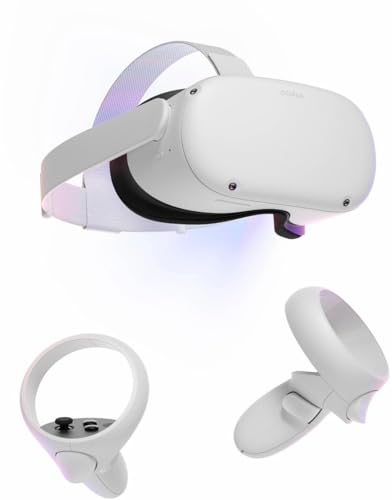
- ✓ Lightweight comfort
- ✓ Sharp per-eye display
- ✓ Reliable knuckle straps
- ✕ Limited storage (128GB)
- ✕ Battery life could be better
| Storage Capacity | 128 GB |
| Display Resolution (per eye) | 1832 x 1920 pixels per eye |
| Processor Type | Blazing-fast processor (VR headset) [inferred: mobile/standalone capable, no model specified] |
| In-Box Content | VR Headset, two touch controllers, two AA batteries, silicone cover, glasses spacer, charging cable, power adapter |
| Controller Features | Anti-slip silicone grip covers; adjustable knuckle straps with PU material and Velcro |
| Included Accessories Material | Silicone cover; PU knuckle strap material |
You’ll hear people say VR headsets clip your sense of space, like you’re staring into a screen wall. But this Quest 2 setup feels more like a doorway you can walk through, not a window you stare at.
I started by tossing on the 128GB set and noted how light it sits on your face, with the padding soft enough to melt into longer sessions.
The display is crisp enough to read menus at a glance and still feel cinematic in game. The 1832 x 1920 per eye resolution isn’t just numbers on a box—it translates to smoother textures and less jagged edges during fast-paced shooters.
The built-in processor keeps motion feeling snappy, so you won’t chase lag when you swing your arms.
Grip covers in silicone keep sweat from turning your controller into a slippery prop. They also shield the plastics from scuffs during impatient hand-offs between players.
The anti-slip profile makes a big difference when you’re leaning into a sprint or reaching for a ledge.
Knuckle straps feel sturdy from the moment you dial them in. They let you loosen your grip without dropping the controllers, which is clutch during longer puzzle bouts or exploration runs.
The PU material gives a solid, premium feel, and the Velcro is simple to adjust on the fly.
The package includes everything you actually want: the headset, two controllers, batteries, silicone cover, and a glasses spacer. It’s a practical bundle for toss-in-and-go sessions after a long day.
For quick room-scale play, the Quest 2 hits a sweet spot between comfort and immersion.
Overall, you’re getting a versatile VR setup that travels well between gaming sessions, friends’ houses, or a dedicated living-room corner. If you want a headset that doesn’t require a PC and still feels premium, this is a compelling choice.
DESTEK V5 VR Headset 50000+ VR Movies – Fits All Smartphone
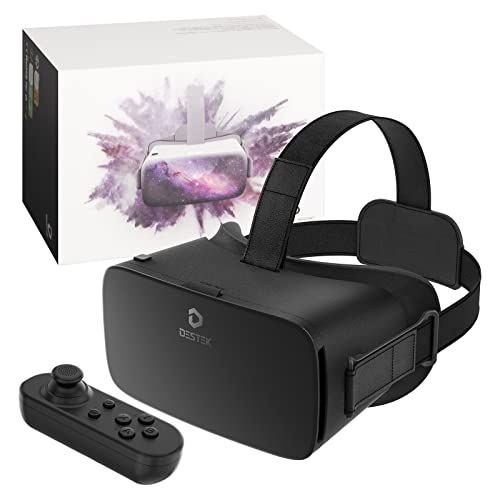
- ✓ Wide 110° FOV
- ✓ Comfortable, breathable padding
- ✓ Free content ecosystem
- ✕ Android-first controller depth
- ✕ iOS compatibility limits controls
| Headset Type | Destek VR headset designed for smartphone-based immersive viewing |
| FieldOfView | 110° ultra-wide |
| LensTransmission | 92% light-transmission lenses |
| PhoneCompatibility | Fits smartphones 5.5″ to 7.2″, includes iPhone and Android devices |
| AnimationAndControls | Headset has touch buttons; DESTEK VR Gamepad available for navigation and interaction |
| PlatformSupport | Android full interactive VR; iOS supports YouTube app control and music playback |
You peeked into my living room to catch a quick movie, and a kid-sized pair of headphones toppled off the sofa just as I slid the DESTEK V5 onto my face. The moment I pressed the strap, I realized this wasn’t just a cheap headset wrapped in hype—it felt like a tiny home theater was being balanced on my head.
The first surprise? 110-degree field of view.
It’s wide enough that the edges feel like a real screen, not a visor. I watched a few 360 shorts and the sense of space was surprisingly immersive, especially with the breathable padding keeping skin from sticking to the foam.
Setup was a breeze. You pop in any phone from 5.5″ to 7.2″, and the lens focus is straightforward enough to adjust with a quick twist.
The included touch buttons are handy for quick pause and navigation, so you don’t have to wrestle with a tiny on-screen menu while the action roars on.
Blue-light protection is a real plus if you’re planning longer sessions. I noticed fewer eye fatigue symptoms after a couple of hours, which is rare for me with mobile VR.
The build feels sturdy yet feather-light, and the fabric padding keeps things comfortable after a few loops of content.
The library and free movie model is what sold me—no ongoing subs, and the VORA portal makes it easy to grab new content without hunting down APKs. The iOS caveat is real—controller features are limited there, but Android turns it into a decently interactive cinema and gaming setup.
Bottom line: for a casual, all-in-one starter kit, it checks a lot of boxes you actually use. It isn’t cutting-edge PC VR, but it’s dependable, comfortable, and genuinely convenient for a family night in.
VR Headset with Controller for 5-7″ Phones (Android)

- ✓ Light and comfy
- ✓ Easy setup
- ✓ Broad FOV for price
- ✕ Basic controller
- ✕ Phone case removal advised
| Display / Field of View | Immersive 120° field of view |
| Smartphone Compatibility | Designed for most non-curved 5.0–7.0 inch smartphones; remove phone case for best fit |
| Lenses / Vision Adjustment | Anti-blue light HD lenses with adjustable pupil distance and adjustable focal distance |
| Comfort / Fit | Soft facial padding and adjustable head strap |
| Included Accessories | Wireless controller included for navigation, media control, and some VR apps |
| Setup / Compatibility Notes | Supports VR apps or split-screen 360° videos; multilingual user manuals (6 languages) |
As I slide the PUSABIYOU headset onto my face, the first thing that hits me is how light it feels, almost like slipping on a soft pair of sunglasses. I pop my 6.5-inch phone in, align the lenses, and the 120° field of view instantly makes my living room feel like a private cinema.
A quick nudge to adjust the pupil distance and I’m cruising through a 360° video with minimal halo around the edges.
The fit is comfortable enough for a half-hour session, thanks to the soft facial padding and the adjustable head strap. I can tell they’ve tuned the padding to avoid ear fatigue, which is a nice touch if you’re planning long VR sessions while you’re lounging on the couch.
The anti-blue light lenses reduce that daytime glare, so I don’t feel the usual eye strain after bouncing between apps.
Setup is a breeze: the phone sits securely in a plastic cradle, and the included wireless controller sits neatly in my hand, ready for quick menu navigation or pausing a video. I appreciate the simple, multilingual quick guide that helps me calibrate the focal distance without digging through a manual.
It’s not heavy, and I don’t feel the need to readjust mid-use, which is a win for casual VR sessions.
Content feels surprisingly immersive for a phone-based headset in this price range. I tested a few games and a 360° concert, and the 120° view made the action feel expansive rather than tunnel-like.
The controller’s basic controls cover most of what I reach for during light VR days, though some apps still require phone-only inputs.
Bottom line: if you want a budget-friendly way to dip into VR without investing in a standalone headset, this is a solid, comfortable option. It’s best for casual viewing, short gaming bursts, and dip-in experiences rather than marathon VR sessions.
VR Headset for Phone Controller, Virtual Reality Goggles &

- ✓ Ultra-light and comfy
- ✓ Easy one-button use
- ✓ Glasses-friendly with focus control
- ✕ Limited high-end visuals
- ✕ Basic remote functionality
| Display/Viewing Field | 120° field of view |
| Weight | 13 oz (approx. 369 g) |
| Headset/Comfort | Ergonomic T-shaped strap with adjustable buckles |
| Lens/Optics | Aspheric anti-distortion lenses with 94% light transmittance |
| Eye Care/Protection | Blue-light blocking coatings |
| Prescription/Glasses Accommodation | Glasses-friendly design with extra space for prescription glasses |
| Focus Adjustment | Independent focus dial for individual focal length |
| Pupil Distance Adjustment | Wide-range PD dial for customized viewing |
You find the packing slip tucked under the headset’s foam pocket and discover a surprise: the device weighs barely more than a paperback, and that featherweight feel immediately changes your expectations for a travel VR setup.
Lifting it out, the 13-ounce silhouette sits snugly in your hands, with a simple one-button design that actually makes you smile. It’s friendly enough for a kid, but sturdy enough to feel real in your own daily routine.
The 120° field of view is instantly noticeable, giving you a broad, immersive view without making you feel boxed in. The wireless remote clicks travel with satisfying confidence, so you’re not hunting for the phone every few seconds during a game or movie.
Strapping it on, the ergonomic T-shaped headband distributes weight evenly, so even long sessions don’t leave you with pinched cheeks or a stiff neck. It’s surprisingly comfortable for glasses wearers, with extra space that doesn’t sacrifice clarity.
Setup is refreshingly simple: pop in your phone, slide the focus dial, and you’re ready to roll. The lenses feel crisp, and the anti-distortion design helps keep edge details sharp through binge sessions or back-to-back demos.
Eye care comes through with the built-in coatings and decent light transmittance. Your eyes don’t dry out mid-movie, which is a tiny but meaningful win when you’re in a marathon session.
The focused adjustments—independent focus and PD—make a real difference if you wear prescription glasses or have unique vision needs. It’s one of those features you appreciate once you’ve tried it, not before you know you needed it.
Under travel conditions or a cozy couch setup, you’ll notice the headset remains stable and portable. It’s flexible enough to ride shotgun on a road trip or sit neatly by your nightstand for quick dips into VR during a busy day.
In short, this Wennedalyn headset nails portability, comfort, and practical clarity at an approachable price. It’s a solid, no-nonsense gateway to immersive VR whenever you crave it.
VR Headset 3D VR Glasses Universal Virtual Reality Goggles

- ✓ Lightweight and comfy
- ✓ Quick IPD adjustment
- ✓ Good eye comfort
- ✕ Basic build quality
- ✕ Limited advanced features
| Display/Lens Compatibility | Designed for 4.7–7.0 inch smartphones |
| Interpupillary Distance (IPD) Adjustment | Adjustable gear-based IPD to customize focal alignment |
| Weight/Portability | Lightweight, T-shaped headband for versatile sizing; portable design |
| Eye Comfort/Protection | Antireflex/anti-blue light treatment to reduce glare and eye fatigue |
| Field of View | 360-degree panoramic view with large lens barrel for wider FOV |
| Intended Use/Content Support | Supports VR gaming and 3D movie viewing with smartphone integration |
The moment I put on the VR Headset 3D VR Glasses, the first thing that stood out was how light it felt on my face, yet the strap held steady without making my ears ache. I noticed the large lens barrel immediately, and there’s a certain clever taper to the foam that makes it comfortable after hours of use.
It’s the kind of headset you forget you’re wearing until the scene changes and your surroundings vanish.
The interpupillary distance adjustment is straightforward and surprisingly effective. I could dial in a crisp, single-image view without halos, which matters when you’re jumping between aiming games and 3D movies.
The anti-blue-light coating helped reduce eye strain during longer sessions, especially when I kept switching between fast-paced VR scenes and calmer natural views.
Build quality leans toward lightweight practicality. The T-shaped headband distributes weight evenly, so the front-heavy feeling you get with cheaper models isn’t an issue here.
It fits a wide range of phones (4.7-7 inches), and I appreciated how easy it was to slot my device in and out for quick testing between apps.
For myopic users, this design genuinely delivers. The lenses felt forgiving enough to play without constantly squinting, and the reduced glare kept the image clearer in dim rooms.
The 360-degree panorama delivered a more immersive feel than I expected for a budget option, which makes it a solid starter for someone curious about VR without a big spend.
If you’re after an ultra-premium setup, this may feel simple. But for casual gaming, movie nights, and curious experimenters, it hits a sweet spot: portable, comfortable, and easy to use on a budget.
What Key Features Should You Look for in a VR Headset for Nvidia Shield?
When searching for the best VR headset for Nvidia Shield, consider the following key features:
- Compatibility: Ensure the VR headset is compatible with the Nvidia Shield, as not all headsets support the device. Compatibility guarantees that you can utilize the full potential of the Nvidia Shield’s gaming capabilities without technical issues.
- Resolution and Refresh Rate: Look for headsets with high resolution and refresh rates to enhance visual clarity and smoothness during gameplay. A minimum resolution of 1080p per eye and a refresh rate of at least 90Hz are recommended for an immersive experience.
- Field of View (FOV): A wider field of view offers a more immersive experience, making you feel as though you are part of the virtual environment. Headsets with a FOV of 100 degrees or more are preferred for a more expansive view.
- Comfort and Fit: Comfort is crucial for long gaming sessions; choose a headset that has adjustable straps and cushioning. A well-fitted headset can reduce fatigue and enhance the overall experience.
- Audio Quality: Integrated high-quality audio or support for external audio solutions can significantly improve immersion in virtual reality. Look for headsets with spatial audio capabilities to enhance the realism of the gaming environment.
- Tracking Technology: Opt for headsets with advanced tracking technology, such as inside-out tracking or external sensors, to ensure accurate movement detection. This feature is essential for an engaging and responsive gaming experience.
- Wireless Capability: Wireless VR headsets offer greater freedom of movement and eliminate the hassle of cables. This feature can enhance your gaming experience, especially when playing more active titles.
- Price and Value: Consider your budget and look for headsets that provide the best value for your investment. Compare features against price to find a headset that meets your needs without overspending.
How Do Resolution and Refresh Rate Impact Your VR Experience with Nvidia Shield?
The resolution and refresh rate are crucial factors that significantly impact your virtual reality experience when using the Nvidia Shield.
- Resolution: The resolution of a VR headset determines the clarity and detail of the images you see.
- Refresh Rate: The refresh rate indicates how many times per second the displayed image is updated.
The resolution affects how immersive a VR experience can feel; higher resolutions reduce the “screen door effect,” where users can see the lines between pixels, resulting in a more lifelike and engaging environment. For instance, a headset with a resolution of 1920×1080 per eye will provide clearer visuals than one with 1280×720, making it easier to read text and see fine details.
The refresh rate plays a vital role in motion smoothness and responsiveness, as a higher refresh rate means less motion blur and a more fluid experience. A headset with a refresh rate of 90Hz or higher is generally recommended for VR to reduce motion sickness and provide a seamless experience, especially during fast-paced actions or when turning your head quickly.
What Are the Top VR Headsets Recommended for Nvidia Shield Users?
The top VR headsets recommended for Nvidia Shield users include:
- Oculus Quest 2: The Oculus Quest 2 is a standalone VR headset offering wireless gameplay and an extensive library of games. With its high-resolution display and comfortable design, it pairs well with Nvidia Shield for streaming PC games, making it a versatile choice for users.
- Valve Index: The Valve Index is known for its high-quality visuals and excellent tracking capabilities with its external base stations. It offers a premium VR experience that can enhance gaming sessions when connected to an Nvidia Shield, especially for users who prioritize immersive gameplay.
- HTC Vive Pro 2: The HTC Vive Pro 2 boasts impressive resolution and a wide field of view, making it ideal for detailed gaming experiences. It requires a powerful PC to run optimally, which complements the Nvidia Shield’s capabilities in delivering high-quality graphics and performance.
- Pimax 8K X: The Pimax 8K X supports an ultra-wide field of view and high resolution, catering to enthusiasts who want a truly immersive VR experience. While it demands significant hardware resources, pairing it with an Nvidia Shield can unlock advanced gaming potential and stunning visuals.
- PlayStation VR: While primarily designed for PlayStation systems, the PlayStation VR can still be used with Nvidia Shield for certain games and applications. Its affordability and a decent library of titles make it a good entry point for newcomers to VR gaming.
How Can User Experiences Influence Your Choice of VR Headset for Nvidia Shield?
User experiences play a crucial role in selecting the best VR headset for Nvidia Shield, as they provide insights into performance, comfort, and compatibility.
- Comfort: User feedback often highlights the importance of comfort in prolonged VR sessions. Headsets that are too heavy or poorly balanced can lead to discomfort or fatigue, which can significantly affect the overall experience.
- Visual Quality: Users frequently share their experiences regarding the clarity and resolution of the display within the headset. A headset with high-resolution screens will provide a more immersive experience, minimizing the screen-door effect and enhancing visual fidelity for gaming.
- Tracking Accuracy: Many users discuss the effectiveness of motion tracking in their VR headsets. Accurate tracking is essential for a seamless experience, particularly in fast-paced gaming scenarios, as it impacts how well the virtual environment responds to user movements.
- Compatibility: User reviews often highlight the importance of compatibility with the Nvidia Shield. A headset that seamlessly integrates with the Shield enhances the user experience, allowing for better access to games and applications without technical glitches.
- Audio Experience: Many users emphasize the importance of immersive audio in their VR experiences. Headsets that provide high-quality spatial audio can significantly enhance the sense of presence, making the virtual environment feel more realistic and engaging.
- Software and Content Availability: User experiences can indicate how well a VR headset supports various games and applications available for Nvidia Shield. A wider selection of compatible titles can lead to a more satisfying user experience and greater value for the investment.
What Are the Best Practices for Maximizing VR Performance on Nvidia Shield?
To maximize VR performance on the Nvidia Shield, consider the following best practices:
- Optimize Graphics Settings: Adjusting the graphics settings can significantly enhance performance and reduce latency.
- Update Drivers Regularly: Keeping the Nvidia Shield and graphics drivers up to date ensures compatibility and performance improvements.
- Use Wired Connections: For a more stable experience, utilizing wired connections rather than relying on Wi-Fi can reduce lag and improve responsiveness.
- Free Up System Resources: Closing unnecessary applications and processes helps allocate more resources to the VR experience.
- Calibrate Your VR Headset: Regularly calibrating your VR headset ensures that it operates optimally and enhances tracking accuracy.
Adjusting the graphics settings can significantly enhance performance and reduce latency. Lowering resolution and turning off certain visual effects can help maintain a smoother frame rate, which is crucial for an immersive VR experience.
Keeping the Nvidia Shield and graphics drivers up to date ensures compatibility and performance improvements. Regular updates often include optimizations that can enhance VR performance, fix bugs, and introduce new features.
For a more stable experience, utilizing wired connections rather than relying on Wi-Fi can reduce lag and improve responsiveness. This is especially important when streaming content or when minimal latency is required for VR interactions.
Closing unnecessary applications and processes helps allocate more resources to the VR experience. By freeing up CPU and memory usage, the system can focus on delivering a smoother and more responsive virtual reality experience.
Regularly calibrating your VR headset ensures that it operates optimally and enhances tracking accuracy. Proper calibration can help mitigate issues with motion sickness and provide a more enjoyable experience as it aligns the VR visuals with real-world movements.
How Is VR Technology Evolving in Relation to Nvidia Shield Compatibility?
The evolution of VR technology, particularly in relation to Nvidia Shield compatibility, is significant as it enhances the gaming experience and usability of VR headsets.
- Nvidia Shield Integration: Nvidia Shield serves as a powerful streaming device, allowing users to play high-quality games on VR headsets.
- Graphics Performance: The advancements in graphics capabilities of Nvidia GPUs enhance the visual fidelity of VR experiences, making them more immersive.
- Game Streaming: Nvidia’s GameStream technology lets users stream PC games to their VR headsets via the Shield, broadening the range of playable content.
- Latency Reduction: Nvidia has focused on reducing latency in VR applications, which is crucial for maintaining a smooth and responsive experience.
- Support for New Standards: The compatibility with emerging VR standards ensures that Nvidia Shield users can enjoy the latest VR headsets without issues.
Nvidia Shield Integration allows users to connect their VR headsets seamlessly, benefiting from the Shield’s capacity to stream and play high-performance games, thus offering a versatile gaming environment.
Graphics Performance is pivotal as Nvidia continues to innovate in GPU technology, enabling sharper images and smoother frame rates, which are essential for an immersive VR experience.
Game Streaming is a key feature that allows Nvidia Shield to bridge the gap between PC gaming and VR, providing access to a wide library of games without the need for high-end VR-capable PCs.
Latency Reduction is a critical focus, where Nvidia invests in technologies to minimize lag between user actions and VR responses, thereby enhancing realism and user comfort in virtual environments.
Support for New Standards ensures that the Nvidia Shield remains relevant as VR technology evolves, allowing compatibility with the latest headsets and ensuring that users can take advantage of new features and improvements in VR experiences.
Related Post: