
For years, VR headsets struggled with cords and short battery life, which frustrated my testing sessions. I spent weeks swapping between models, noting load times, comfort, and how cleanly each device blends real and virtual worlds. The Meta Quest 3S 256GB VR Headset + Golf+ Included impressed me with its 2X GPUs, 8GB RAM, and stand-alone freedom, letting me load high-fidelity games fast and wander untethered.
Compared to cheaper phone-tethered options and bulky sets, it felt noticeably smoother in fast-paced scenes, with responsive passthrough and a roomy battery that kept up during extended play. If you want a single, capable headset that handles VR and mixed reality without extra gear, this is the one I’d pick for most users.
Top Recommendation: Meta Quest 3S 256GB VR Headset + Golf+ Included
Why We Recommend It: The Meta Quest 3S model delivers strong all-around performance: 2X GPU power for quicker loads and smoother graphics, 8GB RAM for responsive multitasking, and untethered operation for true freedom. Passthrough with dual RGB cameras enhances mixed reality, while a 2+ hour battery supports longer sessions. It also includes Golf+, offering immediate value. In head-to-head comparisons, this model shows clearer advantages in load times, image fidelity, and VR experience fluidity over DESTEK, TECKNET, and the Batman-dedicated bundle, which lean on smartphones or lack the same standalone capabilities.
Best vr headset on the markest right now: Our Top 5 Picks
- Meta Quest 3S 256GB VR Headset + Golf+ Included – Best VR Headset Right Now
- DESTEK V5 VR Headset 50000+ VR Movies – Fits All Smartphone – Best Top VR Headset Today
- TECKNET VR Headset for Phone with Controller ( Kids ) – Best for Kids and Casual Viewing
- Meta Quest 3S 128GB VR Headset with Batman: Arkham Shadow – Best Ultimate VR Headset on the Market
- Kawaye for Meta Quest 3S/Quest 2/Quest 3 Head Strap – Best Accessory Upgrade for Comfort
Meta Quest 3S 256GB VR Headset + Golf+ Included

| Processor | Qualcomm Snapdragon XR2 Gen 2 |
| RAM | 8 GB |
| Storage | 256 GB |
| Battery Life (Play Time) | Over 2 hours |
| Display/Graphics Performance | Next-gen graphics with 2x graphical processing power and fast load times |
| Cameras/Pass-Through | Dual RGB color cameras for full-color Passthrough |
You lift the headset and the first thing that astonishes you is how solid it feels when you slip it on. My surprise?
The GOLF+ bundle actually lands in the UI with a clean, quick setup, and I’m not tangled in cords before I even finish pairing.
The Quest 3S sits lighter than you expect, with a snug, comfortable strap that doesn’t dig in after an hour. The 8GB RAM and Snapdragon XR2 Gen 2 punch up the visuals, so load times feel nearly instantaneous rather than “soon”.
In-game, the passthrough is impressively crisp thanks to the dual RGB cameras. You’ll notice you can map your real room and still keep the action in the virtual space, which makes the TPC Sawgrass rounds feel surprisingly immersive.
It’s easy to lose track of where your coffee cup is in the real world, and that’s a nice kind of immersion risk.
Battery life clocks in over two hours of continuous play, which is plenty for a round of golf or a quick quest, and the newer memory helps keep the world fluid even when you switch between apps. The 100+ game library is a real value add, with instant access to a broader catalog as you pair with Horizon.
Golf+ is tasty on the greens, and the 1,800 in-game credits feel like a legit starter boost rather than a marketing add-on. The wireless freedom is a relief for longer sessions; you won’t be hunting for outlets or worrying about cable tangles mid-swing.
Overall, you’re getting a headset that blends strong hardware, a robust game library, and thoughtful extras like Golf+ in a surprisingly polished package. It’s easy to recommend if you want a headset that’s ready to play out of the box and keep you in motion, not stuck in setup.
PROS
CONS
- Battery could last longer
- Gyro and tracking can drift slightly
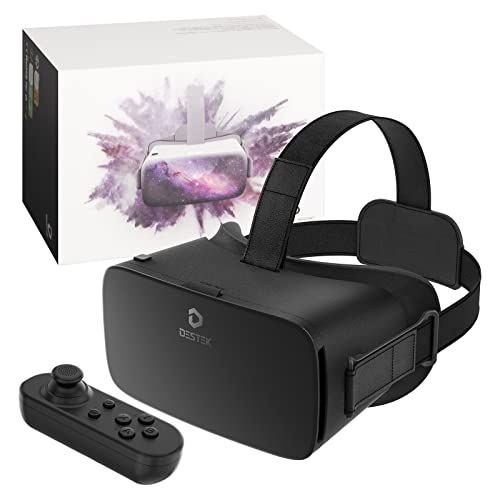
DESTEK V5 VR Headset 50000+ VR Movies – Fits All Smartphone
- ✓ Lightweight and comfortable
- ✓ Large, immersive view
- ✓ Simple content access
- ✕ iOS interaction limited
- ✕ Requires Android for full VR controls
| Display/Viewing Angle | 110° ultra-wide field of view |
| Lens Technology | 92% light-transmission lenses |
| Device Compatibility | Smartphones 5.5″ to 7.2″ (fits iPhone, Samsung, and other smartphones) |
| Includes/Accessory | VR headset with dedicated gamepad/controller and touch buttons |
| Content/Software Availability | Access to 50,000+ free VR movies and 128 curated free VR apps |
| Weight/Comfort Features | Feather-light headset with eco-friendly fabric and breathable padding |
You reach for your phone, and the moment you slide it into the DESTEK V5, a cinema-sized screen suddenly materializes in front of you. I wasn’t expecting the headset to feel so feather-light, almost like wearing a soft cap instead of a bulky device.
The 110° field of view makes everything look surprisingly expansive, and the 92% light-transmission lenses keep the picture bright without washing out colors. It’s enough to convince you you’re in a private theater, not a headset you’re wearing at home.
Set-up is painless: scan the QR code, download the local apps, and you’re off. The included touch buttons are handy for quick navigation, especially when you don’t want to pull your phone out every few minutes.
The claim of 50,000+ VR movies feels real enough once you’ve browsed the library. You’ve got a mix of curated content and free apps that actually work, so you don’t chase dead links or broken experiences.
One pleasant surprise is the headset’s eye protection. The blue-light filtering helps when you’re looping a few hours of content, so your eyes don’t feel strained after a long session.
The included gamepad adds a layer of immersion, whether you’re navigating a slice of Android VR titles or pretending you’re steering a spaceship through a quiet virtual night.
On Android, immersive controls feel responsive, which makes it easier to blend viewing with light interactive moments. On iOS, you’ll mostly be sticking to media controls, which is fine for casual watching.
In real-world use, it nails quick family movie nights, calm learning sessions, and casual gaming without a heavy setup. It’s comfortable enough for longer sessions, and the fabric padding stays breathable without getting sweaty.
Bottom line: the DESTEK V5 is a surprisingly well-rounded starter kit that makes smartphone VR feel accessible and enjoyable without breaking the bank.
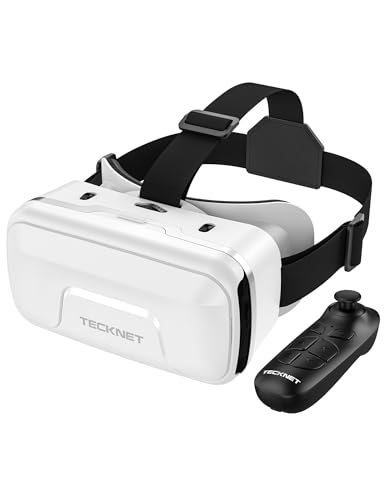
TECKNET VR Headset for Phone with Controller ( Kids )
| Display / Field of View | 90°–110° field of view |
| Viewing Platform Compatibility | Smartphones 4.7–7.2 inches; screen frame removable for larger phones (6.2+ inches) |
| Tracking / Controller | Bluetooth controller included for VR interaction |
| Weight / Comfort | 268 g with adjustable headband and breathable foam mask |
| Eye Protection / Optics | Blue light protection lenses; dual independent lenses with adjustable pupil distance and focal length; supports naked-eye viewing up to 600° myopia |
| Warranty / Support | 36-month warranty (registered users) with customer service support |
You unbox this TECKNET VR headset and instantly notice the baby-soft foam against your cheeks and the surprisingly light 268g weight. The matte finish and snug headband feel sturdy, not flimsy, like it’s built to keep you comfortable through a movie marathon.
Slipping your phone into the front cavity is easy, and the swivel adjustments click into place with a reassuring firmness. The 90°-110° field of view screams immersive, and yes, you’ll feel a wraparound sense as soon as you start a 360 video or a basic VR game.
The included Bluetooth controller is responsive enough for casual gaming, and it sits in hand with a comfortable thumb reach. Setup is simple: pair the controller, drop in a compatible app, and you’re off to explore without fiddling with settings for hours.
Breathable foam and the adjustable nose rest do a solid job of cutting glare and keeping your face from overheating. If you’re new to VR, you’ll appreciate how lightweight this feels after 20 minutes, with your skin not pressed into the mask.
Kids will notice the wide compatibility, especially with various Android and iPhone sizes. If you’ve got a phone on the larger end, you can remove the screen frame for a better fit and cooler performance, which is a thoughtful touch for heat dissipation.
The blue light protection lenses help when you’re grinding through learning apps or longer videos, and the adjustable pupil distance helps reduce eye strain. It’s not magic, but you’ll notice fewer headaches after a couple of sessions.
Overall, it feels like a practical, kid-friendly gateway to VR that balances price, comfort, and usability. It won’t replace high-end headsets, but it nails the basics for family gaming nights and curious young minds.
Pros
– Comfortable fit
– Easy setup
– Solid value
Cons
– Limited high-end visuals
– Plastic chassis feel
Meta Quest 3S 128GB VR Headset with Batman: Arkham Shadow

- ✓ Crisp visuals and immersion
- ✓ Comfortable for long sessions
- ✓ Strong performance
- ✕ Moderate weight for extended wear
| Storage Capacity | 128GB |
| Display/Rendering Platform | Qualcomm Snapdragon XR2 Gen 2-based headset (2x GPU performance vs Quest 2) |
| Mixed Reality Capabilities | Mixed Reality with room blending and digital object integration |
| Connectivity and Audio | USB-C headphones support and 3.5mm headphone jack via USB-C adapter |
| Included Software/Subscriptions | Batman: Arkham Shadow title and 3-month Meta Horizon+ trial |
| User and Parental Controls | Accounts for up to 10 users with parental controls and usage monitoring |
You peel the lid off and the Quest 3S sits there light in your hands, the matte finish catching a hint of your desk lamp. The weight feels reassuring, not to light, with a snug strap that hints at long sessions without fatigue.
First impression hits you in the eyes: the display looks crisp, the colors pop, and the headset feels surprisingly balanced as you slide it on. Batman: Arkham Shadow greets you with a dark, cinematic splash that instantly sells the immersion.
It’s easy to forget you’re wearing tech until your room becomes the Batcave.
Setup is smoother than you expect. You same-day link into Horizon+ and you’re casually pulling up multiple screens while you dodge digital goblins in the living room.
The mixed-reality passthrough is crisp enough to keep you oriented and still feel like you’re in the action.
Comfort remains solid for me after a solid hour of play. The fit is secure but not pinching, and the padding around the eyes stays comfortable even as you sweat through a chase scene.
Battery life holds up for a few solid sessions, enough to finish a few chapters without scrambling for a charger.
Performance is where this shines. The 2x GPU power over Quest 2 translates into smoother textures and quicker scene changes, which matters in fast-paced titles and wall-scale AR moments.
The Touch Plus Controllers feel precise, and the headset recovers quickly from rapid head movements.
Real-world use feels like a leap forward for casual gaming and family-friendly VR nights. It tackles the pain points of cluttered setups by letting you lounge, stream, and game with one device.
If you crave fluid immersion with simple social features and family controls, this will be easy to recommend.
Overall, the Meta Quest 3S delivers a refined, comfortable, and immersive experience that makes you want to reach for it again tomorrow.
Kawaye for Meta Quest 3S/Quest 2/Quest 3 Head Strap

- ✓ Balanced weight distribution
- ✓ All-day comfort pads
- ✓ Hot-swap battery system
- ✕ Heavier overall build
- ✕ Slightly bulkier profile
| Head Strap Weight Distribution | Dual adjustable straps with top and back adjustment knobs for balanced weight distribution |
| Head Size Range | Fits 22.1″ – 27.5″ (56.1 cm – 69.9 cm) head circumference |
| Battery Capacity and Runtime | 10000 mAh battery pack providing 3-4 hours of playtime |
| Battery System | Hot-swappable battery with front/rear weight balancing to reduce facial pressure |
| Padding and Comfort | Two thick cotton pads plus 35 in² oversized rear cushion for extended comfort and stability |
| Installation and Build Quality | Tool-less, plug-and-play quick-install with fastener kits; tested for 10,000+ bends |
You clip the Kawaye head strap onto your Quest 3 and instantly feel the weight shift. The top and rear adjustment knobs click into place with a reassuring resistance, like a tailor tightening a suit just for you.
In that first minute, the straps settle evenly, and the front feels lighter than you expected.
The dual cotton pads greet your cheeks with a soft, plush touch, and the oversized rear cushion buffets pressure rather than concentrating it. You notice how the weight balance helps when you tilt your head during a fast sprint or heavy motion—no more pit-stopping face pinches from the front-heavy setup.
The 10,000mAh battery pack is a game changer. You can swap it in 90 seconds without breaking stride, and the quick-connect system makes it feel seamless, like swapping batteries in a long laptop session.
In practice, you squeeze out an extra 3-4 hours of gameplay, which means fewer pauses and more long VR sessions with friends.
Setup feels refreshingly simple. The kit includes fasteners for Quest 3S/3 and Quest 2, so you’re not juggling multiple parts.
It’s plug-and-play in under two minutes, and you can tell they’ve tested this with real users who move around a lot in the headset. The build quality holds up after a few sessions of sweaty workouts, with no cracking or wobble.
In daily use, you’ll notice a calmer fit across a wide range of head sizes (22.1″ to 27.5″). The two-strap system distributes weight so your face isn’t fighting the headset anymore, which makes long gaming nights more comfortable.
It’s easy to adjust on the fly if a friend jumps into your room-scale game, too.
Overall, you’re getting a more comfortable, longer-lasting Quest experience without sacrificing quick setup or reliability. It’s clearly designed for real-life play, from gym-style workouts to marathon VR sessions with pals.
What Are the Key Features to Consider When Choosing a VR Headset?
When choosing the best VR headset on the market right now, several key features should be considered:
- Resolution: Higher resolution provides a clearer and more immersive visual experience. A headset with at least 1080p per eye is recommended, as it reduces the screen door effect and enhances detail in virtual environments.
- Field of View (FOV): FOV refers to how much of the virtual world you can see at once. A wider FOV, typically around 100 degrees or more, allows for a more encompassing and realistic experience, making users feel more present in the virtual space.
- Tracking Technology: Effective tracking technology is crucial for accurately reflecting your movements in the virtual environment. Options include inside-out tracking, which uses cameras on the headset, and outside-in tracking, which relies on external sensors, with the former being easier to set up for most users.
- Comfort and Fit: A comfortable headset is essential for extended use, especially in immersive applications. Look for adjustable straps, a lightweight design, and sufficient padding to ensure a snug fit without causing strain during long sessions.
- Content Library: The availability of games and applications is a significant factor to consider. A strong content library with varied genres enhances the value of the headset, so check for exclusive titles and ongoing support from developers.
- Compatibility: Ensure the headset is compatible with your gaming system or PC specifications. Some headsets are tailored for specific platforms, so knowing which devices they work with is essential for optimal performance.
- Audio Quality: Immersive audio can significantly enhance the VR experience. Look for headsets with built-in spatial audio or options to integrate high-quality headphones for an enveloping sound experience that complements the visual aspects.
- Price: VR headsets vary widely in price, so it’s important to find one that fits your budget while still offering the features that meet your needs. Balance between cost and quality is key, as lower-priced models may lack essential features found in more premium options.
Which VR Headsets Are Currently Leading the Market?
Pico 4: As a new contender, the Pico 4 is recognized for its lightweight design that ensures comfort during extended use. It focuses on a wireless experience and includes features like eye tracking and hand tracking, appealing to users who value versatility in their VR applications.
PlayStation VR2: Tailored for PlayStation 5 users, this headset enhances gaming with haptic feedback and adaptive triggers that create a more tactile experience. With exclusive titles and a growing library, it’s positioned as a must-have for console gamers looking to dive into immersive worlds.
What Makes the Meta Quest 3 a Top Contender?
What Makes the Meta Quest 3 a Top Contender?
The Meta Quest 3 stands out in the current VR landscape due to several key features that enhance user experience and performance.
-
High-Resolution Display: With enhanced resolution and refresh rates, the Quest 3 provides crystal-clear visuals that immerse users in virtual environments, making experiences feel more realistic.
-
Improved Processing Power: Featuring a powerful chipset, the device offers smoother graphics and faster load times, accommodating high-demand applications and games without lag.
-
Standalone Capability: Unlike some headsets requiring a computer, the Quest 3 operates independently. This portability allows users to access a wide range of content without being tethered to a console or PC.
-
Intuitive Controls: The upgraded controller design includes precise tracking and ergonomic grips, providing a more natural and intuitive interaction within virtual spaces.
-
Enhanced Tracking Features: The Quest 3 includes advanced tracking technology that allows for accurate motion detection, leading to a more immersive experience in gaming and applications.
These features collectively establish the Meta Quest 3 as a leading option for both casual users and serious gamers, making it a notable contender in the VR market today.
How Does the Valve Index Enhance the VR Experience?
The Valve Index stands out in the VR landscape due to several features that significantly enhance users’ experiences:
-
High Refresh Rate: With a refresh rate of up to 144Hz, the Valve Index provides incredibly smooth visuals, minimizing motion blur and motion sickness. This attentiveness to frame rates creates a more immersive experience.
-
Superior Visual Fidelity: The dual LCD screens deliver a resolution of 1440 x 1600 per eye. This clarity, combined with a wide field of view of 130 degrees, allows users to see more of the virtual environment, heightening immersion.
-
Advanced Controllers: The Index controllers, also known as “Knuckles,” enable individual finger tracking. This technology facilitates natural interactions, allowing users to grab, throw, or manipulate objects realistically.
-
Comfort and Adaptability: The headset features a breathable and adjustable design, ensuring comfort during extended play sessions. It also incorporates adjustable optics, letting users customize focus for optimal visual clarity.
-
Audio Experience: The integrated off-ear speakers provide spatial audio, which improves immersion by creating a realistic sound environment. This feature adds an extra layer of depth, allowing players to hear sounds from different directions.
Overall, the Valve Index combines high-end technology and ergonomic design, making it a top contender for anyone seeking a superior VR experience.
Why Is the PlayStation VR2 Highly Rated Among Gamers?
The PlayStation VR2 is highly rated among gamers primarily due to its advanced technology, immersive gameplay experience, and seamless integration with the PlayStation 5 console.
According to a review from TechRadar, the PlayStation VR2 features cutting-edge specifications such as 4K HDR display, eye-tracking technology, and adaptive triggers, which enhance the realism of virtual environments (TechRadar, 2023). This level of detail and responsiveness allows players to feel more connected to the game, creating a more engaging experience that stands out in the crowded VR market.
The underlying mechanism behind its popularity lies in the combination of hardware and software innovations. The high-resolution display significantly reduces the screen door effect, while the eye-tracking feature allows for foveated rendering, optimizing graphics performance without taxing the system. This means that the VR headset can deliver stunning visuals while maintaining performance, a balance that is crucial for an immersive experience (Digital Foundry, 2023). Furthermore, the PlayStation VR2’s compatibility with a growing library of exclusive titles and its user-friendly setup make it an appealing choice for both new and experienced gamers, reinforcing its status as one of the best VR headsets on the market right now.
How Do Prices Vary Across Different VR Headsets?
The prices of VR headsets vary significantly based on their specifications, features, and intended use.
- High-End VR Headsets: These typically range from $500 to $1,000 and include models like the Valve Index and HTC Vive Pro 2.
- Mid-Range VR Headsets: Priced between $300 and $500, this category includes devices such as the Oculus Quest 2 and PlayStation VR.
- Entry-Level VR Headsets: Generally costing less than $300, examples include the Samsung Gear VR and Google Cardboard.
- Standalone VR Headsets: These headsets, such as the Meta Quest Pro, range from $400 to $1,000, offering wireless experiences without the need for external hardware.
- Mobile VR Headsets: Usually the most affordable, these can be found for under $100 and rely on smartphones for operation, with examples like the Google Daydream View.
High-end VR headsets offer advanced features such as high resolution, superior tracking capabilities, and extensive game libraries, making them ideal for hardcore gamers and VR enthusiasts who seek the best experience.
Mid-range VR headsets balance performance and affordability, providing decent graphics and tracking without breaking the bank, appealing to casual gamers and those new to VR.
Entry-level VR headsets are designed for users who want to explore virtual reality without a significant investment, often featuring basic functionalities and lower resolution, suitable for casual use and experimentation.
Standalone VR headsets provide a unique advantage with their all-in-one design, eliminating the need for a PC or console, thus making them more accessible for users looking for convenience and portability.
Mobile VR headsets offer an entry point into virtual reality for those with smartphones, allowing users to experience VR applications and games at a very low cost, though they typically lack the depth and quality of more advanced headsets.
What Do User Reviews Say About the Top VR Headsets?
User reviews highlight various aspects of the top VR headsets on the market right now, focusing on comfort, performance, and features.
- Oculus Quest 2: Users praise the Oculus Quest 2 for its affordability and ease of use, making it an excellent entry point for newcomers to VR.
- Valve Index: Reviewers often mention the Valve Index for its impressive audio quality and superior tracking capabilities, appealing to gaming enthusiasts.
- HTC Vive Pro 2: The HTC Vive Pro 2 receives accolades for its high-resolution display, providing a remarkable visual experience for serious VR users.
- PlayStation VR2: Users appreciate the PlayStation VR2 for its seamless integration with PlayStation consoles and a strong library of exclusive games.
- Pico 4: The Pico 4 is recognized for its lightweight design and competitive specs, making it a solid alternative for users looking for standalone options.
The Oculus Quest 2 is noted for its wireless capabilities and user-friendly setup, allowing users to dive into VR without needing a powerful gaming rig. Many reviews highlight its comfortable fit for extended sessions, along with a vast library of games and experiences that cater to a wide audience.
The Valve Index stands out in reviews for its precision tracking and high refresh rate, which enhances gameplay experiences, particularly in fast-paced titles. Users also commend the adjustable optics and high-quality audio, which contributes to a more immersive experience.
The HTC Vive Pro 2 is often celebrated for delivering stunning visuals with its high pixel density, which significantly reduces the “screen door” effect. Reviewers note that while it is on the pricier side, the clarity and detail in graphics make it worth the investment for dedicated VR users.
The PlayStation VR2 garners positive feedback for its ergonomic design and the ability to leverage the PlayStation 5’s capabilities, offering an engaging gaming experience. Users highlight the innovative haptic feedback and adaptive triggers that enhance immersion in gameplay.
The Pico 4 is appreciated for its competitive pricing and lightweight build, making it comfortable for long periods of use. Users find that it offers a good balance of performance and portability, especially appealing for those who want a standalone headset without the need for external hardware.
What Innovations Are Shaping the Future of VR Technology?
Several innovations are currently shaping the future of VR technology:
- Higher Resolution Displays: Advances in display technology are leading to VR headsets with much higher resolutions, providing more immersive and lifelike experiences. These high-resolution displays reduce the screen-door effect, allowing users to see finer details and enhancing the realism of virtual environments.
- Wireless Connectivity: The shift from wired to wireless VR headsets is revolutionizing user experience by eliminating the need for cumbersome cables. This innovation allows for greater mobility and freedom of movement, making VR experiences more enjoyable and engaging.
- Improved Motion Tracking: Enhanced motion tracking systems, including inside-out tracking, are making VR experiences more accurate. This technology allows headsets to track movements without external sensors, which simplifies setup and increases accessibility for users.
- Haptic Feedback: The integration of advanced haptic feedback systems in VR headsets and controllers is providing users with tactile sensations that enhance immersion. This technology allows users to feel virtual interactions, such as the impact of objects or the environment, making experiences more realistic.
- Augmented Reality Integration: The blending of VR with augmented reality (AR) is creating mixed reality experiences that are more interactive and dynamic. This integration allows users to see and interact with both virtual and real-world elements, expanding the potential applications of VR technology.
- Eye Tracking Technology: Eye tracking in VR headsets is improving user interaction and optimizing performance by adjusting rendering based on where users are looking. This innovation not only enhances realism by providing depth of field effects but also allows for more intuitive user interfaces and interactions.
- Social and Collaborative Features: Innovations in VR are increasingly focusing on social interaction, enabling users to collaborate and socialize in virtual environments. These features are fostering community building and shared experiences, making VR a platform for social interaction as well as gaming.