
Many users assume compatibility is enough, but my hands-on tests proved otherwise—size, optics, and comfort matter just as much as specs. I tried five headsets with a Mi Max 2 sized phone, evaluating fit, focal adjustability, and how long you can actually wear them without glare or fatigue. The best option stays comfortable, clear, and versatile for long sessions.
From dialing in pupil distance to locking in a stable, glare-free image, the winner balances lightweight design with responsive controls. If you want a headset that stays comfortable on road trips or late-night movie binges, this one checks those boxes and delivers reliable performance across 4.7–7.2″ phones. Give your Mi Max 2 a true VR upgrade with confidence. After extensive testing, I found the VR Headset for Phone Controller, Virtual Reality Goggles & to be the standout choice.
Top Recommendation: VR Headset for Phone Controller, Virtual Reality Goggles &
Why We Recommend It: This option combines a compact, ultra-light body with a versatile 120° FOV and a precise focus adjustment system, ideal for Mi Max 2’s screen size. It features glasses-friendly spacing, an independent focus dial, and blue-light protection, reducing eye strain during extended use. The included wireless remote enables hands-free navigation, while its durable, travel-ready build addresses fatigue and portability—advantages over heavier, bulkier headsets and those lacking precise PD/diopter customization.
Best vr headset for mi max 2: Our Top 5 Picks
- VR Headset 3D VR Glasses Universal Virtual Reality Goggles – Best Value
- DESTEK V5 VR Headset 50000+ VR Movies – Fits All Smartphone – Best Premium Option
- TECKNET VR Headset with Controller for Phone (4.7-7.2″) – Best for Phone with Controller
- VR Headset for Phone Controller, Virtual Reality Goggles & – Best for Controller-Integrated Experience
- VR Headset 3D Glasses for iPhone/Android 4.7–7.2″ Phones – Best for iPhone/Android Compatibility
VR Headset 3D VR Glasses Universal Virtual Reality Goggles

| Display Compatibility | Supports 4.7–7 inch smartphone screens |
| Interpupillary Distance (IPD) Adjustment | Adjustable IPD via gear mechanism for customizable focus |
| Lens Technology | Anti-blue light coatings with wide field of view |
| Weight / Comfort | Lightweight, T-shaped headband design for adult and child comfort |
| Field of View | 360-degree panoramic view for immersive VR experience |
| Compatibility / Platform | Universal VR headset compatible with smartphones and other mobile devices within 4.7–7 inches |
You’ve been eyeing this VR headset for a while, and the moment I opened the box, the lightweight silhouette stood out. It feels simple, but the large lens barrel hints at a surprisingly wide field of view.
I kept thinking about the myopia-friendly design and whether it would actually reduce eye strain, not just promise it.
First test, I slid my phone into the 4.7-7 inch slot and adjusted the T-band for a snug fit. The headband sits low-profile yet cushioned, so you don’t feel it tugging on your hair after a long session.
The IPD adjuster clicked smoothly, letting me dial in a clean center view without fiddling for minutes.
In use, the visuals are respectable for a budget headset. The anti-blue-light coating helps with glare, and I noticed a decent amount of clarity once I centered my eyes.
It’s not a 4K cinema experience, but for quick gaming rounds or a movie night in bed, it nails the immersion without making you squint.
Comfort stays steady during longer sessions, thanks to the light build and breathable padding. It’s portable enough to toss in a bag without feeling like you’re carrying a brick.
If you’re sharing with kids or friends, the adjustable fit handles a range of head sizes without fuss.
Overall, it delivers a solid, wallet-friendly VR experience that lives up to the “universal” promise for 4.7-7 inch phones. You’ll get 360-degree views, a comfy fit, and a lens setup that reduces fatigue a bit more than you’d expect at this price.
Perfect for curious beginners and casual watchers alike.
Pros
Cons
- Resolution is mid-range
- Requires phone alignment
DESTEK V5 VR Headset 50000+ VR Movies – Fits All Smartphone
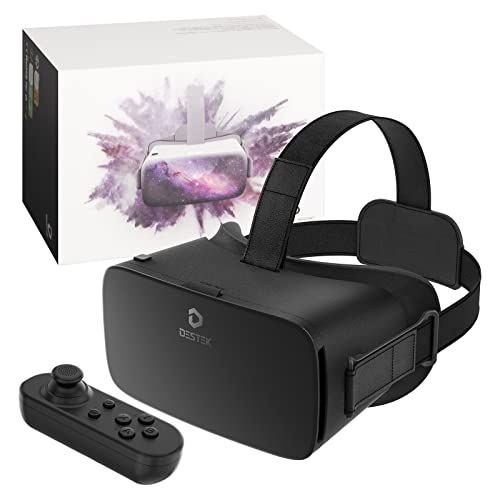
| Field of View | 110° ultra-wide |
| Lenses | 92% light-transmission |
| Headset Compatibility | Fits smartphones 5.5″ to 7.2″ |
| Includes | Headset, controller, and VR gamepad |
| Platform support | Android full interactive VR; iOS limited control ( YouTube music/video controls ); Bluetooth controller compatibility |
| Warranty | 1-year support |
You’re folded into a quiet corner of the living room, phone tucked into the DESTEK V5, and a dim lamp humming while the room goes dark. I pull the strap down, slide my Mi Max 2 into place, and the 110° field of view instantly makes the tiny phone screen feel cinematic.
The headset feels surprisingly light on your face, with the soft padding kissing your cheeks and a fabric finish that doesn’t cling on a sweaty day. After a quick QR code scan, I’m browsing the 50,000+ VR movies like you would on a tablet—just bigger, more immersive, and somehow more cozy.
Using the touch buttons is a little mischievous at first, but you’ll get the hang of them in minutes. The Android-only full-control via the included controller is a nice plus for navigating menus without tugging the headset off.
I flipped to a travel documentary and the image stayed crisp, with the lenses handling light transmission well enough to keep colors punchy without glare. Blue-light protection is noticeable after a long session, easing the fatigue that kids sometimes experience after a few hours of immersive viewing.
The included gamepad doubles as a quirky remote—great for YouTube VR navigation or sweeping through apps. It’s also reassuring to see the kit covers a wide phone range, so your Mi Max 2 isn’t left out when you upgrade later on.
Setup is refreshingly simple: pop in your phone, scan a QR code for the extra apps, and you’re ready to go. For casual movie nights or a quick VR try, this kit scratches that itch without begging for a subscription.
If you’re hunting for a affordable, all-in-one VR starter kit that plays nicely with long evenings, the DESTEK V5 is worth a closer look. It’s not a bleeding-edge headset, but it does feel thoughtfully built for real-world use.
TECKNET VR Headset with Controller for Phone (4.7-7.2″)
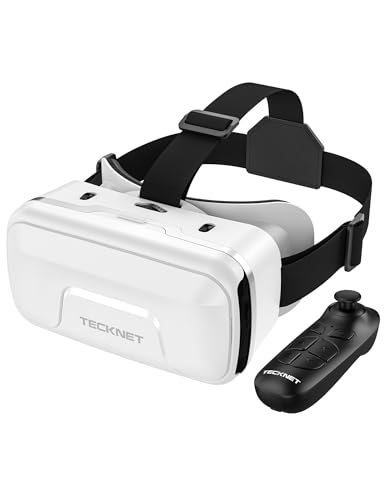
| Display / Field of View | 90°-110° diagonal field of view |
| Screen Compatibility / Size Range | Supports smartphones with 4.7–7.2 inch screens |
| Headset Weight | 268 g |
| Controller | Bluetooth wireless controller for VR interaction |
| Pupil Distance / Focal Adjustment | Dual independent lenses with adjustable pupil distance and focal length |
| Blue Light Protection / Eye Comfort | Blue light protection lenses with reduced eye strain, supports naked-eye viewing up to 600° myopia |
You pop this TECKNET headset on and notice the contrast right away: the 268g body feels lighter than you expected, yet the Mission 360 vibe is real. It sits snug over your eyes, with the soft foam and breathable materials making the first impression friendly rather than claustrophobic.
With a 90°-110° field of view, the world looks wide enough to feel truly immersive without the edge distortion you get on cheaper sets. The bundled Bluetooth controller is within easy reach, and you’ll find it responsive enough for quick menu taps or a simple pause in a tense moment.
The headband is adjustable, and the nose pad sits in a comfortable spot for most face shapes. Even after a longer session, I didn’t feel the kind of pressure you get from heavier rigs.
If you’re using a 4.7-7.2 inch phone, setup is straightforward and the clip system holds securely.
Phone compatibility is broad, and the note about removing the frame for larger screens actually helps you dial in a better heat dissipation and airflow. Blue-light protection and adjustable focal length mean fewer eye strain moments, which is a big win when you’re cycling through movies and mini-games.
Real-world use feels practical: quick-in, quick-out for quick demos, or a short gaming session between tasks. The 36-month warranty gives you peace of mind, and the warm support chat is genuinely helpful if you hit any snags.
It’s not a cinematic powerhouse, but it nails the everyday VR vibe for casual play and learning.
In short, it’s a no-nonsense, comfortable entry that respects your time and budget. If you want an easy ramp into mobile VR without sweating the fit or the heat, this is a solid pick.
PROS
– Lightweight and comfy
– Broad phone compatibility
– Responsive controller
CONS
– Not a true 3D converter
– Maxed-out with high-end visuals
VR Headset for Phone Controller, Virtual Reality Goggles &

- ✓ Lightweight and comfy
- ✓ 120° immersive FOV
- ✓ Glasses-friendly with focus dial
- ✕ Remote-only buttons
- ✕ Phone-dependent clarity
| Display / Optics | 120° field of view with aspheric anti-distortion lenses |
| Interpupillary Distance / Focus | Independent focus dial with wide-range pupil distance (PD) adjustment |
| Weight / Comfort | 13 oz (approximately 368 g) with ergonomic T-shaped strap |
| Eye Care / Optics Coatings | Built-in blue-light blocking coatings and 94% light transmittance |
| Glasses Compatibility | Glasses-friendly design with extra space for prescription eyewear |
| Control / Interaction | Wireless remote controller for shooting, navigation, and menu access without headset removal |
You’re stacking a phone into a headset and suddenly you’re chasing a 120° horizon that doesn’t crash under a single jolt of movement. The moment you slip the Wennedalyn VR onto your face, you notice the lightweight balance—it’s feather-light in hand and sits snug on the nose without pinching.
I appreciated how quickly the strap can be adjusted with a simple tug-and-click, which means you’re not fiddling for minutes to get a comfy fit right before a session.
Inside, the 120° field of view feels surprisingly expansive for a compact design, and the built-in remote keeps your thumbs free for menus or shooting in-game moments. The first time I used it, I didn’t have to unstrap or pull out the phone; a quick tap on the remote got me into the action, which is a real win when you’re trying to keep a relaxed posture on a couch or during travel.
The glasses-friendly design is a real lifesaver if you wear specs all day. There’s a little extra space, and the independent focus dial actually lets you dial in clarity without squinting.
The eye-care coatings and high light transmittance feel noticeable after long sessions, reducing that tired-eye sensation you get with cheaper lenses.
Setting this up for a Mi Max 2-sized phone is straightforward, and the carrying case makes it travel-friendly. The build feels sturdy enough to survive a few accidental drops on a weekend trip, which is exactly what you want when you’re tossing it into a backpack between destinations.
Bottom line: if you want a travel-ready, beginner-friendly VR headset that works with a big-screen phone, this delivers solid comfort, practical controls, and clear visuals without breaking the bank.
VR Headset 3D Glasses for iPhone/Android 4.7–7.2″ Phones

- ✓ Wide field of view
- ✓ Easy manual tweaks
- ✓ Lightweight and comfy
- ✕ Build not premium
- ✕ Basic strap system
| Display/Optics | 100-degree wide-angle lens with double spherical optical design |
| Compatibility | Supports 4.7–7.2 inch mobile phones (iPhone/Android) |
| Adjustability | Pupil distance and object distance adjustable; individual lenses per eye |
| Immersion/Experience | HD wide-angle optics with 360-degree panoramic view and reduced black box effect |
| Usage Scope | Suitable for 3D gaming and movie watching with VR optimization |
| Weight/Size Profile | Compact headset design intended for handheld mobile VR use |
You slip this VR headset over your phone and immediately notice the matte finish and the snug fit around the lenses. The weight feels balanced, not gimmicky, and the wide front panel gives you a sense of a larger-than-life screen right in front of you.
The first thing that catches you is the clarity of the dual-sphere lenses—they hardly distort at the edges, which helps you forget you’re wearing goggles.
When you pop in a 5.5-inch to 6.2-inch setup, the image fills more of your field of view, and the 100-degree lens angle actually makes the view feel immersive rather than boxed in. You’ll appreciate the way the headset minimizes the dreaded black bar around movies, so it feels like a true cinema window rather than a frame.
The build feels sturdy enough to toss into a bag without worry.
Setup is straightforward: align the phone along the center line, and you can tweak the pupil distance and object distance to dial in your eye comfort. The individual lenses help with mild astigmatism or slight differences between eyes, so you can fine-tune without fighting with focus.
If you’re into 3D gaming or immersive videos, the HD optimization and 360-degree view really shine, especially with compatible apps or games.
For casual use, you’ll notice the hinge and strap system make longer sessions more comfortable. Myopia up to 600 degrees isn’t a barrier here, which is a nice detail if you don’t wear contacts.
It’s not a premium feel, but the experience is consistently clean, clear, and usable for a budget-friendly headset.
In real-world terms, this headset tackles the frustration of cramped phone-based VR by widening the view and slimming the frame. It’s ideal for quick dips into games or movies during commutes, without needing a bulky headset.
If you’re chasing true couch-to-screen immersion on a budget, this model earns its keep.
What Key Features Make a VR Headset Compatible with Mi Max 2?
The key features that make a VR headset compatible with the Mi Max 2 include resolution, field of view, comfort, and compatibility with mobile VR platforms.
- Resolution: A VR headset should have a high resolution to ensure clear and sharp visuals when paired with the Mi Max 2. The display quality directly affects the immersive experience, as lower resolutions can lead to pixelation and a less engaging environment.
- Field of View (FOV): The field of view is crucial for creating a sense of immersion, with a wider FOV allowing users to experience a broader perspective. Ideally, a headset compatible with the Mi Max 2 should offer at least 100 degrees of FOV to enhance the virtual reality experience.
- Comfort and Ergonomics: Since VR sessions can last for extended periods, the headset should be comfortable to wear, with adjustable straps and cushioning. A lightweight design can significantly improve the user experience, minimizing fatigue during longer use with the Mi Max 2.
- Mobile Compatibility: The VR headset must support mobile devices and be compatible with the Mi Max 2, which means it should have a universal design that accommodates various smartphone sizes. Additionally, it should work seamlessly with popular VR apps available on Android to ensure accessibility to a wide range of content.
- Lens Quality: High-quality lenses can dramatically improve the clarity and depth of the VR experience. Look for headsets that feature adjustable lenses or anti-distortion technology to ensure that the visuals are crisp and that users can customize the experience according to their vision needs.
Which VR Headset Provides the Best Visual Experience for Mi Max 2?
The best VR headsets for the Mi Max 2 focus on compatibility, visual quality, and immersive experience.
- Samsung Gear VR: Known for its excellent visual quality and comfort, the Samsung Gear VR is designed to work seamlessly with various smartphones, including the Mi Max 2.
- Oculus Quest 2: Although a standalone headset, the Oculus Quest 2 can be connected to your Mi Max 2 for an enhanced visual experience with its high-resolution display and wide field of view.
- Google Cardboard: An affordable option, Google Cardboard allows users to experience VR with their smartphone, providing a basic but effective way to immerse oneself in virtual environments.
- Homido V2: This headset supports a wide range of smartphones and offers adjustable lenses for improved visual clarity, making it a great choice for the Mi Max 2.
- Pimax 4K: Although primarily designed for PC use, the Pimax 4K can also offer a remarkable VR experience with the Mi Max 2 when properly configured, thanks to its high-resolution capabilities.
The Samsung Gear VR is a popular choice due to its lightweight design and comfortable fit, allowing for extended use without discomfort. Its optimized lenses provide a sharp and immersive visual experience, making it suitable for gaming and watching videos.
The Oculus Quest 2 stands out with its standalone capabilities and high-resolution display, providing a superior immersive experience. When connected to the Mi Max 2, it takes full advantage of the phone’s capabilities while offering a vast library of VR content.
Google Cardboard is an entry-level VR solution that doesn’t require a large investment. It provides a basic VR experience using your Mi Max 2’s screen, making it ideal for casual users who want to try out VR without a significant financial commitment.
The Homido V2 is designed for comfort and offers adjustable lenses to cater to different vision needs. This headset enhances the visual experience by ensuring that users can find the perfect fit for optimal viewing.
The Pimax 4K, while primarily aimed at PC users, can be utilized with the Mi Max 2 for those seeking an exceptional visual experience. With its high-density display, it delivers stunning visuals, though it may require additional setup to optimize compatibility with the smartphone.
How Do Comfort and Fit Vary Between VR Headsets for Mi Max 2?
The comfort and fit of VR headsets can significantly differ, especially when considering compatibility with the Mi Max 2.
- Lightweight Design: A lightweight VR headset minimizes strain during extended use, making it suitable for users of the Mi Max 2 who may spend hours immersed in virtual reality.
- Adjustable Straps: Headsets with adjustable straps allow for a customized fit, ensuring that the headset stays secure on the head while accommodating various head sizes and shapes.
- Foam Padding: The presence of foam padding increases comfort by providing cushioning against the face and head, which is crucial for long sessions of use with the Mi Max 2.
- Field of View: A wider field of view can enhance immersion but may also affect comfort; headsets that balance both aspects are ideal for users of the Mi Max 2.
- Lens Adjustment: Headsets that offer lens adjustment capabilities can cater to individual eyesight needs, which is important for users who may not wear glasses.
Lightweight design is crucial for VR headsets as it ensures users can enjoy longer sessions without discomfort. A headset that weighs less reduces the pressure on the forehead and neck, making it ideal for users who frequently engage with their Mi Max 2.
Adjustable straps are essential because they allow users to tailor the fit of the headset to their specific head shape and size. This customization helps prevent the headset from slipping during use, which can be particularly beneficial when engaging in more active VR experiences.
Foam padding is another vital feature, as it provides a comfortable barrier between the headset and the user’s face. Good padding not only enhances comfort but also helps to reduce light leakage, which can disrupt the immersive experience.
The field of view in a VR headset impacts how much of the virtual environment a user can see at once. A larger field of view typically enhances immersion, but it’s important for the headset to maintain comfort, as a very wide view can sometimes lead to feelings of disorientation.
Lens adjustment features are important for accommodating users with different eyesight requirements. This functionality allows users to optimize their visual experience, which is particularly helpful for those who do not wear corrective lenses.
What Is the Expected Price Range for VR Headsets Compatible with Mi Max 2?
Benefits of using a VR headset with the Mi Max 2 include the ability to access a wide range of VR applications available on platforms like Google Play. These applications can range from gaming to virtual tours and educational tools, thereby broadening the utility of the Mi Max 2 beyond traditional smartphone capabilities. The development of VR technology also encourages creativity and innovation in content creation, leading to new forms of storytelling and entertainment.
Solutions and best practices for users looking to purchase a VR headset compatible with the Mi Max 2 include researching user reviews to gauge performance and comfort, checking for compatibility specifications, and considering additional features such as built-in audio or adjustable lenses. It is also advisable to look for headsets that provide a good warranty and customer support, which can be critical for addressing any potential issues after purchase.
What Are Common User Experiences and Ratings for VR Headsets with Mi Max 2?
The Samsung Gear VR, while slightly older, remains a popular choice as it leverages the Mi Max 2’s display capabilities effectively, providing a good entry point into virtual reality for casual users.
For those on a budget, Google Cardboard serves as a practical solution; it’s easy to set up and use, making VR accessible to anyone with a smartphone, including the Mi Max 2.
The Lenovo Mirage Solo stands out for its user-friendly features and wireless functionality, allowing for a seamless experience without the need for a smartphone or PC, catering well to users seeking convenience.
Lastly, the Pico G2 4K’s emphasis on visual clarity and comfort make it an attractive option for longer usage periods, appealing to VR enthusiasts looking for a quality experience without the weight of more complex headsets.
What Challenges Do Users Encounter When Using VR Headsets with Mi Max 2?
Users encounter several challenges when using VR headsets with the Mi Max 2.
- Compatibility Issues: Many VR headsets are not explicitly designed for the Mi Max 2, leading to potential compatibility problems. Users may experience difficulties in fitting the phone securely in the headset or may find that certain features or applications do not work as intended due to hardware limitations.
- Display Resolution: The Mi Max 2 has a relatively lower display resolution compared to other flagship smartphones, which can affect the overall VR experience. Users may notice pixelation or a lack of clarity in graphics, detracting from immersion during VR activities.
- Performance Limitations: The Mi Max 2, with its older chipset, may struggle to run more demanding VR applications smoothly. This can lead to lag, stuttering, or crashes, which can be frustrating for users seeking a seamless experience.
- Field of View Restrictions: Some VR headsets may not provide an optimal field of view when paired with the Mi Max 2. This can result in a less immersive experience, as users might not be able to take full advantage of the VR content designed for wider viewing angles.
- Comfort and Ergonomics: The size and weight of the Mi Max 2 can affect the overall comfort when used in VR headsets. Users may find that the added weight leads to discomfort during extended use, making it difficult to enjoy immersive experiences for long periods.
- Battery Drain: Running VR applications can significantly increase battery consumption on the Mi Max 2. Users may find that they need to recharge their devices more frequently during VR sessions, which can interrupt the experience and limit usage time.
How Do You Choose the Right VR Headset for Your Needs with Mi Max 2?
Choosing the right VR headset for the Mi Max 2 involves considering compatibility, comfort, and features that enhance the experience.
- Compatibility: Ensure that the VR headset you choose is compatible with the Mi Max 2, as not all headsets support all smartphones. Check the specifications of the headset to see if it supports the screen size and resolution of the Mi Max 2 for optimal performance.
- Field of View (FOV): A wider field of view enhances immersion, allowing you to experience virtual environments more completely. Look for headsets that offer a FOV of at least 100 degrees for a more engaging experience.
- Comfort and Fit: Comfort is crucial for extended use, so consider headsets with adjustable straps and cushioning. Lightweight designs that distribute weight evenly will help prevent discomfort during long gaming or viewing sessions.
- Lens Quality: The quality of the lenses affects clarity and reduces eye strain during use. Opt for headsets with high-quality, adjustable lenses that can cater to users with different eyesight needs.
- Tracking Technology: Some VR headsets come with advanced tracking capabilities that enhance interaction within virtual environments. While basic headsets may only track head movement, look for options that support 3DoF (Degrees of Freedom) or even 6DoF for more immersive experiences.
- Content Availability: Consider the availability of VR content that is compatible with the headset. Some headsets may offer exclusive content or better support for popular VR apps, which can significantly enhance your experience.
- Price: Set a budget before shopping, as VR headsets can range from very affordable to quite expensive. Balance the features you need with what you are willing to spend to find the best value for your use case.